







Ghana Slips in Global Mining Investment Rankings Amid Rising African Competition

Ghana’s standing as a premier mining investment destination has taken a hit, according to the latest findings from the Fraser Institute’s 2025 Annual Survey of Mining Companies. Once a top contender in Africa’s resource sector, Ghana has now slipped seven places in the global Investment Attractiveness Index (IAI), falling to 53rd out of 68 jurisdictions, down from 46th last year. The country’s score declined to 55.21 from 56.98, reflecting mounting competitive pressure across the continent. Within Africa, Ghana now trails behind countries such as Botswana and Morocco, settling into the middle tier of the continent’s mining investment landscape. While the country still boasts significant mineral wealth, the new ranking signals a need to address the factors holding back investor confidence. The IAI blends mineral potential with policy perception, with geology accounting for 60 percent and policy factors for 40 percent of the overall score. The report points to regulatory uncertainty, tax concerns, infrastructure deficiencies, and land access issues as potential reasons for Ghana’s slide in the rankings. These challenges appear to be dampening investor enthusiasm, despite Ghana’s strong geological profile. Further reinforcing this trend, Ghana ranked 50th globally on the Policy Perception Index, earning a score of 53.65, indicative of moderate but not leading policy competitiveness. The survey, conducted between August and November 2025, gathered insights from 256 mining executives representing companies with a collective exploration budget exceeding US$4.2 billion. As Ghana navigates increased competition from its African peers, the latest rankings serve as a call to action for policymakers to boost the country’s appeal to global investors and reclaim its status as a mining powerhouse. Source: Apexnewsgh.com
Chief of Staff’s Committee Completes Review of Post-Election Public Service Appointments

A committee set up by the Chief of Staff to scrutinize recruitments, appointments, and promotions made into Ghana’s Public Service following the December 7 elections has concluded its work, shedding light on the fate of thousands affected by a sweeping review directive. According to the committee’s findings, a total of 2,080 individuals had their recent appointments or promotions under examination. After a thorough review, the committee determined that 1,201 of these appointments were valid, confirming that they had followed the proper due process and could stand. However, the process was not without casualties; 541 appointments were revoked after the committee found they failed to meet the necessary procedural standards. In a strong affirmation of inclusivity, the committee also upheld the appointments of 338 Persons With Disabilities, recognizing that these appointments had adhered to all requirements and signaling the government’s ongoing commitment to diversity within the Public Service. The review process, initiated in the wake of the elections, was designed to promote transparency, fairness, and strict compliance with established protocols in public sector hiring and advancement. With the committee’s report now released, the government looks to move forward, guided by the principles of accountability and merit. Source: Apexnewsgh.com
Nana Agradaa Released from Prison, Reunites with Family After Eight Months

The gates of Nsawam Prison swung open this week to release Patricia Asiedua Asiamah, better known to many as Nana Agradaa, the former fetish priestess who turned her life to evangelism. After spending eight months in custody, Nana Agradaa has finally returned home, marking a new chapter in a story that has captured national attention. Her husband, Asiamah, took to Facebook on Tuesday, March 3, to share the news of her return: “Thank God my wife is finally home,” he wrote, sparking a wave of reactions from supporters and critics alike. The homecoming was marked by heartfelt reunions as Nana Agradaa rejoined her family after a period of separation. Later in the day, she is expected to make her first public appearance by joining her church community for fellowship, a significant moment for her congregation and followers, many of whom have stood by her throughout her legal troubles. Nana Agradaa was initially handed a 15-year sentence on July 3, 2025, after being convicted on charges of defrauding by false pretence and charlatanic advertisement. Her legal team, however, appealed the ruling, arguing that the punishment was excessive. The Amasaman High Court ultimately reviewed her case, reducing her sentence to 12 months and describing the original term as harsh. Her release comes in line with Ghana’s remission rules, which allowed her to regain freedom after serving two-thirds of her revised sentence. As Nana Agradaa steps back into public life, all eyes will be on how she navigates her return and reengages with her faith community. Source: Apexnewsgh.com
Ghana Evacuates Embassy Staff from Iran Amid Escalating Middle East Tensions
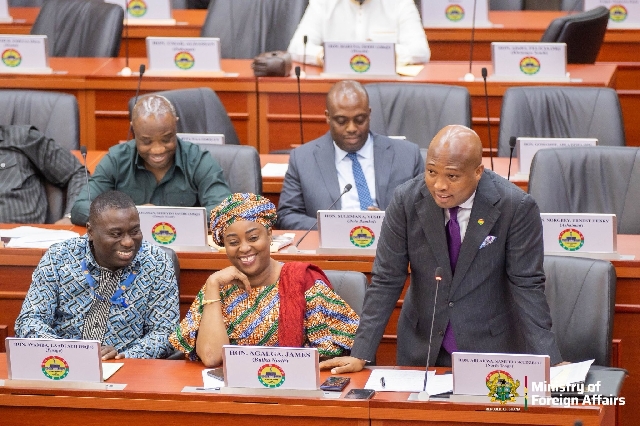
In a decisive move to safeguard its diplomats, the Minister for Foreign Affairs and Regional Integration, Samuel Okudzeto-Ablakwa, announced that the Government of Ghana has successfully evacuated all Ghanaian embassy staff from Iran. The evacuation, prompted by mounting tensions and instability in the Middle East, was carried out swiftly to ensure the safety of Ghanaian personnel stationed in the region. Minister Ablakwa confirmed that the diplomats are safe and in high spirits following their return. As an added precaution, the Ghanaian embassy in Iran has been closed indefinitely, “sine die”, until further notice. The Foreign Affairs Minister emphasized that the government’s paramount concern remains the security and welfare of Ghanaian citizens, especially in light of recent military hostilities involving several Middle Eastern countries. This evacuation forms part of a broader emergency preparedness strategy activated by the Ministry of Foreign Affairs, which has also included advisories urging Ghanaians to avoid non-essential travel to the region and to remain vigilant amidst the ongoing unrest. The successful evacuation marks a significant diplomatic response, underscoring the government’s commitment to protecting its citizens abroad and highlighting the lengths to which Ghana is prepared to go to uphold the safety and well-being of its people during times of crisis. Source: Apexnewsgh.com
Police Delegation Visits Ga Mantse, Extends Prayers and Solidarity

A delegation from the Ghana Police Service, led by Inspector General of Police Christian Tetteh Yohuno, paid a special visit to the Ga Mantse, Nii Teiko Tsuru. The purpose of their courtesy call was clear: to express solidarity with the revered traditional leader and to offer prayers for his swift and complete recovery. The meeting, held at the Ga Mantse’s residence, was marked by warm words and mutual appreciation. Inspector General Yohuno conveyed the sincere well-wishes of the entire Police Service, sharing hopes for the Ga Mantse’s speedy return to full health. The delegation emphasized their deep respect for the Ga traditional authority and acknowledged its vital role in nurturing peace and stability across the Ga State. This gesture of goodwill underscored the close collaboration between the Ghana Police Service and traditional leadership. As the visit concluded, it stood as a testament to the enduring partnership between security institutions and traditional authorities, one that continues to foster unity, social harmony, and shared purpose within the community. Source: Apexnewsgh.com
Slow Start Marks Ayawaso East By-Election Amid Ramadan Observance
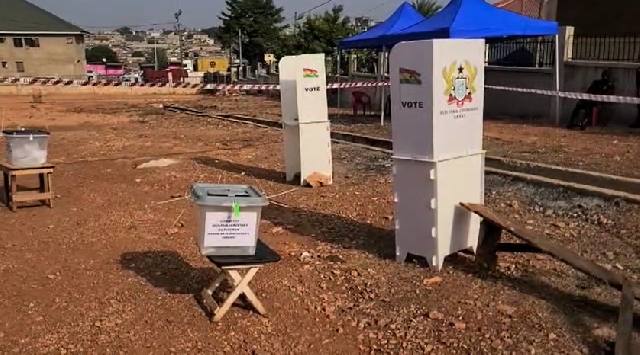
On a quiet Tuesday morning in the Ayawaso East Constituency, anticipation hung in the air as more than 40,000 registered voters prepared to select their new Member of Parliament. The by-election, set against the backdrop of the holy month of Ramadan, saw a sluggish beginning at polling centres across the Greater Accra Region. By 8:00 a.m., the numbers told a clear story: at the Nima Cluster of Schools, only 162 ballots had been cast. At Nima JHS 1, just 15 voters had made their choice, while a similar scene unfolded at the Presby School polling station. In some cases, polling officers noted with a hint of humour that they had seen more journalists than voters in the early hours. At Alhaji Iddrisu House Number 2, reporters described turnout as equally low. Party officials and observers attributed the muted start to the ongoing Ramadan fast. A Branch Youth Organiser of the governing National Democratic Congress (NDC) explained that many Muslim voters begin their day before dawn to observe the fast, only to return to sleep and venture out later to vote. The NDC, determined to boost participation, began mobilising supporters as the day progressed. Despite the slow morning, electoral officers assured the public that all arrangements were in place for a peaceful and orderly exercise. Security personnel stood watch at polling centres, and the Electoral Commission reiterated its commitment to transparency and fairness throughout the process. Five candidates are vying for the vacant seat: Baba Jamal of the NDC, Baba Ali of the New Patriotic Party (NPP), independent contenders Umar Sander Mohammed and David Kanor, and Ibrahim Iddrisu of the Liberal Party of Ghana (LPG). As the day unfolded, observers kept a close eye on turnout and the conduct of the polls, aware that the outcome would shape the political landscape of Ayawaso East in the months to come. Source: Apexnewsgh.com
Ghanaian Banks Achieve Record Profits in 2025 Amid Improved Cost Controls

In a remarkable turnaround for Ghana’s financial sector, banks across the country closed 2025 with record-breaking profits, demonstrating resilience and operational discipline despite a turbulent economic backdrop. The latest Banking Sector Developments Report from the Bank of Ghana revealed that the industry’s total profit soared to GH¢15.0 billion in 2025, a dramatic leap from GH¢10.4 billion the previous year. This 43.5 per cent year-on-year growth not only outperformed the 26.2 per cent rise seen in 2024 but also signaled the sector’s growing strength and adaptability. Profit before tax (PBT) followed suit, climbing by 38.4 per cent in December 2025, compared to 24.4 per cent the year prior. The surge underscored the sector’s enhanced operational efficiency and ability to navigate shifting income dynamics. While the industry’s main revenue streams, net interest income and fees, continued to expand, their growth rates softened relative to 2024. Net interest income rose by 16.4 per cent in 2025, down from 18.0 per cent in 2024, as lower lending rates and muted returns on money market instruments tempered the pace. Fees and commissions grew by 9.5 per cent, a marked slowdown from the 25.8 per cent jump a year earlier. Yet, the moderation in income was more than offset by tighter cost management throughout the sector. Operating expenses in December 2025 increased by 14.0 per cent, a notable slowdown from 22.0 per cent in 2024, thanks to disciplined controls on staff and non-staff costs alike. Even more striking was the steep drop in loan loss provisions and impairment charges, which contracted by 57.1 per cent, compared to an 11.7 per cent decline the previous year, signaling healthier assets and lower credit risk. These achievements were reflected in improved profitability metrics: Return on Assets (ROA) climbed to 5.7 per cent in December 2025 from 5.0 per cent a year earlier, while Return on Equity (ROE) remained strong at 30.8 per cent. The latest data paints a picture of a banking sector consolidating its gains, leveraging prudent cost controls, better asset quality, and consistent earnings to strengthen Ghana’s financial system, even as external challenges persist. Source: Apexnewsgh.com
Minister Muntaka Receives Landmark Report on Gbiyiri Peace Mediation
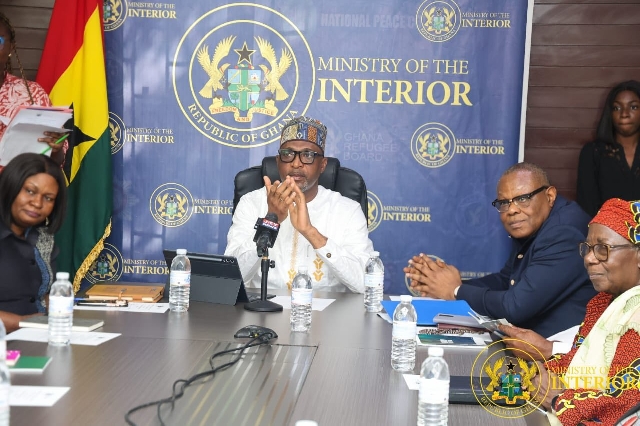
Ghana’s Minister of Interior, Mohammed Mubarak Muntaka, accepted the final report of the Gbiyiri Mediation Committee, a document poised to change the course of relations in the Sawla–Tuna Kalba area. The formal handover took place as the Committee’s Chairman, Emmanuel Bombande, presented the report, underscoring its power to lay the groundwork for enduring peace, renewed social cohesion, and meaningful cooperation between the Gonja and Lobi/Brifors communities. The committee, established in September 2025, was tasked with tackling the root causes of the region’s longstanding inter-communal disputes and mapping out practical steps for reconciliation. Minister Muntaka, visibly appreciative, thanked the committee for their perseverance and detailed work. He commended the roadmap outlined in the report, which aims to rebuild fractured relationships, nurture tolerance, and restore harmony within the Gbiyiri community and beyond. The recommendations contained in the report are set to provide a guiding framework for local authorities, traditional leaders, and stakeholders as they embark on the next phase—implementing sustainable peace initiatives tailored to the region’s needs. Chairman Bombande also took the opportunity to thank President John Dramani Mahama, Minister Muntaka, the Overlord of Gonja, and all those who offered steadfast support and partnership throughout the mediation process. With the submission of this report, the Gbiyiri Mediation Committee brings a note of optimism to a region that has weathered years of intermittent tension, marking a decisive step toward lasting peace and stability. Source: Apexnewsgh.com
Finance Minister Outlines Bold Reforms to Boost Cocoa Farmers and Local Industry

After President John Dramani Mahama’s State of the Nation Address, Finance Minister Dr. Cassiel Ato Forson stepped into the spotlight, eager to address the future of Ghana’s cocoa sector. Meeting with journalists, Dr. Forson spoke candidly about the government’s renewed commitment to uplifting cocoa farmers and transforming the local cocoa industry through a suite of targeted reforms. The minister acknowledged the comparisons often drawn between Ghana and neighbouring Ivory Coast, where cocoa producer prices are reportedly higher. Dr. Forson explained, however, that the government’s approach is rooted in sustainability. Rather than opting for quick fixes that might destabilise the sector, the government is prioritising measures that will deliver better and long-lasting returns for Ghanaian farmers. Central to these reforms is a drive to increase local participation in cocoa processing and to revive homegrown buying companies that have faded or collapsed in recent years. Dr. Forson named the Cocoa Processing Company (CPC) and Produce Buying Company (PBC) as examples of key institutions poised for revitalisation. By strengthening these entities and encouraging more Ghanaian businesses to process cocoa domestically, the government hopes to add significant value, reduce dependence on raw bean exports, and generate more jobs along the supply chain. Dr. Forson emphasised that these changes would not only boost export revenues but also provide a buffer for farmers against the unpredictable swings of global commodity prices. With greater competition from strengthened local buying companies, farmers could also see improved services and more competitive pricing. The minister was optimistic about the broader impact, predicting a ripple effect of increased economic activity in rural cocoa-growing communities, higher incomes, and more employment opportunities, especially for young people. Over time, he said, these reforms would help stabilise the sector and position Ghana as a formidable player in the global chocolate and cocoa processing market. Closing his remarks, Dr. Forson reaffirmed the government’s resolve to collaborate with stakeholders, assuring farmers that their welfare remains at the heart of Ghana’s economic agenda. Source: Apexnewsgh.com
Kinkaafa and Waakye: The Rich History, Nutritional Power, and Cultural Significance of Ghana’s Beloved Rice and Beans

The Story of Sorghum & Beans, locally known as Waakye – Ki La Tea! Born from innovation during times of scarcity, Ki La Tea is a testament to resilience and creativity. When food was limited, the wise women of the community combined sorghum seeds and baobab seeds to create a simple, nourishing meal. Later, they added beans—discovering a delicious, filling, and nutrient-packed dish. What began as a humble experiment to feed families during hard times eventually became one of Ghana’s most beloved and enduring culinary traditions, celebrated across generations and regions. Ghanaian cuisine is a reflection of the country’s diversity, with each dish carrying the weight of history, culture, and communal life. Kinkaafa and Waakye, known in Hausa communities as the local name for rice and beans, have played a central role in nourishing people while also symbolizing resourcefulness and adaptation. These dishes are more than mere sustenance; they represent ingenuity, the blending of traditions, and the ability of communities to create rich flavors and wholesome nutrition from modest ingredients. The origins of rice and beans in Ghana, and West Africa generally, stretch back centuries. Rice cultivation in West Africa has existed for over three thousand years, primarily in the inland delta regions of the Niger and Senegal rivers. Trade and migration brought rice across vast distances, allowing it to adapt to different ecological zones, including the savannahs of northern Ghana. The Hausa people, who are primarily concentrated in northern Ghana and across the Sahel, were instrumental in spreading rice cultivation techniques and integrating rice into local diets. Beans, often referred to as cowpeas or black-eyed peas, are indigenous to Africa and have been cultivated for thousands of years, providing a reliable source of protein and essential nutrients. The combination of rice and beans became increasingly popular because it created a meal that was both filling and nutritionally balanced. Waakye, as it is now widely recognized in southern Ghana, carries the influence of the Hausa people, who migrated south during pre-colonial and colonial times as traders and merchants. Bringing with them their culinary traditions, they introduced beans and rice as staples to the southern regions. Over time, these dishes were adapted and enriched with local flavors, giving rise to Waakye as a street food phenomenon as well as a cherished home-cooked meal. Today, Waakye serves as a culinary bridge between northern and southern Ghana, connecting communities through shared taste and heritage. Kinkaafa and Waakye are deceptively simple in their ingredients—rice and beans—but the preparation and accompaniments reveal the depth of culinary artistry across Ghana. In northern Ghana, Kinkaafa is often boiled and steamed, sometimes enhanced with small amounts of oil or salt, and served alongside beans stewed with spices such as ginger, garlic, onions, and hot peppers. The resulting dish offers a pleasing combination of textures, as fluffy rice complements the firm, earthy beans. In southern Ghana, Waakye is prepared with a distinctive method. Dried beans are cooked with dried sorghum leaves, which release a reddish-brown color and impart a subtle smoky flavor. Once the beans reach tenderness, rice is added to the pot, absorbing both the color and essence of the beans. Waakye is traditionally served with an array of accompaniments, including shito, boiled eggs, spaghetti, fried plantains, or fish, transforming it into a complete and satisfying meal. The nutritional value of Kinkaafa and Waakye is remarkable. When rice and beans are combined, they create a complete protein, containing all the essential amino acids required by the human body. This makes the meal an excellent source of plant-based protein, particularly important in regions where access to animal protein may be limited. Beans provide substantial protein for growth, tissue repair, and immune function, while rice complements the amino acid profile to form a high-quality, nutritious dish. Rice is rich in complex carbohydrates, which release glucose gradually, providing sustained energy for students, workers, and athletes. Beans are also high in dietary fiber, which promotes healthy digestion, regulates blood sugar, and reduces the risk of heart disease. Together, they create a meal that is both filling and healthful. Micronutrients from beans, including iron, magnesium, potassium, and folate, support overall wellness, while rice contributes essential B-vitamins, such as niacin and thiamine, crucial for metabolism and nervous system function. Traditionally prepared Kinkaafa and Waakye are low in saturated fat, making them a heart-healthy choice. Their combination of protein, carbohydrates, fiber, and vitamins explains why these dishes have remained staples across generations, feeding families affordably and nutritiously. Kinkaafa and Waakye are deeply embedded in Ghanaian culture. They are not only everyday meals but also symbols of community, hospitality, and celebration. Sharing these dishes is a reflection of togetherness and social cohesion. At family gatherings, festivals, or communal events, Kinkaafa and Waakye are often prepared in large quantities to feed groups, reinforcing the importance of generosity and unity. In the streets of Accra, Kumasi, Bolgatanga, and other urban centers, Waakye has emerged as a signature street food, providing affordable nourishment while supporting the livelihoods of small-scale vendors. For many families, these meals are accessible, filling, and inclusive, bringing together people of all socio-economic backgrounds in a shared culinary experience. The cultural significance of Kinkaafa and Waakye also lies in their role as markers of heritage and identity. The dishes represent a fusion of northern and southern Ghanaian culinary traditions, blending the Hausa techniques of rice cultivation and preparation with southern preferences for spicy condiments, spaghetti, and fried plantains. Eating Kinkaafa and Waakye is an act of cultural continuity, connecting people to their history and shared practices. These dishes also hold spiritual and ritualistic value. During Islamic holidays such as Eid al-Fitr, Hausa communities prepare Kinkaafa with beans and spices to nourish families and celebrate communal prosperity. During Christian festive seasons, funerals, and other significant life events, Waakye is often served as a staple meal, highlighting its role as a unifying, comforting, and celebratory food. As culinary practices evolve, Kinkaafa and Waakye have undergone modern adaptations while retaining their traditional essence. Contemporary cooks experiment with different