
Scandal Strikes as Visa Controversy Mars World Cup Arrangements
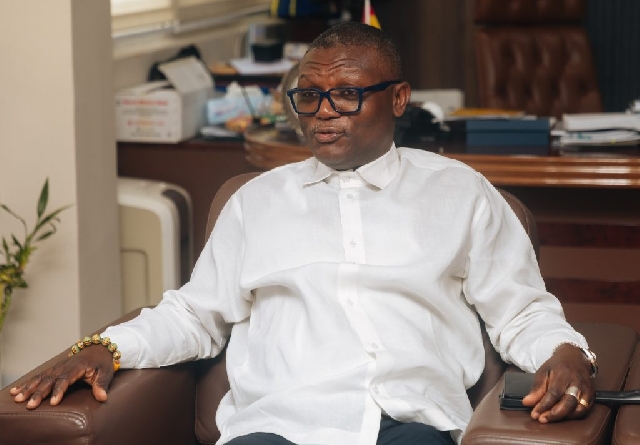
It was supposed to be a dream come true for nearly 90 Ghanaians, each of whom paid between $10,000 and $15,000 in hopes of attending the World Cup extravaganza in the United States, Canada, and Mexico. But for most, the dream ended in disappointment, only five out of the group ultimately received visas, leaving dozens frustrated and sparking a nationwide controversy that has shaken Ghana’s sporting and political circles. The fallout was immediate. National Sports Authority (NSA) Director-General Yaw Ampofo Ankrah was suspended, and the Presidency announced plans to launch a formal probe into the arrangements that led to the debacle. Meanwhile, the Minority in Parliament called for not just suspensions but also the prosecution of officials they allege were involved in facilitating the failed arrangements. Amidst the uproar, Minister Adams found himself at the center of swirling accusations. In a candid interview with Citi News, he firmly rejected calls for his removal and insisted that his ministry had no foreknowledge of the controversial arrangements. “Well, I don’t see the justification. Both the American Embassy and TRIBE Culture Fest, the NSA and the Ghana Tourism Authority (GTA) were doing their thing behind the Ministry. The Ministry didn’t know,” Adams asserted. According to Adams, the sequence of events that brought the issue to his attention began with a letter dated May 19. The correspondence requested that the Ministry of Sports and Recreation forward the names of event coordinators and volunteers to the Ministry of Foreign Affairs and the US Embassy. “The first time I ever sat and had a conversation in relation to that matter was when the May 19 letter requested the forwarding of event coordinators and volunteers to the Ministry of Foreign Affairs and the Embassy. That’s when I got to know the details of what was happening,” he explained. Adams recounted that the letter was passed along to the ministry’s Chief Director, who sits on the technical committee overseeing such arrangements. The committee, he explained, had agreed that lists of people expected to perform specific duties at the World Cup should be submitted to the appropriate authorities to initiate the necessary processes. However, he maintained that the entire process was handled independently by the NSA, GTA, US Embassy, and TRIBE Culture Fest, without the Ministry’s involvement or notification. “If the organisations involved had formally presented their plans, copied the ministry in their correspondence, or otherwise informed us, we would have known,” Adams insisted. He also denied any knowledge of the alleged financial transactions, stating, “Government money has not been lost.” The controversy reached new heights following allegations by Vincent Ekow Assafuah, Ranking Member of Parliament’s Sports Committee. At a press conference, Assafuah claimed that some officials had helped outsiders, people who were not ministry employees, apply for visas, even preparing a cover letter to present them as staff. As calls for accountability grew louder, the Minority demanded the dismissal and prosecution of the Chief Executive Officer of the Ghana Tourism Authority, citing alleged involvement in the arrangements. Minister Adams, however, maintained that his role had been limited to forwarding the May 19 letter through the proper channels, with no prior knowledge of the financial aspects or the deeper details of the arrangements. As the nation awaits the results of the official probe, questions linger over how so many could be left out in the cold, and who will ultimately be held responsible for the World Cup visa fiasco. Source: Apexnewsgh.com
Gamal Gorkeh Nkrumah, Eldest Son of Ghana’s Founding President, Dies in Cairo
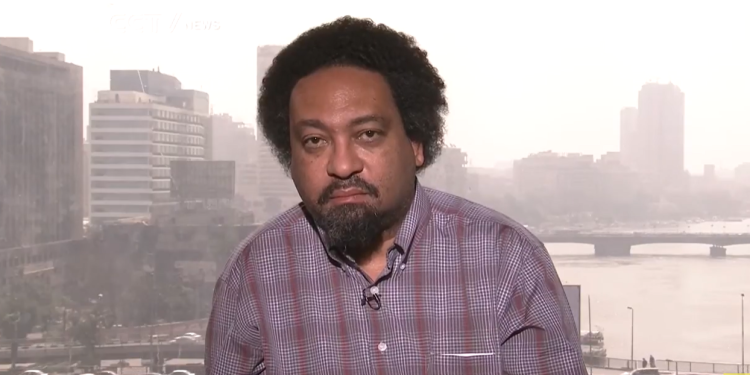
Gamal Gorkeh Nkrumah, the eldest son of Ghana’s founding President Dr. Kwame Nkrumah, has passed away in Cairo, Egypt, after a prolonged illness. In a statement announcing his death, the Nkrumah family said Gamal died peacefully at a rehabilitation centre where he had been receiving care following a stroke. The family expressed deep sorrow over his loss, describing him as a distinguished journalist, writer, and intellectual who spent his life exploring the political, social, and cultural currents shaping Africa and the wider world. Throughout his life, Gamal Nkrumah was known for his unwavering commitment to justice, human dignity, African unity, and international solidarity, ideals strongly associated with his father’s legacy. The family praised his intellectual curiosity, independent thought, and quiet conviction, noting that he managed to uphold his father’s ideals while building his own reputation and principled path. “His passing represents a profound loss not only to our family and loved ones, but also to the wider community of friends, colleagues and readers who valued his insight, humanity and unwavering engagement with the great questions of our time,” the family’s statement read. The family remembered Gamal with love, gratitude, and pride, emphasizing that his wisdom, kindness, and dedication to his values would remain an enduring source of inspiration. They also expressed appreciation to the medical professionals and caregivers in Cairo, as well as the governments and people of Egypt and Ghana, for their support during his illness. The Nkrumah family has requested privacy as they mourn and indicated that details regarding memorial arrangements and tributes to Gamal’s life and legacy will be announced in due course. Source: Apexnewsgh.com
Six Remand Prisoners Escape from Konongo Police Cells, Five Still at Large
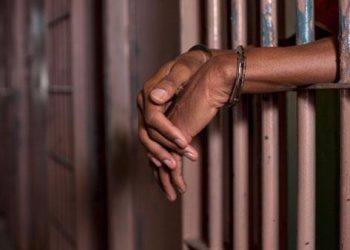
Six remand prisoners have escaped from police custody at Konongo in the Asante Akyem Central Municipality of the Ashanti Region, with authorities confirming that five of the inmates remain at large. According to police sources, the prisoners managed to break out through a hole that had been dug, which led to the detached washrooms at the police station. After successfully moving out of the cell through the hole, the inmates jumped off and made their escape. A swift manhunt was launched, resulting in the re-arrest of one escapee in a Kumasi suburb. Efforts are ongoing to apprehend the remaining five. Asante Akyem Central Municipal Chief Executive, Dr. Ebenezer Ekow Aidoo, confirmed the incident to Citi News and revealed that the Municipal Security Council is moving quickly to strengthen the walls of the police cells to prevent similar occurrences. He also outlined additional long-term measures, including the construction of a new police station and increasing police presence, particularly during nighttime hours. Dr. Aidoo further announced plans to improve lighting and install surveillance cameras at the police station, aiming to enhance security and prevent future escapes. Source: Apexnewsgh.com
Mahama Receives Report on $200 Million Cocaine Shipment Seized in France
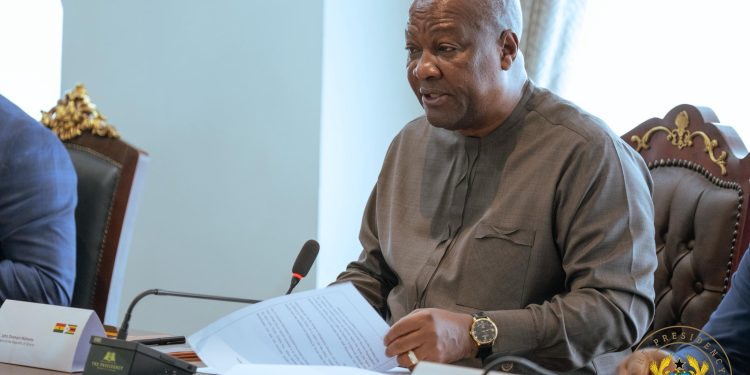
President John Dramani Mahama has received a preliminary report on investigations into the recent shipment of cocaine from Ghana, after French authorities intercepted a consignment worth more than $200 million at the port of Dunkirk. The Commissioner-General of the Ghana Revenue Authority (GRA), Anthony Sarpong, revealed the development when he appeared before Parliament’s Public Accounts Committee. Sarpong explained that President Mahama had swiftly set up a multi-agency team to probe the incident and identify weaknesses in the systems monitoring goods leaving Ghana’s ports. According to Sarpong, the investigative team was initially given two weeks to conduct its review, with a preliminary report presented to the President last week. “The report was presented to the President in terms of what the state of the investigation is, and what the recommendations are to be able to close all the gaps substantially,” he told the committee. Sarpong expressed confidence that the findings would guide new policies and investments aimed at tightening security at Ghana’s entry and exit points, helping to close loopholes that allow illicit shipments to pass through undetected. The investigation follows the seizure by French customs officials on September 10, 2026, of nearly 3.9 tonnes of cocaine concealed in a container of plastic waste that had arrived from Ghana. The haul, with a street value of €225 million, was reportedly destined in part for Antwerp, Belgium. In response to the seizure, Ghana’s Narcotics Control Commission (NACOC) announced the arrest of three suspects for their alleged involvement in the illicit shipment. The suspects are believed to have represented and facilitated the activities of Dutch fugitive Jos Leijdekkers, also known as “Bolle Jos,” in Ghana. Authorities say the ongoing investigation and its resulting recommendations will be critical to preventing similar incidents at Ghana’s ports in the future. Source: Apexnewsgh.com
Ghana’s Economy Grows 7.4% in July 2026, Driven by Services and Industry Recovery
Ghana’s economic activity surged by 7.4% year-on-year in July 2026, marking a notable acceleration from the 4.9% growth recorded in the same period last year, according to the latest data from the Ghana Statistical Service (GSS). The strong performance was underpinned by robust expansion in the services sector and a significant recovery in industry, which together offset a pronounced slowdown in agriculture. The Monthly Indicator of Economic Growth (MIEG) index climbed to 121.6 in July 2026, compared to 113.2 a year earlier, signalling increased economic momentum. Services led the charge, expanding by 12.2% year-on-year, almost double the 6.7% growth seen in July 2025. The sector accounted for 63.8% of the overall growth, solidifying its role at the heart of Ghana’s economic progress, with the information and communication sub-sector as the main driver. Industry also bounced back, growing by 5.4% after eking out just 0.4% growth a year earlier. Mining and quarrying provided much of the impetus behind the sector’s recovery. However, agriculture lagged behind the broader trend. The sector grew by only 3.7%, a sharp drop from the 8.2% expansion recorded in July 2025, with crops and livestock leading the modest gains. The data highlight Ghana’s increasing reliance on services for economic growth, a trend that could pose risks should momentum in the sector wane. The Ghana Statistical Service has urged policymakers to not only sustain the gains in services but also intensify efforts to strengthen agriculture and broaden the contributions of other productive sectors to ensure balanced and resilient economic growth. Source: Apexnewsgh.com
High Court Adjourns Ruling on Chairman Wontumi’s Bail Application Pending Appeal
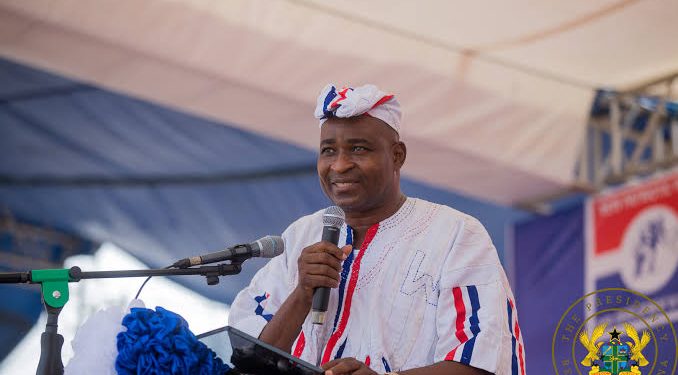
Justice Audrey Kocuvie-Tay of the High Court has adjourned to November 4, 2026, the delivery of her ruling on a bail application filed by former Ashanti Regional Chairman, Bernard Antwi Boasiako, popularly known as Chairman Wontumi, who is seeking temporary release pending the outcome of his appeal. The adjournment follows arguments presented by Chairman Wontumi’s legal team, led by Samuel Atta Akyea, and Deputy Attorney General, Dr. Justice Srem-Sai, who represented the state during the hearing. Chairman Wontumi is currently serving a 20-year prison sentence after being convicted for permitting mining activities on his Samreboi concession without the required approval from the Minister for Lands and Natural Resources. He is appealing the conviction and sentence and is requesting bail to prepare his appeal and participate in two other ongoing criminal cases. At Thursday’s hearing, Atta Akyea argued that Wontumi’s temporary release was necessary for his effective participation in the appeal process and other legal matters, stressing that Wontumi had previously complied with bail conditions and was not a flight risk. He further pointed to 19 grounds of appeal with a reasonable chance of success as justification for granting bail. In response, Dr. Srem-Sai opposed the application, asserting that the appeal grounds were not exceptional and that established case law required more than ordinary grounds to justify bail pending appeal. He also raised concerns that the possibility of additional consecutive prison terms might incentivize Wontumi to abscond if released. Dr. Srem-Sai referenced a video allegedly showing Wontumi’s former counsel discussing a plan to evade law enforcement, using it to support the state’s argument against bail. Justice Kocuvie-Tay, who had presided over Wontumi’s conviction and sentencing in July, questioned Atta Akyea about the progress of the appeal, to which he replied that steps were being taken to compile the records for the Court of Appeal. The court will deliver its ruling on the bail application on November 4, 2026. Source: Apexnewsgh.com
MITDS: Seven PhD and Two MPhil Students Successfully Complete Viva Process
A journey that began nearly four years ago is gradually reaching a significant milestone for nine students of the Millar Institute for Transdisciplinary and Development Studies (MITDS), following the successful completion of their viva examinations. The nine students, comprising seven PhD candidates and two Master of Philosophy (MPhil) candidates, successfully completed their viva process, which commenced on Monday, October 12, 2026, and concluded on Wednesday, October 14, 2026. The exercise marked an important stage in the students’ academic journeys, bringing them closer to the completion of their respective postgraduate programmes after years of dedication, research, and academic commitment. The viva examinations were conducted professionally by the institution, with the participation of both internal and external examiners. Students of the institute and other observers were also present online and some physically present to witness the academic exercise. The process provided an opportunity for the candidates to present and defend their research work before the examining panels, demonstrating their knowledge, research findings, and understanding of their respective areas of study. List of Successful Candidates The seven PhD candidates who completed their viva examinations are: 1. Duut Daniel Janamah 2. Gariba Sato 3. Cletus Chevure 4. Gloria Pamela Adablah 5. Alberta Nana Adjoa Rockson 6. Zume Cletus Puordem 7. Samuel Sekyere The two MPhil candidates are: 1. Abdallah Abdul-Rahaman 2. Joel Daniel Atompoya The successful completion of the viva examinations represents a major academic milestone for the nine candidates, whose efforts over the years have culminated in this important stage of their postgraduate studies. Their achievement is also a moment of pride for the Millar Institute for Transdisciplinary and Development Studies as it continues to provide an environment for advanced learning, research, and intellectual development. The candidates’ successful completion of the viva process marks a significant step forward in their academic pursuits and professional development. Source: Apexnewsgh.com
NDC’s Hamza Suhuyini Defends Impartiality of Newly Appointed EC Deputy Chairperson
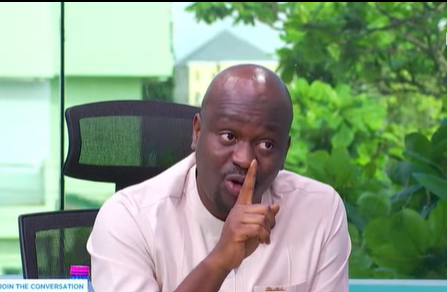
A member of the National Democratic Congress (NDC) communications team, Hamza Suhuyini, has voiced support for the impartiality of newly appointed Electoral Commission (EC) Deputy Chairperson, Emelia Affi Agbenyo, despite her known association with the governing party. Speaking in a programme on Wednesday, October 14, Suhuyini acknowledged Ms. Agbenyo’s links to the NDC but maintained that her political affiliation should not be seen as a barrier to performing her official duties fairly. He stressed that professionalism, not party ties, should be the ultimate measure of her performance. Suhuyini pointed to Dr. Bossman Asare as an example of an EC official who, in his view, has managed to fulfill his responsibilities in a neutral manner, even amid concerns about his political background with the NPP. “I told you that she is an associate of the NDC, but when it comes to her job and mandate, if Dr. Bossman Asare could discharge his duties in a neutral fashion, be rest assured that she will do her work. She is politically neutral,” Suhuyini remarked. His comments come at a time when the political backgrounds of newly appointed EC Deputy Chairpersons are under scrutiny, with many emphasizing the need for public trust in the commission’s independence and fairness. On Monday, October 12, President John Dramani Mahama officially swore in Emelia Affi Agbenyo and Dr. Joseph Kweku Asamoah as Deputy Chairpersons of the Electoral Commission. During the ceremony, he urged them to uphold impartiality and safeguard the right of Ghanaians to freely choose their leaders. Source: Apexnewsgh.com
High Court Dismisses Afenyo-Markin’s Defamation Suit Against GoldBod CEO Over Procedural Breach
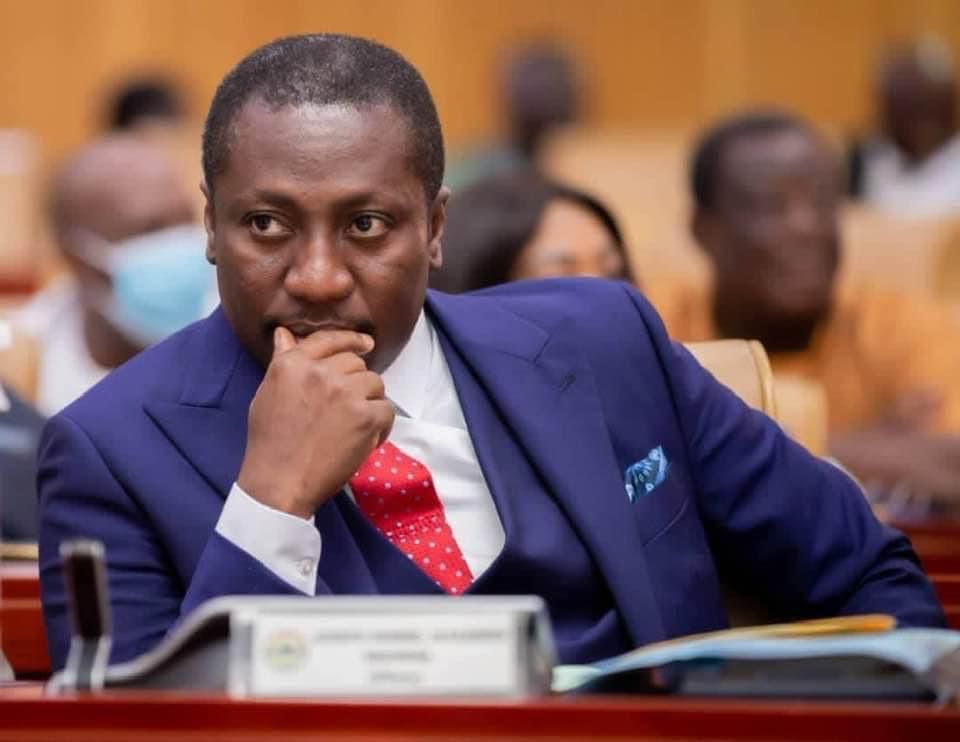
The High Court has dismissed a defamation suit brought by Minority Leader Alexander Afenyo-Markin against Ghana Gold Board (GoldBod) Chief Executive Officer, Sammy Gyamfi, after finding that the writ of summons failed to comply with mandatory procedural requirements for libel actions. The lawsuit stemmed from a heated public exchange between Afenyo-Markin and Gyamfi over alleged losses of US$1.7 billion linked to the Bank of Ghana’s Domestic Gold Purchase Programme in 2025. While Afenyo-Markin expressed concerns about the reported losses, Gyamfi disputed his claims and accused the Minority Leader of attempted extortion. The allegations prompted Afenyo-Markin to file a defamation claim. However, Gyamfi’s legal team quickly entered a conditional appearance and sought to have the writ set aside, arguing that it was defective under the High Court (Civil Procedure) Rules, 2004 (C.I. 47). Specifically, they pointed to Order 57 Rule 2, which requires that writs in libel cases be endorsed with sufficient particulars of the allegedly defamatory publication. In its ruling, the court agreed, emphasizing that providing these particulars is not a mere technicality but a procedural obligation essential for defamation proceedings. The judge noted that failing to comply with the specific rules governing libel actions means the court’s jurisdiction is not properly invoked. Addressing arguments from the plaintiff, the judge referred to previous Supreme Court cases, including Owusu Domena v Amoh and consolidated suits involving Alex Onuma and Newmont, which highlighted the centrality of procedural compliance in defamation cases. While, in some instances, a statement of claim might cure a defective writ if the defendant does not object and participates in the case, the judge distinguished this case since Gyamfi’s lawyers had promptly challenged the writ through a conditional appearance. Ultimately, the court found that Afenyo-Markin’s failure to endorse the writ with detailed particulars of the alleged defamatory publication rendered the action defective. The judge struck out both the writ of summons and the statement of claim, filed on August 24, 2026, and made no order as to costs. Source: Apexnewsgh.com
President Mahama Reaffirms Commitment to Religious Inclusivity, Calls Ghana’s Diversity a National Asset
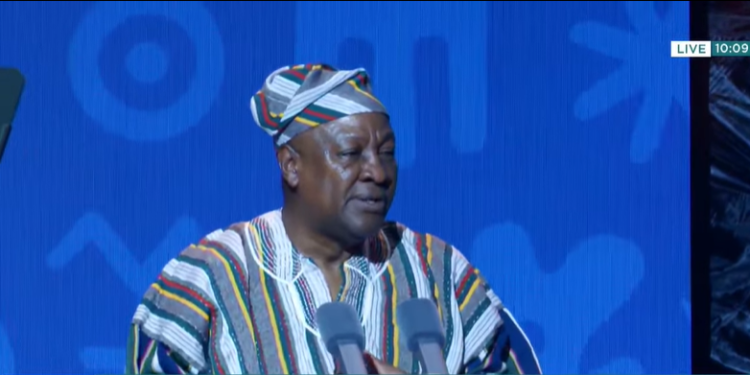
President John Dramani Mahama has reiterated his dedication to fostering religious inclusivity in Ghana, describing the country’s religious diversity as a valuable national asset that must be preserved to ensure continued peaceful coexistence. Addressing the 10th World Assemblies of God Congress on Wednesday, October 14, President Mahama emphasized that his role as President obliges him to serve all Ghanaians equitably, regardless of their religious backgrounds. He stressed that public office demands respect and concern for Christians, Muslims, traditional religious practitioners, and citizens who profess no faith. “My Christian faith remains a source of strength, but as President, I have sworn a duty to serve every Ghanaian: Christians of every denomination, Muslims, adherents of traditional religion, and even our citizens who profess no faith,” Mahama stated. He acknowledged that his commitment to fairness has sometimes led to questions from some Christian leaders about his religious convictions. However, he insisted that impartiality and equal treatment must guide his leadership. President Mahama urged Ghanaians to nurture the nation’s religious diversity by strengthening relationships that allow people of different beliefs to coexist peacefully and support one another. “Ghana’s religious diversity is our most precious possession, and we must continue to nurture the relationships that enable neighbours of different faiths to live, work, and care for one another,” he said. Drawing on his own upbringing in a multi-faith family, the President noted that differences in religious beliefs had never lessened the love and unity among his siblings. “Nevertheless, our different religions do not affect the love and affection that we share,” he reflected. President Mahama also called on churches and religious organizations to contribute to national development by promoting honesty, compassion, responsible citizenship, and peace, while maintaining their independence to speak out against injustice and suffering. Source: Apexnewsgh.com