
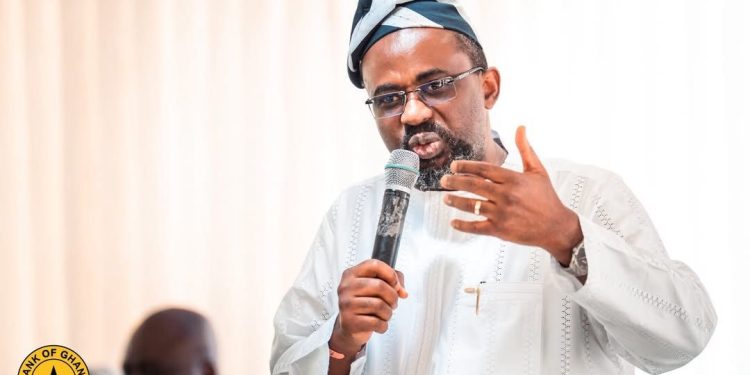

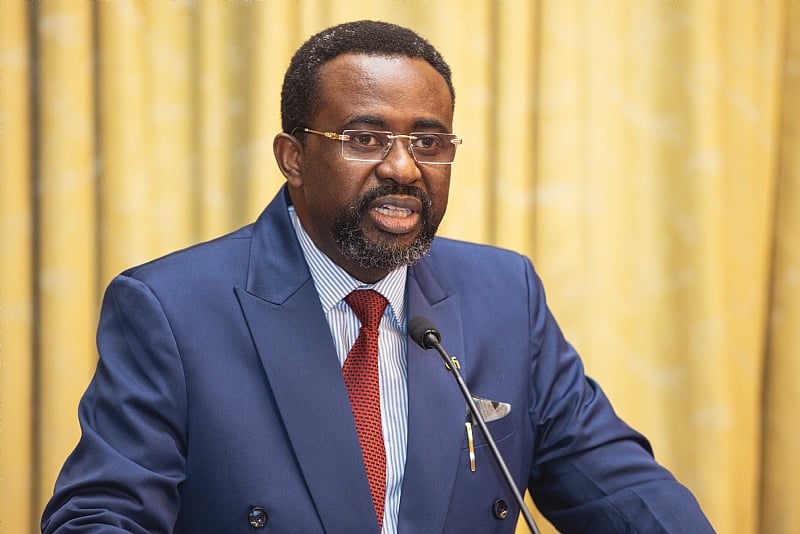





The Governor of the Bank of Ghana, Dr. Johnson Pandit Asiama, on Sunday, April 5, participated in the Kwahu Business Forum Governor’s Roundtable session, where he engaged the business community on Ghana’s economic development and the policy decisions shaping the country’s financial landscape.
Governor Asiama used the platform to reflect on Ghana’s economic performance in 2025, acknowledging the significant strides made while also shedding light on the difficult policy trade-offs that central banks face globally. On the subject of inflation, a matter of keen interest to the business community, Dr. Asiama was candid about the price paid to achieve the current low inflation environment.
“Last year was good but expensive for the central bank. It took us a lot of money to mop up excess liquidity and bring inflation down to 5.4% by December 2025,” he stated.
He also pointed to the stable exchange rate as one of several strong macroeconomic indicators, asserting confidently, “The Cedi is stable and under control.” Elaborating on the nature of central banking, he noted, “The work we do is always about trade-offs… trying to strike the right balance.”
Ghana’s inflation story in 2025 is a remarkable one. The rate dropped from 23.8% at end-December 2024 to 5.4% by end-December 2025, a reduction of 18.4 percentage points within a single year. Achieving such a dramatic decline, however, came at a considerable financial cost to the central bank.
Central banks, by mandate, are tasked with maintaining economic stability, primarily by keeping inflation low and stable. To do this, they employ monetary policy tools, including Open Market Operations (OMO), which involve draining excess liquidity from the economy. In Ghana’s case, the Bank of Ghana issues BoG Bills purchased by commercial banks. The cost of issuing these bills is heavily influenced by the prevailing policy rate, making large-scale liquidity mop-up exercises particularly expensive.
At the last Monetary Policy Committee press briefing, Governor Asiama disclosed that the cost of the Bank’s Open Market Operations rose significantly in 2025 as a result of the aggressive liquidity mop-up exercise. This is a challenge not unique to Ghana, other major monetary authorities, including the US Federal Reserve and the European Central Bank, face similar pressures when deploying tools to rein in inflation.
The rationale for bearing such costs, however, is clear. Inflation, left unchecked, erodes the real incomes of citizens. Even when nominal wages remain unchanged, every uptick in inflation reduces the purchasing power of households. Central banks, therefore, cannot afford to be passive bystanders.
Despite the heavy cost incurred in 2025, Governor Asiama expressed confidence that the year ahead would tell a different story. “If you look at where inflation was at the end of December 2024 and where it is now, it wouldn’t involve the same level of resources to keep it low and stable going forward,” he said.
The logic is straightforward. With current inflation already below 4%, the scale of intervention required to maintain price stability in 2026 is far less demanding than the monumental effort needed to slash inflation by 18.4 percentage points in 2025. The Bank of Ghana’s monetary operations going forward are therefore expected to be less costly, easing pressure on the central bank’s balance sheet.
Beyond inflation and monetary policy costs, Governor Asiama underscored the importance of collaboration between the central bank and the broader financial sector. He assured the business community that the Bank of Ghana remains committed to strengthening financial markets and the banking sector.
“When banks are strong, they can give more credit,” he noted, a statement that speaks directly to the aspirations of businesses seeking access to financing for growth and expansion.
Governor Asiama’s appearance at the Kwahu Business Forum offered a rare and frank window into the inner workings of central banking in Ghana. His remarks painted a picture of an institution that has made difficult, costly decisions in the interest of macroeconomic stability, and one that is now positioned to consolidate those gains at a lower cost. With inflation subdued, the Cedi stable, and a more favourable monetary environment taking shape, 2026 appears to hold genuine promise for Ghana’s economy and its business community.
Source: Apexnewsgh.com