


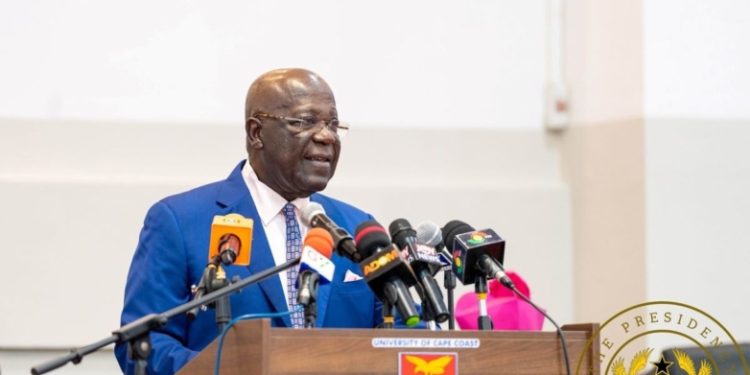







At the grand inauguration of the Upper East Regional Committee of the Ghana AIDS Commission (ReCCOM), the air was filled with a sense of hope and purpose.
Among the distinguished guests and partners, the Commission on Human Rights and Administrative Justice (CHRAJ) stood out, represented by Mr. Edmond Alagpulinsa. As he took to the podium, Mr. Alagpulinsa’s words painted a vivid story of commitment, collaboration, and resilience in the region’s ongoing battle against HIV/AIDS.
Mr. Alagpulinsa began by expressing CHRAJ’s sincere gratitude to the Regional Co-ordinating Council and its partners. The recognition of CHRAJ as a strategic partner in the HIV/AIDS response, he noted, was not just an honor but a reflection of the Commission’s enduring commitment to upholding human rights in Ghana. This partnership, he explained, is deeply rooted in the CHRAJ Act, 1993 (Act 456), which mandates the Commission to investigate violations of fundamental rights and freedoms, injustice, corruption, abuse of power, and unfair treatment by public officials.
This legal framework, Mr. Alagpulinsa underscored, extends protection to all citizens, including those living with HIV/AIDS. He highlighted that the Ghana AIDS Commission Act, 2016 (Act 938), spells out specific rights for persons living with HIV/AIDS, and CHRAJ is duty-bound to actively promote and protect these rights. “Our role in defending the rights of persons living with HIV/AIDS,” he said, “is not just important, it is absolutely critical.”
The journey, as Mr. Alagpulinsa described, has been one of seeking out strong partnerships to fulfill CHRAJ’s mandate. Organizations such as WAPCAS, the Ghana AIDS Commission, and Hope for Future Generations have been steadfast allies. Through these collaborations, CHRAJ has empowered its staff and focal persons on HIV/AIDS with specialized training. They have been educated on the Legal Aid Commission Act, with a particular focus on the rights of persons living with HIV/AIDS, strategies to combat stigma and discrimination, and the principles of Alternative Dispute Resolution. This training, Mr. Alagpulinsa emphasized, has equipped the Commission’s team with the knowledge and skills necessary to handle the sensitive cases reported by those living with HIV/AIDS in the region.
In addition to training, CHRAJ has actively engaged with individuals at risk of contracting HIV/AIDS. Periodic outreach sessions, conducted in collaboration with Hope for Future Generations, have made a tangible impact. Participants in these sessions not only learn about their fundamental rights but also find a safe space to resolve personal and domestic issues. “These engagements are more than educational, they are transformative,” Mr. Alagpulinsa remarked.
CHRAJ’s approach, he explained, is both human-centered and friendly, making the Commission accessible to those who need it most. Persons living with HIV/AIDS now feel more comfortable and confident in approaching CHRAJ with their complaints, knowing they will be treated with dignity and respect. The Commission’s support goes beyond legal redress; counseling services are provided, and ongoing education about rights and freedoms is a cornerstone of their work.
Yet, Mr. Alagpulinsa did not shy away from discussing the formidable challenges CHRAJ faces. Among the most pressing issues is the lack of adequate logistics. Limited resources have made it difficult for the Commission to conduct regular public education and outreach activities. The cost of securing airtime on radio stations, an essential platform for public sensitization, has become prohibitive. Similarly, organizing direct engagement sessions with the public is often hampered by financial constraints, restricting the Commission’s ability to meet the growing demand for its services.
Stigma and discrimination, Mr. Alagpulinsa explained, remain persistent obstacles. He shared the story of an elderly woman in the municipality, ostracized and assaulted simply because of perceptions surrounding her HIV status. On several occasions, CHRAJ had to step in, providing protection and standing as a shield against the community’s prejudice. Such cases, he noted, illustrate the deep-seated challenges that go beyond legal mandates and require a collective effort to address.
Another significant challenge lies in inter-institutional collaboration. Sometimes, cases reported to CHRAJ intersect with issues outside its jurisdiction, necessitating cooperation with other state institutions. However, this collaboration is not always as effective as it should be, leading to gaps in service and, at times, frustration for those seeking help. Mr. Alagpulinsa stressed the importance of strengthening these partnerships to ensure a seamless support system for persons living with HIV/AIDS.
Despite these hurdles, CHRAJ remains undeterred. The Commission’s achievements, empowering staff, educating communities, providing counseling, and serving as a beacon of hope for vulnerable individuals, are a testament to its unwavering dedication. “All our services,” Mr. Alagpulinsa concluded, “are provided free of charge. Our doors are always open at the Regional Co-ordinating Council block.”
As the event drew to a close, the story of CHRAJ’s contributions, achievements, and challenges resonated with all present. It was a call to action, a reminder that the fight for the rights and dignity of persons living with HIV/AIDS is a shared responsibility, and that with continued collaboration, compassion, and commitment, a brighter future is within reach for the Upper East Region and beyond.
Source: Apexnewsgh.com