



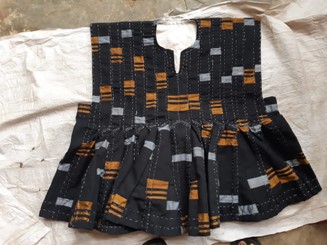
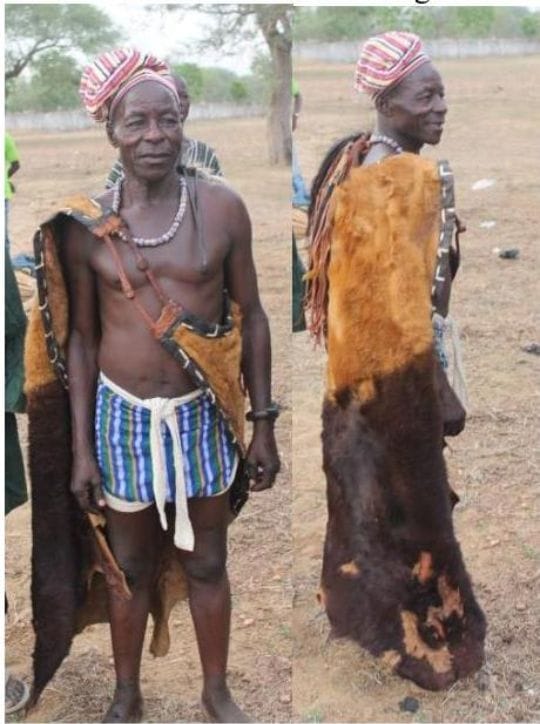





In northern Ghana, identity is not only spoken in language or performed in dance; it is worn. It rests on the shoulders, flows down the body, and moves with dignity in the wind. The smock—known variously as fugu, batakari, or kpakoto—is more than a garment.
It is history stitched into fabric, migration woven into stripes, and philosophy embroidered into form. Yet in recent times, casual comparisons and uninformed mockery have reduced this profound cultural artifact to fashion rivalry. It is time to say it clearly: do not mock the smock.
Among the Gurensi of the Upper East Region, the smock is not merely sewn; it is crafted with layered intention. The Gurensi are known for their distinct embroidery, done boldly both at the front and at the back of the garment. This dual embroidery is not accidental decoration. It is a declaration of completeness—of visibility from every direction. When a Gurensi elder stands in a durbar ground in Bolgatanga or Nangodi, adorned in a richly embroidered smock, the garment speaks before he does. The front carries authority; the back carries legacy. The patterns are symmetrical yet expressive, often reflecting ancestral symbols, social status, or clan identity. The threadwork is deliberate and dense, forming geometric and symbolic patterns that withstand both time and washing.
In contrast, the Dagomba smock, while equally dignified and historically significant, carries a different aesthetic philosophy. The Dagomba of the Northern Region traditionally produce fugu with minimal or no embroidery, especially at the back. Their emphasis lies in the structure and the drape rather than ornamental stitching. The stripes are often fewer in color variation, giving the fabric a calmer and more uniform visual tone. However, because of the nature of the dyes and weaving techniques historically used, some Dagomba fugu are known to fade more quickly over time, particularly when exposed to repeated washing and harsh sunlight. This fading is not a sign of inferiority but of difference in textile chemistry, dye sources, and historical trade influences.
The Gonja smock traditions present yet another variation. The Gonja people, with roots tied to the ancient Gonja Kingdom in what is now the Savannah Region, have fugu that are often likened to tie-and-dye aesthetics. The color transitions may appear softer, sometimes resembling blended or diffused patterns rather than sharply contrasted stripes. The Gonja textile expression reflects their own historical interactions, trade routes, and access to dye materials. It is a testament to the diversity within northern Ghana’s textile heritage.
Then there are the Gurensi and the Upper Western communities, whose smocks are notable for their multiple, vibrant strips. The weaving in these regions tends to incorporate more color contrasts—deep indigo, white, black, and sometimes red—arranged in repetitive but striking sequences. These multi-strips do not fade easily, largely because of stronger dye fixation methods and the types of thread used. The resilience of the color mirrors the resilience of the people. In many Upper East and Upper West communities, a smock is expected to last for years, even decades. It may be worn at festivals, funerals, enskinment ceremonies, and national celebrations. It is not disposable fashion; it is heirloom cloth.
To understand these differences is to appreciate that diversity within similarity does not warrant ridicule. Each region’s smock tells a different chapter of a shared story. The warp and weft threads may be arranged differently, but they are part of the same historical loom.
The term motama, often associated with certain smock traditions and styles, can be traced to Mossi roots in present-day Burkina Faso, formerly known as Upper Volta. The Mossi civilization, particularly the powerful kingdoms such as Yatenga and Ouagadougou, played a significant role in shaping the cultural and political landscape of what is now northern Ghana. Migration, warfare, trade, and intermarriage carried not only people across porous precolonial borders but also their crafts, beliefs, and clothing styles. The embroidery techniques, weaving patterns, and even naming conventions of smocks bear the imprint of these Mossi connections.
Indeed, many of the states that settled in northern Ghana—whether centralized kingdoms or acephalous, segmentary societies—trace aspects of their ancestry to the Wombogo tribe of the Mossi in Upper Volta. Oral traditions across Gurensi, Dagomba, Mamprusi, and even Gonja histories speak of movements from the north and northeast. These migrations were not singular events but waves over centuries. As groups moved southward, they adapted to new environments while preserving core elements of their identity. Textile production became one of the most portable and resilient expressions of that identity.
In acephalous societies such as some Gurensi communities, where political authority was traditionally decentralized and vested in clan heads rather than kings, the smock served as a visual equalizer and distinguisher at the same time. Without a single centralized monarch to dictate court fashion, communities developed their own distinctive weaving signatures. Embroidery both front and back became a way to assert presence and cohesion. In centralized kingdoms such as Dagbon, courtly traditions influenced clothing styles differently. Simplicity in embroidery did not imply lack of sophistication; rather, it reflected a different court aesthetic and social coding.
Mockery often arises from ignorance of context. To laugh at a smock’s embroidery or to belittle its color arrangement is to dismiss centuries of migration, adaptation, and artistry. It is to overlook the fact that the loom itself is a sacred instrument in many northern communities. The weaver is not merely a technician; he is a custodian of heritage. The narrow-strip weaving technique common across northern Ghana requires patience and skill. Strips are woven individually and later sewn together to form a full garment. Each strip carries tension from the loom; each seam carries alignment from the tailor’s hand.
The durability of Gurensi and Upper Western multi-strip smocks, which resist fading, speaks to the evolution of dye knowledge. Indigo pits, plant-based dyes, and later imported threads all played roles in strengthening textile longevity. The community’s insistence on color fastness reflects practical realities—garments must endure long market days, farm work, and ceremonial use. Meanwhile, the aesthetic restraint in some Dagomba fugu reflects values of dignity and measured display. Neither approach is superior; they are culturally coherent within their own systems.
Colonial boundaries later divided what had long been fluid cultural zones. The border between Ghana and Burkina Faso cut across Mossi-descended communities, but it could not sever shared textile memory. The motama’s trace to Mossi heritage reminds us that culture does not obey colonial cartography. The Wombogo lineage, referenced in various oral traditions, underscores that many northern Ghanaian societies share deeper genealogical threads than contemporary rivalries admit.
In modern Ghana, the smock has moved from village squares to national stages. It is worn in Parliament, at Independence Day celebrations, and at international cultural festivals. Designers reinterpret it for urban fashion, pairing it with denim or tailoring it into suits and dresses. Yet even as it modernizes, its regional signatures remain visible. A trained eye can often distinguish a Gurensi embroidered back from a Dagomba minimalist drape or a Gonja blended stripe.
For those of us in the Upper East Region, where cultural preservation is both duty and pride, the smock is not a costume; it is continuity. It connects the present generation to ancestors who crossed savannah landscapes from Mossi lands, who settled, farmed, fought, negotiated, and built communities. The embroidery on both front and back is a reminder that history surrounds us entirely—we are seen from the front by our contemporaries and from the back by our ancestors.
To mock the smock is to trivialize migration stories, kingdom formations, and acephalous resilience. It is to ignore the Wombogo roots that tie many northern peoples together. It is to forget that diversity in strip density, color retention, or embroidery placement reflects ecological adaptation, trade access, and philosophical worldview.
Instead of mockery, there should be dialogue. Instead of rivalry, there should be research. Textile historians, anthropologists, and cultural custodians must document these distinctions carefully. Younger generations should be taught not only how to wear the smock but how to read it. The front embroidery may signal status; the back embroidery may signal belonging. The multi-strips may speak of Upper Western vibrancy; the calmer tones may speak of Dagomba courtliness. The tie-and-dye resonance in Gonja cloth may echo trade exchanges and aesthetic experimentation.
In a time when globalization threatens to flatten cultural nuance, the smock stands as a textured reminder that identity is layered. Each stitch is a syllable in a long narrative. Each stripe is a timeline of migration. Each fading or unfading dye is a chemical testimony to historical resource networks.
So let us correct the tone of conversation. Let us acknowledge that the Gurensi do embroidery both front and back with intentional symbolism. Let us recognize that Dagomba fugu, though less embroidered and sometimes more muted in strip color, carries its own regal philosophy. Let us appreciate the Gonja variations and the Upper Western multi-strips that hold their colors boldly. Let us remember that motama traces back to Mossi heritage in Burkina Faso, and that many northern states—kingdoms and acephalous alike—trace their deeper roots to the Wombogo lineage of the Mossi in Upper Volta.
When we understand this shared ancestry, the urge to mock dissolves. What remains is respect. The smock, in all its regional variations, is a fabric of unity woven through difference. It deserves admiration, scholarship, and preservation—not ridicule. In honoring it, we honor ourselves.
Source: Apexnewsgh.com/Prosper Adankai/ Contributor