



The numbers tell a striking story. In 2024, Ghana’s Metropolitan, Municipal and District Assemblies (MMDAs) received just GH¢362 million from the District Assemblies Common Fund (DACF), a figure so low it raised serious questions about the viability of local governance and development across the country. One year later, that figure had ballooned to GH¢5 billion.
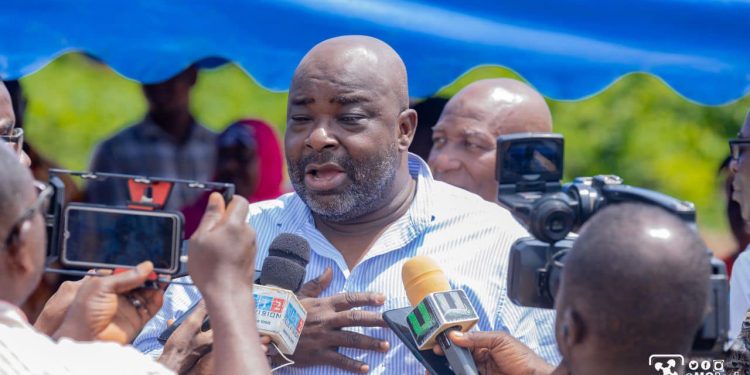
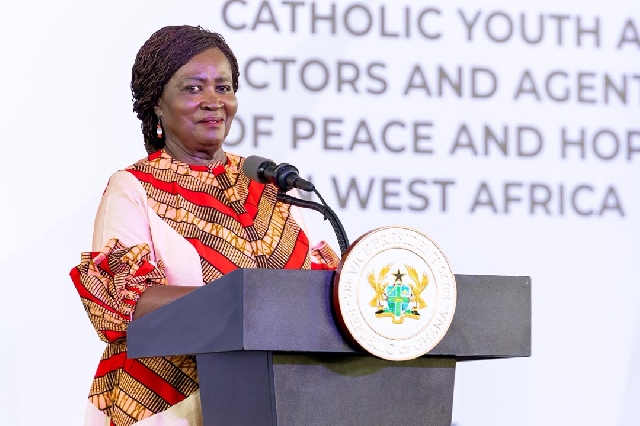
The Minister for Local Government, Chieftaincy and Religious Affairs, Ahmed Ibrahim, laid out the details at the government’s Accountability Series on Monday, April 20, offering a quarter-by-quarter breakdown of how funds flowed to assemblies throughout 2025.
The turnaround was not accidental. According to Minister Ibrahim, the 2025 disbursements were structured deliberately, designed to bring consistency and predictability to a funding system that had previously left assemblies starved of resources.
The first quarter opened with a release of GH¢790,372,058.40, providing assemblies with a meaningful base to begin the year. The second quarter saw the figure more than double to GH¢1,464,983,309.60, reflecting a significant ramp-up in disbursements.
The third quarter recorded GH¢1,188,921,640.80, a slight dip, but still a substantial allocation — before the fourth quarter closed the year on the highest note of all, with GH¢1,592,706,391.20 released to assemblies across the country.
Together, the four quarters added up to a total of GH¢5 billion — a more than thirteen-fold increase on what was disbursed the year before.
The increased releases, however, did not come without strings. Minister Ibrahim explained that the improved disbursements were tied to specific development obligations that every MMDA was expected to fulfil in return for accessing the funds.
Each district was required to construct at least two Community-based Health Planning and Services (CHPS) compounds, three classroom blocks, and ten boreholes. Assemblies were also expected to make progress on completing ongoing legacy projects that had stalled under previous funding constraints.
The conditions, in the Minister’s framing, were not punitive, they were purposeful. By linking funding to concrete deliverables, the government sought to ensure that the money translated into visible, tangible improvements in communities across the country.
Beyond the standard development benchmarks, the government earmarked 25 percent of the Common Fund for a specific economic initiative: the development of 24-hour economy model markets. The allocation reflects the government’s broader agenda to stimulate economic activity at the local level and create jobs in communities that have long been bypassed by growth concentrated in urban centres.
For Minister Ibrahim, the contrast between 2024 and 2025 is more than a set of figures; it is evidence of a deliberate policy shift toward taking local governance seriously. The question now is whether the momentum of 2025 can be sustained, and whether the assemblies that received the funds have delivered on the development commitments that came with them.
Source: Apexnewsgh.com