



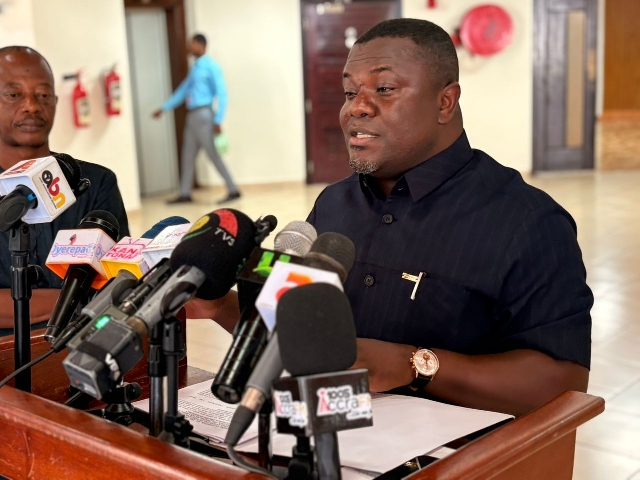
The President of the Ghana Union of Traders Association (GUTA) has delivered a stinging rebuke to Ghana’s political class, holding both sides of Parliament responsible for what he describes as a systemic failure to protect local businesses from being crowded out by foreign enterprises.
Clement Boateng made no effort to soften his message as he addressed members of the Minority Caucus, laying the blame squarely at the feet of successive political administrations across party lines. His central charge: that lawmakers, through inaction and weak oversight, have allowed foreign investors, particularly from China, to entrench themselves in sectors of the economy that were historically the preserve of Ghanaian entrepreneurs.
The sectors Boateng identified paint a broad and troubling picture. Retail trade, construction, mining, finance, telecommunications, and small-scale commerce, areas once dominated by indigenous business owners, have, in his view, increasingly fallen under the influence of foreign players. The consequence, he argued, has been the gradual marginalisation of local entrepreneurs who find themselves unable to compete on an uneven playing field.
Nowhere has this been more damaging, Boateng suggested, than in the mining sector, where the surge in foreign activity has not only displaced Ghanaians economically but has also wreaked havoc on the environment. He pointed specifically to the contamination of vital water bodies, a crisis that has drawn widespread public concern and underscored the real human cost of unchecked foreign involvement in the industry.
The GUTA President also turned his attention to the regulatory frameworks that should, in theory, offer some protection. He singled out the Ghana Investment Promotion Centre Act, which contains provisions safeguarding local participation in certain sectors, but argued that the law exists largely on paper. Weak enforcement, he contended, has rendered these protections meaningless in practice, a failure he attributed to a lack of political will.
Perhaps his sharpest warning, however, was directed personally at the lawmakers in the room. Boateng reminded them that many of them are active business people themselves, and cautioned that once they exit public office and return fully to private enterprise, they will be forced to confront the very same challenges they are currently doing so little to address. It was, in effect, a warning that the consequences of their inaction would one day come home to roost.
Source: Apexnewsgh.com