






Ghana’s improved economic performance in 2025 did not come for free. That was the candid message from the Governor of the Bank of Ghana, Dr. Johnson Pandit Asiama, who used his appearance at the Kwahu Business Forum 2026 to pull back the curtain on the significant financial burden the central bank bore to deliver the macroeconomic stability that businesses and households have come to enjoy.
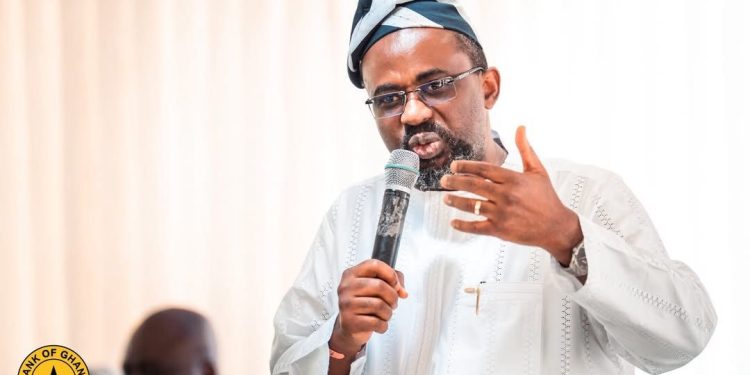
Speaking at the Governor’s Roundtable session, which served as the closing highlight of the four-day forum, Dr. Asiama painted a picture of an institution that had to make costly, difficult decisions in order to steer Ghana’s economy back from the brink of high inflation and currency instability.
“The Cedi is stable and under control,” he told the gathering. But behind that stability, he explained, lay a resource-intensive effort that stretched the central bank’s operations considerably. “Last year was good but expensive for the central bank. It took us a lot of money to mop up excess liquidity and bring inflation down to 5.4% by December 2025,” he said.
The Governor was equally frank about the nature of central banking itself, describing it as a discipline defined by difficult choices. “The work we do is always about trade-offs… trying to strike the right balance,” he noted, a remark that resonated with business owners in the audience who understand all too well the tension between cost management and growth.
At the heart of those trade-offs is the perennial challenge of controlling inflation without stifling credit and economic activity. To bring inflation down, central banks drain excess liquidity from the financial system — but doing so comes at a price. The higher the volume of liquidity to be absorbed, the greater the cost to the central bank’s balance sheet.
In Ghana’s case, that cost was particularly steep in 2025, when inflation was slashed from 23.8% at the close of 2024 to 5.4% by December 2025, a reduction of 18.4 percentage points in a single year. Such an aggressive disinflation required equally aggressive monetary operations, and the Governor made no attempt to downplay the toll it took.
Yet, looking ahead, Dr. Asiama offered a more optimistic outlook. With inflation now subdued and the monetary environment more stable, he suggested that the scale of intervention required going forward would be considerably smaller. “If you look at where inflation was at the end of December 2024 and where it is now, it wouldn’t involve the same level of resources to keep it low and stable going forward,” he said.
That is welcome news not just for the central bank’s balance sheet, but for the broader economy. A less burdened central bank, operating in a low-inflation environment, is better positioned to support the kind of credit expansion that businesses need to grow. Dr. Asiama underscored this connection directly: “When banks are strong, they can give more credit.”
The Governor’s Roundtable brought the 2026 Kwahu Business Forum to a close. The event, which ran from April 3, drew an impressive gathering of business owners, industrialists, investors, policymakers, and development partners, all convened to deliberate on policies capable of stimulating business growth. Among those in attendance were Chief of Staff to the President, Julius Debrah; Eastern Regional Minister, Rita Akosua Adjei Awatey; Economic Advisor to the President, Seth Terkper; and Legal Counsel to the President, Marietta Agyeiwaa Brew.
With the forum concluded, the conversations it sparked, about the cost of stability, the future of credit, and the path to sustainable growth, are ones Ghana’s business community will be watching closely as the year unfolds.
Source: Apexnewsgh.com