


MP for Nabdam Applauds Bold Step to Open Upper East Passport Centre– Says NPP Past 8 Years was Only Talk Talk
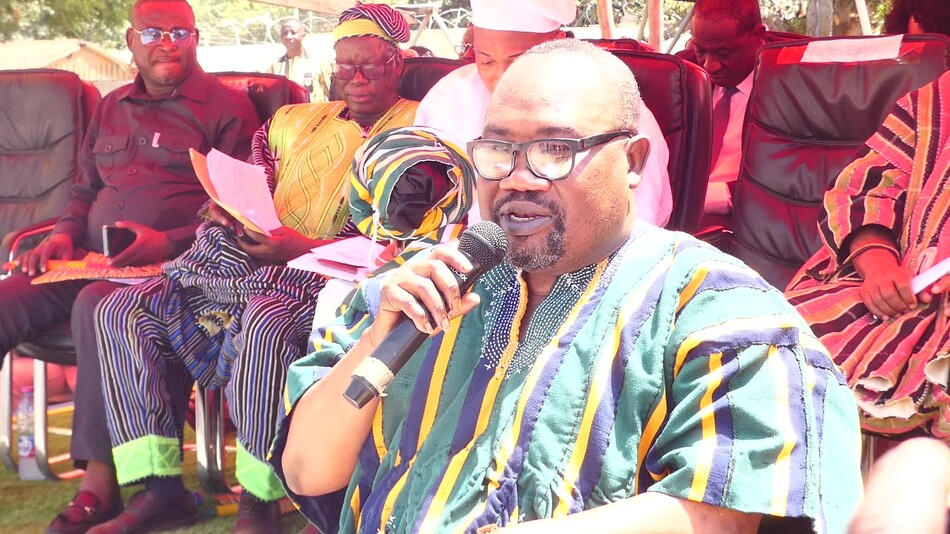
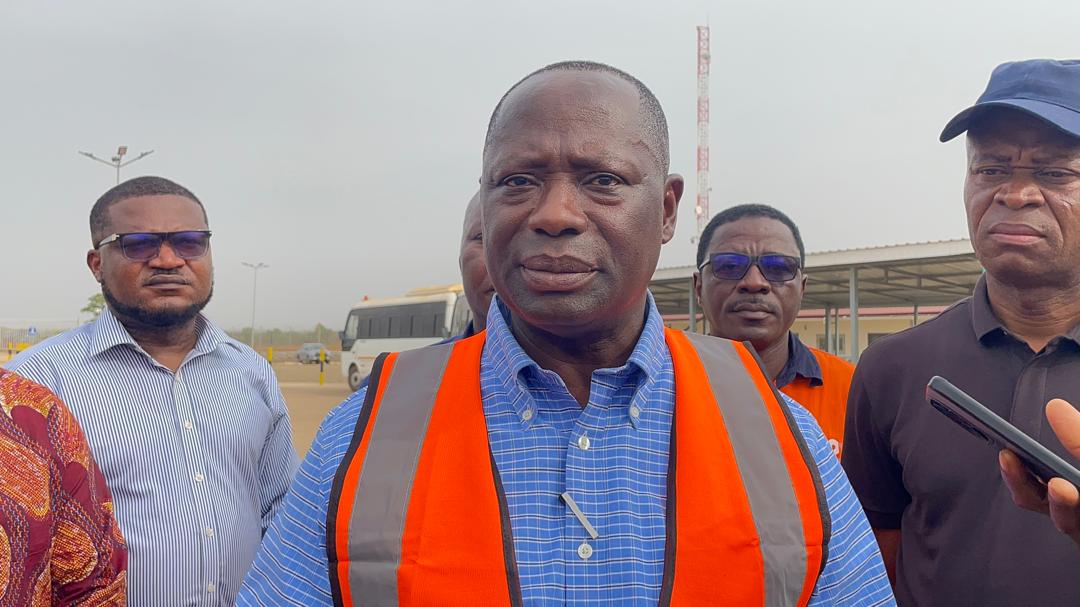
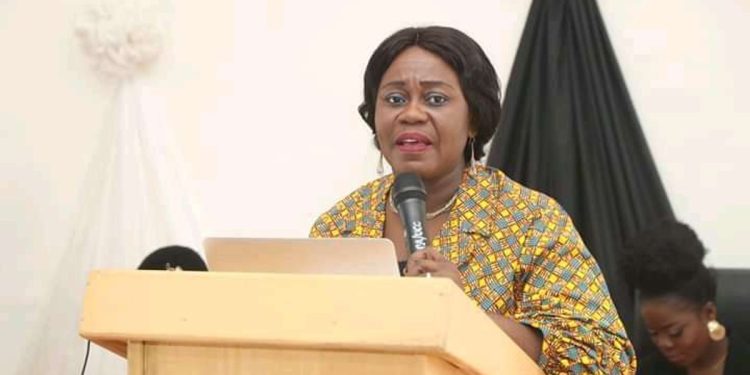
For the people of Ghana’s Upper East Region, the commissioning of the new Regional Passport Application Centre in Bolgatanga marks more than just a bureaucratic milestone; it is a victory over years of unfulfilled promises and a testament to decisive leadership. Apexnewsgh reports At the heart of this event, the Member of Parliament for Nabdam Constituency, Dr. Mark Kurt Nawaane, delivered a speech, reflecting on the journey that brought the much-needed facility to fruition. “For the past eight years, there has been talk and talk and talk of establishing the passport office,” Dr. Nawaane told the gathered crowd, his words echoing the shared frustrations of many residents. “A structure that is being built for the passport office, and I looked at it, it is far from completion.” His remarks highlighted a reality that many in the region have come to know all too well: plans for decentralizing essential public services often stall, leaving communities waiting and hoping. With the opposition New Patriotic Party (NPP) in power for the last eight years, Dr. Nawaane noted, there had been much discussion about setting up a regional passport centre, but little action. The unfinished building meant for the centre stood as a daily reminder of those unmet promises. Yet, Dr. Nawaane was quick to point out that progress sometimes requires bold action. “It needed somebody brave, strong, experienced to know that, no, these people need the services. We don’t have to wait until that building is completed before we start giving passports to people. Somebody has to make that decision.” He credited the breakthrough to the Minister for Foreign Affairs and Regional Integration, Hon. Samuel Okudzeto Ablakwa. “The person who took that decision is here with us. And that is the Honorable Okudzeto Ablakwa. It needed one person to agree that this thing you have been talking about should come to being. And he did it.” Dr. Nawaane’s praise for Hon. Ablakwa was met with applause. “Let’s clap for him,” he urged, acknowledging the Minister’s role in transforming years of empty rhetoric into real, accessible services. Thanks to this intervention, an existing structure in Bolgatanga was renovated and quickly repurposed, allowing the region’s residents to access passport services without delay. The MP’s comments also touched on a broader issue affecting the Upper East and many other regions: the need for decentralized agencies and services. “The members of parliament from the Upper East Region have observed that a lot of the decentralized agencies and structures are not in the region,” he explained. “And some of them are also not in the districts. And so we continue to discuss what we can do to get some of these things to our regions and districts.” As an example, Dr. Nawaane shared ongoing efforts to expand essential services in his own constituency. “As I am speaking now, by January, the National Health Insurance Authority will have an office in Nabdam. That is a structure that is not there.” He further noted the absence of a Health Facilities Regulatory Authority office in the region, which he is actively advocating for as a board member. “Because there are hospitals in Bolgatanga that also need to be regulated. Why don’t we open that office and get people employed? That’s the most important thing.” Employment and local management, Dr. Nawaane stressed, should be central to these efforts. “Let them manage the place and we can, you know, be thinking of more and more. So that is what we are doing in Accra. Here, all of us, we are trying as much as possible to get the decentralized authorities to open their offices in the region and in the districts.” The MP expressed gratitude for the support he and his colleagues have received from the region. “I use this opportunity to thank you very much for the goodwill that we have been enjoying from you.” He also called on their constituents to remain patient with their Members of Parliament, assuring them of continued engagement. “We’ve been very busy throughout the year, but we hope that we’ll come back, especially during the Christmas and New Year festivities. We’ll be with you and engage you and I believe that you’ll be happy with us.” Dr. Nawaane’s words captured both the relief and renewed optimism felt throughout the Upper East Region as the passport centre opened its doors. His speech served as both a celebration of what had been accomplished and a call for continued advocacy to bring more decentralized services to every corner of the region. As the ceremony concluded, the sense of accomplishment was palpable. No longer would Upper East residents need to journey long distances for a simple passport application. Source: Apexnewsgh.com/Ngamegbulam Chidozie Stephen
Bolgatanga Welcomes First-Ever Passport Application Centre Inaugurated

In a momentous step toward inclusive development and improved public service delivery, the Ministry of Foreign Affairs and Regional Integration, under the leadership of Hon. Samuel Okudzeto Ablakwa, has officially inaugurated the Bolgatanga Passport Application Centre (PAC) in the Upper East Regional capital. Apexnewsgh reports This landmark initiative forms part of the government’s broader commitment to decentralising passport services, thus ensuring that every Ghanaian, regardless of geographic location, enjoys equitable access to essential documentation. For decades, residents of the Upper East Region and its surrounding communities faced significant hurdles in obtaining or renewing their passports. The closest PACs were located in Tamale and Kumasi, forcing applicants to embark on long, costly, and often inconvenient journeys, sometimes spanning over three hours, just to complete the process. For a region with a population exceeding 1.3 million, this meant countless hours lost, added financial burdens, and unnecessary risks on the road. The opening of the Bolgatanga PAC signals an end to these challenges. Speaking at the commissioning ceremony, Hon. Ablakwa acknowledged the historical significance of the day: “This is the first time in the history of the Upper East Region that we are opening a Passport Application Centre. Today, we are making history. It should not have taken us this long, but as they say, better late than never.” He further emphasized that development must be inclusive and not limited to a select few regions: “Government services must be made available to all parts of Ghana so that all of us can feel a part of our national progress and transformation.” The story of the Bolgatanga PAC is also one of community spirit and collaboration. The Alagumgube Association, a local group with its founder, Gabriel Agambila, played a pivotal role by mobilizing resources to assist in the renovation of the facility, originally a Ghana Commercial Bank property. The bank readily handed over the building for conversion, removing all obstacles to the project. Regional authorities also demonstrated keen interest, with the regional minister reaching out for the Ministry’s approval and support. Hon. Ablakwa praised the sense of unity, stating, “What we celebrate today is a mark of togetherness, of unity, of community support where we all come together.” The Minister was quick to commend the Ministry’s staff, who undertook long journeys and tireless nights to ensure that the new centre met the exacting standards required for a modern passport office. This included directors from various departments, Finance, Passport, Consulate in Humanitarian Affairs Bureau (COHAB), and Information Public Affairs Bureau (IPAP), alongside private partners and courier companies, all combining their efforts for a seamless launch. The Bolgatanga PAC is a key milestone in a nationwide agenda. Until now, seven regions in Ghana lacked a passport application centre. With the new addition, that number is down to six, and Hon. Ablakwa has set an ambitious target: by the end of 2025, every one of Ghana’s 16 regions will have its own PAC. “We are putting in the resources, we are putting in the effort, and I am very confident that by the end of this year, all 16 regions in Ghana will have passport application centers,” he assured. This commitment, he explained, stems from the government’s belief that development must be inclusive, reaching every corner of the country. He reminded attendees that the acquisition of a passport is a right, not a privilege, for every Ghanaian citizen. The Bolgatanga PAC is not just about access; it also represents a leap forward in security and efficiency. Ghanaian passports are now highly sought after, particularly following successful negotiations for visa waivers and the country’s removal from the US sanction list. As a result, demand for Ghanaian passports has surged, particularly in border regions like Upper East, which shares a boundary with Burkina Faso. Hon. Ablakwa assured the public that robust security protocols are in place to prevent fraudulent passport acquisition. All PACs across Ghana are networked and powered by advanced AI technology. “Once you are blacklisted here in Bolga, immediately, in real time, you are blacklisted at all passport application centers across the country,” he explained, highlighting a new era of digital vigilance. “We have retrained all our passport application offices. There is absolutely no way that we are going to allow the Ghanaian passport to be easily obtained by any foreigner.” The Minister also discussed a suite of customer-focused reforms designed to make the passport process more convenient than ever. Notably, applicants no longer need to return to the PAC to receive their passports; instead, Ghana Post now delivers completed passports directly to applicants’ homes or offices. An e-tracking system allows applicants to monitor the status of their applications in real time. Additionally, the Ministry guarantees that passports will be ready within 15 working days, with an expedited service available for those who need their documents even faster, sometimes in as little as three days. The Bolgatanga PAC is equipped to issue Ghana’s latest generation of chip-embedded passports, compliant with International Civil Aviation Organization (ICAO) standards. These modern documents offer enhanced security features and durability, ensuring their holders enjoy a smooth experience both locally and internationally. Hon. Ablakwa demonstrated the effectiveness of the new system by surprising the first seven citizens of Bolgatanga, who had earlier completed their biometrics, with their new chip-embedded passports—ready in under five days. “We mean business,” he declared, “This is not some white elephant commissioning. Once we commission, the passport application officials will start work immediately. And those of you who don’t have passports can apply immediately.” Residents of the Upper East Region seeking passport services can now contact the Bolgatanga PAC via email at ipab@mfa.gov.ghOpens a new window or by phone at +233 240 913 284 and +233 240 793 072. For updates and further information, the Ministry maintains an active presence on its official X (Twitter) handle, @GhanaMFA. Citizens are encouraged to take advantage of the Ministry’s online application platform for faster, more efficient processing and to utilize the new centre for all passport-related needs. The inauguration of the