




CHRAJ’s Steadfast Role in Ghana’s HIV/AIDS Response: Achievements, Challenges, and the Journey Ahead
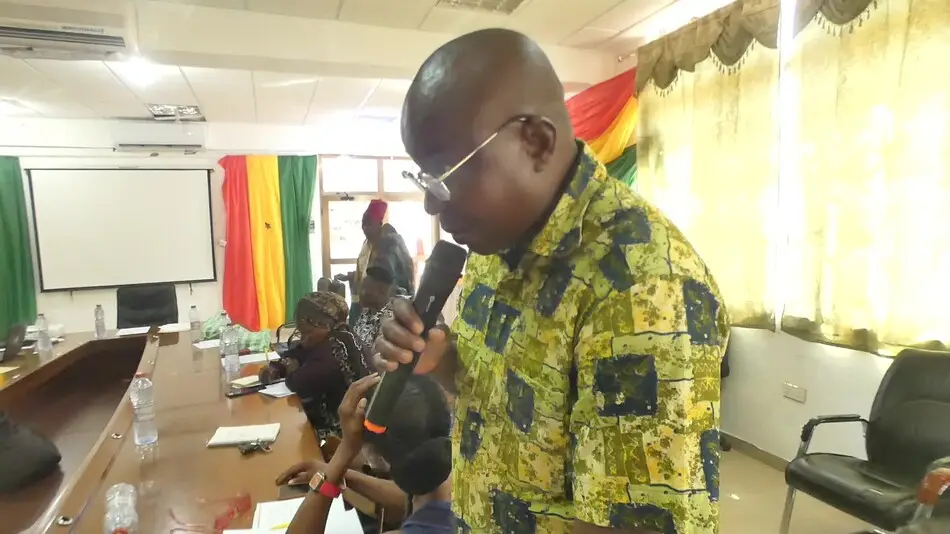
At the grand inauguration of the Upper East Regional Committee of the Ghana AIDS Commission (ReCCOM), the air was filled with a sense of hope and purpose. Among the distinguished guests and partners, the Commission on Human Rights and Administrative Justice (CHRAJ) stood out, represented by Mr. Edmond Alagpulinsa. As he took to the podium, Mr. Alagpulinsa’s words painted a vivid story of commitment, collaboration, and resilience in the region’s ongoing battle against HIV/AIDS. Mr. Alagpulinsa began by expressing CHRAJ’s sincere gratitude to the Regional Co-ordinating Council and its partners. The recognition of CHRAJ as a strategic partner in the HIV/AIDS response, he noted, was not just an honor but a reflection of the Commission’s enduring commitment to upholding human rights in Ghana. This partnership, he explained, is deeply rooted in the CHRAJ Act, 1993 (Act 456), which mandates the Commission to investigate violations of fundamental rights and freedoms, injustice, corruption, abuse of power, and unfair treatment by public officials. This legal framework, Mr. Alagpulinsa underscored, extends protection to all citizens, including those living with HIV/AIDS. He highlighted that the Ghana AIDS Commission Act, 2016 (Act 938), spells out specific rights for persons living with HIV/AIDS, and CHRAJ is duty-bound to actively promote and protect these rights. “Our role in defending the rights of persons living with HIV/AIDS,” he said, “is not just important, it is absolutely critical.” The journey, as Mr. Alagpulinsa described, has been one of seeking out strong partnerships to fulfill CHRAJ’s mandate. Organizations such as WAPCAS, the Ghana AIDS Commission, and Hope for Future Generations have been steadfast allies. Through these collaborations, CHRAJ has empowered its staff and focal persons on HIV/AIDS with specialized training. They have been educated on the Legal Aid Commission Act, with a particular focus on the rights of persons living with HIV/AIDS, strategies to combat stigma and discrimination, and the principles of Alternative Dispute Resolution. This training, Mr. Alagpulinsa emphasized, has equipped the Commission’s team with the knowledge and skills necessary to handle the sensitive cases reported by those living with HIV/AIDS in the region. In addition to training, CHRAJ has actively engaged with individuals at risk of contracting HIV/AIDS. Periodic outreach sessions, conducted in collaboration with Hope for Future Generations, have made a tangible impact. Participants in these sessions not only learn about their fundamental rights but also find a safe space to resolve personal and domestic issues. “These engagements are more than educational, they are transformative,” Mr. Alagpulinsa remarked. CHRAJ’s approach, he explained, is both human-centered and friendly, making the Commission accessible to those who need it most. Persons living with HIV/AIDS now feel more comfortable and confident in approaching CHRAJ with their complaints, knowing they will be treated with dignity and respect. The Commission’s support goes beyond legal redress; counseling services are provided, and ongoing education about rights and freedoms is a cornerstone of their work. Yet, Mr. Alagpulinsa did not shy away from discussing the formidable challenges CHRAJ faces. Among the most pressing issues is the lack of adequate logistics. Limited resources have made it difficult for the Commission to conduct regular public education and outreach activities. The cost of securing airtime on radio stations, an essential platform for public sensitization, has become prohibitive. Similarly, organizing direct engagement sessions with the public is often hampered by financial constraints, restricting the Commission’s ability to meet the growing demand for its services. Stigma and discrimination, Mr. Alagpulinsa explained, remain persistent obstacles. He shared the story of an elderly woman in the municipality, ostracized and assaulted simply because of perceptions surrounding her HIV status. On several occasions, CHRAJ had to step in, providing protection and standing as a shield against the community’s prejudice. Such cases, he noted, illustrate the deep-seated challenges that go beyond legal mandates and require a collective effort to address. Another significant challenge lies in inter-institutional collaboration. Sometimes, cases reported to CHRAJ intersect with issues outside its jurisdiction, necessitating cooperation with other state institutions. However, this collaboration is not always as effective as it should be, leading to gaps in service and, at times, frustration for those seeking help. Mr. Alagpulinsa stressed the importance of strengthening these partnerships to ensure a seamless support system for persons living with HIV/AIDS. Despite these hurdles, CHRAJ remains undeterred. The Commission’s achievements, empowering staff, educating communities, providing counseling, and serving as a beacon of hope for vulnerable individuals, are a testament to its unwavering dedication. “All our services,” Mr. Alagpulinsa concluded, “are provided free of charge. Our doors are always open at the Regional Co-ordinating Council block.” As the event drew to a close, the story of CHRAJ’s contributions, achievements, and challenges resonated with all present. It was a call to action, a reminder that the fight for the rights and dignity of persons living with HIV/AIDS is a shared responsibility, and that with continued collaboration, compassion, and commitment, a brighter future is within reach for the Upper East Region and beyond. Source: Apexnewsgh.com
UER: ReCCOM Inaugurated to Tackle Issues Against HIV/AIDS

In line with section 9(1a) and 9(2) of the Ghana AIDS Commission Act, 2016 (ACT 938), the Upper East Regional Coordinating Council has inaugurated the Upper East Regional Committee of the Ghana AIDS Commission (ReCCOM). At the center of this gathering stood Donatus Akamugri Atanga, the Upper East Regional Minister, his presence radiating a blend of solemn responsibility and steadfast optimism. As the appointed Chairman of the Committee, he addresses a crowd representing every facet of the region’s social fabric. His words, as he took the podium, would chart a new course in the region’s response to HIV and AIDS, one rooted in unity, compassion, and shared resolve. “Distinguished guests, members of the committee, and esteemed colleagues,” Mr. Akamugre began, “it is with a deep sense of purpose, responsibility, and optimism that I warmly welcome you to this significant gathering.” He paused, surveying the attentive faces before him. Today’s event, he reminded them, was not merely the formation of another bureaucratic body. Rather, it was the renewal of a collective pledge, a declaration that the fight against HIV and AIDS would be met with reinvigorated energy, ideas, and collaboration. “For years, Ghana has made commendable progress in the fight against AIDS,” he continued, “yet the Upper East Region, like many others, still faces stubborn challenges.” These included not only medical and logistical hurdles but deeply entrenched social and economic issues that touched every home, every sector, and every individual in the region. The task ahead, he emphasized, required more than just government directives; it called for a harmonized effort from every corner of society. Mr. Akamugre traced the foundation of this renewed fight to the Ghana AIDS Commission Act of 2016 (Act 938), which fortified the institutional framework for the national response and provided the legal backing for a coordinated, multi-level approach. This legislative backbone, he noted, gave the region both the mandate and the tools to strengthen partnerships, harmonize interventions, and ensure that no community was left behind. He looked around the room, his gaze resting on the newly appointed committee members. “The assessment and inauguration of this committee are crucial steps in deepening decentralization and ensuring that our regional response is strategic, inclusive, and sustainable,” he asserted. The committee’s work, he underscored, was central to the broader regional development agenda. The Minister’s tone grew more urgent as he addressed the true nature of HIV: “The AIDS pandemic is not merely a health issue, but a social and economic canker. HIV has no respect for profession, tribe, religion, or status. So, our fight must have no boundaries.” He called for the dismantling of silos and the forging of new alliances, between state actors, the private sector, traditional authorities, and religious leaders. Addressing these gatekeepers of culture and conscience directly, he urged them to use their influence to dispel myths, reshape harmful narratives, and encourage testing and treatment without fear or discrimination. To civil society, he extended a special acknowledgment: “You represent the voice of the vulnerable, serving as a bridge between policy and people. You are the engine of community action in this campaign.” Turning to the committee members, Mr. Akamugre reminded them of the weighty responsibility they had accepted. “Ours is a call to service. We are expected to coordinate efforts, drive public education, protect the vulnerable, challenge stigma, and ensure accountability to the very people we serve.” He challenged each member to approach their work with professionalism, integrity, and a sense of urgency. He expressed confidence that the diversity of backgrounds and experiences within the committee would enrich its work and bring innovative solutions to the region’s most pressing HIV-related challenges. As Chairman, he pledged his unwavering support, promising that the Regional Coordinating Council would provide the leadership, institutional support, and strategic coordination necessary for success. Collaboration, he insisted, would be at the heart of their efforts. The Council would work closely with the Technical Support Unit of the AIDS Commission, civil society organizations, and all relevant stakeholders to achieve the ambitious 95-95-95 global target: 95% of people living with HIV know their status, 95% of those diagnosed are on sustained antiretroviral therapy, 95% of those on treatment achieve viral suppression. The Regional Minister shared the sobering statistics from the 2024 National and Sub-National HIV Estimates. The Upper East Region, he reported, had 7,549 people living with HIV, including 345 new infections, representing a regional prevalence of 0.85%. However, only 49.4% of those affected were receiving antiretroviral therapy. “These numbers reveal a significant gap that we must urgently address if we are to reach our targets and end AIDS as a public health concern by 2030,” he said. While the prevalence rate was relatively low, he warned against complacency. Urban centers were experiencing a rise in new cases, and misinformation from self-styled vigilantes and traditional healers continued to undermine adherence to treatment. More daunting still was the persistent stigma and discrimination faced by people living with HIV. “This is one critical area where we must show strong leadership,” the Minister emphasized. He called for intensive behavior change communication programs, robust partnerships with the media, and community-level engagement to promote compassion, inclusion, and the dissemination of accurate information. He highlighted another critical pillar of the committee’s work: resource mobilization. The effectiveness of regional and sub-national interventions, he noted, depended on securing the funding and logistical support necessary to implement evidence-based programs. As his speech drew to a close, Mr. Akamugre further congratulated the committee members on their nomination and thanked the governing board of the Ghana AIDS Commission for their trust. “We accept this responsibility with profound humility and determination, fully aware that the fight against HIV is not for one institution alone, but a shared responsibility.” He then made the official declaration: “It is my singular honor and privilege to declare the Upper East Regional Coordinating Council Committee of HIV-AIDS duly inaugurated, here on the 10th day of November 2025.” The ceremony reached its emotional pinnacle as Circuit Court Judge Sumaila M. Ahmadu, representing the High
Just In: 7, 953 are living with HIV in the Upper East Region

It has been revealed that 7, 953 persons are living with HIV in the Upper East Region. The report has also shown that out of the 16 regions of Ghana, Upper East Region is the 11th highest affected region. This clearly shows that the region is negatively better than 5 other regions in Ghana. Below is the Regional breakdown of persons living with HIV in Ghana 2020. Ashanti 73, 245 Greater Accra 70,855 Eastern 47,866 Western 25,620 Central 24,881 Volta 20, 949 Bono 19,173 Bono East 14,273 Western North 10,619 Ahafo 8,405 Upper East 9, 753 Northern 6,941 Oti 5,877 Upper West 5,725 Savannah 3,135 North East 2,122 Out of approximately 30.8 million Ghanaian population, 346,120 are reported to be HIV positive with a new infection of 18,928 in 2020. Apexnewsgh.com/Ghana/Ngamegbulam Chidozie Stephen Please contact Apexnewsgh.com on email apexnewsgh@gmail.com for your credible news publications. Contact: 05555568093