
CHRAJ’s Steadfast Role in Ghana’s HIV/AIDS Response: Achievements, Challenges, and the Journey Ahead
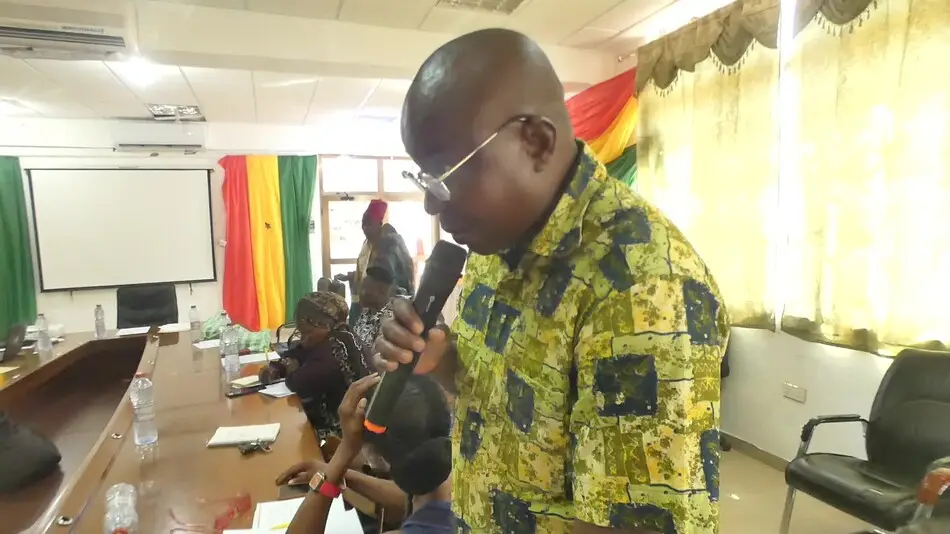
At the grand inauguration of the Upper East Regional Committee of the Ghana AIDS Commission (ReCCOM), the air was filled with a sense of hope and purpose. Among the distinguished guests and partners, the Commission on Human Rights and Administrative Justice (CHRAJ) stood out, represented by Mr. Edmond Alagpulinsa. As he took to the podium, Mr. Alagpulinsa’s words painted a vivid story of commitment, collaboration, and resilience in the region’s ongoing battle against HIV/AIDS. Mr. Alagpulinsa began by expressing CHRAJ’s sincere gratitude to the Regional Co-ordinating Council and its partners. The recognition of CHRAJ as a strategic partner in the HIV/AIDS response, he noted, was not just an honor but a reflection of the Commission’s enduring commitment to upholding human rights in Ghana. This partnership, he explained, is deeply rooted in the CHRAJ Act, 1993 (Act 456), which mandates the Commission to investigate violations of fundamental rights and freedoms, injustice, corruption, abuse of power, and unfair treatment by public officials. This legal framework, Mr. Alagpulinsa underscored, extends protection to all citizens, including those living with HIV/AIDS. He highlighted that the Ghana AIDS Commission Act, 2016 (Act 938), spells out specific rights for persons living with HIV/AIDS, and CHRAJ is duty-bound to actively promote and protect these rights. “Our role in defending the rights of persons living with HIV/AIDS,” he said, “is not just important, it is absolutely critical.” The journey, as Mr. Alagpulinsa described, has been one of seeking out strong partnerships to fulfill CHRAJ’s mandate. Organizations such as WAPCAS, the Ghana AIDS Commission, and Hope for Future Generations have been steadfast allies. Through these collaborations, CHRAJ has empowered its staff and focal persons on HIV/AIDS with specialized training. They have been educated on the Legal Aid Commission Act, with a particular focus on the rights of persons living with HIV/AIDS, strategies to combat stigma and discrimination, and the principles of Alternative Dispute Resolution. This training, Mr. Alagpulinsa emphasized, has equipped the Commission’s team with the knowledge and skills necessary to handle the sensitive cases reported by those living with HIV/AIDS in the region. In addition to training, CHRAJ has actively engaged with individuals at risk of contracting HIV/AIDS. Periodic outreach sessions, conducted in collaboration with Hope for Future Generations, have made a tangible impact. Participants in these sessions not only learn about their fundamental rights but also find a safe space to resolve personal and domestic issues. “These engagements are more than educational, they are transformative,” Mr. Alagpulinsa remarked. CHRAJ’s approach, he explained, is both human-centered and friendly, making the Commission accessible to those who need it most. Persons living with HIV/AIDS now feel more comfortable and confident in approaching CHRAJ with their complaints, knowing they will be treated with dignity and respect. The Commission’s support goes beyond legal redress; counseling services are provided, and ongoing education about rights and freedoms is a cornerstone of their work. Yet, Mr. Alagpulinsa did not shy away from discussing the formidable challenges CHRAJ faces. Among the most pressing issues is the lack of adequate logistics. Limited resources have made it difficult for the Commission to conduct regular public education and outreach activities. The cost of securing airtime on radio stations, an essential platform for public sensitization, has become prohibitive. Similarly, organizing direct engagement sessions with the public is often hampered by financial constraints, restricting the Commission’s ability to meet the growing demand for its services. Stigma and discrimination, Mr. Alagpulinsa explained, remain persistent obstacles. He shared the story of an elderly woman in the municipality, ostracized and assaulted simply because of perceptions surrounding her HIV status. On several occasions, CHRAJ had to step in, providing protection and standing as a shield against the community’s prejudice. Such cases, he noted, illustrate the deep-seated challenges that go beyond legal mandates and require a collective effort to address. Another significant challenge lies in inter-institutional collaboration. Sometimes, cases reported to CHRAJ intersect with issues outside its jurisdiction, necessitating cooperation with other state institutions. However, this collaboration is not always as effective as it should be, leading to gaps in service and, at times, frustration for those seeking help. Mr. Alagpulinsa stressed the importance of strengthening these partnerships to ensure a seamless support system for persons living with HIV/AIDS. Despite these hurdles, CHRAJ remains undeterred. The Commission’s achievements, empowering staff, educating communities, providing counseling, and serving as a beacon of hope for vulnerable individuals, are a testament to its unwavering dedication. “All our services,” Mr. Alagpulinsa concluded, “are provided free of charge. Our doors are always open at the Regional Co-ordinating Council block.” As the event drew to a close, the story of CHRAJ’s contributions, achievements, and challenges resonated with all present. It was a call to action, a reminder that the fight for the rights and dignity of persons living with HIV/AIDS is a shared responsibility, and that with continued collaboration, compassion, and commitment, a brighter future is within reach for the Upper East Region and beyond. Source: Apexnewsgh.com
GHS emphasizes crucial role of journalism in health emergencies
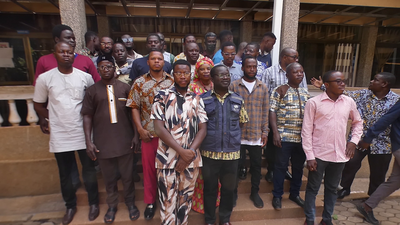
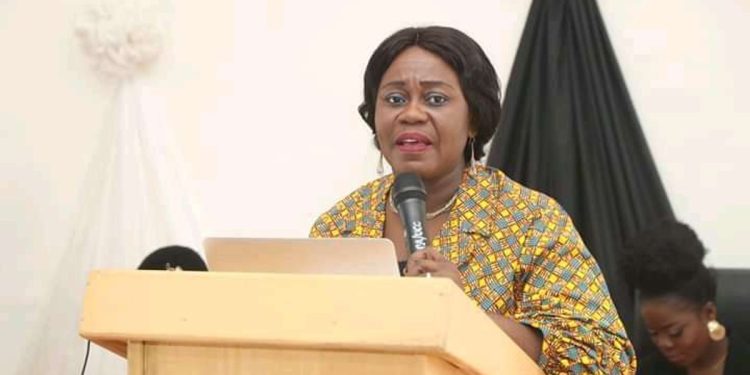
Ghana Health Service’s National Coordinator for Community Engagement and Health Promotion, Joel Abekuliya, has emphasized the crucial role of responsible journalism in reporting health emergencies and risk communication. “Today, we’re gathered to reiterate the importance of responsible journalism, especially in the face of rapidly spreading diseases,” Abekuliya began. “As one of the pillars of risk communication during health emergencies, journalists play a vital role in shaping public perception and action.” Abekuliya highlighted the need for journalists to write responsibly, producing stories that benefit the public and promote health equality. “In this technological era, we must leverage digital tools to fact-check online content and ensure credibility.” He stressed that journalists must prioritize verifying information from trusted sources, enabling the public to make informed decisions about their health. Abekuliya acknowledged the media’s significant contributions to promoting protective measures and combating health challenges. “We recognize the media’s power in shaping public opinion and influencing behavior.” However, he also cautioned against the risks of misinformation. “Sometimes, false information spreads quickly, and we must work together to correct it.” To address these challenges, Abekuliya emphasized the importance of collaboration between health officials and journalists. “By working together, we can identify solutions and promote accurate, timely information.” In conclusion, Abekuliya expressed optimism about the potential for responsible journalism to drive positive change. “Together, let’s strive for successful health communication that benefits all Ghanaians.” Through this call to action, Abekuliya reaffirmed the Ghana Health Service’s commitment to partnering with journalists to promote public health and well-being. However, the engagement which the participation of Journalists from Upper East, Upper West, North East and Northern Region also witnessed the present of Health Promotion Officers of these regions in attendance and officials from WHO. The training workshop was supported by the World Health Organization (WHO). Source: Apexnewsgh.com/Ngamegbulam Chidozie Stephen Contact: +233248250270/+233256336062 for your publications
No Ebola in Ghana; it’s only a simulation exercise – GHS
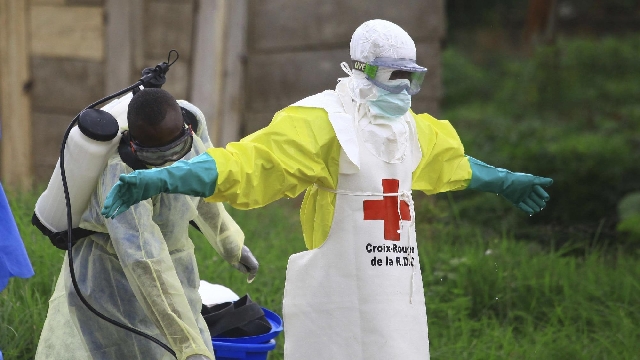
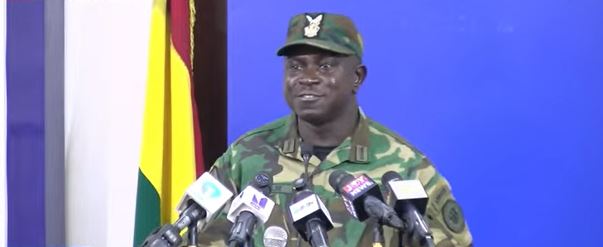
Ghana has not recorded any case of Ebola, the Ghana Health Service said on Wednesday, 22 June 2022. Some media reports had claimed a case had been recorded in Tamale, the capital of the Northern Region. However, the Director-General of the health service, Dr Patrick Kuma-Aboagye, told journalists at a briefing on Wednesday: “I want to use this opportunity to say there is no Ebola case in Ghana”. Dr Kuma-Aboagye said a simulation exercise about handling Ebola cases had been mistaken by the media to mean there was an outbreak in the country. Also, the Northern regional disease surveillance officer, Mr Francis Atiagbor, said: “I am not aware that we have picked an Ebola case in the Northern Region, but what I can say for a fact is that we were doing simulation exercise on Ebola virus disease at the Public Health Emergency Management Operation Centre”. “Simulation exercises are part of one of the requirements under international health regulations and then all countries are enjoined to regularly do simulation exercise to test their preparedness for such public health emergencies”, he noted. —Classfm
Ghana has committed $25 million to develop domestic vaccine production capability—Pres. Akufo-Addo

President Nana Addo Dankwa Akufo-Addo has said, Ghana as a country has committed twenty-five million dollars ($25 million) to develop our domestic vaccine production capability. “We have committed twenty-five million dollars ($25 million) to develop our domestic vaccine production capability, and facilitate the capacity of domestic pharmaceutical companies to fill, finish and package mRNA COVID-19, malaria, tuberculosis and other vaccines, as a first step towards vaccine production Below are President’s statement I first came to your homes on Wednesday, 11th March 2020, five (5) days after our nation’s 63rd Independence Day celebration, a day before we recorded our first two (2) cases, with news of the measures Government was taking to limit the importation of the COVID-19 virus into the country. Even at that time, it was obvious to me, watching what was happening in Asia, Europe and Latin America, that, if it was not well-managed, it would disrupt our lives and livelihoods. 2. Since then, we have experienced four (4) waves of the outbreak. One hundred and sixty-thousand, nine hundred and thirty-two (160,932) people have tested positive from the 2.4 million tests conducted, and one thousand, four hundred and forty-five (1,445) people have, sadly, died. 3. Our comprehensive strategy has entailed living with restrictions that altered our daily routine; we have been restrained from shaking hands and hugging one another; we have had to keep a distance from each other; we have had to put up with the discomfort of wearing face masks every time we left our homes; we have had to endure distress caused by the poking of our nostrils and throats with swab-sticks, each time we underwent a PCR or antigen test; we had to endure, for three weeks, the painful lockdown in the Greater Accra Metropolitan Area and Kasoa and the Greater Kumasi Metropolitan Area and contiguous districts; and we have all borne the brunt of the ravages of the pandemic. 4. As your President, I saw it as my duty to provide you with regular updates on the situation, the measures government is taking, and to seek your support and co-operation. That is why I have been a constant feature on your screens these past two years, in the addresses that have now become popularly referred to as “Fellow Ghanaians”, and I thank you for welcoming me so warmly into your homes. 5. You have listened to me, you have co-operated with Government and with the health experts, you have adhered to the enhanced hygiene and mask wearing protocols, and a considerable number of you have taken the vaccine. 6. I thank you for the opportunity you have given me to be your President in these difficult times. I do not take it lightly. The relative successes we have chalked in winning the fight against COVID-19 have been collective ones, which reinforce my belief that, if we are united, there is no obstacle or hurdle too high to surmount in our quest to build a progressive and prosperous Ghana. 7. Fellow Ghanaians, undoubtedly, like in every country in the world, the effects of the pandemic have been devastating for us, in Ghana. We have felt the brunt of COVID-19, with every aspect of national life affected. 8. I did say at the height of the pandemic that “we know what to do to bring the economy back to life; but what we do not know is how to bring people back to life”. We, thus, had to take drastic steps to protect lives and livelihoods by suspending, for the years 2020 and 2021, our pursuit of fiscal responsibility, which had made the Ghanaian economy the poster boy of rapid economic growth in the world in 2017, 2018, and 2019. 9. You would recall that, in response to the pandemic, I mandated the creation of the Coronavirus Alleviation Programme to support households and micro, small, and medium-size businesses (MSMEs). Its intent was to help minimise job losses, and stimulate economic revitalisation, by mobilising private and public sector finances to expand industrial output for domestic consumption and exports. 10. To this end, I instituted a GH¢1.1 billion health response package, which was used to procure supplies and equipment, and a relief package for health workers, which included tax waivers, allowances, transportation and COVID-insurance. Government also found the money to recruit, on a permanent basis, twenty-four thousand, two hundred and eighty-five (24,285) more health professionals. 11. GH¢1.6 billion was made available to support vulnerable households across the country, which went into food packages and hot meals, and the provision of free water for all, free electricity for lifeline consumers, and 50% rebate for all others. Some seven hundred and fifty million cedis (GH¢750 million) in soft loans and grants were also disbursed to micro, small and medium sized businesses to help maintain their economic activity. The Government Statistician tells us that this expenditure has achieved its purpose. 12. At the height of the pandemic, despite strong opposition in some quarters and the legitimate concern of some parents, we stood firm and were successful in ensuring that the education of our children was not truncated. 13. We spent some GH¢1.9 billion providing PPEs and hot meals for students, teaching and non-teaching staff, hand washing facilities, training of teachers on COVID, development of content for online classes, and disinfection and fumigation of schools. This made it possible for students to return in conditions of safety, sit for their respective examinations, and achieve successful results. Indeed, the spectacular results of the first and second batches of the Free SHS graduates, whom I proudly call the Akufo-Addo graduates, are testament to this. 14. I want to state, without any equivocation, that should our nation, God forbid, be confronted by such a pandemic again, and I, Nana Addo Dankwa Akufo-Addo, am, by the grace of God, your President, I will not shy away from taking such essential steps to protect you and your businesses again. 15. Whilst we count the costs, COVID-19 also inspired our domestic manufacturing capabilities, and deepened our
COVID-19: Land, sea borders to open Monday–President Akufo-Addo announces
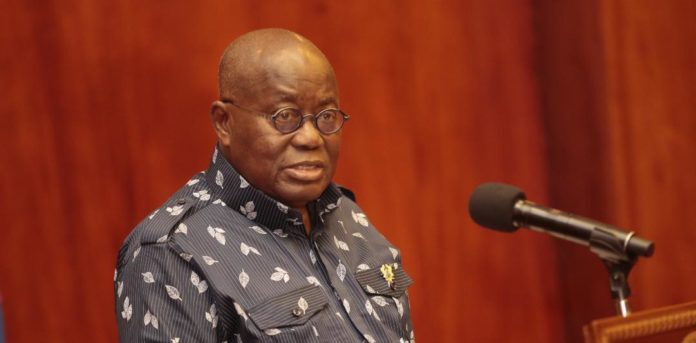
President Nana Akufo-Addo has announced opening Ghana’s land and sea borders from Monday, 28 March 2022. He has also scrapped PCR tests for fully-vaccinated Ghanaians travelling back into Ghana. “As from tomorrow, Monday, 28th March, all land and sea borders will be opened. Fully vaccinated travellers will be allowed entry through the land and sea borders without a negative PCR test result from the country of origin. Citizens and foreign residents in Ghana, who are not fully vaccinated, will have to produce a negative 48-hour PCR test result, and will be offered vaccination on arrival”. Below are President’s statement I first came to your homes on Wednesday, 11th March 2020, five (5) days after our nation’s 63rd Independence Day celebration, a day before we recorded our first two (2) cases, with news of the measures Government was taking to limit the importation of the COVID-19 virus into the country. Even at that time, it was obvious to me, watching what was happening in Asia, Europe and Latin America, that, if it was not well-managed, it would disrupt our lives and livelihoods. 2. Since then, we have experienced four (4) waves of the outbreak. One hundred and sixty-thousand, nine hundred and thirty-two (160,932) people have tested positive from the 2.4 million tests conducted, and one thousand, four hundred and forty-five (1,445) people have, sadly, died. 3. Our comprehensive strategy has entailed living with restrictions that altered our daily routine; we have been restrained from shaking hands and hugging one another; we have had to keep a distance from each other; we have had to put up with the discomfort of wearing face masks every time we left our homes; we have had to endure distress caused by the poking of our nostrils and throats with swab-sticks, each time we underwent a PCR or antigen test; we had to endure, for three weeks, the painful lockdown in the Greater Accra Metropolitan Area and Kasoa and the Greater Kumasi Metropolitan Area and contiguous districts; and we have all borne the brunt of the ravages of the pandemic. 4. As your President, I saw it as my duty to provide you with regular updates on the situation, the measures government is taking, and to seek your support and co-operation. That is why I have been a constant feature on your screens these past two years, in the addresses that have now become popularly referred to as “Fellow Ghanaians”, and I thank you for welcoming me so warmly into your homes. 5. You have listened to me, you have co-operated with Government and with the health experts, you have adhered to the enhanced hygiene and mask wearing protocols, and a considerable number of you have taken the vaccine. 6. I thank you for the opportunity you have given me to be your President in these difficult times. I do not take it lightly. The relative successes we have chalked in winning the fight against COVID-19 have been collective ones, which reinforce my belief that, if we are united, there is no obstacle or hurdle too high to surmount in our quest to build a progressive and prosperous Ghana. 7. Fellow Ghanaians, undoubtedly, like in every country in the world, the effects of the pandemic have been devastating for us, in Ghana. We have felt the brunt of COVID-19, with every aspect of national life affected. 8. I did say at the height of the pandemic that “we know what to do to bring the economy back to life; but what we do not know is how to bring people back to life”. We, thus, had to take drastic steps to protect lives and livelihoods by suspending, for the years 2020 and 2021, our pursuit of fiscal responsibility, which had made the Ghanaian economy the poster boy of rapid economic growth in the world in 2017, 2018, and 2019. 9. You would recall that, in response to the pandemic, I mandated the creation of the Coronavirus Alleviation Programme to support households and micro, small, and medium-size businesses (MSMEs). Its intent was to help minimise job losses, and stimulate economic revitalisation, by mobilising private and public sector finances to expand industrial output for domestic consumption and exports. 10. To this end, I instituted a GH¢1.1 billion health response package, which was used to procure supplies and equipment, and a relief package for health workers, which included tax waivers, allowances, transportation and COVID-insurance. Government also found the money to recruit, on a permanent basis, twenty-four thousand, two hundred and eighty-five (24,285) more health professionals. 11. GH¢1.6 billion was made available to support vulnerable households across the country, which went into food packages and hot meals, and the provision of free water for all, free electricity for lifeline consumers, and 50% rebate for all others. Some seven hundred and fifty million cedis (GH¢750 million) in soft loans and grants were also disbursed to micro, small and medium sized businesses to help maintain their economic activity. The Government Statistician tells us that this expenditure has achieved its purpose. 12. At the height of the pandemic, despite strong opposition in some quarters and the legitimate concern of some parents, we stood firm and were successful in ensuring that the education of our children was not truncated. 13. We spent some GH¢1.9 billion providing PPEs and hot meals for students, teaching and non-teaching staff, hand washing facilities, training of teachers on COVID, development of content for online classes, and disinfection and fumigation of schools. This made it possible for students to return in conditions of safety, sit for their respective examinations, and achieve successful results. Indeed, the spectacular results of the first and second batches of the Free SHS graduates, whom I proudly call the Akufo-Addo graduates, are testament to this. 14. I want to state, without any equivocation, that should our nation, God forbid, be confronted by such a pandemic again, and I, Nana Addo Dankwa Akufo-Addo, am, by the grace of God, your President, I will not shy away
NHIA owes 6 health centers in Upper East Region for service rendered between….
According to the 2020 Auditor Service reports, as at 31 August 2020, the National Health Insurance Authority (NHIA) owed 46 BMCs a total amount of GH¢20,999,551.10 for services rendered between June 2019 and August 2020 Per regulation 38 of the National Health Insurance Regulations requires that a claim or payment of health service submitted to the scheme shall be paid within four weeks after receipt of the claims from the health care facility unless there is a legal impediment. However, among all the 46 BMCs, the 2020 Auditor General reports indicate that only 6 BMCs in the Upper East Region have an outstanding amount with National Health Insurance Authority (NHIA) Below are the health centers: Zuarungu – Moshie Health Centre Upper East 101,722.85 Gambibgo Health Centre Upper East 100,630.47 Talensi District Hospital Upper East 330,293.09 Zuarungu Health Centre Upper East 176,660.53 Pelungu Health Centre Upper East 113,077.66 Sumbrungu Health Centre Upper East 112,935.04 Zebilla District Hospital Upper East 1,626,616.46 However, the Auditor General has recommended that the Heads of the BMCs should engage the CEO, NHIA for reimbursement of the outstanding amount. Apexnewsgh.com/Ghana/Ngamegbulam Chidozie Stephen Please contact Apexnewsgh.com on email apexnewsgh@gmail.com for your adverts and credible news publications. Contact: 05555568093
Emergency circumstances don’t justify bypassing constitutional, statutory processes – OccupyGhana kicking out Health Minister
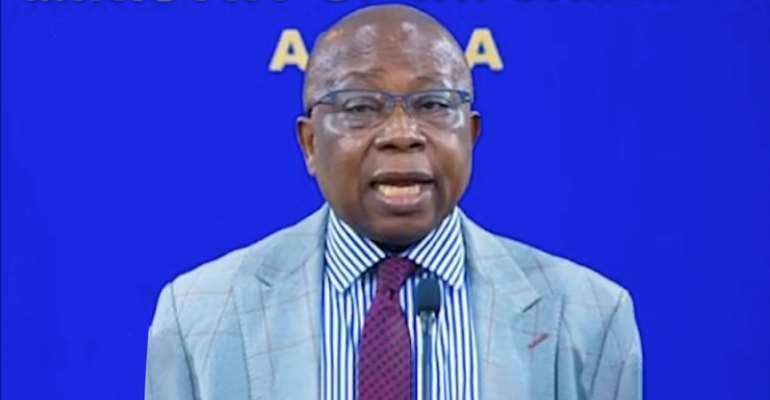
Social and political non-partisan pressure group, OccupyGhana says the underfire Health Minister Kwaku Agyemang Manu has no right to sidestepped Parliament in whatever situation pertaining to dealings on behalf of the country. The pressure group noted that the emergency circumstances do not justify bypassing constitutional and statutory processes in the procurement of the Sputnik V vaccines through a middleman. The Health Minister is in trouble following the revelation that he did not follow the country’s Constitution processes earlier this year when he reached a deal with a middleman, Sheikh Ahmed Dalmook Al Maktoum on behalf of Ghana for the procurement of Sputnik-V vaccines. In his defense, Kwaku Agyemang Manu noted that he was only trying to get ahead of the emergency circumstances facing the country at the time to procure the vaccines to help in the fight against the pandemic. Not convinced, OccupyGhana stresses that it cannot be an excused for the Health Minister to enter into an international business without parliamentary approval, without cabinet approval, without Public Procurement Authority approval or ratification, and without the advice of the Attorney-General. As a result, the pressure group is calling on the Health Minister to do the honourable thing and as a matter of urgency resign from his position. “It is on the basis of the foregoing that we demand that the Health Minister resigns from office. Even if he meant well under emergency circumstances, those did not justify bypassing our constitutional and statutory processes. If the Health Minister does not resign of his own accord, then we call on the President to relieve him of his post,” part of a press release from OccupyGhana reads. It adds, “While calling for this resignation, we also believe that Ghanaians ought to be told which other officials were involved in processing and paying the monies, without demanding and seeing the requisite approvals; those officials ought to be similarly sanctioned. Also, Ghanaians should be told when we expect to receive a full refund of the outstanding amount from the recipient.” —ModernGhana Please contact Apexnewsgh.com on email apexnewsgh@gmail.com for your credible news publications. Contact: 05555568093
ASEPA gives AG 48-hour ultimatum to initiate criminal investigations against Health Minister

The Alliance for Social Equity and Public Accountability (ASEPA) has threatened to file an official petition at the Criminal Investigations Department (CID) of the Ghana Police Service (GPS) if criminal investigations are not initiated to prosecute Health Minister Kwaku Agyemang Manu. This comes after a report of the ad-hoc committee of Parliament set up to investigate the circumstances leading to the procurement of the Sputnik V vaccines by the Health Ministry through a middleman. While ASEPA commends the committee for the work done, it says it believes the work of the Committee but its report wasn’t particularly thorough. Insisting that the adverse findings made by the Committee are already issues Civil Society, experts, and well-meaning Ghanaians have already raised in the public domain, ASEPA says is giving the Attorney-General 48 hours to initiate criminal investigations against the Health Minister. Failure to do so, ASEPA says it will formally file an already prepared petition to the CID to compel the AG to do the needful. “A petition has been already prepared together with all relevant documents including the report of the ad-hoc committee of Parliament awaiting to be filed within the next 48 hours at the CID if the Attorney General fails to initiate the relevant legal processes against the health,”. Please contact Apexnewsgh.com on email apexnewsgh@gmail.com for your credible news publications. Contact: 05555568093
UER: Teenage pregnancy and school dropout for the first quarter of 2021 exceeds that of 2020 by 14.5 percent.
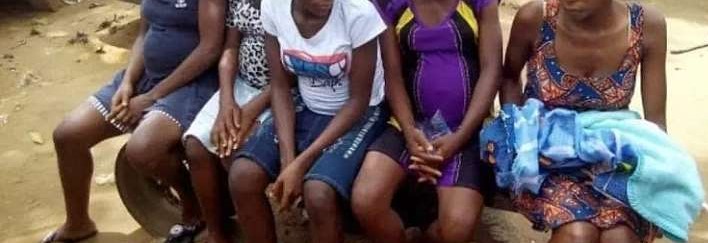
According to data from the Ghana Health Service District Health Information Management System as of April 30, 2021, it shows that the Upper East Region recorded 1632 teenage pregnancies in the first quarter of this year representing a 14.5 percent increase over figures recorded in 2020 which recorded a total of 6533 for the whole year. For the district and municipal breakdown, Bawku West lead the table with 207 teenage pregnancy cases followed by Talensi with 162, Pusiga 152, Bongo 150, Bolgatanga 139, Kasena Nankana West 120, Bawku 112, Kasena Nankana 109. The rest are Garu with 105 reported cases of teenage pregnancies, Tempane 94, Binduri 71, Builsa South 68, Nabdam 63, Builsa North 52 and Bolgatanga East recording 35 cases. This was revealed at a review meeting for 50 Peer Educators on sexual and reproductive health rights in six districts organized by the National Youth Authority NYA and the Upper East Regional Coordinating Council under the auspices of the government of Ghana and the UNFPA 2018-2022 country programme. In his welcome address, the Upper East Regional Director for the National Youth Authority Francis Takyi Koranteng observed with the current trend, the future of the country is in limbo. Teenage pregnancy, young single mother issues and unwarranted sex-related deaths are on the ascendency especially as a result of the COVID 19 induced restrictions with its job losses and the bottleneck surrounding the smooth flow of goods and services. He encouraged the 50 peer educators from the Builsa South, Kasena Nankana west, Bongo, Talensi, Nabdam and Bawku West to collaborate with health workers and community members to intensify information dissemination and provision of Sexual and Reproductive Health Rights services for adolescents. Mr. Takyi Koranteng further urged them to create a platform at the community level for all stakeholders to appreciate the traditional phenomenon that hinders young people’s access to these resources. The Upper East Region was ranked 7th in the national ranking for the year 2020 relative to the number of teenage pregnancies recorded. Apexnewsgh.com/Ghana/Ngamegbulam Chidozie Stephen Please contact Apexnewsgh.com on email apexnewsgh@gmail.com for your credible news publications. Contact: 05555568093
Ken Ofori-Atta revelation after a return from U.S hospital

Ken Ofori Ghana Finance Minister-Atta has said he appreciated the need for investment in the country’s health infrastructure during his five weeks in the US hospital. The finance minister made confession when addressing the Festschrift in honour of Rev. Prof. J. Kwabena Asamoah-Gyadu, President of the Trinity Theological Seminary in Accra. “In my five weeks at the Mayo Clinic where they have three shields; faith, hope and science, I came to really understand the nexus between finance and health, and the need for us as a country to be bold about our health infrastructure and our ministry finding every way to be able to fund that, so we protect our citizens.” He confessed On Valentine’s Day this year, the Ministry of Finance issued a statement to inform the general public and stakeholders that Mr Ofori-Atta, who was, at the time, the representative of the President at the Ministry of Finance and Minister-designate for Finance, was to travel to the United States of America today for “a special medical review”. The statement said after recovering from COVID-19 last December, Mr Ofori-Atta had medical complications which doctors advised, required further interventions not currently available in Ghana. The complications delayed Mr Ofori-Atta’s vetting by Parliament’s Appointments Committee which became the talk of Ghana as NDC faithful thought it was a calculated attempt by Ken to skip vetting. Please contact Apexnewsgh.com on email apexnewsgh@gmail.com for your credible news publications. Contact: 05555568093