


Uncovering the Challenges of Isaac Adongo’s Grinding Mill Projects
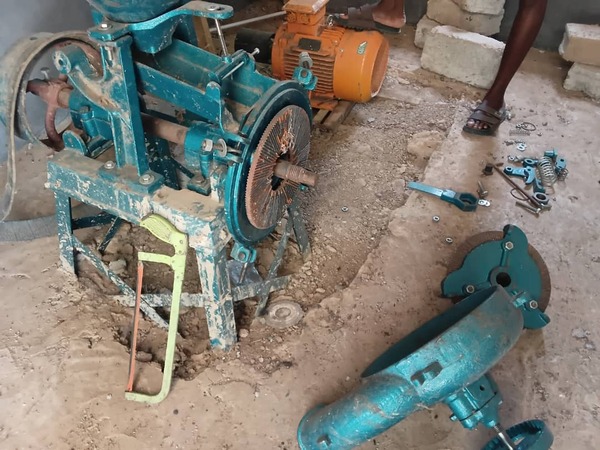
Development projects led by Members of Parliament (MPs) are often viewed as lifelines for communities, bridging the gap between local needs and national resources. Beyond their constitutional roles of legislation and oversight, MPs like Hon. Isaac Adongo of Bolgatanga Central have taken on direct intervention projects to address pressing grassroots issues and promote equitable resource distribution. One such intervention, the grinding mill project spearheaded by Hon. Adongo, was envisioned as a beacon of economic empowerment and relief for rural communities. Funded through the MP’s District Assembly Common Fund, the initiative set out to benefit fifteen communities by providing grinding mills to ease economic hardship and support local livelihoods. However, a recent findings by Apexnewsgh has revealed troubling challenges threatening the project’s success. In early June 2026, Apexnewsgh visited nine out of the fifteen beneficiary communities to assess the state of the grinding mill projects. The findings were sobering: all sites visited were either inactive or completely non-operational, each facing unique but significant obstacles. Common issues included: Locked and unused facilities Incomplete machinery installation Mismatched or missing machine parts Lack of electricity supply Buildings without grinding mills or with uninstalled equipment In several cases, facilities stood empty or had equipment that was never commissioned. For instance, at one site, the utility pole intended for power supply lay uninstalled on the ground. At others, critical machine parts were missing or incompatible, rendering the mills unusable from the outset. Community members and Assembly member expressed deep frustration. In Sumbrungu-Atoobisi, Assembly member Hon. Azure Samuel lamented his exclusion from the project’s planning and implementation, highlighting a lack of stakeholder engagement and gaps in accountability. “I have nothing to say because I was not carried along as a community leader,” he said, voicing a sentiment echoed in other communities. The investigation painted a picture of locked doors, silent machines, and mounting disillusionment, a far cry from the promise of economic empowerment. Detailed Findings by Community Sumbrungu-Nyobongo: Facility connected to electricity and fitted with a meter, but not yet linked to the grinding mill. The community awaits final electrical connections; the facility remains locked. Amogrebisi (Atoobisi Electoral Area): Building connected to power and metered, but locked and non-operational. Assembly member unable to give account of the project in his commutiy because he was not consulted on the project. Sumbrungu Akuka Women’s Centre: Machines and electricity are in place, but the motor was yet to be not installed as at the day Apexnewsgh visited. The entrance is secured with stones instead of locks, raising concerns about security and maintenance. Azorobisi: Facility operated only briefly at commissioning before a mechanical fault was detected. Since then, it has remained closed and unused. Kolgo Aguusi: Grinding mill non-operational; community members say parts are faulty and require replacement, despite electricity being connected. Kunbangre: No power connection, no electric meter installed, and the utility pole remains on the ground. The building is painted but unused. Sherigu-Baseongo: Building connected to power, but the grinding mill machine was never installed as at the day Apexnewsgh visited.. Dorongo-Aperika: We observed that the building was powered and metered, but grinding machine parts are mismatched and separated, leaving the machine inoperable. Tindonmolgo: Facility appears ready, with power and meter in place, but remains non-operational as the community plans a meeting to address usage before the official launch. It is important to note that Apexnewsgh was able to visit only nine out of the fifteen planned beneficiary communities; the operational status of grinding mill facilities in the remaining six communities could not be verified. MP’s Response and Acknowledgement Following weeks of findings, Apexnewsgh met Hon. Isaac Adongo during repair efforts at Dorongo-Aperika, where he personally supervised the matching of machine parts and ensured electricity credit was purchased to facilitate repairs. Hon. Adongo explained that while community members were familiar with grinding mill operation, incompatible replacement parts had stalled progress. He pledged to see the machine operational before leaving. Looking ahead, Hon. Adongo identified the need for comprehensive operator training across all fifteen communities, stressing that each grinding mill required specific operational skills. He called on suppliers to offer in-depth training for local operators, ensuring sustainability and effective use of the facilities. Addressing challenges in Baseongo and Kunbangre, the MP cited site preparation delays and electricity access issues, sometimes caused by land disputes and the need for additional infrastructure. On funding and transparency, he clarified that the project was funded from his common fund in partnership with the district assembly, which maintains detailed financial records. The project’s total cost, according to credible sources, stands at GHS 1,334,443.90, with each unit, including structure, electrification, supply, and installation, costing GHS 88,962.93. Responding to concerns about the exclusion of Assembly members like Hon. Azure Samuel, Hon. Adongo acknowledged the oversight, promising to involve such leaders in future engagements and ensure greater stakeholder inclusion. Recommendations for Project Success To overcome these challenges and realize the grinding mill project’s original goal, the following recommendations are proposed: Strengthen Stakeholder Engagement and Communication Involve Assembly members, community leaders, and local groups in planning, implementation, and monitoring. Regularly update communities on project status and address concerns promptly. Establish a project committee in each community to oversee operations and gather feedback. Complete Installation and Commissioning Conduct a comprehensive audit of all sites to identify incomplete installations and faulty machinery. Work with suppliers and technicians to ensure all machines are properly installed, tested, and commissioned before handover. Resolve Power Supply and Infrastructure Issues Liaise with the Volta River Authority (VRA) for timely power connections. Address issues such as uninstalled utility poles or delayed electrification urgently. Consider alternative power solutions where grid connection is not feasible. Provide Comprehensive Operator Training Organize hands-on training sessions for local operators, tailored to the specific machinery installed. Ensure training covers troubleshooting, maintenance, and safe operation. Establish Routine Maintenance and Rapid Response Mechanisms Set up regular inspection and servicing schedules. Develop clear fault-reporting and rapid repair processes. Allocate a small fund for emergency repairs and spare parts. Promote Transparency and Community Ownership Publicize