







Starving Young Minds: The Devastating Impact of Denied School Meals
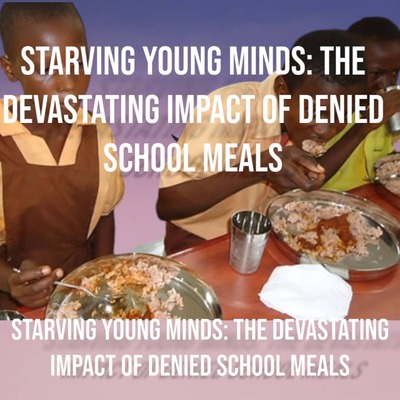
⇒DOCUMENTARY BY NGAMEGBULAM CHIDOZIE STEPHEN⇐ At Kalbeo Tindonsoblgo in the Upper East Region, a small and impoverished community where most parents are poor farmers struggling to make ends meet, a quiet crisis is unfolding. The government’s School Feeding Programme, which is meant to provide a reliable source of nourishment to school pupils, has faltered, leaving the children at Kalbeo Tindonsoblgo Primary School hungry and uncertain. For these children, the meals they receive at school are not just food; they are a critical source of energy that helps them concentrate on their studies. Without it, their ability to focus and thrive in school is compromised. The 2024 Global Hunger Index paints a gloomy picture of Ghana, ranking it 66th out of 127 countries. This statistic is painfully real for communities like Kalbeo Tindonsoblgo, where hunger is an ever-present concern. Instead of looking forward to lunchtime with anticipation and relief, the children are met with disappointment, a constant reminder of the daily struggles their families face. Once hopeful and eager, their faces now reflect fatigue, their energy drained by the absence of regular meals. Yet, even in their weariness, their resilience remains strong. Despite these challenges, there is hope for change. The community’s strength and determination cannot be overlooked. Through the collective efforts of parents, educators, and well-wishers, the School Feeding Programme can be restored, providing more than just food. It will restore the children’s confidence, reminding them that they are cared for, valued, and worthy of every opportunity. A reliable meal will do more than fill their stomachs; it will bolster their sense of self-worth and enable them to focus on their education, knowing that a brighter future is within their grasp. Addressing this issue is not just about providing a meal, it’s about nurturing the dreams and aspirations of an entire generation. Stella and Azumah, the caterers responsible for providing meals for school pupils at Kalbeo Tindonsoblgo Primary School, had neglected their duties, leaving the children to face the harsh reality of hunger. Throughout the previous term, the pupils were served food only on a handful of days, forcing many to go without proper meals. As the school year drew to a close in July 2024, the consequences of this negligence became painfully evident. The days turned into weeks, and children who once brimmed with energy were now lethargic and distracted, struggling to focus on their studies. Their health suffered greatly, and the vibrant laughter that used to fill the schoolyard was replaced by quiet resignation. Conversations among parents revealed a shared sense of frustration; while they appreciated the government’s efforts to improve nutrition for their children, they could only lament the failure of the program at Kalbeo Tindonsoblgo School (KTS). Some parents spoke earnestly about their hopes for the initiative, believing it could uplift their children’s futures. However, witnessing the deterioration of their wards due to inadequate nutrition was heartbreaking. The community rallied together, calling for immediate action to restore the feeding program to its former glory. With the future of these young learners hanging in the balance, the urgent need to address the situation became crystal clear. It was imperative that the necessary steps be taken to ensure children at Kalbeo Tindonsoblgo Primary School received the fundamental nourishment they needed to not only survive but to truly thrive in their educational journey. The community deserved better; the next generation’s potential depended on it. In the heart of Ghana, amidst the vibrant landscapes and bustling towns, lies a small and struggling community that tells a poignant story of resilience and desperation. The national school feeding program in Ghana was designed to be a beacon of hope. Its goals were noble: to reduce hunger and malnutrition, increase school enrollment, attendance, and retention, and boost domestic food production. Ultimately, it aimed to break the chains of poverty and enhance food security for the nation’s future. But at Kalbeo Tindonsoblgo Primary School, those promises felt like a distant dream. The reality was stark and disheartening. The children, eager to learn and play, faced the harsh silence of empty bellies. The purpose of the feeding program had been betrayed by these caterers who had, time and again, failed to fulfill their commitments. They neglected their duties, leaving the students with little more than the hope of a meal. Last term, the children were fed on only a handful of days, with months stretching between their meager portions, until the school closed for vacation in July 2024. The impact was devastating. They struggled to focus in class, their minds foggy with hunger. As days turned into weeks, attendance became a struggle. Children who should have been eager to gather around their teachers were instead forced to choose between learning and the gnawing pain of an empty stomach. Retention rates plummeted, and with that, the community faced an unsettling reality where poverty continued to grip them tightly. The cries of the Kalbeo Tindonsoblgo Primary School community echoed with urgency. Parents and teachers alike knew that something had to change. They longed for intervention and accountability; they needed the authorities to step in and hold the negligent caterers responsible for their failures. Swift action was necessary to ensure meals were delivered promptly, safeguarding not just the health of the children but their right to an education. As I delved deeper into the investigation surrounding the catering services at Kalbeo Tindonsoblgo Primary School, I found myself seated across from the headmistress in her modest office. Her weary eyes held a mix of frustration and concern, a reflection of the troubling situation unfolding at the school. “Tell me about the catering services provided by the two vendors,” I prompted, hoping to glean more about the persistent issues. Madam Wayo Ajara, the headmistress, paused, carefully weighing her response. “Well, to put it bluntly, the pupils haven’t been fed properly, even on the few days the caterers did show up. Every time I voice my complaints, the caterers will just become confrontational.” Her voice carried a sense of urgency
Upper East Regional NPP Director Dismisses NDC’s Claims on GSFP, Describes Statement as False

In a recent statement, the Upper East Regional Director of the New Patriotic Party (NPP), Peter Ayinbisa, vehemently criticized the National Democratic Congress (NDC) for propagating false information about the Ghana School Feeding Program (GSFP) in the Upper East Region. Ayinbisa further described the NDC’s claims as malicious and rooted in their desperate pursuit of political power. He clarified that the School Feeding Program was initially introduced by the John Agyekum Kuffour government in 2005. The program’s objective was to enhance food security and reduce hunger, aligning with the Sustainable Development Goal 2. Over the years, the program has witnessed significant growth in terms of the number of children served and the financial commitment from the government. The budget allocation for the GSFP has increased, with the feeding cost per child rising from GH¢ 0.80 in 2016 to GH¢ 1.20 and GH¢ 3.20 in subsequent years. The number of children benefiting from the program has also increased from around 1.6 million in 2016 to over 3.3 million currently. This expansion demonstrates the government’s dedication to achieving 100% coverage in the Upper East Region. Ayinbisa acknowledged that there are outstanding payments to caterers, a standard practice within the program. However, he assured caterers that efforts were underway to settle these arrears. The NPP government remains committed to the continuity of the program, despite the economic challenges faced by the country. Furthermore, Ayinbisa refuted the NDC’s claim that caterers have not fulfilled their contractual obligations since the reopening of schools. According to investigations, the majority of caterers are diligently providing meals for school children, with any delays being isolated incidents and not indicative of government negligence. According to Peter Ayinbisa, in an attempt to deflect attention from their lack of constructive criticism, the NDC included unrelated issues such as capitation grants and dual desks in the North East region. He dismissed these claims as baseless, citing the NPP government’s increased budgetary allocations for education, including a significant rise in capitation grants. Ayinbisa challenged the NDC to substantiate their allegations of caterers being owed for three terms and a desk deficit in the North East region. He emphasized the government’s commitment to Ghana’s development, particularly in education, hunger reduction, and sustainable development. Ayinbisa urged the public to disregard the NDC’s statement and have confidence in the proven track record of the NPP administration. Source: Ngamegbulam Chidozie Stephen Please contact Apexnewsgh.com on email apexnewsgh@gmail.com for your credible news publications. Contact: 0256336062
Corruption and fraud: Whooping amounts paid to ghost schools for School Feeding Programme

When Mr. Kufuor launched the Ghana School Feeding Programme (GSFP) it worked. Both children and parents were satisfied and happy. The programme encountered some financial problems. Salaries and payments for food items were in arrears. When Akufo-Addo took power, he extended the feeding programme to Senior High Schools. The good news is that the National Coordinator of the Ghana School Feeding Programme, Dr. Gertrude Quarshie, hinted that the government has given approval for the release of funds to pay all arrears up to the first term of 2021. Since its inception, appointments to GSFP were done on party lines. The programme was a laudable one but the financial difficulties it encountered were man-made. The GSFP was fraught with corruption. As a result the former coordinator, Dr. Adu Nsiah, was suspended, in December 2018 over allegations of supervising fictitious deals in the management of the programme. He was, however, exonerated by a committee set up by Akufo-Addo. Several financial irregularities revealed in the 2018 Auditor General’s Report have led to losses to the state in the running of the programme. 81 Metropolitan, Municipal, and District Assemblies (MMDAs) were blamed for excessive financial mismanagement. It came to a point when there was not enough money to pay food suppliers. The Auditor-General uncovered a serious financial loss to the state from 2014 to the present day. In 2014 it was alleged that GHc12m were paid to ghost schools. This fraud continued and when it was uncovered by the Auditor General in 2021, the defrauded amount had reached GHc2bn! Now the question is: how can such fictitious deals go on for such a long time when the Auditor General’s department sends out annual audit reports? Who were the cheques paid to? In which accounts did the monies go? I will not be surprised if some big shots are involved. Ghanaians are interested in the scandal. (UNESCO) started a case study to see how effective the school feeding programme was in 14 countries. The countries in Africa involved in the study were Ghana, Nigeria, Ivory Coast, and Morocco. Five countries each were also chosen from Asia and Latin America. Many things went into the study, including procurement of food, budgetary planning, the quality of food given to the children, and employment procedures. The conclusions drawn from the study was a woeful one for Ghana. Ghana was at the bottom of the list of all the countries in terms of budgetary planning, quality of food served to the children, corruption, and fictitious deals. The Ghana School Feeding Programme is likely to enter into crisis if strict measures are not taken. The first step is for the authorities to make sure that jobs are given to those who are qualified rather than giving employment on party lines. It is also not proper for matrons or cooks to play the role of suppliers of food items while they receive salaries for the jobs they do in the schools. One sad thing is that these suppliers condone the authorities and hike up the prices. It seems the Ministry responsible for GSFP is not on top of the affairs. Some of the workers have not been paid for more than six months. Suppliers are also facing a similar problem. Not all schools in Ghana are enjoying free food. If the government does not take the programme seriously, the scheme is likely to collapse. —Stephen Owusu Please contact Apexnewsgh.com on email apexnewsgh@gmail.com for your credible news publications. Contact: 05555568093
Your arrears’ll be paid immediately after Easter – GSFP to caterers
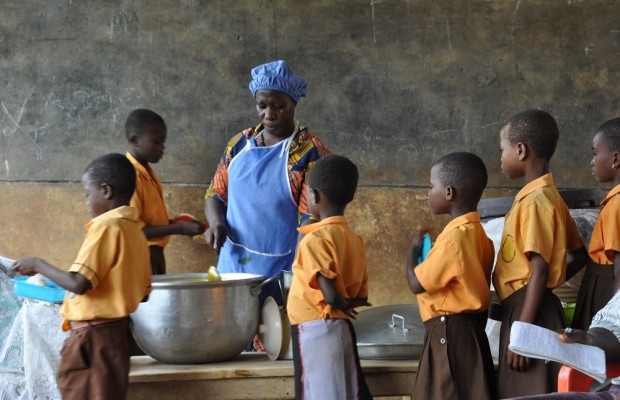
The management of the Ghana School Feeding Programme (GSFP) has said funds are being mobilised to pay all the remaining arrears due caterers for providing a hot meal a day to Form 2 and Form 3 Junior High School students. A statement signed by the Public Relations Officer of the Programme, Siiba Alfa, on 30 March 2021, urged the caterers “to exercise restraint while we engage the appropriate authorities for the release of the funds to defray the arrears immediately after the Easter break.” “We wish everyone a happy Easter and look forward to resolving our payment issues after the holidays,” the statement added. Last year, the government directed the GSFP to provide one free hot meal daily to students, as part of measures toward curbing the spread of the COVID-19 pandemic. Please contact Apexnewsgh.com on email apexnewsgh@gmail.com for your credible news publications. Contact: 0555568093