






The Broken Chalkboards: Hon. Volmeng David Nansong suggests reintroduction of corporal punishment in schools

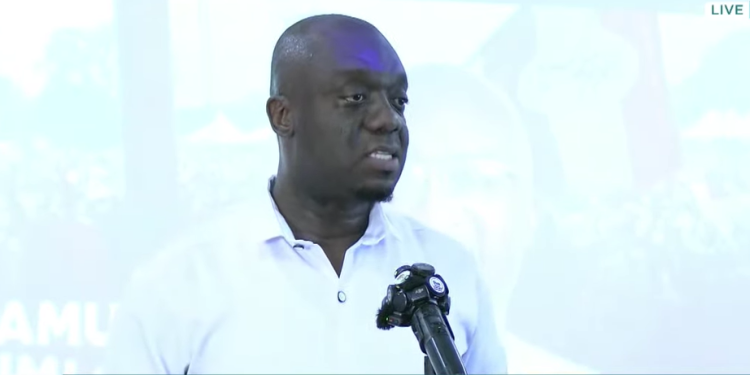
In recent times, become grounds for unrest rather than learning. Hon. Volmeng David Nansong, the Regional Secretary for the Parent Teachers Association (PTA), sat reflecting on an alarming trend: student riots erupting across the region’s secondary schools. His thoughts, captured in an Apexnewsgh documentary titled “The Broken Chalkboards,” produced by Ngamegbulam Chidozie Stephen, were not only observations but a rallying call to action. For parents, educators, and policymakers alike, this was no longer a problem to ignore. David Nansong spoke with the gravity of one entrusted with the hopes of parents and the future of children. “As secretary to the PTA,” he began, “I see the immense role parents play. But what’s truly causing these issues in our secondary schools?” He leaned forward, voice steady: “There are two main issues. The first is the use of mobile phones.” Kindly watch the full video here: https://youtu.be/GSQR3-T6EaE. Mobile phones, once symbols of progress and communication, had become the root of chaos. Although regulations prohibited their use in schools, compliance was abysmally low. Many students did not, in fact, buy these devices themselves; parents, often unknowingly, supplied them. Others acquired phones through less innocent means: gifts from boyfriends, odd jobs, or even theft. School administrators, recognizing the danger, had begun confiscating these devices. The response from students was swift and organized. Plans were hatched to incite confusion and riots, creating opportunities to break into storage rooms, most notably, the senior house master’s office, where confiscated phones were kept. “I can mention Zamse Senior High Technical, Bolga Senior High, and others,” he recounted, “where students broke in and reclaimed their phones. Fortunately, the school management, with the help of the students themselves, identified and apprehended the culprits, who were handed over to the police.” But the aftermath was sobering. Offices vandalized, damages incurred, and in some instances, violence escalated, libraries burned, water systems destroyed, all in pursuit of forbidden phones. The second major catalyst was the spillover of local conflicts, particularly the recent unrest in Bawku. Rivalries between tribes, which found their way into school corridors, fanned the flames of discord. “The conflict didn’t remain in the community,” Nansong explained, “it spilled into the schools, especially in rural areas. Students affiliated with opposing tribes carried tensions into classrooms, turning academic environments into battlegrounds.” It was not uncommon, he noted, for a spark in one school to ignite unrest in another. Through informal networks and social media, students coordinated actions across institutions, threatening the fragile peace that school authorities struggled to maintain. A third, subtler factor was the introduction of the Free Senior High School policy. While the initiative was lauded for making education accessible to all, it unintentionally eroded accountability. “Students now believe that regardless of their performance, they’ll remain in school. There is no demotion, no consequence for failure,” Hon. Nansong observed. “Whether they study or not, promotion is guaranteed.” This lack of academic consequence bred apathy. The abolition of corporal punishment, though a progressive step, left teachers wary. Fearful of repercussions, teachers hesitated to enforce discipline. “Students took this as license to misbehave. Teachers, uncertain of their limits, often turned a blind eye,” Nansong lamented. The cumulative effect was a student body emboldened to challenge authority, sometimes going as far as publicly insulting national leaders on social media, and a teaching staff rendered powerless to intervene. As if these challenges were not enough, the years 2023 and 2024 brought a new crisis: food shortages in schools. Adolescents, still growing and hungry, found themselves subsisting on meager rations, plain maize, garri and beans, porridge without sugar. “At that age, they cannot sustain hunger for long,” Mr. Nansong pointed out. “The lack of proper nutrition led to frustration and, for some, the riots became an outlet for their grievances.” School leaders, bound by bureaucracy and perhaps fear of reprisal, rarely spoke openly of these shortages. Yet, for those in leadership, the link between inadequate feeding and student agitation was clear. By 2025, however, the situation seemed to improve. Reports of food scarcity dwindled, and the frequency of demonstrations reduced. The only major incident that year stemmed from renewed tribal conflict, not deprivation. Hon. Nansong’s message to parents was stern: “Charity begins at home. Parents must be vigilant about what their children bring to school, especially mobile phones.” He urged parents to interrogate the source of any phone call received from their child at school, to visit schools regularly, and to keep in touch with teachers. He recounted a tragic incident where a student, believed by his parents to be attending school, drowned at a hotel swimming pool. School records revealed the student had never reported for the term. “If parents had checked, they would have known,” Nansong said, underscoring the need for constant communication between home and school. Recent debates over student appearance, particularly the directive for students to keep their hair neat and trimmed, sparked national conversation. Mr. Nansong supported the Education Minister’s stance, comparing school regulations to those of security services and training colleges. “In the security services, there are prescribed hairstyles and uniforms. Nursing trainees can’t do their hair anyhow. Why should this be an issue for our students?” he asked. He emphasized that neatness did not preclude natural hair, but rather discouraged neglect and disorder. He dismissed comparisons to the Achimota Rastafarian case, noting that religious exceptions were different from general discipline. “This is not about curtailing freedom; it’s about instilling the standards needed for communal learning and personal responsibility.” Hon. Nansong’s reflections were not a condemnation of today’s youth. “Not all students are bad,” he affirmed, “but certain behaviors threaten the peace and progress of all.” He recounted with sadness how, at Zamsi Senior High, students vandalized the senior housemaster’s office and stole confiscated mobile phones before their final exams. The responsible students were held accountable for the damages. “If a poor widow sends her child to school, and the child destroys property, it is only fair that the student pays for it,” he reasoned. “If you know