


UER: Maintenance of Vea Dam to kick start 2023—Agric Minister
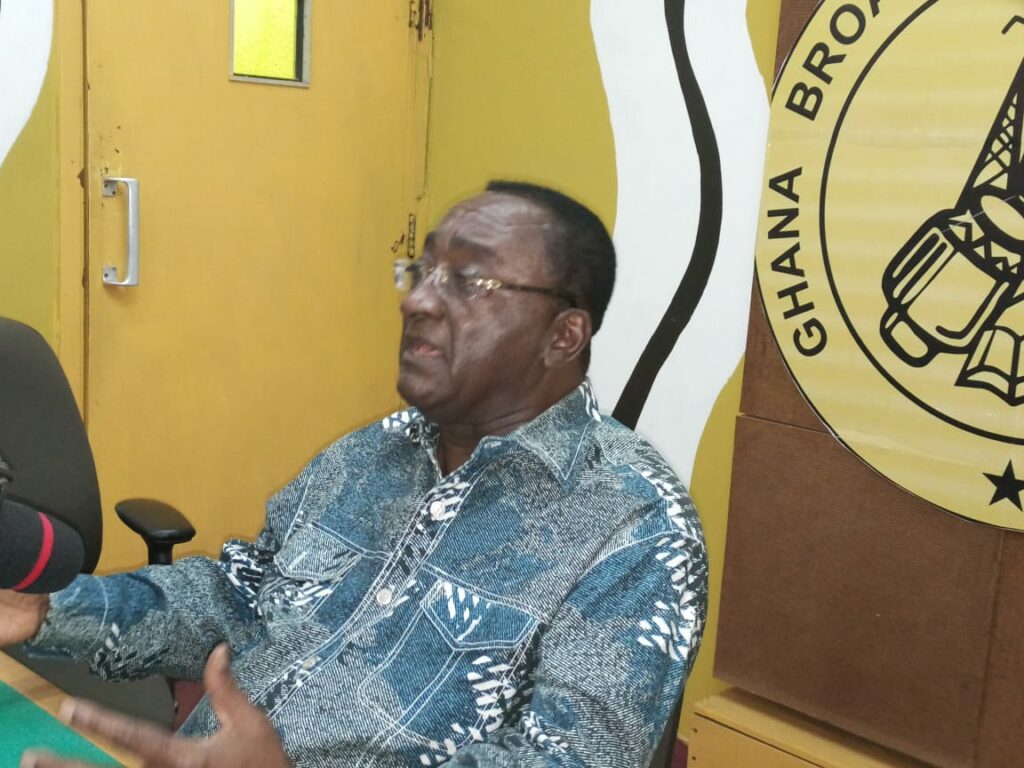
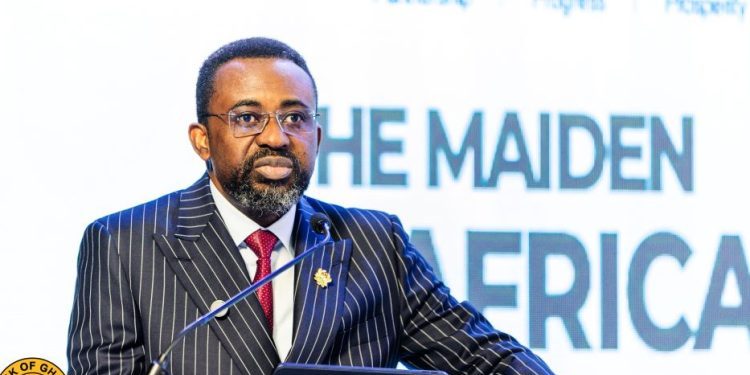
The Minister in charge of the Ministry of Food and Agriculture Dr. Owusu Afriyie Akoto has announced to the people of the Upper East Region, that Vea rehabilitation will kick start next year 2023. Apexnewsgh.com report The Minister who was on a visit to the Upper East Region made the pronouncement during a radio engagement at Ura Radio monitored by Apexnewsgh.com on Wednesday, December 7, 2022. “When it comes to Vea Dam, Vea was one of the three major dams built in the 1970s which we allowed to go to waste in terms of lack maintenance and so on”. “Since this government came, we have received a loan from the World Bank for rehabilitation a $110 million has been put into Tono irrigation scheme and what is left is Vea to get the money to start the project. So, the Vea dam we now have funding, so we are going to start with the rehabilitation in the 2023 season”. The Minister said Source: Apexnewsgh.com/Ghana For publication please kindly contact us on 0256336062 or Email apexnewsgh@gmail.com
Pawlungu Multipurpose feasibility studies cost $60 to $70 million U.S dollars– Dr. Owusu Afriyie Akoto
Dr. Owusu Afriyie Akoto, the Minister in charge of the Ministry of Food and Agriculture has revealed that feasibility studies conducted at the Pwalungu Multipurpose Dam Project cost between $60 to $70 million United State dollars. Apexnewsgh.com report The Minister made the revelation in the Upper East Region during a radio engagement with Ura Radio monitored by Apexnewsgh.com on Wednesday, December 7, 2022.The Minister also revealed that the construction of the Pwalungu Multipurpose will cost One Billion U.S dollars ($1 Billion). “Now the Pwalungu is a big one, is going to cost us a billion U.S dollars ($1Billion) when the President Inaugurated it three years ago, we were talking to financiers including the Chinese government to see how we will do it. The feasibility studies have been completed and now we have a document to go out searching for money to come and start the project, so definitely the Pawlungu will be a big one, it will be the biggest single investment in the who of the 5 Savanna regions since independence. So, they should be hopeful, it will come on”. He assured He added: “Feasibility studies cost $ 60 to 70 million U.S dollars” The Minister reveals Source: Apexnewsgh.com/GhanaFor publication please kindly contact us on 0256336062 or Email apexnewsgh@gmail.com
President promise of Agriculture collage Fumbisi is not dead– Dr. Owusu Afriyie Akoto
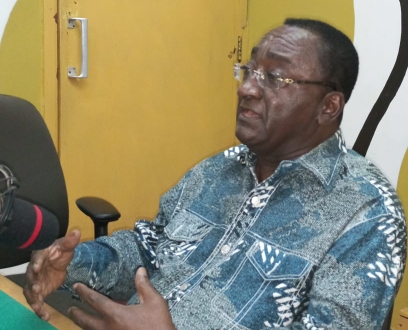
Dr. Owusu Afriyie Akoto, the Minister in charge of the Ministry of Food and Agriculture has assured to the people of Fumbisi in the Upper East Region, that the promise of establishing an Agriculture College in Fumbisi which was made by President Akufo Addo during his past visit to the area, has not been abandoned or dead. Apexnewsgh.com report Dr. Afriye gave the assurance during his visit to the Upper East Region during a radio engagement at Ura Radio monitored by Apexnewsgh.com on Wednesday, December 7, 2022. He said: “I was there when the President made that promise of Agriculture collage in Fumbisi, that promise is not dead. We have to do the infrastructure in Fumbisi. Fumbisi has 8 hill valleys, the one Valley which is being developed hasn’t even been completed, never mind the other huge 7. The 7 if developed can supply of whole of West Africa with our rice requirement and am not joking. So, the priority is to come and build the infrastructure, clear the land, level the land for investors to come in and take over, and that we are doing through Savanna Accelerated Productivity Project and that has done 300 hectors last year in the area and trying to expand it to add another 5000 hectors in the next 2-3 years under the new SAPP which is a loan from the African Development Bank”. He said they want to build an infrastructure development for the production to take place”. Source: Apexnewsgh.com/GhanaFor publication please kindly contact us on 0256336062 or Email apexnewsgh@gmail.com
Savanna Investment Programme: Upper East Region farmers benefited from SIP 22,600 Guinea keets distribution
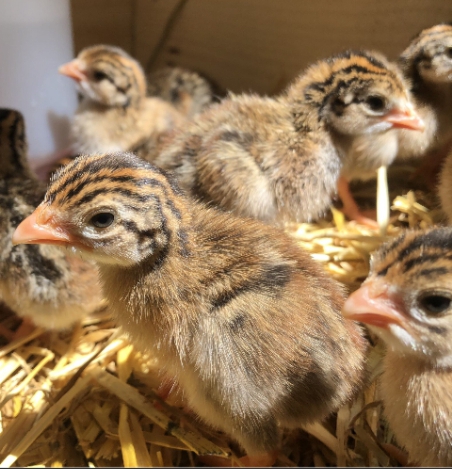
Under the Savanna Investment Programme (SIP) farmers in the Upper East Region In 2021, Guinea keets numbering 22,600 were given to 20 selected out growers to breed is a one-time activity of the project and is a request from the district and the project provided that and keets were given to farmers at a subsidized price of Ghc4.00 per keet. Apexnewsgh.com report This was according to the Upper East Regional Director of Agriculture, Mr. Francis Ennor when he spoke to Ngamegbulam Chidozie Stephen of Apexnewsgh.com on Thursday, September 1, 2022. The Savannah Investment Programme (SIP) aims to reduce the importation of animal protein, enhance the competitiveness of the poultry industry, improve small ruminant breeds and contribute to improved food and nutrition security in Ghana. The Programme seeks to increase farmers’ food and nutrition security and incomes through increased agricultural productivity and diversification; and enhance the creation and strengthening of agribusinesses to increase the incomes of actors along the selected value chains on a sustainable basis. The project has four components :(i) Access to Agriculture Finance,(ii) Production Development,(iii) Agri-Business and Value Chain Development and(iv) Project Management and Institutional Support. The Programme will be implemented over a five-year period (2019 –2024) at a total cost of UA25 million, of which UA20 million is a loan from the ADF and UA5 million represents the Government and beneficiaries’ contribution. Source: Apexnewsgh.com Please, for publication kindly forward your article on apexnewsgh@gmail.com
Rearing for Food and Job: 2000 farmers benefited from the distribution of sheep in the Upper East
Under the government policy initiative Rearing for Food and Job (RFJ) 2000 sheep were distributed to interested farmers in five districts in the Upper East Region for rearing. The Regional also mentioned that “2019 we received 2500 cockerels from the Savanna Investment Programme for 5 districts and each district received 500 cockerels and it went to 50 beneficiaries which means 10 cockerels per beneficiary. This was according to the Upper East Regional Director of Agriculture, Mr. Francis Ennor when he spoke to Ngamegbulam Chidozie Stephen of Apexnewsgh.com on Thursday, September 1, 2022. “This means every district had Four Hundred Sheep and it went to 40 beneficiaries and in all these 40 beneficiaries each one was given 10 sheep comprising nine female and one male. And the idea is that the beneficiaries will keep these animals for two or three years. Then, after that, we pick the upspring from them and distribute it to other farmers who could not benefit initially” “So that over time, most of the people within the district will be able to have access to upspring to benefit”.According to Mr. Ennor, those who benefited from the exercise did not pay anything before, giving them the animals. He said: “the only criteria we set were to make sure that you are interested, you are already in the business, you will avail yourself to any programme that comes and you have a house for the animal, you are prepared to feed them, medicate them and we sign MOU with the farmer who develops the interest, that the animals are given to them to make sure that they kept them very well for them to pass on upspring to the other beneficiaries”. Meanwhile, he also revealed that recovery is ongoing, I think there is one particular district we are having some problems with the passing of upspring. Some people have poisoned the mind of some farmers that when they go for the upspring they will toss up and down” he expressed Source: Apexnewsgh.com||Ghana Please for your publication kindly forward your article on apexnewsgh@gmail.com
UER: Farmers to experience low production this farming season because of…
Mr. John Akaribo a peasant farmer with the Upper East Peasant Farmer Association has said due to numerous challenges bedeviling the activities of farmers in the Upper East Region, there is a huge possibility of a reduction in the 2022 farming seasonal activity. Mr. Akaribo revealed this during an exclusive interview with Ngamegbualam Chidozie Stephen of Apexnewsgh.com Wednesday, August 31, 2022. According to him, “Normally in Agriculture when people see that there is a heavy downpour, they think that is all about it but we are talking about the distribution that will make crops very effective. So, this year the distribution is not far and we have already lost some of our early crops like the Naara and other things we have lost lot of them and even in the rice sector, we have also lost the rice in some other parts. Because at the time the rice was germinating, we experience a long drought and some of us will not get anything because of that”. He said“And secondly, Agric Production goes with the subsidies like fertilizers, inputs and this year fertilizer has been a challenge to farmers by way of being inadequate and the high cost of the fertilizer. If a 50kg of fertilizer is going for Ghc 320.00 then how do expect the open market to be? So, these are some of the challenges”. He explained He said: “This implies that farmers will definitely cut production. If you are going in for 10 acres definitely you cannot go in for 10 acres again, you have to reduce it to 5 acres”.However, he believes that food production this year will see a tremendous reduction. “This year, we are likely to see a reduction in production and that implies that we are not going to get anything like the prices of goods and services is going down but we are praying that what we have now in the market can be sustained” he maintained. Source: Apexnewsgh.com
Farmers Day: Diary With Former Minister for Lands and Natural Resources Inusah Fuseini–A Must Read

As Ghana celebrates its 37th edition of Farmers Day, Apexnews-Ghana has been focusing its attention on Ghana’s former Members of Parliament who after moving out of Parliament, have decided to venture into farming as their lifetime business. Mr. Inusah Fuseini is a Ghanaian Lawyer and Politician. He is a former Member of Parliament for Tamale Central constituency and the former Minister for Lands and Natural Resources. One amongst these MPs turned full-time farmer, is Mr. Inusah Fuseini. He was also the former Member of Parliament for Tamale Central constituency and the former Minister for Lands and Natural Resources. As I write today, Mr. Inusah Fuseini is a full-time farmer. This year 2021, he was able to farm 300 acres of rice, as at today Saturday, December 4, 2021, he has already harvested 4,000 bags of rice for the season and hoping to harvest more. Mr. Fuseini said, he is happy and enjoying peace of mind with his current chapter in life. Below is his engagement with Apexnews Ghana Ngamegbulam Chidozie Stephen on Farmer’s Day: Question: What is the impact of government policy ‘PFJ’ to you as a farmer? For me, the impact of the policy Planting for Food and Jobs (PFJ) on my activity is the fact that I am into seed production and my seeds will help the policy because peasant farmers will be able to have access to quality seeds for their farms at subsidized prices. But, If you are a commercial farmer and you are into grains, you are not part of the PFJ. You have to buy your input from the open market. You don’t enjoy any subside, you buy your fertilizer from the open market, you buy your seeds from the open market, you buy your chemical from the open market a commercial farmer is not part of the policy initiative. The policy is a poverty alleviation programme, peasant farmers who cannot afford quality seeds, we provide them with quality seeds at subsidized prices. So, when they plant and the yield grows, gradually they will be moving out of poverty because they will be getting better yield. They can’t buy fertilizer in the open market. For the commercial farmer, they presume we have the capacity to buy our farm input. Question: What is your best interest as commercial farmer? To be honest with you, most commercial farmers are not interested in subsidies, we are interested in the market. If I produced, how am I selling? Is there a market? You produced your rice, there is no recognized rice miller. There are small disjointed rice mills around and they buy at different standards, some come with a scale and others don’t come with scale, some of them in every 10 bags, they will collect a bag, some buy a kilo at Ghc1.00 and if you don’t sell, the price of your product will fall and if you have no warehouse to store the product, you will be compelled to sell at a lower price. And as a commercial farmer, if you don’t have a warehouse you will run at a loss because you don’t have a place to store your rice”. That is the reason why when it’s time for harvesting you would see those buyers around trying to buy from commercial farmers immediately after the harvest because they don’t have a place to store their produce and that will force them to sell at a lower price. “And as a commercial farmer, building a warehouse is expensive. So, the one-way government can help commercial farmers, is to build warehouses, so that commercial farmers can rent those warehouses for a period of 6 months. So, with that, if I harvest my rice and there is no market, I can go and put my rice in the warehouse for a certain period of time and before I take the rice I will pay rent, but the rent will be lower. So with that, the commercial farmer will be able to recoup his or her investment”. “Apart from that, the problem for commercial farmers is how to get a market. Because, if the market is good we don’t need any government intervention because we will produce and sell. As a commercial farmers, we are producing to sell not to consume. This year, I farmed 300 acres and I have already harvested about 4,000 bags of rice”. Question: Would you say farming is better than being a Parliamentarian? No, life is in chapters, what am doing now has its challenges and its experiences. It gives me peace of mind and happiness, it makes me conjure of myself, whatever I do, I do for myself, if I do good I do for myself and if I do bad I do for myself, if I put on hard work, am putting it for myself”. So, I don’t need any motivation for anyone to tell me to work hard. I have to work hard because am working for myself. Unlike when one is in parliament, your party is on you, your constituents are on you. “So, this time when I get up and say am going to the farm, am going to the farm, when am at the farm working and feeling tired and I say am going home, am going home, when I say I will get to the farm at 6 o’clock in the morning, I will go to the farm at 6 o’clock in the morning. So, in this chapter of my life, i am in control of myself”. MORE TO COME Apexnewsgh.com/Ghana/Ngamegbulam Chidozie Stephen Please contact Apexnewsgh.com on email apexnewsgh@gmail.com for your credible news publications. Contact: 0555568093.
Food shortage: Mahama engaging in scaremongering – Agric Ministry

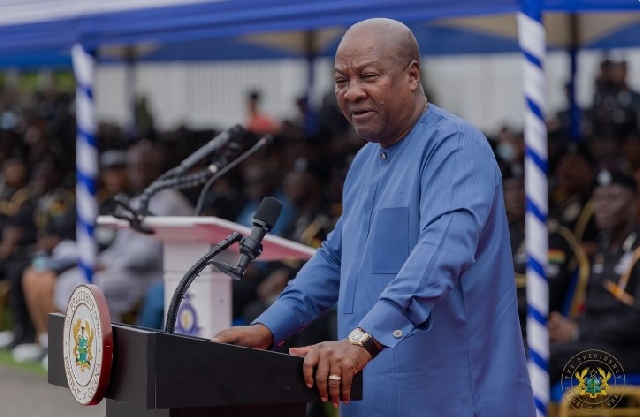
The Ministry of Food and Agriculture has dismissed concerns by former President John Mahama in relation to a likely food shortage in the country next year. In a statement, the ministry said Mr. Mahama is perpetuating lies just to assuage public anger after his do or die remarks about the 2024 election. “The former President, in an attempt to shift the public discussion from his rather reckless and infamous ‘Do or Die’ comment which has attracted public backlash, has decided to attack one of government’s most successful flagship policies Planting for Food and Jobs.” “In fact, apart from becoming desperately notorious for making reckless comments in recent times, the former president is now also engaging in scare-mongering, thriving on lies and falsehoods just to put fear in Ghanaians,” the statement added. The former President has predicted a likely food shortage to hit the country in 2022 if the government does not pump more funds into the programme. Speaking on Moonlite FM in Sunyani as part of his “Thank You Tour”, Mr Mahama said the rising cost of crops can be attributed to the failure of the government to fund the programme which was started by his administration. Justifying why he asserts the Planting for Food & Jobs Programme is a failure, Mr Mahama stated that many farmers including his own brother are yet to receive fertilizers promised by the Akufo-Addo government. “My brother is a farmer and he tells me this year, he has not received any fertilizer supply from government and so he bought his own fertilizer and a bag of fertilizer is very expensive. Normally, he cultivates 300 acres of maize each year. But this year, he had to reduce it, he was not able to cultivate even 80 acres. So there’s a possibility of food shortage next year because the Planting for Food & Jobs Programme has failed.” But the ministry in a response said the PFJ programme had succeeded in its objectives including introducing farmers to fertilizers and improved seeds. “Today, many more farmers are aware of the need to adopt the use of fertilizers and improved seeds in order to increase production.” “We, therefore, wish to reiterate the fact that the country is very safe from any threats of food shortage and that the Former President is only engaging in a desperate scaremongering just for political expediency,” the statement said. Find below the full statement IGNORE FORMER PRESIDENT MAHAMA, HE IS A SCAREMONGER!! Ghana is not facing food shortage, PFJ is very much on course!! Our attention has been drawn to a rather unfortunate comments by the Former President, Mr. John Dramani Mahama, about the status of the country’s agriculture and food security, during his so called Thank You tour across the country. The Former President, in an attempt to shift public discussion from his rather reckless and infamous ‘Do or Die’ comment which has attracted public backlash, has decided to attack one of Government’s most successful flagship policies Planting for Food and Jobs. In fact, apart from becoming desperately notorious for making reckless comments in recent times, the Former President is now also engaging in scare-mongering, thriving on lies and falsehoods just to put fear in Ghanaians. In a meeting in the Bono Region, Former President Mahama is on recorded to have made several false claims about the PFJ programme which was introduced by the President Nana Addo Dankwa Akufo-Addo-led administration in 2017. We wish to set the records straight as follows; INTRODUCTION OF THE PLANTING FOR FOOD AND JOBS PROGRAMME The Former President claimed in his speech that the Planting for Food and Jobs programme was an initiative of the previous NDC administration and that his regime secured funding from the Canadian Government for its implementation. This is completely false. The fact is that the Planting for Food and Jobs is a wholly Government of Ghana (GoG) funded programme. Mr. Mahama has in fact, confused the Modernising Agriculture Ghana(MAG) programme, which involves a $100M Canadian Grant, exclusively meant for the expansion of extension services programme with that of the Planting for Food and Jobs initiative which involves five major areas the Food Crop Model, Planting for Export and Rural Development (PERD), Rearing for Food and Jobs (RFJ), Greenhouse Villages (for Vegetable production and Export) and Mechanization for Food and Jobs. However, it is instructive to note that since 2017, Government of Ghana has spent over $400M Dollars on the PFJ, expenditure of which had gone into subsidies of improved seeds and fertilizers for farmers. It must also be stated that the previous administration of the NDC led by Mr. John Dramani Mahama, left the agriculture sector in a state of moribund and comatose. The extension sector, which is supposed to be the fulcrum around which growth of agriculture revolves, had totally collapsed when the NPP assumed power. Under the watch of Incompetent Mr. Mahama, the extension sector did not see any staff enforcement for four years. Though the country required about 4000 extension officers to support the over 3.5M farmers, the NPP in 2016, inherited less than 1400 staff capacity. The worst part of this situation was that, 80% of the staff had reached their retirement age and were on their way out. To ensure the efficient use of the available resources, President Akufo Addo, under the PFJ programme, immediately granted clearance for the recruitment of over 2700 new extension officers to support the implementation of the programme. Ghana was importing virtually every food item; including thousands of tons of maize, plantain, banana etc from neighbouring countries. Available data in 2016 indicates that Ghana imported about 113,855 and 79,771 metric tons of maize respectively in 2015 and 2016, and same could be said of other major staple foods such as yam, plantain and Soyabean. The food situation of this country was so bad that farmers could not afford fertilizer for their crops, leading low yields. Planting for Food and Jobs therefore came to reverse this trend and by the end of 2017
UER: Farmers wept as Planting for Food and Jobs fertilizers nowhere to be found in the Upper East Region
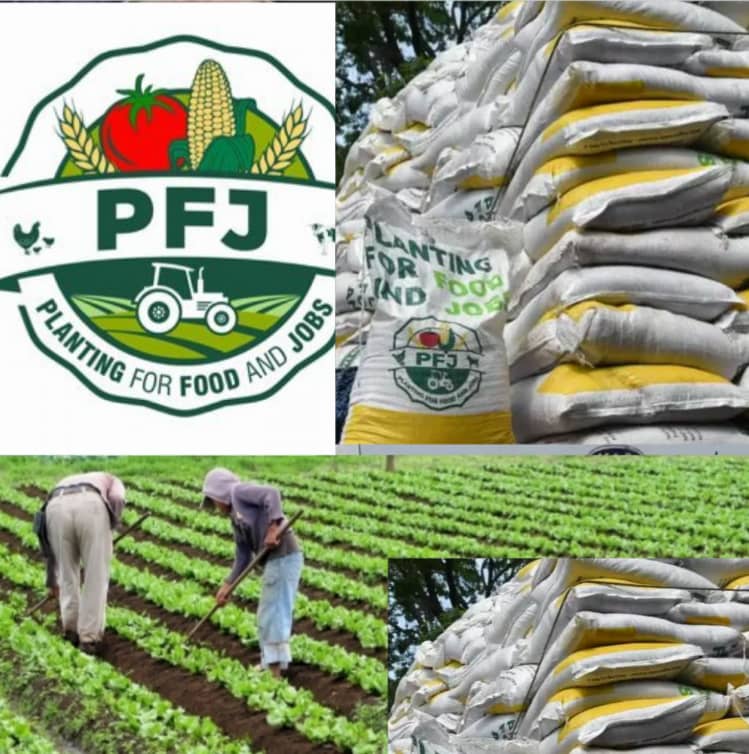
Farmers in the Upper East Region are left with no hope in this year’s farming season as they wept for the current shortage of Planting for Food and Jobs fertilizers in the system. During the last year’s farming season, the region witnessed a massive supply of Planting for Food fertilizers across the region which was facilitated by the government through the Ministry of Agriculture. However, the PFJ policy success Story isn’t the same as usual this year, because the fertilizer is nowhere to be found in any part of the Region. Some farmers who spoke to Apexnewsgh.com say this year’s farming is very difficult for them because the little fertilizer that came through the private business individuals have also entered into the hands of the big men, making it difficult for the ordinary farmer to gain access to the fertilizer. Meanwhile, the Upper East Regional MoFA Director Mr. Francis Ennor, linked the recent shortage as the effect of COVID-19 and a double increase in prices which had actually gone against the government’s will. He described the current situation as a big problem. “Actually this year is not coming as it used to be. It is actually a problem this year”. You see, because of the COVID production have reduced and the prices have also gone up. The government signed a contract with these companies late last year and this year, the prices have almost doubled so is not to their advantage and the government has not gotten the money immediately to meet the shortfall”. He explained “So, they are also reluctant to bring in the fertilizer. That is the problem we are facing now”. According to the Regional MoFA Director Mr. Ennor, the fertilizer they brought to Navrongo is an open market fertilizer and not the Planting for Food and Jobs (PFJ) fertilizer as claimed by some farmers in the Navrongo Municipal. Apexnewsgh.com/Ghana/Ngamegbulam Chidozie Stephen Please contact Apexnewsgh.com on email apexnewsgh@gmail.com for your credible news publications. Contact: 05555568093
UER: CSO in Agriculture stakeholders engagement on women access to arable lands and productive resources
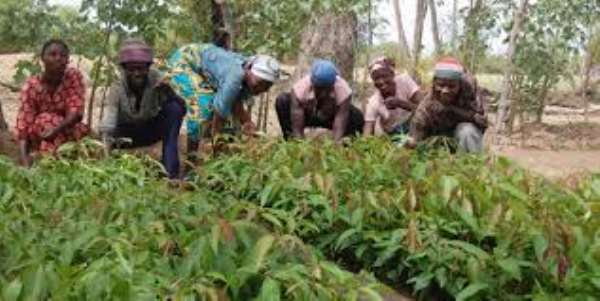
The Upper East Civil Society Organizations in Agriculture platform have called on traditional authorities working closely with landowners to focus attention in facilitating women’s access to arable lands and productive resources as a sustainable way of contributing to food security in the Region. They further called on chiefs and queen mothers to explore opportunities through the traditional council to develop local level bye-laws that promote inclusive land tenure arrangements which prioritize women’s access to land and other productive resources. These were contained in a communique signed by the chairman of the Regional CSO in Agriculture after a Regional stakeholders engagement in Bolgatanga on women’s access to Arable lands and productive resources. The stakeholders were drawn from traditional authorities, civil society organizations, the Regional Coordinating Council, women in Agriculture platform and the media. The statement encouraged women to mobilize into groups in the form of the Women in Agriculture platform to have a bargaining power to negotiate for access to land with landlords and traditional authorities. While calling for national-level institutional reforms to allow women access to land as their human rights, the statement also appealed to the Regional House of chiefs to hold a discussion to address outmoded cultural practices that denies women access to arable lands. It noted that access to arable lands should go alongside with reliable water supply to facilitate irrigation of fields during the dry season. The statement concluded with a call for women’s access to farmlands as one of the indicators for accessing District Assemblies qualification for the District Performance Assessment Tool D-PAT as well as national and regional recognition and awards for traditional authorities. Please contact Apexnewsgh.com on email apexnewsgh@gmail.com for your credible news publications. Contact: 05555568093