



The Broken Chalkboards: The Upper East Regional Education Director’s Battle Against Student Riots and Indiscipline in Schools
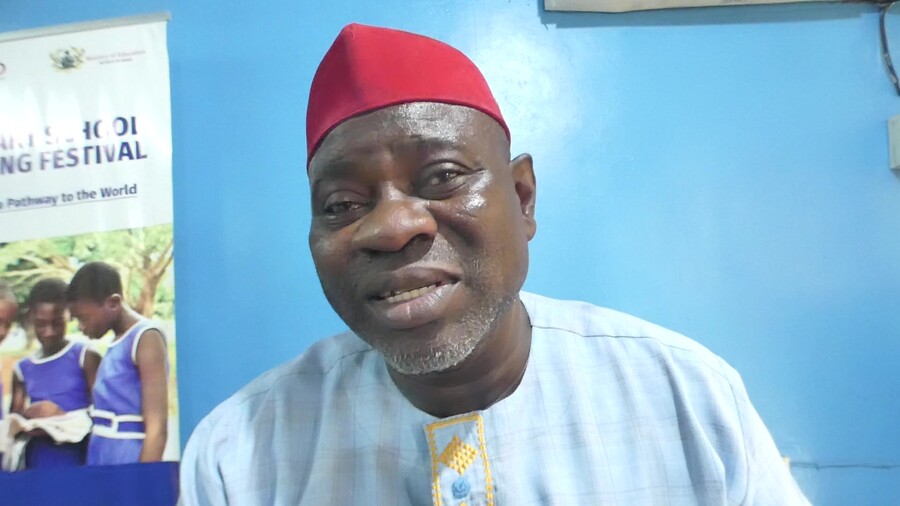
What once were sanctuaries of learning and personal growth have, in recent times, become epicenters of chaos and disruption. The phenomenon of student riots, once rare, now threatens to become a troubling ritual, a recurring storm that leaves behind fractured trust, shattered chalkboards, and an environment far removed from the ideals of education. Razak Z. Abdul-Korah, the Upper East Regional Education Director, has never shied away from confronting uncomfortable truths. In a recent documentary, “The Broken Chalkboards,” produced by Ngamegbulam Chidozie Stephen of Apexnewsgh, Mr. Abdul-Korah spoke candidly about the growing tide of student unrest and painted a comprehensive picture of its causes, impacts, and the necessary path forward. For decades, the schools of the Upper East Region have been pillars of hope—places where young minds are shaped for the future. But lately, a disquieting trend has emerged. Riots, demonstrations, and acts of indiscipline are no longer isolated incidents. They are spreading, springing up across almost all institutions, threatening the peace and stability necessary for effective learning. “It is of concern to everybody in the education space, all stakeholders as well,” Mr. Abdul-Korah began, his tone both measured and urgent. “A peaceful environment should be a creation of almost all stakeholders. So if one stakeholder happens not to be in line, it affects all.” Kindly watch the full video here: https://youtu.be/GSQR3-T6EaE. In his view, the responsibility to maintain peace cannot rest on one group alone. It must be a collective effort; school management, teachers, students, parents, and the wider community all have crucial roles to play. When even a single element falls out of harmony, the entire system feels the strain. Indiscipline, Mr. Abdul-Korah clarified, is not just a problem among students. “Let me even put it, not necessarily only student indiscipline, but indiscipline among staff, indiscipline among students, every level of indiscipline affects the management of the school.” While the recent spate of riots has spotlighted student behavior, the Regional Director was quick to point out that issues of discipline, or the lack thereof, cut across all levels. Sometimes, even administrative offices are not immune, though the manifestations may be less visible. “One trigger leads to another,” he explained. “It is not the best, especially when it goes out into demonstrations.” When discipline breaks down, the cost is not just measured in damaged property or lost learning hours, but in the erosion of trust and the peaceful environment schools strive to maintain. The cost of a riot is profound and far-reaching. “When students revolt against staff, there is mistrust. We are human beings. You may react, but as you go along, it may come in a different form to affect the learners,” Mr. Abdul-Korah stated. Every incident chips away at the fragile bond between teachers and students. Fear and suspicion replace mutual respect, and it can take months, sometimes years, for schools to regain their equilibrium. Learning outcomes suffer, and the ultimate victims are the students themselves. Specific cases, like the disturbances in Gowrie, Bongo, and Zuarungu, were cited. In Gworie, the environment became so inhospitable that learning was all but halted. In Bongo, a single expression of displeasure threatened to spiral out of control. In Zuarungu, the incident’s outcome remains unresolved, hanging over the school community like a specter. Despite the challenges, Mr. Abdul-Korah remains resolute. “We should work to see how to address some of them,” he insisted. Reports are being compiled and sent to the Director General for study and advice. Meanwhile, efforts are underway at the regional level to address concerns as they arise. “Every single actor that can contribute to creating this enabling environment should not be left out.” At every forum, whether with school managers, student bodies, or community elders, the message is the same: peace and discipline are everyone’s responsibility. According to the Regional Director, transparency is key. When the monitoring team visits a school, their first point of contact is the headteacher, ensuring that the purpose of their visit is clear. This openness extends to student forums, where students are encouraged to voice their concerns and see themselves as part of the management process. Many students, Mr. Abdul-Korah observed, do not realize that they are part of the disciplinary and management structures. “If a student is to be disciplined, the student leadership is part of the disciplinary committee. So you are aware, and that is how you are part of the management.” By making student leaders active participants in school management, a sense of ownership and responsibility is fostered. Issues can be raised and resolved through proper channels, reducing the likelihood of escalation. Speaking about effective communication of decisions, the Regional Director pointed out, misunderstandings often arise when decisions, especially disciplinary ones, are not communicated effectively. In one case at Zamse, a student was disciplined, but the reasons were not relayed to the rest of the students, leading to protests. In reality, the action had been recommended by fellow students who felt threatened by their peer’s behavior. “If we’re doing all these things to bring people on board in the management practice, we will reduce the tension,” the Director emphasized. According to Mr. Abdul-Korah, “Once tension is down, you may not see some of these things happening.” By fostering dialogue and quelling rumors, the triggers for riots can be addressed before they explode into full-blown crises. The Director was particularly keen to highlight the role of school management. “The best leader, the best manager certainly has some leadership qualities that drive the activities in his office.” But even the best leaders make mistakes. When they do, the ability to admit fault and correct course is essential. “It’s not everything that as a leader you get 100% right. But as and when, you could do take a decision without taking into consideration the consequences of it.” Sometimes, a careless remark or poorly thought-out decision can spark unrest. School boards and oversight bodies have a critical role to play in reducing tension. But the most effective interventions, Abdul-Korah believes, happen at the