

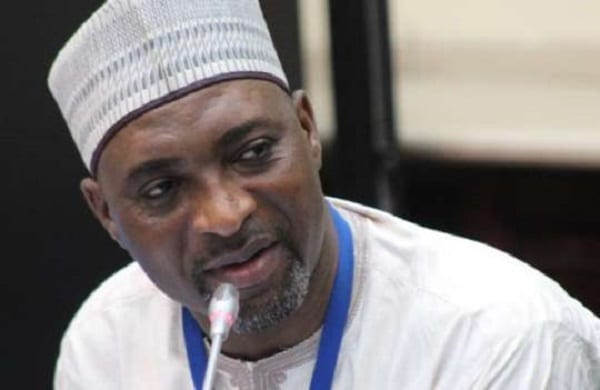
The Broken Chalkboards: Upper East Peace Council Chair Decries Rising Student Riots
Alhaji Sumaila Issaka, Chairman of the Upper East Regional Peace Council, has voiced grave concern over the growing trend of student riots in the region, a worrying development he believes is fast becoming a destructive norm among secondary schools. In a recent interview for the documentary “The Broken Chalkboards,” produced by Ngamegbulam Chidozie Stephen for Apexnewsgh, Alhaji Issaka laid bare the scale of the problem and the urgent need for dialogue and reform. “It’s been a very difficult situation in this region, especially the way this rioting has been going on. It’s now like a canker and so contagious. The moment Zamstech demonstrates, the next day Gowrie is demonstrating, the next day Bongo is demonstrating, the next day Big Boss, and then on and on,” Alhaji Issaka lamented. He noted that while older institutions such as Navrongo Senior High School, Notre Dame, and Bawku Senior High School, as well as the training colleges, where students are considered adults, rarely report such incidents, the wave of unrest continues unabated among the newer institutions. “What I personally don’t understand is why these demonstrations, when you have an SRC that can present your grievances to the authorities,” he added, underlining his bewilderment at the preference for destructive protest over dialogue. Kindly watch the full video here: https://youtu.be/GSQR3-T6EaE. The Peace Council, Alhaji Issaka revealed, had previously initiated peace clubs in several schools as a proactive measure to curb the violence. However, these efforts were hamstrung by a lack of funding, making it impossible to sustain regular outreach. “It’s been of great disturbance to us, especially the destruction on the campuses,” he said, noting the heartbreak of seeing already scarce resources in one of Ghana’s poorest regions destroyed by students themselves. He recalled, “They will not pass Presec or Achimota and give us a bus here if the supplies are very few. Yet we continue to destroy the few that we have. When we went to school, we didn’t demonstrate, but now it’s like they are so proud of it.” Alhaji Issaka expressed his frustration at the often trivial reasons for these demonstrations. “Most of the time they are so flimsy, so annoying that you cannot tolerate them,” he said. He cited the example of students at Gowrie Senior High School insisting on shower facilities despite vandalizing existing ones, and then demanding the dismissal of the headmistress when standpipes were provided instead. In other cases, students ignored bans on personal electronic devices and overloaded dormitory sockets, leading to repeated fires and costly repairs, only to protest when precautionary measures were implemented. “What bothers me most is that the reasons are so flimsy. And if that is even the case, must you go and damage the property of the school? Then you keep complaining, we don’t have this, we don’t have that,” he said. He recounted students insisting on using coal pots for science practicals instead of the safer Bunsen burners of his own school days, and the paradox of demanding better conditions while destroying what little is available. The recurring destruction, Alhaji Issaka noted, ultimately impacts innocent parents who are forced to pay for damages. “After every investigation, money will be paid. And this money will come from the parents,” he explained, recounting a personal experience at Senegal Senior High, where burned motorbikes had to be replaced, ironically benefitting some teachers but compounding hardship for families. Another disturbing trend is the rise of tribalism in school leadership, a stark contrast to the diversity and harmony of past decades. “To the extent that, if you are not a Kassena-speaking boy, you cannot be Senior Prefect in Navrongo Secondary School. If you are not a Guruni speaking boy, you can’t be the Senior Prefect of Big Boss, Tongo Senior High School. If you are not a Kusasi-speaking boy, you cannot be a Senior Prefect of Bawku Secondary School. Why? So this is what is happening? Even though they are extending it to their heads, insisting that if you are not from that area, you shouldn’t be a head. Really?” he asked incredulously. He reflected fondly on the past, when students and leaders from various backgrounds worked together without division, and called the current climate “a big headache.” Despite setbacks, the Peace Council is determined to revive its outreach efforts. Alhaji Issaka detailed recent and ongoing attempts to coordinate with regional education authorities and NGOs to reintroduce peace-building programs in schools. Plans are in place to divide the council into groups and visit schools across the region, fostering dialogue and conflict resolution skills among students. The council’s goal is clear: to help students understand the importance of using the SRC as a channel for grievances, rather than resorting to violence. “Let the students understand that the SRC is there to represent them at the various meetings. And if they have any grievances, they should pass them to those committee members. So that when they go, they table it,” he advised. Alhaji Issaka believes much of the unrest stems from a lack of awareness and leadership among students, and from the influence of troublemakers. He noted that simple disputes, such as the theft of a phone, which is itself contraband, can quickly escalate into widespread violence and even tribal conflict. “Two students fight, and the Bawku incident crops up. You come, and it’s your kinsman against another man, and you just join the fight.” He urged proper reporting and resolution of issues through the appropriate channels, rather than resorting to mob justice or property destruction. “If you suspect somebody, report him to the authorities. And if they search him and find your phone, they give it to you. But these fights, now, the tribal fighting is in these two schools. Which was not the case before.” Alhaji Issaka closed with an impassioned plea for a return to civility and the prioritization of dialogue, warning that continued unrest threatens not only the schools but the entire region’s progress. “We want us to grow. Yet, we are last in everything.
The Broken Chalkboards: Upper East CHASS Chair Warns of Rising Student Unrest, Calls for Collective Action
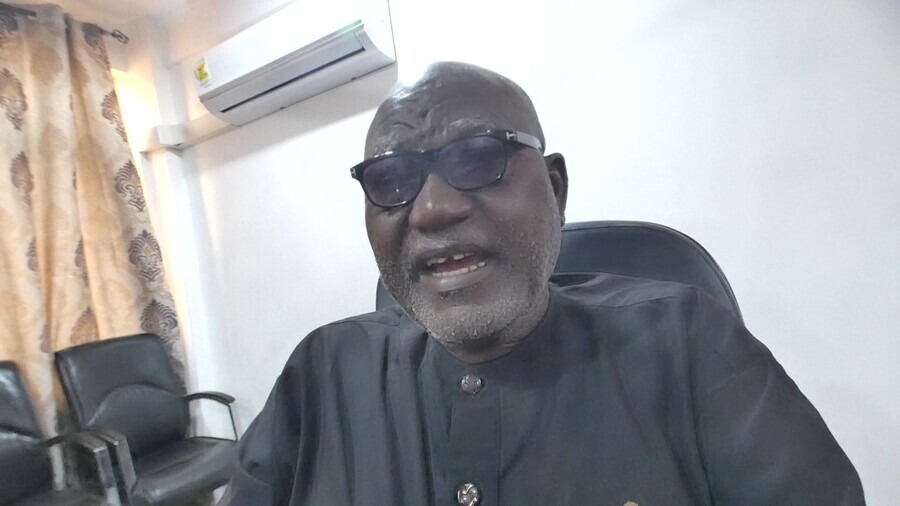
In a compelling segment of the documentary “The Broken Chalkboards,” produced by Ngamegbulam Chidozie Stephen of Apexnewsgh, Richard Akumbas Ayibilla, the Upper East Regional Chairman for the Conference of Heads of Assisted Secondary Schools (CHASS), lays bare the troubling rise of student unrest in the region’s schools. His address, at once candid and urgent, delves into the deepening crisis of discipline, the shifting causes of school riots, and the collective responsibility required of educators, parents, policymakers, and communities to restore order and nurture the next generation of responsible citizens. Mr. Ayibilla began by tracing the evolution of student unrest in the Upper East Region. In the past, riots were often rooted in grievances over poor food or lapses in teaching, issues, he said, that while troubling, at least had some bearing on the core mission of education. “Discipline is the keyword in every educational institution,” he emphasized. “When discipline is present, students learn, complete assignments, maintain a clean environment, and build positive relationships. Ultimately, disciplined students leave school better prepared for life.” Yet today, the triggers of unrest have shifted dramatically. “Now, most of the riots across all the schools start from mobile phones,” he lamented. In schools such as Navrongo, St. Benedict, and Bolga Tech, what might begin as a minor dispute over a stolen or misplaced phone can rapidly escalate, drawing in friends, then entire clans, and sometimes splitting along tribal lines. What should be a tool for learning instead becomes a spark for chaos. “What starts as a seemingly minor issue can draw in friends and even entire clans, turning schools into battlegrounds over technology that should only be a tool for learning.” Kindly watch the full video here: https://youtu.be/GSQR3-T6EaE. While Mr. Ayibilla acknowledges the educational potential of mobile phones, from research and AI tools to global connectivity, he is troubled by the reality he sees. Students, he observed, rarely use their devices for academic enrichment. Instead, the lure of social media, especially platforms like TikTok, drives many to create content for attention and potential income. “For some, it’s just to go into TikTok, create content, and get likes,” he observed. Particularly disheartening for him was an encounter with students who believed speaking intentionally poor English in their videos would make them go viral. These behaviors, he warned, are more than mere distractions. They can fuel deeper conflicts, leading to arguments, resentment, and property destruction. “Essential resources, from furniture to vehicles, have been damaged during riots, further straining already limited school supplies,” he said. The consequences are not limited to broken rules but extend to broken trust and broken property, deepening the crisis in already under-resourced schools. Despite these challenges, Mr. Ayibilla remains unwavering in his advocacy for core values: commitment, discipline, hard work, teamwork, honesty, and excellence. “If students are committed, discipline will naturally follow,” he asserted, drawing an analogy from the classic cartoon Captain Planet: “When you put your powers together, you are more powerful.” He proudly recounted practices from his own school, where honesty is not just taught but lived. Lost items are reliably returned, a testament to the school’s culture of integrity. “If you come to my school and lose money or valuables, don’t worry. Once a student picks it, you will get it back,” he affirmed, suggesting that habits of honesty in youth sow the seeds of integrity in adulthood. Discipline in school, he argued, is the antidote to the corruption that plagues society at large. Mr. Ayibilla is adamant that the burden of instilling discipline cannot fall solely on teachers. “Parents are very key,” he insisted. By the time students arrive at secondary school, much of their character is already formed, making the educator’s task all the more formidable. He called on parents to visit schools, build relationships with teachers, and show genuine interest in their children’s lives. “When children are in school, and parents don’t visit, they know their actions at school will go unnoticed at home,” he explained. This absence of parental oversight, he warned, fosters a double life, children well-behaved at home but unruly at school. Extending his call to the wider community, Mr. Ayibilla invoked the proverb, “he who says he doesn’t care, will at the end of the day be the one to pay the price.” Elders, residents, and even market women, he argued, have a role in supervising and guiding the youth. Discipline, in his view, is everyone’s business. Notably, Mr. Ayibilla did not shy away from critiquing the impact of government policies and political interference on school discipline. He observed that sometimes the pronouncements of politicians — such as blanket bans on corporal punishment or directives to reinstate suspended students — undermine the authority of educators and embolden indiscipline. “Punishment is not to destroy, but to correct,” he explained. Sanctions should fit the offense and serve both to reform the offender and deter others, not to crush their spirit. He called for support from all stakeholders, including chiefs, opinion leaders, and policymakers, to ensure that discipline remains consistent, fair, and focused on students’ long-term well-being. In his view, when discipline is subverted for political convenience, the whole educational ecosystem suffers. In an era where public scrutiny of schools is intense, Mr. Ayibilla called for a more nuanced, compassionate evaluation of schools and teachers. He cautioned against condemning all schools or educators for isolated incidents of misconduct, whether in food management, exam performance, or student behavior. “In every society, there are good ones and bad ones,” he noted, arguing that the actions of a few should not overshadow the dedication and integrity of the many. He also challenged the widespread politicization of exam results. The government’s primary role, he contended, is to provide resources and infrastructure, not to sit exams on behalf of students. “If children write exams and don’t pass, ministers don’t write for them,” he said. Instead, he advocated for a focus on student improvement, completion rates, and the intangible benefits of education, such as character development and social competence. Mr. Ayibilla
The Broken Chalkboards: Hon. Volmeng David Nansong suggests reintroduction of corporal punishment in schools
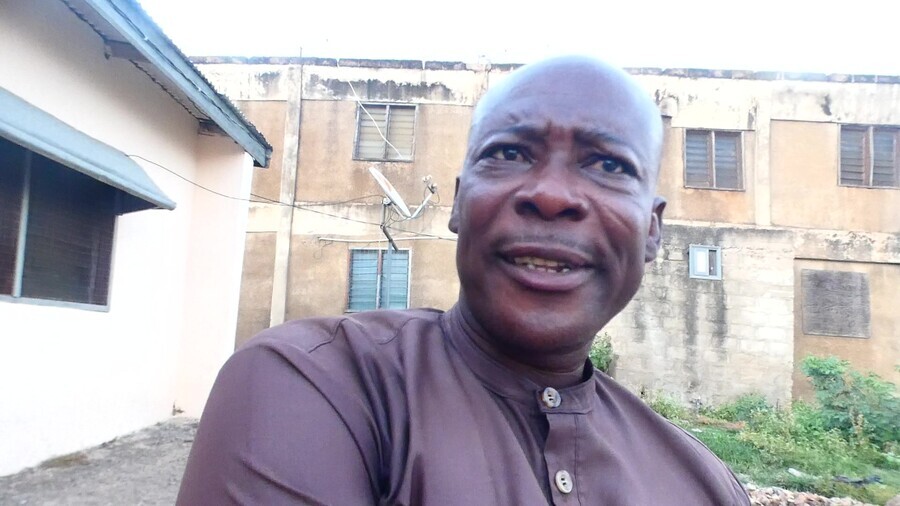
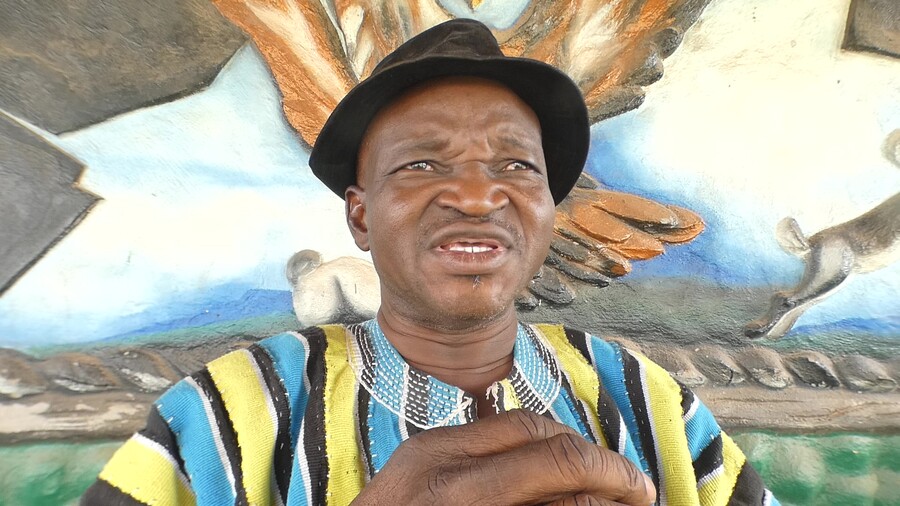
In recent times, become grounds for unrest rather than learning. Hon. Volmeng David Nansong, the Regional Secretary for the Parent Teachers Association (PTA), sat reflecting on an alarming trend: student riots erupting across the region’s secondary schools. His thoughts, captured in an Apexnewsgh documentary titled “The Broken Chalkboards,” produced by Ngamegbulam Chidozie Stephen, were not only observations but a rallying call to action. For parents, educators, and policymakers alike, this was no longer a problem to ignore. David Nansong spoke with the gravity of one entrusted with the hopes of parents and the future of children. “As secretary to the PTA,” he began, “I see the immense role parents play. But what’s truly causing these issues in our secondary schools?” He leaned forward, voice steady: “There are two main issues. The first is the use of mobile phones.” Kindly watch the full video here: https://youtu.be/GSQR3-T6EaE. Mobile phones, once symbols of progress and communication, had become the root of chaos. Although regulations prohibited their use in schools, compliance was abysmally low. Many students did not, in fact, buy these devices themselves; parents, often unknowingly, supplied them. Others acquired phones through less innocent means: gifts from boyfriends, odd jobs, or even theft. School administrators, recognizing the danger, had begun confiscating these devices. The response from students was swift and organized. Plans were hatched to incite confusion and riots, creating opportunities to break into storage rooms, most notably, the senior house master’s office, where confiscated phones were kept. “I can mention Zamse Senior High Technical, Bolga Senior High, and others,” he recounted, “where students broke in and reclaimed their phones. Fortunately, the school management, with the help of the students themselves, identified and apprehended the culprits, who were handed over to the police.” But the aftermath was sobering. Offices vandalized, damages incurred, and in some instances, violence escalated, libraries burned, water systems destroyed, all in pursuit of forbidden phones. The second major catalyst was the spillover of local conflicts, particularly the recent unrest in Bawku. Rivalries between tribes, which found their way into school corridors, fanned the flames of discord. “The conflict didn’t remain in the community,” Nansong explained, “it spilled into the schools, especially in rural areas. Students affiliated with opposing tribes carried tensions into classrooms, turning academic environments into battlegrounds.” It was not uncommon, he noted, for a spark in one school to ignite unrest in another. Through informal networks and social media, students coordinated actions across institutions, threatening the fragile peace that school authorities struggled to maintain. A third, subtler factor was the introduction of the Free Senior High School policy. While the initiative was lauded for making education accessible to all, it unintentionally eroded accountability. “Students now believe that regardless of their performance, they’ll remain in school. There is no demotion, no consequence for failure,” Hon. Nansong observed. “Whether they study or not, promotion is guaranteed.” This lack of academic consequence bred apathy. The abolition of corporal punishment, though a progressive step, left teachers wary. Fearful of repercussions, teachers hesitated to enforce discipline. “Students took this as license to misbehave. Teachers, uncertain of their limits, often turned a blind eye,” Nansong lamented. The cumulative effect was a student body emboldened to challenge authority, sometimes going as far as publicly insulting national leaders on social media, and a teaching staff rendered powerless to intervene. As if these challenges were not enough, the years 2023 and 2024 brought a new crisis: food shortages in schools. Adolescents, still growing and hungry, found themselves subsisting on meager rations, plain maize, garri and beans, porridge without sugar. “At that age, they cannot sustain hunger for long,” Mr. Nansong pointed out. “The lack of proper nutrition led to frustration and, for some, the riots became an outlet for their grievances.” School leaders, bound by bureaucracy and perhaps fear of reprisal, rarely spoke openly of these shortages. Yet, for those in leadership, the link between inadequate feeding and student agitation was clear. By 2025, however, the situation seemed to improve. Reports of food scarcity dwindled, and the frequency of demonstrations reduced. The only major incident that year stemmed from renewed tribal conflict, not deprivation. Hon. Nansong’s message to parents was stern: “Charity begins at home. Parents must be vigilant about what their children bring to school, especially mobile phones.” He urged parents to interrogate the source of any phone call received from their child at school, to visit schools regularly, and to keep in touch with teachers. He recounted a tragic incident where a student, believed by his parents to be attending school, drowned at a hotel swimming pool. School records revealed the student had never reported for the term. “If parents had checked, they would have known,” Nansong said, underscoring the need for constant communication between home and school. Recent debates over student appearance, particularly the directive for students to keep their hair neat and trimmed, sparked national conversation. Mr. Nansong supported the Education Minister’s stance, comparing school regulations to those of security services and training colleges. “In the security services, there are prescribed hairstyles and uniforms. Nursing trainees can’t do their hair anyhow. Why should this be an issue for our students?” he asked. He emphasized that neatness did not preclude natural hair, but rather discouraged neglect and disorder. He dismissed comparisons to the Achimota Rastafarian case, noting that religious exceptions were different from general discipline. “This is not about curtailing freedom; it’s about instilling the standards needed for communal learning and personal responsibility.” Hon. Nansong’s reflections were not a condemnation of today’s youth. “Not all students are bad,” he affirmed, “but certain behaviors threaten the peace and progress of all.” He recounted with sadness how, at Zamsi Senior High, students vandalized the senior housemaster’s office and stole confiscated mobile phones before their final exams. The responsible students were held accountable for the damages. “If a poor widow sends her child to school, and the child destroys property, it is only fair that the student pays for it,” he reasoned. “If you know
The Broken Chalkboards: The Upper East Regional Education Director’s Battle Against Student Riots and Indiscipline in Schools
What once were sanctuaries of learning and personal growth have, in recent times, become epicenters of chaos and disruption. The phenomenon of student riots, once rare, now threatens to become a troubling ritual, a recurring storm that leaves behind fractured trust, shattered chalkboards, and an environment far removed from the ideals of education. Razak Z. Abdul-Korah, the Upper East Regional Education Director, has never shied away from confronting uncomfortable truths. In a recent documentary, “The Broken Chalkboards,” produced by Ngamegbulam Chidozie Stephen of Apexnewsgh, Mr. Abdul-Korah spoke candidly about the growing tide of student unrest and painted a comprehensive picture of its causes, impacts, and the necessary path forward. For decades, the schools of the Upper East Region have been pillars of hope—places where young minds are shaped for the future. But lately, a disquieting trend has emerged. Riots, demonstrations, and acts of indiscipline are no longer isolated incidents. They are spreading, springing up across almost all institutions, threatening the peace and stability necessary for effective learning. “It is of concern to everybody in the education space, all stakeholders as well,” Mr. Abdul-Korah began, his tone both measured and urgent. “A peaceful environment should be a creation of almost all stakeholders. So if one stakeholder happens not to be in line, it affects all.” Kindly watch the full video here: https://youtu.be/GSQR3-T6EaE. In his view, the responsibility to maintain peace cannot rest on one group alone. It must be a collective effort; school management, teachers, students, parents, and the wider community all have crucial roles to play. When even a single element falls out of harmony, the entire system feels the strain. Indiscipline, Mr. Abdul-Korah clarified, is not just a problem among students. “Let me even put it, not necessarily only student indiscipline, but indiscipline among staff, indiscipline among students, every level of indiscipline affects the management of the school.” While the recent spate of riots has spotlighted student behavior, the Regional Director was quick to point out that issues of discipline, or the lack thereof, cut across all levels. Sometimes, even administrative offices are not immune, though the manifestations may be less visible. “One trigger leads to another,” he explained. “It is not the best, especially when it goes out into demonstrations.” When discipline breaks down, the cost is not just measured in damaged property or lost learning hours, but in the erosion of trust and the peaceful environment schools strive to maintain. The cost of a riot is profound and far-reaching. “When students revolt against staff, there is mistrust. We are human beings. You may react, but as you go along, it may come in a different form to affect the learners,” Mr. Abdul-Korah stated. Every incident chips away at the fragile bond between teachers and students. Fear and suspicion replace mutual respect, and it can take months, sometimes years, for schools to regain their equilibrium. Learning outcomes suffer, and the ultimate victims are the students themselves. Specific cases, like the disturbances in Gowrie, Bongo, and Zuarungu, were cited. In Gworie, the environment became so inhospitable that learning was all but halted. In Bongo, a single expression of displeasure threatened to spiral out of control. In Zuarungu, the incident’s outcome remains unresolved, hanging over the school community like a specter. Despite the challenges, Mr. Abdul-Korah remains resolute. “We should work to see how to address some of them,” he insisted. Reports are being compiled and sent to the Director General for study and advice. Meanwhile, efforts are underway at the regional level to address concerns as they arise. “Every single actor that can contribute to creating this enabling environment should not be left out.” At every forum, whether with school managers, student bodies, or community elders, the message is the same: peace and discipline are everyone’s responsibility. According to the Regional Director, transparency is key. When the monitoring team visits a school, their first point of contact is the headteacher, ensuring that the purpose of their visit is clear. This openness extends to student forums, where students are encouraged to voice their concerns and see themselves as part of the management process. Many students, Mr. Abdul-Korah observed, do not realize that they are part of the disciplinary and management structures. “If a student is to be disciplined, the student leadership is part of the disciplinary committee. So you are aware, and that is how you are part of the management.” By making student leaders active participants in school management, a sense of ownership and responsibility is fostered. Issues can be raised and resolved through proper channels, reducing the likelihood of escalation. Speaking about effective communication of decisions, the Regional Director pointed out, misunderstandings often arise when decisions, especially disciplinary ones, are not communicated effectively. In one case at Zamse, a student was disciplined, but the reasons were not relayed to the rest of the students, leading to protests. In reality, the action had been recommended by fellow students who felt threatened by their peer’s behavior. “If we’re doing all these things to bring people on board in the management practice, we will reduce the tension,” the Director emphasized. According to Mr. Abdul-Korah, “Once tension is down, you may not see some of these things happening.” By fostering dialogue and quelling rumors, the triggers for riots can be addressed before they explode into full-blown crises. The Director was particularly keen to highlight the role of school management. “The best leader, the best manager certainly has some leadership qualities that drive the activities in his office.” But even the best leaders make mistakes. When they do, the ability to admit fault and correct course is essential. “It’s not everything that as a leader you get 100% right. But as and when, you could do take a decision without taking into consideration the consequences of it.” Sometimes, a careless remark or poorly thought-out decision can spark unrest. School boards and oversight bodies have a critical role to play in reducing tension. But the most effective interventions, Abdul-Korah believes, happen at the
The Broken Chalkboards: Rev. Abukari Thomas Calls for Collective Action and Moral Reform Amid Rising Student Riots in Upper East Region
In recent years, the Upper East Region has witnessed a troubling surge in student riots across its educational institutions. This trend has left educators, parents, and leaders grappling for answers. Among those raising their voices for change is Rev. Abukari Thomas, Chairman of the Upper East Regional Christian Council, Bolgatanga and a respected Baptist Church head Pastor, who shared his profound reflections in a documentary “Broken Chalkboards” produced by journalist Ngamegbulam Chidozie Stephen of Apexnewsgh. Rev. Abukari’s insights are a clarion call to society, urging all stakeholders to acknowledge the gravity of campus unrest and to seek solutions rooted in empathy, communication, and moral guidance. His message is not one of blame, but of collective responsibility, a rallying cry to educators, parents, religious leaders, and students themselves to reclaim the original purpose of education and to restore dignity and order in schools. Addressing the matter, Rev. Abukari begins with an earnest appeal: “I come your way to add my voice to things that are happening in our society, which are heartbreaking. For example, we look at our various institutions, we see some emerging trends that are of late not the best for u,s and it would not be appropriate for us to be silent on this issue.” Kindly watch the full video here: https://youtu.be/GSQR3-T6EaE. He observes with concern that nearly 90% of secondary schools in the Upper East have experienced some form of student unrest, a situation unprecedented in recent history. Rather than apportioning blame, he emphasizes the need for unity and shared purpose in seeking solutions. “We all have to find ourselves in getting a solution to this. So my focus here is not to look at who is at fault, but what can be done because we are in the woods and we need to come out.” Rev. Abukari laments the loss of the original vision for schools: environments meant to model, transform, and equip future leaders. He notes, “In our schools, this is a place where people are to be modelled, transformed, equipped, and then they will pick up leadership positions in the near future. But if we see them going all around destroying school properties…it might be a simple misunderstanding, misinformation or miscommunication.” The generational gap, he asserts, has made communication more complex. Today’s students are “sensitive and active,” with access to social media and peer influences sometimes leading them astray. Many, he warns, are unaware of the long-term consequences of their actions, including the destruction of scarce infrastructure. “The government has spent huge sums of amounts of money to put up infrastructure which our region is lacking. There is no institution in our region that we can boast and say that they have enough infrastructure…Why do we then destroy the few?” Rev. Abukari calls for proactive communication between school leadership and students, particularly through student representative councils. He suggests regular engagement, transparency about school management, and education about the realities of funding and resource allocation. “If students know that this is the right channel we are to pass through to get our grievances met, some of these instances we are observing will not be there.” He advocates for empowering student leaders with knowledge about their rights and responsibilities, as well as the costs involved in running a school. “If we explain, they will understand,” he says, reinforcing the need for dialogue over destruction. While acknowledging the importance of child rights, Rev. Abukari cautions that many students misunderstand where their rights begin and end. “You have the right to be educated, so if you have the right to be educated, it means you have the right to be trained and be corrected.” He recommends that corrective measures be made pragmatic and transparent, so that students understand the intention is reform, not punishment. “School authorities, can we let them get to this understanding?” he asks, adding that many students come from troubled homes and need more structured support in school. A critical gap, according to Rev. Abukari, is the lack of effective guidance and counseling offices in schools. He urges management to invest in these services, so students can seek help and receive warm, professional advice. “If we get guidance and counselors to take care, an open office where the students can walk in with their heartfelt issues and walk out warmly received and properly educated, most of these issues that we encounter in our institutions will not be there.” He also proposes the creation of robust reward systems to motivate positive behaviour, complementing disciplinary action. “If we see more awards given to well-disciplined, well-dressed, well-behaved students…I think it will motivate and encourage the students to tow this line.” As a religious leader, Rev. Abukari stresses the role of faith communities in shaping student character. He calls for stronger religious life on campus, with chaplains and imams working together to help students discover purpose and resist negative peer pressure. “Nobody’s destiny is promoted through rioting. Nobody’s destiny is promoted through bad behavior.” Religious institutions, he believes, must step up to provide moral guidance, especially for students from broken homes. “If we religious leaders make sure that we model their religious life in these institutions, I think definitely…the numbers [of riots] should reduce.” Rev. Abukari does not leave out parents and alumni, urging Parent-Teacher Associations and school boards to support rightful discipline and set positive examples. He warns against interventions that undermine necessary corrective measures, noting that “since he did it and went scot-free, there’s nothing wrong.” He encourages alumni to take pride in building their schools, not destroying them: “It’s for us to go through our books, study, come out with flying colors, move to the next level so that you come back one day and say yes, I was a product of this institution.” A sobering reminder is offered to students: school records, including involvement in riots, often follow individuals throughout their lives. “If they pull out the files and you were part of those who burned down the dormitory, you were the gang leader,
The Broken Chalkboards: Nyeya Yen Calls for Better Food, Discipline, and Democratic School Management
Social justice advocate Nyeya Yen has shared deep concerns over the increasing rate of student riots in schools across the Upper East Region. Speaking in a documentary engagement with Ngamegbulam Chidozie Stephen of Apexnewsgh in his recent documentary titled “The Broken Chalkboards”, Mr. Yen drew from both his experiences in Ghana and over 30 years of living in the United Kingdom to offer insights and solutions. He began by challenging the notion that Western countries, particularly the UK, offer a flawless model of education and discipline. “People tend to have an exaggerated opinion of the United Kingdom. But it is not a perfect society. It has also failed a lot of its young people, particularly in the black community.” Mr. Yen explained that while Ghana struggles with student unrest, British schools face equally troubling issues such as gang violence, substance abuse, and high dropout rates among black students. “There was a time in London when almost every week two or three children died, killed by other children. Many of them were black kids from inner-city communities who had no supervision at home.” Kindly watch the full video here: https://youtu.be/GSQR3-T6EaE. Turning back to Ghana, Mr. Yen argued that the root causes of school riots are often practical, with poor food quality topping the list. “One of the major reasons for school riots is extremely poor food. When children are given food that is not sufficient, they get organized. Many riots have occurred because of poor food.” He pointed to corruption in food distribution and low salaries of kitchen staff as aggravating factors. “Sometimes the school may be given 100 bags, but the authorities decide to keep 20. And by the time the food gets to the kitchen, the cooks, who are paid 600 or 1000 cedis, also take some home. In the end, the children suffer.” Beyond food, Yen stressed the importance of inclusive school management and student participation in decision-making. “Schools should be run democratically. Get students involved through councils. Even in simple things like the kitchen, discuss with them. Don’t just say, ‘I am in charge.’ That brings resentment, and resentment can lead to riots.” He also highlighted the role of peer influence, bullying, and substance misuse in fueling unrest. Citing the Zuarungu case linked to the Bawku conflict, he warned against ethnic divisions infiltrating schools. “My advice to the young people is that we are all Ghanaians. We shouldn’t say, I am Frafra, I am Kusasi, I am Dagomba. Hate is extremely bad, and students should not allow it to divide them.” On discipline, Mr. Yen clarified that it should not be equated with corporal punishment but with firm, consistent guidance. “Discipline is not about beating. It is about how you relate to the child. If you say you will withdraw a privilege, follow through. Children know when you are not serious, and they will take liberties.” He concluded by calling for better supervision, stronger discipline, fair treatment, and meaningful engagement of students as the way forward. “Some of these students are already 17 or 18, and they are adults, voting age. They should be involved in the running of schools. Only then can we prevent resentment from turning into riots.” Source: Apexnewsgh.com/Ngamegbulam Chidozie Stephen
The Broken Chalkboards: Prof. David Millar Reveals 7 Root Causes of Student Riots and Pathways to Reform
The air, once filled with the hopeful banter of students, now trembles with the aftershocks of unrest. In the corridors of academia, concern ripples among parents and educators alike. Professor David Millar, President of the Millar Institute for Transdisciplinary and Development Studies, has added his voice in the documentary “The Broken Chalkboards,” produced by Ngamegbulam Chidozie Stephen of Apexnewsgh, as he warns: if the current wave of student riots is not checked, it threatens to engulf the entire nation. Kindly watch the full video here: https://youtu.be/GSQR3-T6EaE. Professor Millar’s observations are not mere conjecture. He describes, with painstaking clarity, how riots in secondary schools, once sporadic and exceptional, are becoming alarmingly routine. “It’s becoming very common and noticeable that rioting in schools, especially second-cycle institutions, is on the ascendancy. It’s beginning to increase nationwide,” he asserts. With each passing term, the risk grows that isolated incidents will ignite a conflagration, one that could destabilize the nation’s educational system and erode the social fabric. To understand the roots of this unrest, Professor Millar embarks on a thorough diagnosis of the contemporary school environment. His analysis yields seven interlocking factors, four major and cross-cutting, and three institution-specific, that fuel the flames of student discontent. The Shadow of Drug Abuse Foremost among the major factors is the specter of drug abuse and misuse. According to Prof. Millar, this problem is no longer confined to the school compound. It follows students home, forms habits, and then returns to infiltrate the school environment anew. The result is a culture where substance abuse becomes normalized, blurring the boundaries between personal recreation and institutional disruption. “We have to do something with drug abuse and drug misuse,” Prof. Millar insists, underscoring its centrality to the crisis. The Pressure Cooker of Peer Influence The second factor is the relentless pressure exerted by peer groups. Within the closed ecosystem of a school, peer validation becomes a form of currency. Membership in social circles is governed by overt and covert rules, and the need to belong can drive students to conform to destructive behaviors. For girls as well as boys, these peer groups can be both a refuge and a crucible—incubating actions that undermine the school’s integrity. The Rise of Cults and Weaponization Peer pressure, left unchecked, can metastasize into something even more insidious: the rise of cults within schools. These groups, often shrouded in secrecy and governed by their own codes, demand allegiance through symbolic acts, sometimes even the bearing of weapons. Inter-cult rivalries and competitions for dominance further stoke the fires of unrest. The existence of such groups, Prof. Millar warns, “weaponizes” peer relationships and transforms schools into battlegrounds. The Double-Edged Sword of Technology Modern information and communication technology (ICT) is another factor reshaping the school environment. Smartphones, social media, and even artificial intelligence platforms expose students to a world far beyond the classroom. While this can be a force for good, it also creates new avenues for comparison, competition, and subversion. Students return from holidays eager to display their new digital prowess, sometimes in ways that challenge or undermine school authority. The result is a generation increasingly at odds with the structures meant to guide them. Beyond these core issues, Prof. Millar identifies three more factors that vary from school to school. School Management Systems and Institutional Culture The management style of a school can either mitigate or exacerbate unrest. Institutions with strong religious affiliations or private ownership tend to be more responsive to misconduct, swiftly meting out discipline. Public schools, by contrast, often suffer from bureaucratic inertia—disciplinary procedures are drawn out, diluted by committees, and susceptible to outside interference. This laxity, combined with unclear institutional cultures, leaves a vacuum that disruptive elements are quick to fill. The Disruption Subculture A subtler, but no less significant, factor is what Prof. Millar calls the “subculture of disruption.” Weak students, fearful of looming examinations or unprepared for academic challenges, may seek to derail the school calendar altogether. By fomenting unrest, they hope to avoid failure and mask their own deficiencies. This phenomenon is often most acute as exams approach, with mass participation by those who feel threatened by strict enforcement of academic standards. The Parental Paradox Finally, the role of parents is both pivotal and paradoxical. While parental engagement is essential for effective discipline, unchecked indulgence can have the opposite effect. Some parents provide their children with cars, excessive pocket money, and privileges that enable misbehavior. At home, such actions may go unchecked; at school, they find eager collaborators among peer groups. The result is a feedback loop where home and school reinforce rather than correct negative behavior. While the destruction of property during riots is costly, Prof. Millar is more disturbed by the long-term impact on behaviors and attitudes. “It’s not so much the destruction of property… but the negative impact on behaviors and attitudes that are long-term. For me, that is the worrying part. Because these have long-term implications. We call them our future leaders. Imagine our future leaders coming out with all those vices. What sort of leadership do we get?” Having laid bare the roots of the crisis, Prof. Millar turns to solutions. His proposals are pragmatic, grounded in both research and years of experience. Conscientization and Civic Education The first step, he argues, is a renewed emphasis on civic education—what he calls “conscientization.” Many students, he notes, are simply unaware of the long-term consequences of their actions. By bringing in resource persons, former addicts, and career professionals to share their experiences, schools can equip students with the knowledge they need to avoid destructive pathways. “Educate, educate, re-educate,” Prof. Millar urges, advocating for a revival of civic education programs and the involvement of the National Commission for Civic Education in a large-scale, school-to-school campaign. Revitalizing School Life with Positive Engagement Prof. Millar also calls for a renaissance in extracurricular activities. In the past, debates, drama clubs, and cultural associations provided outlets for energy and creativity. Today, these activities hold less allure, leaving students idle and susceptible
The Broken Chalkboards
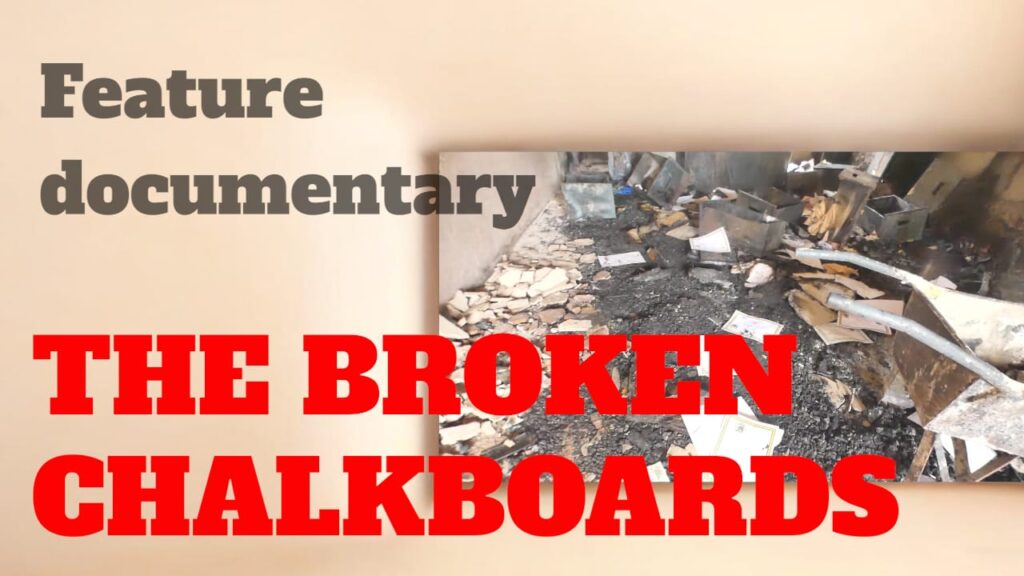
Feature Documentary by Ngamegbulam Chidozie Stephen The sun rises early over Ghana’s Upper East Region, casting a golden hue over the flat plains and scattered school compounds. For generations, these institutions, forty-nine senior high schools and several technical and vocational centers, have stood as beacons of hope, preparing the young for brighter futures. But in recent times, a cloud has settled over these grounds. What once were sanctuaries of learning have become, with troubling frequency, sites of unrest. Desks overturned, windows shattered, staffrooms vandalized, student riots, once rare, have become alarmingly common, leaving educators, parents, and leaders searching for answers It began as a whisper, a phone stolen in a dormitory, a rumor of unfair punishment, or the discontent over a meager meal. But these minor sparks soon flared into flames. Reports from ApexNewsGH revealed a disturbing trend: students, once lauded as the torchbearers of the region’s future, were now, in too many cases, undermining their very schools through acts of defiance and destruction. At the Technical and Vocational Education and Training (TVET) office, the atmosphere was somber. Mr.William Aduum, the regional director, sat behind his desk, stacks of disciplinary reports at his elbow. “Parents are not allowed to give phones to their wards to bring to school,” he explained. “But the students sneak them in. They hide them. When a phone is stolen, investigations begin, by the students themselves. Bullying follows. And when a student is pushed too far, trouble seeks him out.” Such incidents, he noted, were no longer isolated. “Every administration since the Fourth Republic has seen at least one or two riots. These disrupt academic activities and leave lasting scars on the educational landscape.” To understand the surge, one must look beyond the headlines. Professor David Miller, President of the Miller Institute for Transdisciplinary and Development Studies, had spent years studying youth behavior. “Rioting in schools, especially second-cycle institutions, is on the ascendancy nationwide,” he said gravely. “There are several causes. The abuse and misuse of drugs is a major one, both in and outside school. Habits formed at home follow students back to the classroom, poisoning the environment.” Professor Miller listed seven factors behind the unrest, four major, cross-cutting causes and three more specific to individual institutions. Alongside drugs, he identified breakdowns in communication, lack of awareness about the consequences of actions, and shifting generational expectations. “This generation is complex, sensitive, and active,” he said. “We need to reform how we communicate with them. Many don’t understand the full impact of their actions.” Reverend Thomas Abukari Thomas, chairman of the Upper East Regional Christian Council, echoed these concerns. As head pastor of the Baptist Church in Bolgatanga, he saw firsthand the devastation wrought by riots. “The government has spent huge sums on infrastructure, which we desperately need. Yet, students destroy these scarce resources, often over misunderstandings or misinformation.” The role of discipline, or the lack thereof, soon surfaced as a recurring theme. Honorable. Volmeng David Nansong, Upper East Regional Secretary for the Parent-Teachers Association, was blunt: “The abolition of corporal punishment is at the root of this. Teachers are afraid to enforce discipline. Back in the day, strikes and riots were rare. Now, security forces have to camp on campus to prevent unrest from spreading. The Ghana Education Service should reintroduce demotion and promotion based on behavior. Students must know there are consequences.” Yet, even as some called for a return to old methods, others pointed to deeper fractures. Alhaji Sumalia Issaka, Chairman of the Upper East Regional Peace Council, spoke of a worrying trend: tribal divisions among students, which sometimes determined who could become a senior prefect or even a headmaster. “If you’re not a Kassena-speaking boy, you can’t be senior prefect in Navrongo. If you’re not Gurune, you can’t lead in Big Boss. This tribalism is spreading to staff appointments too.” In the midst of turmoil, some students tried to uphold the values their schools instilled. One young student from Zamse, known among peers as an “Elephant,” spoke candidly. “It’s unbearable for those of us who want to learn. We’re influenced by friends into acts we don’t support. If you speak out, you become a target. Sometimes, even the innocent end up paying fines for acts they did not commit. We need more education about the dangers of such behavior.” Francis Adingo, President of the Upper East Youth Association, agreed that grievances, if genuine, should be addressed through proper channels. “There are rules and regulations. Peaceful demonstrations are within our rights, but vandalism is not. Substance abuse is a big part of the problem. And parents are often unconcerned; some don’t even check what their children take to school. Weapons have been found in dormitories. Students have burned down dorms, libraries, places meant for their own growth.” With tensions mounting, school leaders scrambled to respond. The regional TVET director, William Aduum, doubled down on counseling. “We’ve mandated all schools to strengthen their guidance and counseling units. One counselor looking after 2,000 students isn’t enough. I’m visiting schools myself to see how we can improve.” Mr. Razak Abdul Korah, Upper East Regional Director of Education, described the escalating riots as a “major concern for all stakeholders.” Investigations were underway, but he believed the ultimate solution lay in civic education. “Some students don’t realize the long-term consequences of their actions. We need to educate and re-educate them, bring in career people and those who have struggled with drugs to share their stories. We used to have civic education in schools. It’s time to bring it back.” Other voices, like that of social justice advocate Mr. Nyeya Yen, pointed to practical causes. “Poor food is a major trigger. A hungry man is an angry man. Corruption, poor salaries, and theft of school supplies all play a role. Sometimes, cooks take food home, and students are left with less. This can lead to riots.” The Upper East Regional Minister, Honorable Donatus Atanga Akamugri, had seen the unrest up close. “Since I took over, I’ve dealt with