


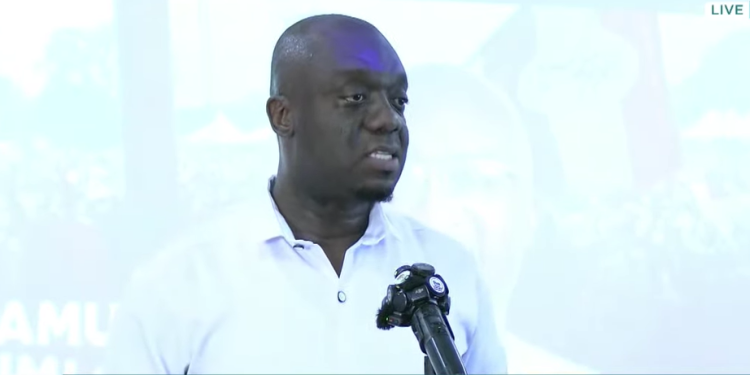


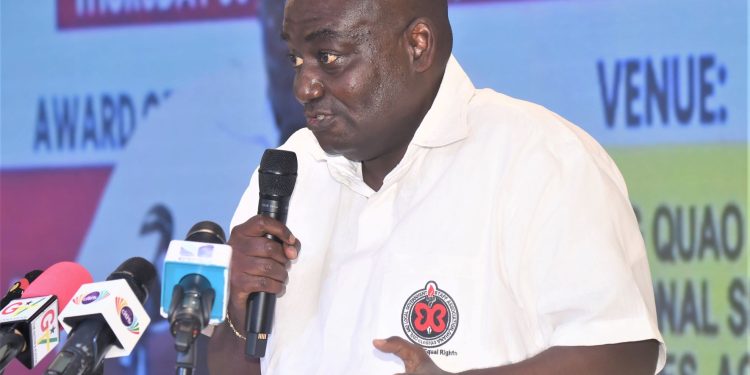
In a compelling segment of the documentary “The Broken Chalkboards,” produced by Ngamegbulam Chidozie Stephen of Apexnewsgh, Richard Akumbas Ayibilla, the Upper East Regional Chairman for the Conference of Heads of Assisted Secondary Schools (CHASS), lays bare the troubling rise of student unrest in the region’s schools.
His address, at once candid and urgent, delves into the deepening crisis of discipline, the shifting causes of school riots, and the collective responsibility required of educators, parents, policymakers, and communities to restore order and nurture the next generation of responsible citizens.
Mr. Ayibilla began by tracing the evolution of student unrest in the Upper East Region. In the past, riots were often rooted in grievances over poor food or lapses in teaching, issues, he said, that while troubling, at least had some bearing on the core mission of education. “Discipline is the keyword in every educational institution,” he emphasized. “When discipline is present, students learn, complete assignments, maintain a clean environment, and build positive relationships. Ultimately, disciplined students leave school better prepared for life.”
Yet today, the triggers of unrest have shifted dramatically. “Now, most of the riots across all the schools start from mobile phones,” he lamented. In schools such as Navrongo, St. Benedict, and Bolga Tech, what might begin as a minor dispute over a stolen or misplaced phone can rapidly escalate, drawing in friends, then entire clans, and sometimes splitting along tribal lines. What should be a tool for learning instead becomes a spark for chaos. “What starts as a seemingly minor issue can draw in friends and even entire clans, turning schools into battlegrounds over technology that should only be a tool for learning.”
Kindly watch the full video here:
https://youtu.be/GSQR3-T6EaE.
While Mr. Ayibilla acknowledges the educational potential of mobile phones, from research and AI tools to global connectivity, he is troubled by the reality he sees. Students, he observed, rarely use their devices for academic enrichment. Instead, the lure of social media, especially platforms like TikTok, drives many to create content for attention and potential income. “For some, it’s just to go into TikTok, create content, and get likes,” he observed. Particularly disheartening for him was an encounter with students who believed speaking intentionally poor English in their videos would make them go viral.
These behaviors, he warned, are more than mere distractions. They can fuel deeper conflicts, leading to arguments, resentment, and property destruction. “Essential resources, from furniture to vehicles, have been damaged during riots, further straining already limited school supplies,” he said. The consequences are not limited to broken rules but extend to broken trust and broken property, deepening the crisis in already under-resourced schools.
Despite these challenges, Mr. Ayibilla remains unwavering in his advocacy for core values: commitment, discipline, hard work, teamwork, honesty, and excellence. “If students are committed, discipline will naturally follow,” he asserted, drawing an analogy from the classic cartoon Captain Planet: “When you put your powers together, you are more powerful.”
He proudly recounted practices from his own school, where honesty is not just taught but lived. Lost items are reliably returned, a testament to the school’s culture of integrity. “If you come to my school and lose money or valuables, don’t worry. Once a student picks it, you will get it back,” he affirmed, suggesting that habits of honesty in youth sow the seeds of integrity in adulthood. Discipline in school, he argued, is the antidote to the corruption that plagues society at large.
Mr. Ayibilla is adamant that the burden of instilling discipline cannot fall solely on teachers. “Parents are very key,” he insisted. By the time students arrive at secondary school, much of their character is already formed, making the educator’s task all the more formidable. He called on parents to visit schools, build relationships with teachers, and show genuine interest in their children’s lives. “When children are in school, and parents don’t visit, they know their actions at school will go unnoticed at home,” he explained. This absence of parental oversight, he warned, fosters a double life, children well-behaved at home but unruly at school.
Extending his call to the wider community, Mr. Ayibilla invoked the proverb, “he who says he doesn’t care, will at the end of the day be the one to pay the price.” Elders, residents, and even market women, he argued, have a role in supervising and guiding the youth. Discipline, in his view, is everyone’s business.
Notably, Mr. Ayibilla did not shy away from critiquing the impact of government policies and political interference on school discipline. He observed that sometimes the pronouncements of politicians — such as blanket bans on corporal punishment or directives to reinstate suspended students — undermine the authority of educators and embolden indiscipline. “Punishment is not to destroy, but to correct,” he explained. Sanctions should fit the offense and serve both to reform the offender and deter others, not to crush their spirit.
He called for support from all stakeholders, including chiefs, opinion leaders, and policymakers, to ensure that discipline remains consistent, fair, and focused on students’ long-term well-being. In his view, when discipline is subverted for political convenience, the whole educational ecosystem suffers.
In an era where public scrutiny of schools is intense, Mr. Ayibilla called for a more nuanced, compassionate evaluation of schools and teachers. He cautioned against condemning all schools or educators for isolated incidents of misconduct, whether in food management, exam performance, or student behavior. “In every society, there are good ones and bad ones,” he noted, arguing that the actions of a few should not overshadow the dedication and integrity of the many.
He also challenged the widespread politicization of exam results. The government’s primary role, he contended, is to provide resources and infrastructure, not to sit exams on behalf of students. “If children write exams and don’t pass, ministers don’t write for them,” he said. Instead, he advocated for a focus on student improvement, completion rates, and the intangible benefits of education, such as character development and social competence.
Mr. Ayibilla acknowledged that issues like school feeding and resource shortages remain real challenges. He warned, however, against generalizing the faults of a few schools or individuals to the entire system. While some lapses in supervision or integrity do occur, he argued, most school leaders and teachers are deeply committed to their students’ welfare. The focus, he insisted, should remain on partnership and progress, not on blame and condemnation.
The CHASS Chairman also shared uplifting anecdotes from his own school, describing how honesty and self-discipline are not only possible but flourish when modeled by adults and celebrated among peers. “If you come to my school and lose any valuable item, don’t worry. Once a student picks it, you will get it back.” Such moments, he argued, are proof that even in challenging environments, young people can and do rise to the occasion when given the right guidance and values.
Ultimately, Mr. Ayibilla’s address was a passionate call to action. He urged all political parties, chiefs, teachers, parents, and concerned citizens to join forces against the “canker” of indiscipline, regardless of political convenience or affiliation. “If we want to live our lives like this in this country, we will not progress at all,” he warned.
He called for a collective effort, not just to punish, but to correct; not just to criticize, but to support; not just to lament, but to act. Restoring discipline in schools, he concluded, is not a task for educators alone. It demands the active participation of parents, communities, policymakers, and the wider society. Only through shared responsibility, consistent values, and honest communication can schools nurture not just successful students, but responsible, ethical citizens ready to contribute positively to the nation’s future.
Mr. Ayibilla closed his address with gratitude for the honest headmasters and dedicated teachers who, despite many challenges, continue to give their best for their students. “All of us want the good of the students. No teacher teaches a child and doesn’t want the child to pass.”
His words serve as a timely reminder: the pursuit of discipline, integrity, and excellence in education is a shared journey. It requires vigilance, empathy, and the unwavering support of the entire society. The “broken chalkboards” of today can be restored, he believes, if all stakeholders work together with purpose and resolve.
Source: Apexnewsgh.com/Ngamegbulam Chidozie Stephen