

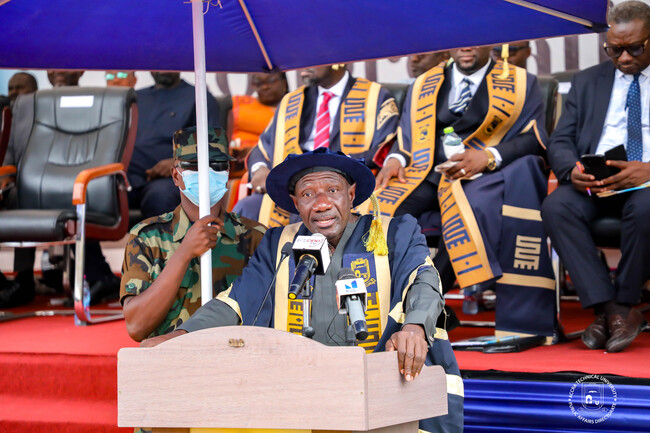

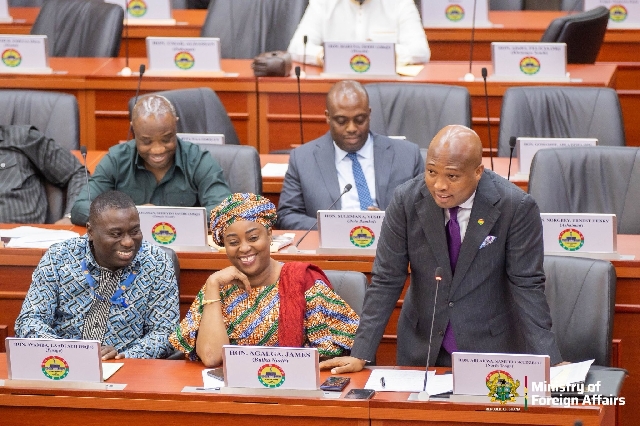
At his first-ever press soirée since his appointment, the Upper East Regional Minister, Donatus Atanga Akamugri, has revealed that in response to the troubling increase in student riots, he has advised the Regional Education Directorate to ban all tribal groups within the region’s second-cycle institutions.
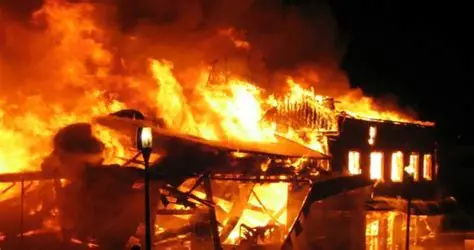
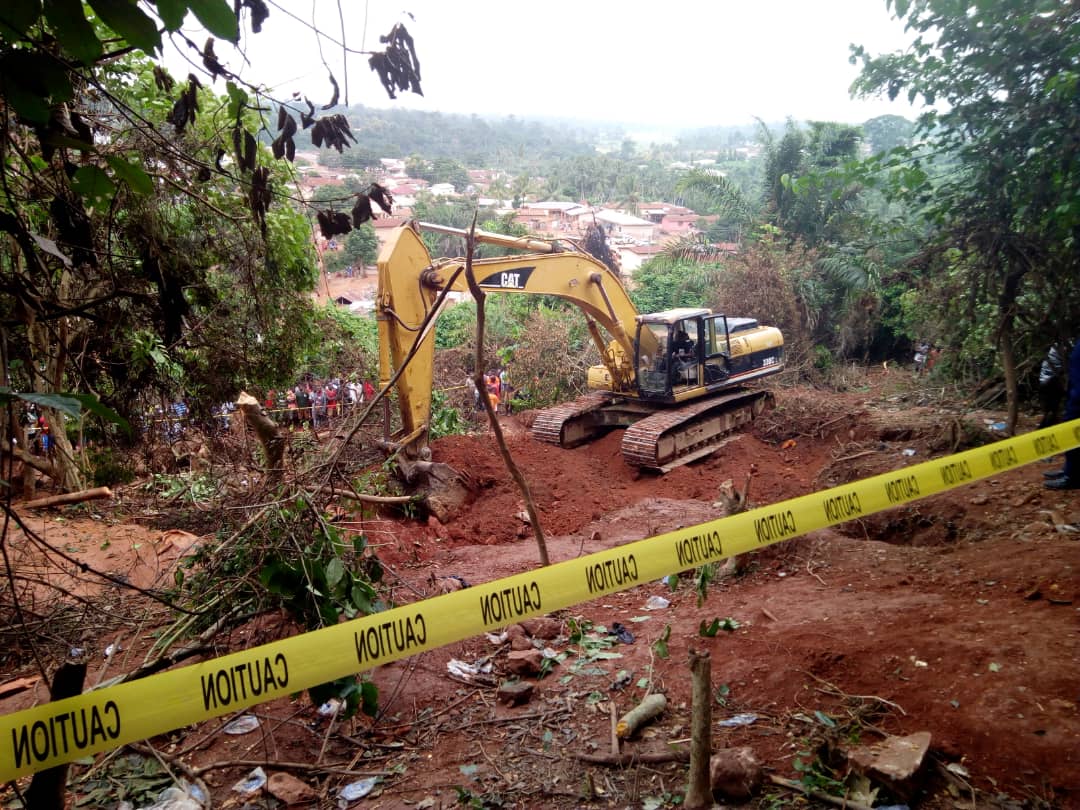
The Minister made this statement in response to a question from Ngamegbulam Chidozie Stephen, who sought to understand the role of the Regional Coordination Council (RCC) in addressing the rampant student riots, which often destroyed school properties. Ngamegbulam recently produced a documentary titled “The Broken Chalkboards,” which highlights the rampant student riots plaguing schools in the Upper East Region.
However, when the question came, what was the RCC’s role in addressing this disturbing trend?, Regional Minister Donatus Atanga Akamugri leaned in, his response measured yet firm.
“Unfortunately, our region is hit with this frequency of riots,” he began, setting the tone for a diagnosis that looked beyond the students themselves. The core of the problem, he revealed, was not normally the students, but a foundational “breakdown of discipline even among the teaching and non-teaching staff.” This discord, he argued, inevitably trickled down, finding fertile ground in the student body.
His prescription was twofold. First, he had urged the Regional Education Directorate to reinforce discipline and foster better relationships among staff to prevent troubles that youths might later act upon.
Then, he presented a more direct proposal. “We have also discouraged the organization of tribal groups in those institutions,” the Minister stated. He painted a familiar, volatile scenario: a simple dispute escalating as someone injects tribal sentiment. “Somebody will be fighting, and then somebody will just say, ‘Oh, but you are from a place…’ and then it takes a tribal dimension.” His solution was clear: ban the tribal groups. “When they ban them, they will have no platform to be able to go and organize themselves as tribal guys.”
He anchored this advice in the very philosophy of boarding schools, invoking the vision of Kwame Nkrumah. “A boarding school is for integration,” Minister Akamugri reminded the room. It is a place for young people from anywhere to learn to coexist, appreciate each other’s cultures, and ultimately foster national unity. “If we want to encourage tribal groups in the schools too,” he cautioned, “it will defeat the purpose.”
The Minister also turned the spotlight on the home, noting that some parents now fear their own children, failing to command respect. This, he said, was worsened by weakened Parent-Teacher Associations, leaving a critical support system in disrepair. Compounding this was a policy environment where teachers feel powerless to punish wayward students.
“So the teacher will be left there. He cannot say anything. So when the child is going wayward, it’s a problem,” he observed.
His concluding thoughts wove together the threads of his strategy: restoring staff discipline, banning divisive tribal platforms, reinvigorating parental involvement, and reviewing policy guidelines to empower teachers and PTAs.
“That is how we’ll be able to address this,” Minister Akamugri stated, offering a multi-fronted plan to silence the alarms of riot and mend the region’s broken chalkboards.
Source: Apexnewsgh.com