


Mutawakilu kicks against proposed tariff increment
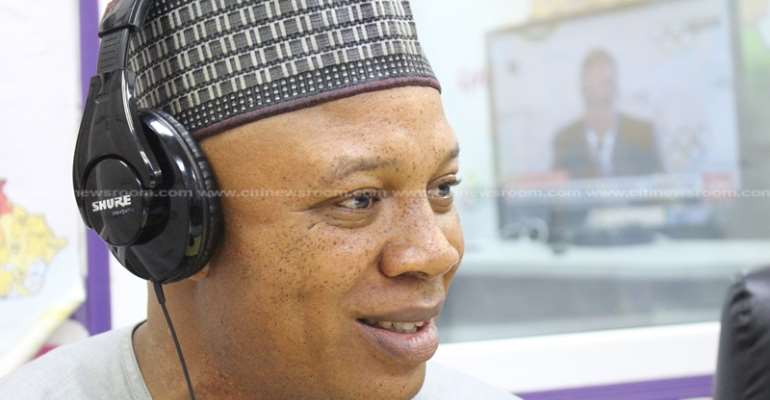
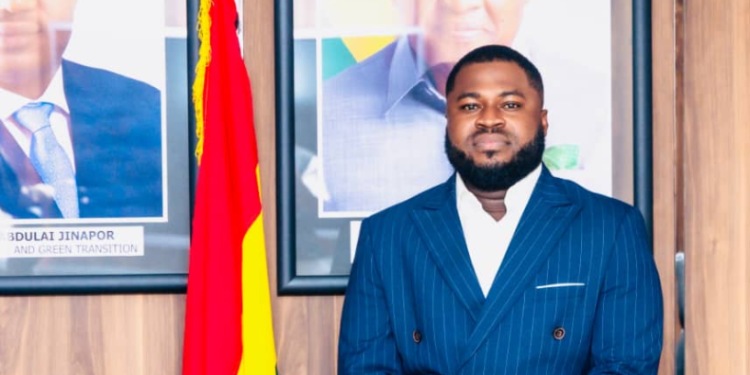
A former ranking Member of Parliament’s Mines and Energy Committee, Adam Mutawakilu has rubbished proposals by the Electricity Company of Ghana (ECG) for tariff increment. He says the ECG has not demonstrated its capacity to effectively manage its resources hence there is no justification for an increment in tariffis. Speaking on Eyewitness News, the former Damongo legislator said ECG is undeserving of an increment if it is unable to prove how it is tackling the about 25% losses it suffers to technical and commercial issues. “How much of our monies is being lost? If that is not tackled, then we are wasting our time on this. They are just taking money from Ghanaians and wasting it. Technical and commercial losses alone is over 25% and that means that for every 100 million that ECG is expected to collect, they can’t account for 25 million of it. So if we only concentrate on increasing tariff without reducing technical and commercial losses, we will come back to square one,” he said. Adam Mutawakilu said the government had a good chance to tackle the inefficiencies leading to losses the ECG suffered through the PDS deal but it “messed it up.” He said the deal would have to ensure that the ECG’s infrastructure is improved and service delivery made better, but that did not happen. He said it was unfair to make consumers pay more for power when they do not enjoy improved service. “Should the consumer always be the punching bag? I have not seen how previous increments have helped reduce the technical and commercial losses,” he noted. The Managing Director of the company, Kwame Agyeman-Budu at a public forum on Thursday, April 8, 2021, said ECG needs more resources to improve its service. He said while he is aware that the proposal will only materialize after approval from the Public Utilities and Regulatory Commission (PURC), he believes that it is critical for ECG to have access to more funds to enable it to operate efficiently. “We need money to do it [improve]. If we get the increase we will love it [but] that will be up to the PURC because, no matter what we propose, they will ultimately decide,” he said. “In terms of distribution, we need support, because we have to do upgrades to make sure the system is sustainable. We don’t wait till something is broken before we fix it. We need additional funds to upgrade our systems at all times,” he added. Citinewsroom Please contact Apexnewsgh.com on email apexnewsgh@gmail.com for your credible news publications. Contact: 0555568093
We need money – ECG
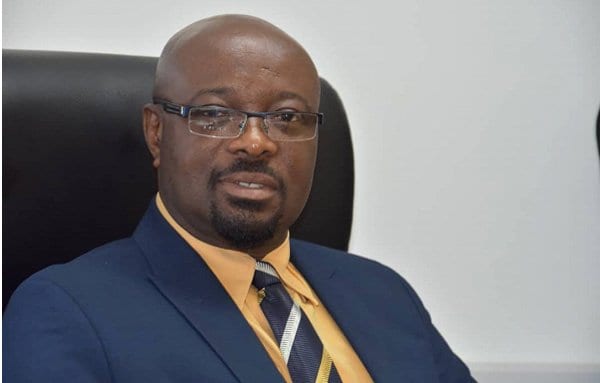
The Managing Director of the Electricity Company of Ghana (ECG), Kwame Agyeman-Budu has said the company needs money to carry out its operation duties. He said this at a public forum in Accra on Thursday, April 8, 2021. “We need money to do it [improve]. If we get the increase we will love it [but] that will be up to the PURC because, no matter what we propose, they will ultimately decide,” he said. He added “In terms of distribution, we need support, because we have to do upgrades to make sure the system is sustainable. We don’t wait till something is broken before we fix it. We need additional funds to upgrade our systems at all times.” Energy Minister Dr Mathew Opoku Prempeh for his part revealed that there is going to be systematic power outgases in in the country in May this year. “Just two days ago, I received a letter from Millennium Development Authority (MiDA), [the company which is helping with the upgrade of the Pokuase and Kasoa substations] informing me in the month of May, there is going to be systematic power outages. “So we have invited ECG [Electricity Company of Ghana] and GRIDCo [Ghana Grid Company Limited] that in the light of this information we sit and plan and communicate to the people who will be affected way before it happens,” he said. He added “In all of these instances it is only appropriate that managers of the power sector communicate such reasons timeously to the public in order for people to plan their lives accordingly.” He had earlier assured the country that the technical issues that have resulted in power cuts to some areas especially in the capital city will be fully resolved by end of the year. Dr Prempeh told journalists on Tuesday April 6 when he paid a working visit to the Ghana Grid Company (GRIDCo) that “We are working feverishly to resolve the challenges which have arisen as a result of technical difficulties with our transmission lines and it is our hope that, that issue will be resolved by the end of the year,” He further said that most of the transmission lines are old and haven’t seen any changes. “These our lines that we have just been informed about, were strung in the 50s and some in the 60s. The power it was supposed to transmit to Accra has increased tremendously due to the expansion of Accra yet the lines have remained the same. “They are now giving us lines that can improve the power situation in Accra,” he said. He stated that the country is not back to the ‘dumsor’ era. “We should all be sincere and truthful in our communication. In 2016, the whole country was given periods when we are to receive power and when to be off. In 2016, the government of the day told us it was a generation problem. “Even the opposition then said government did not have money to buy fuel to power the generators. This is not a generation problem, this is not about fuel so how can we call it “Dumsor”?” he queried. 3news Please contact Apexnewsgh.com on email apexnewsgh@gmail.com for your credible news publications. Contact: 0555568093
NLA reacts to Ghana Lotto Operators Association
Also the conduct of its allied group known as Concerned Lotto Agents Association of Ghana (CLAAG) is also not good. In a statement copied to the Ghana News Agency in Accra, the NLA stated that, there was no policy for KGL Technology Limited to take over from the Authority, which was confirmed by the Minister of Finance, Mr Ken Ofori-Atta, during his vetting at the Appointments Committee of Parliament. “It is instructive to place on record that NLA is not creating any form of monopoly for KGL Technology Limited and urged the media and the public to totally disregard the allegations by GLOA”. “For the avoidance of doubt, Keed Ghana Limited is not the same as KGL Technology Limited in terms of operations. “Keed Ghana Limited was duly licensed by the NLA to operate a dividend-based game on behalf of NLA known as Lucky 3 with an official short code of *987#. “On the other hand, KGL Technology Limited is an online lotto marketing company duly licensed by the NLA to operate the 5/90 Original Lotto on behalf of the Authority with the official short of *959#. The statement said the allegations by GLOA against KGL Technology Limited and its Chief Executive, Mr. Alex Dadey and Keed Ghana Limited was baseless. It said KGL Technology Limited was fully legal and recognized by the NLA as an online lotto marketing company responsible for the operation of *959# on behalf of NLA and the partnership between the NLA and KGL Technology Limited could be best described as a GAME CHANGER. It said the partnership was a million times more profitable to the NLA than the licenses issued to members of Ghana Lotto Operators Association including Alpha Lotto Limited. The statement said KGL Technology Limited was not indebted to the NLA by GH₵20 million and was important that the media and the public totally ignored and rejected the unsubstantiated allegations by GLOA against KGL Technology Limited. The statement said GLOA sought to create misleading information that there was a KGL Cabal with intentions of creating a monopoly over online Lotto for KGL Technology Limited to the disadvantage of the State and other Lotto Operators. It said KGL Technology Limited was a wholly-owned Ghanaian company with no political attachments and had a track record and perfect platform which was useful to the revenue mobilization efforts of NLA. It said the attempts by GLOA to link KGL Technology Limited to Government appointees was unfortunate and needed to be totally ignored by the media and the public and there were no hidden intentions, and absolutely no “take-over” schemes to surrender NLA to KGL Technology Limited. The statement KGL Technology Limited was only an online Lotto marketing company duly licensed by NLA and operated on behalf of NLA aimed at supporting the revenue generational capacity of the Authority and they supported any statement issued by the Public Relations Unit against the illegal activities of Alpha Lotto Limited as it was illegally operating a Short Code as well as conducting live Draws on GTV. The statement said the NLA had every power to curtail the illegal short code, and illegal Live Draws of Alpha Lotto Limited and the NLA would not hesitate to revoke the licenses of Private Lotto Operators who were not operating within the terms and conditions of their respective licenses. “The Authority as the regulator will also not allow any private lotto operator to operate a short code without the appropriate license from the Board of NLA. “The NLA as the regulator would not allow any private lotto company to conduct independent live draws on TV without a Draw Committee duly constituted by NLA in accordance with the National Lotto Act 722 and Lottery Regulations, 2008(L.I. 1948). “ The statement said the NLA had stated that the licenses issued by Mr Kofi Osei-Ameyaw, the former Director-General to all Private Lotto Operators were without approval. “In accordance with the National Lotto Act 722 and Lottery Regulations 2008(L.I.1948), the licenses issued by the former Director-General, Mr Kofi Osei-Ameyaw to the Private Lotto Operators are not grounded in law because it is only the NLA Board that has the powers and authority to grant licenses to companies or individuals who want to operate Lotto in Ghana. “President Akufo-Addo is fully committed to protecting the NLA from collapsing and setting the records straight once again, KGL Technology Limited is not indebted to NLA by GH₵20 million. “The only recalcitrant group here is the members of GLOA/CLAAG, and the NLA would like to caution members of GLOA that they cannot fight NLA, the regulator through the media or Court and become successful. “NLA shall never allow the illegal activities of some GLOA and CLAAG members to collapse NLA”. The statement said KGL Technology Limited and Keed Ghana Limited had their respective licenses duly approved by the Board of NLA in accordance with the National Lotto Act 722 and Lottery Regulations, 2008(L. I. 1948). “All the licenses for members of GLOA/CLAAG signed by the former Director-General, Mr Kofi Osei-Ameyaw were without approval and all allegations against Presidency, Appointees, Alex Dadey, Razak Kojo Opoku and Ernest Mote are all baseless and lies that the media and public must ignore. “So far so good, the NLA was happy with the KGL Partnership and absolutely no media noise from GLOA, CLAAG and their “Allies” would stop the partnership between NLA and KGL Technology Limited because the partnership is a Game changer and more profitable to NLA”, the statement concluded. GNA Please contact Apexnewsgh.com on email apexnewsgh@gmail.com for your credible news publications. Contact: 0555568093
Leakages in petroleum product distribution worrying – Bawumia
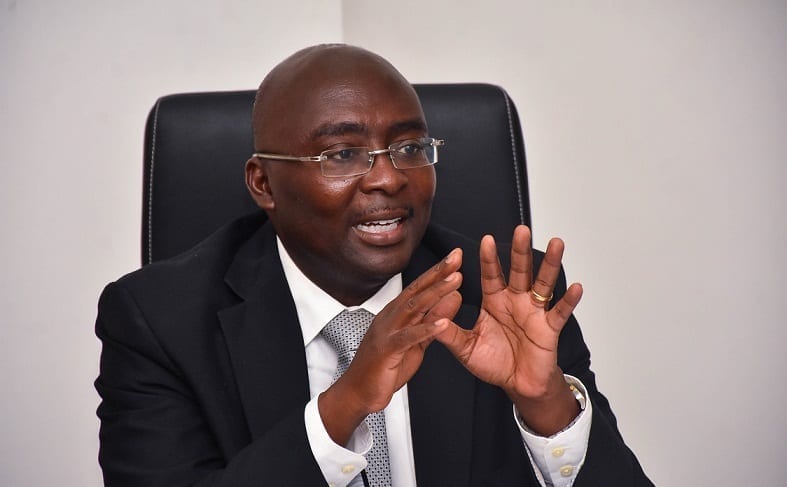
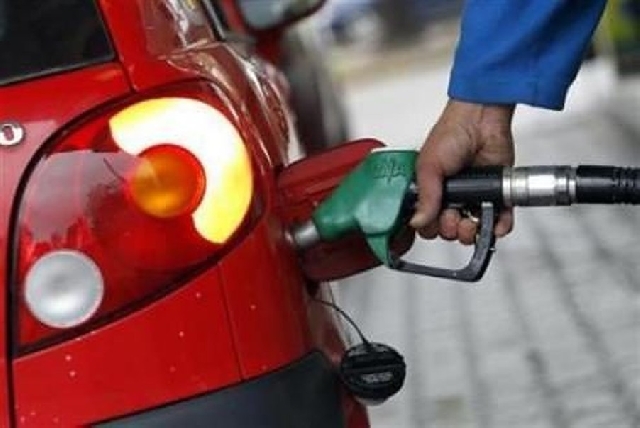
Vice President, Dr. Mahamudu Bawumia has launched an innovative Digital Retail Fuel Monitoring System by the National Petroleum Authority (NPA) in Accra. The Fuel Monitoring System, which allows fuel in OMC tanks across the country to be monitored by NPA, will curb illicit activities in petroleum downstreaming, such as unauthorised third party deliveries, fake receipts, smuggling, among others. Under this system, any OMC that receives illegal fuel would be found out. Launching the programme in Accra on Wednesday April 7, Vice President Bawumia commended the NPA for leveraging on government’s digitization drive to create an innovative solution to a major problem in the petroleum industry. “I am particularly delighted that the NPA is leveraging on technology to improve efficiency and effectiveness in the distribution of petroleum products in the Petroleum Downstream Industry,” Vice President Bawumia said. Dr. Bawumia revealed staggering losses in petroleum revenue to government due to illegal activities in petroleum distribution, adding that the initiative by the NPA will end the malady of revenue loss and significantly boost government revenue. “It is estimated that between 2015-2019, government lost GHC4.7 billion in tax revenue as a result of illegal activities in the petroleum sector,” Dr. Bawumia revealed. “Actions, decisions and policies of individuals and corporate bodies which result in petroleum product distribution leakages and the associated revenue losses to the State have serious negative effects on the developmental agenda of the government.” Dr. Bawumia undersored the significance of the innovation to the overall development agenda of government, highlighting the importance of petroleum revenue. “Taxes and levies on petroleum products are major sources of revenue for the government in pursuing its developmental agenda,” the Vice President said. “Actions, decisions and policies of individuals and corporate bodies which result in petroleum product distribution leakages and the associated revenue losses to the State have serious negative effects on the developmental agenda of the government.” “With this latest initiative of the Retail Outlet Fuel Monitoring System, we look forward to blocking revenue leakages and improving revenue mobilization that would contribute to Government’s efforts to providing social services and funding for infrastructural development.” The Minister for Energy, Dr. Mathew Opoku Prempeh, urged stakeholders in the petroleum industry to exhibit patriotism and join hands with the NPA to help curb illegal activities in the interest of the state. He also urged all to embrace innovation in order to make Ghana a better place for all. Also present at the ceremony were the Minister for Fisheries and Aquaculture, Mavis Hawa Coomson as well as the immediate past Chief Executive Officer of the NPA, Hassan Suleiman Tampuli. The Retail Fuel Monitoring System, with a command centre at the NPA’s head office, will be able to monitor in real time online, every fuel sales data from pums, get station tank fuel levels data and fillings, handle overall wet-stock management and handle complete fuel management. The system will also be able to manage all fuel related data, among other things in real time. 3news Please contact Apexnewsgh.com on email apexnewsgh@gmail.com for your credible news publications. Contact: 0555568093
Support for smallholder farmers key to ending hunger in Africa – AGRA President

AGRA President Dr Agnes Kalibata says that contrary to narratives that farmers are invariably resistant to adopting technology, nine in ten smallholder farmers engaged with AGRA programmes have adopted one or more technologies within one planting season. Africa’s strongest route towards the Sustainable Development Goal of eliminating hunger lies in helping smallholder farmers to access capital and supporting governments to promote policies that enable the farmers to adopt technologies and increase yields. Statistics indicate that by 2050, about four in five people living in extreme poverty will be concentrated in sub-Saharan Africa, where food insecurity is already a major challenge as a result of rapid population growth. To ensure food security in the future, experts say current food production levels will need to be increased by at least 70%. With studies showing that growth coming out of the agricultural sector is eleven times more effective at reducing poverty than growth coming out of other sectors, Dr Kalibata says AGRA has been pursuing three strategies to unlock the potential of Africa’s smallholder farmers, who produce 80 percent of the food the continent eats. “We are working with the governments across Africa to prioritise agriculture, supporting the enabling environment to benefit smallholder farmers and to make it possible for the private sector to provide services to smallholder farmers by reducing the real and perceived risk associated with the agricultural sector. We are also supporting farmers to access technologies that enable them to increase the yields and incomes while developing resilience to pests, climate change, droughts and floods,” she says. Dr Kalibata credits the Strengthening State Capability pillar of AGRA’s approach as the most transformational in driving scale, pointing out that functional government policies are key to success. “For example, the provision of early generation seed is usually driven by government institutions. If they aren’t functioning well, it makes it impossible for the private sector to function and farmers to access improved varieties of seeds. If markets don’t function, and they quickly revert to subsistence farming, which perpetrates the poverty cycle,” she says. Through technical assistance and grants, AGRA has helped to make capital more accessible to farmers, while delivering incentives to the private sector to invest in smallholder farmer systems, to shore up an agriculture sector that currently receives less than 10 percent of private lending. Apart from finance, AGRA is supporting resilience and sustainability for smallholders especially in response to challenges brought on by climate change. For example, in semi-arid areas of Kenya, AGRA is working with governments and the private sector to conserve, protect and enhance natural ecosystems. “With the judicious use of appropriate fertilisers and with the right seeds, farmers are able to triple, even quadruple their yields, says Dr. Kalibata. “Ending hunger is a solvable problem. AGRA has learned the hard way that if you’re going to be serious about pulling farmers out of poverty, you need to support reforms of policies and support programmes that can help reach millions of farmers. If Africa smallholder farmers become prosperous, they will change the continent forever,” she says. Source: AGRA Please contact Apexnewsgh.com on email apexnewsgh@gmail.com for your credible news publications. Contact: 0555568093
BoG releases list of approved electronic money issuers and payment service providers
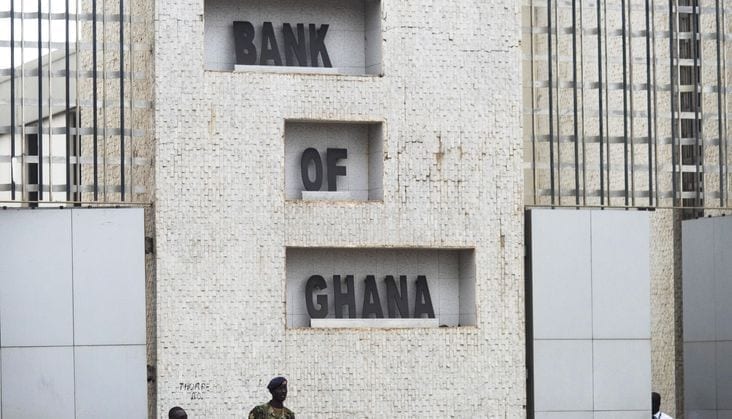
The Bank of Ghana (BoG) has released the list of approved electronic money issuers and payment service providers. The central released the list following the passage of the Payment Systems and Services Act, 2019 (Act 987) and the publication of Notice number BG/GOV/SEC/2020/07 on Licensing Application Pack for Payment Service Providers. “The Bank of Ghana announces for the information of the general public that the institutions listed below have received regulatory approval to operate as payment service providers: Institution Lic Please contact Apexnewsgh.com on email apexnewsgh@gmail.com for your credible news publications. Contact: 0555568093
Bank Collapse: Speaker Bagbin sets up nine-member committee for probe

The drastic financial sector clean-up by the regulator Bank of Ghana in 2017 which led to the collapse of some major banks and some microfinance companies in the country, has been revisited in Parliament. Speaker of Parliament, Alban Bagbin, has led the setting up of a nine-member committee to look into a petition presented to the House by two majority shareholders of uniBank and UT Bank. The petition called for an investigation into the conduct of the Bank of Ghana and the Ghana Stock Exchange in the revocation of the licences of UT Bank and uniBank. The Speaker, after the petition was officially brought before him by the Bawku Central legislator, Mahama Ayariga, proposed a seven-member committee. But on the floor of the House on Tuesday, Mr. Bagbin indicated that his earlier ruling had been revised. The First Deputy Speaker and Member of Parliament (MP) for Bekwai, Joseph Osei-Wusu will chair the committee. “It is directed to consider the petitions and duly report to the House at the commencement of the Second Meeting. The Committee is composed in consultation with leadership”, the Speaker noted. Other members are Alexander Afenyo- Markin (MP, Effutu), Joe Ghartey (MP, Essikando-Ketan), Patrick Yaw Boamah (MP, Okaikwei Central), Samuel Atta-Akyea (MP, Abuakwa South), James Klutse Avedzi (MP, Ketu North), Hon. Cassiel Ato Forson (MP, Ajumako Enyan Esiam), Isaac Adongo (MP, Bolagtanga Central) and Elizabeth Ofosu-Adjare (MP, Berekum). Opposition to committee Even before the committee will be formed, some Majority members kicked against the Parliamentary probe because of the ongoing litigation involving one of the banks. For instance, the Okaikoi Central MP, Patrick Boamah, said the petition will achieve no result as the House does not have the power to intervene. The Majority Leader, Osei Kyei-Mensa-Bonsu, also wanted the Speaker, Alban Bagbin to reconsider the planned inquiry into the dissolution of the banks. He made the point that the committee’s work would impair the adjudication of the two cases currently before the Supreme Court. But Alban Bagbin in a detailed report assured that admitting and laying of the petitions will not be a contravention. Consistent with prior parliamentary practice, I may exercise my discretion to provide for occasions in the sub judice rule may be permitted in order to prevent a real and substantial danger of prejudice to a proceeding, and to ensure that a Member, in making reference to that matter does not seek to pass judgment on or prejudice the matter, he said. Petition and collapse of banks Former stakeholders of the banks, Prince Kofi Amoabeng and Dr. Kwabena Duffuor petitioned Parliament to investigate the conduct of the Bank of Ghana and the Ghana Stock Exchange in the revocation of the licences of UT Bank as well as uniBank and delisting them from the country’s stock exchange. The petition also sought the restoration of the licences of these banks. Dr. Duffuor, founder of now-defunct uniBank and Mr. Amoabeng, former Chief Executive Officer of collapsed UT bank, had the licences of their respective financial institutions revoked during the banking sector clean-up which commenced in 2017. For UT Bank, the apex bank claimed it took the action against the institution because it was insolvent and was unable to recapitalize despite several assurances from the company’s shareholders. The apex bank also gave similar reasons for the revocation of uniBank’s licence saying the financial institution was significantly undercapitalised. ModernGhana Please contact Apexnewsgh.com on email apexnewsgh@gmail.com for your credible news publications. Contact: 0555568093
Tourism, Arts & Culture Key To Ghana’s Economic Growth – Minister Reveals
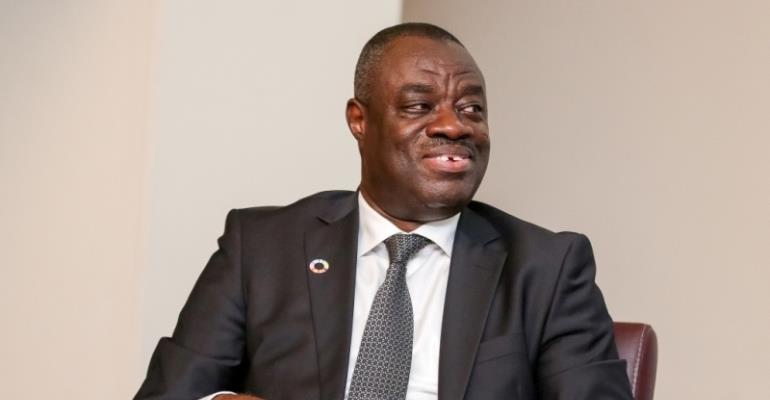
The Minister for Tourism, Arts, and Culture, Dr. Mohammed Ibrahim Awal has revealed plans to revitalize the tourism sector to become a strong and indispensable force that would contribute at least 5 billion dollars annually to the economic transformation of Ghana. Dr. Awal who is expected to use his business acumen and entrepreneurial skills to change the face of Ghana’s Tourism Industry revealed how he intends to make the sector a number one contributor to the country’s GDP. Speaking at a 2-day retreat organized for the Management Staff and the Heads of Agencies under the Tourism, Arts and Culture Ministry held at Akosombo in the Eastern Region, the Minister emphasized that he would infuse business perspectives in line with the Strategic Policy direction of the Ministry to rake in more revenue for the state. Dr. Awal said that in ensuring the actualization of the Ghana Beyond Aid agenda of the Government he was more than prepared to work with all the relevant stakeholders to make Ghana an attractive tourism destination in Africa by boosting tourism, culture, and the creative arts sectors. He described it as multi-billion dollar sectors, which needed to be given an utmost attention and governmental support to thrive. The Minister further unveiled his plans to make Domestic Tourism his top-most priority by improving the tourism centres to attract at least One Million local tourists visitation annually. As part of his unwavering commitment to make Ghana’s tourism hub a game-changer in the economic transformation of Ghana, Dr. Awal promised to create massive employment opportunities for Ghanaian citizens in the industry. Dr. Mohammed Ibrahim Awal disclosed that upon assumption of office, President Akufo-Addo challenged him to use his business and entrepreneurial skills to change the face of the Ghana Tourism industry, and in consequence promised not to depart from that call. He entreated all the Heads of Agencies under the Ministry to work closely and in a more transparent manner with him for the betterment of Ghana. The Chief Director of the Ministry of Tourism, Arts and Culture, Mr. John Yao Agbeko, earlier in his remarks officially welcomed Hon. Dr. Mohammed Ibrahim Awal to the Ministry, adding that the meeting was to also afford the Policy Makers an opportunity to have a deeper knowledge of the Sector and how it had performed over the years under the Agency Heads. Meanwhile, eleven (11) Heads of Agencies under the Ministry took turns to deliver their presentations on their respective Agencies’ Policy interventions and activities. ModernGhana Please contact Apexnewsgh.com on email apexnewsgh@gmail.com for your credible news publications. Contact: 0555568093
Plans to issue new bond smacks of desperate state of Ghana’s finances – Joe Jackson
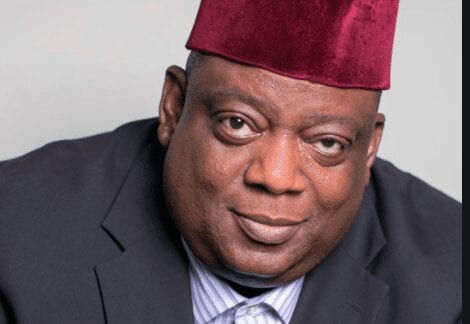
Plans of the government to issue zero-coupon bonds where there will be no payment of interest until maturity, is an indication that the country’s financial situation is currently going through desperation, a financial analyst with Dalex Finance Mr Joe Jackson has said. In a tweet, he said “Ghana plans to issue Zero-coupon bonds where we pay no interest until maturity. Bonds mature in 4 short years. This is further evidence of the desperate state of our finances. We need to ‘Share the burden’ by taxing the wealthy. #TaxTheRich.” In its latest attempt to use non-conventional means to ease its dire fiscal predicament, Ghana` is attempting to issue zero coupon bonds for the first time. This involves issuing bonds on which no interest will be paid until the bond mature – in Ghana’s proposal, after four years. It is still unclear whether the interest will be lumped front end (in which case the total interest would be deducted from the principal amount to be lent, and the full amount would be repaid to investors upon maturity) or whether it will be paid back-end (whereby the full principal amount would be provided at the time of issuance and the full amount of accrued interest would be added to this and paid to investors at maturity). However considering the sheer amount of interest to be paid over four years – even at seven percent per annum this would still be equivalent to 28 percent of the principal to be borrowed, it is likely that government would insist on the interest to accumulate and be paid back end, upon maturity. Indeed, front-ended interest payment would make the issuance less advantageous to Ghana than a conventional bond issuance where interest is paid annually or semi-annually. Government’s proposal to issue zero coupon bonds is thus an effort to avoid paying interest on the bonds during its lifespan. Interestingly the proposed tenor is four years just long enough for the huge one –time payment of principal and accumulated, compounded interest to become the obligation of the administration that succeeds this one which will use the money. This will generate considerable controversy. The use of back-ended zero coupon bonds would improve the country’s cashflow by enabling it borrow over the medium term without having to meet debt servicing costs of paying interest every year – debt servicing costs have been rising to inordinate levels and this year will take away 49.5 percent of the country’s expected tax revenues – but would leave the next administration, which will succeed this one with a huge debt servicing bill to meet almost immediately it assumes office, comprising the principal amount being borrowed now and the interest accumulated over four years. Indeed, if Parliament had not already approved the planned bond issuance already, government would have found it very difficult, if not altogether impossible to secure legislative approval for issuing the zero bonds it intends, especially without having a clear majority in the house. Even with approval already secured, the intended issuance will generate controversy among parliamentarians politicians, public policy analysts and commentators as well as economists who will question the fairness of leaving the next administration with such a debt servicing bill so early in its tenure. The payment will obviously have to be refinanced rather than paid from the treasury, but the timing will leave the new government with very little time to arrange it, especially if the next government is formed by a party currently in opposition. On the other hand though, the arrangement is perfectly suited to the incumbent government which effectively will be borrowing without any debt servicing obligations accompanying it while still in office. Considering that debt servicing already is taking half of its tax revenues this will be crucial towards its plans for fiscal consolidation to bring the fiscal deficit back under 5.0 percent as demanded by the currently suspended fiscal responsibility law, by 2024. The incumbent government’s supporters will argue that the use of zero coupon bonds is not unfair since its inordinate debt servicing costs have been imposed on it by previous administrations – in effect it would be doing to its successors the same thing as its predecessors did to it. Actually it will not be an easy sell to the international investment community. With Ghana’s public debt to Gross Domestic Product ratio already well above the generally accepted debt sustainability threshold of 70 percent (it was 76.1 percent by the end of 2020) and the World Bank projecting it to rise to over 80 percent by 2023, even recovering the principal amount lent will be seen as risky; zero coupon bonds put the interest at risk too, since by the time it falls due for payment Ghana might be having difficulties meeting its debt servicing obligations unless its debt trajectory changes from its current course. ’Basically government will have to convince investotrs that by the time payments fall due, new sources of foreign exchange revenues would have become available to it – most practically from the development of either the impending Pecan oilfield by Aker or the Afina oilfield by Springfield and partners. 3news Please contact Apexnewsgh.com on email apexnewsgh@gmail.com for your credible news publications. Contact: 0555568093
UER: PFAG, CIKOD and National Sesame Business Farmers Association appeals for govt support in agroecology
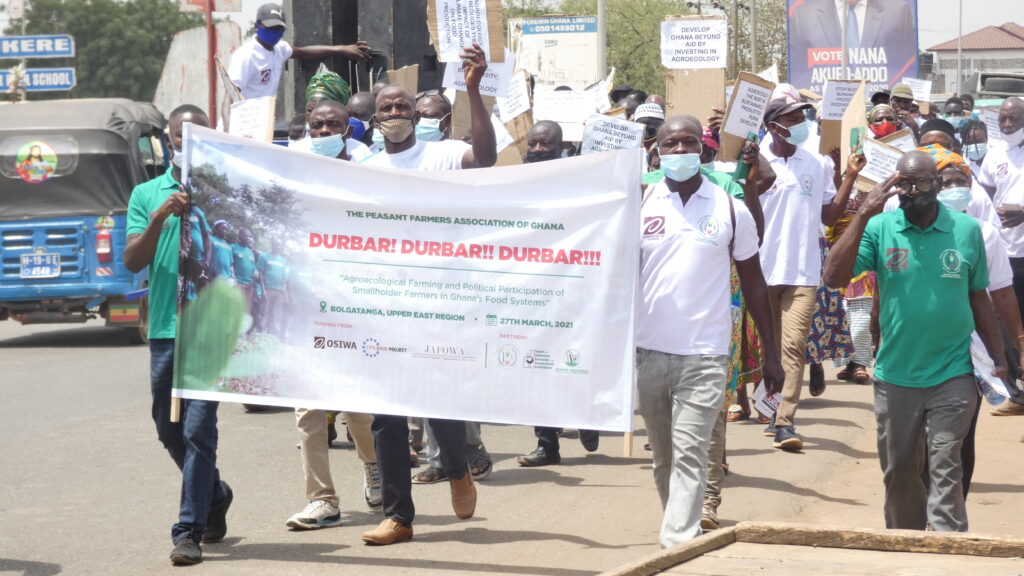
Peasant Farmers Association of Ghana (PFAG), Centre for Indigenous Knowledge and Organizational Development (CIKOD), and Ghana National Sesame Business Farmers Association in the Upper East Region have appealed to the government through a petition submitted- to the Upper East Regional MOFA Director to invest in agroecology to help address climate change impact on smallholder farmers in northern Ghana. According to the petition presented to the Regional MOFA Director Francis Ennor by the National President Peasant Farmers Association of Ghana Abdul Rahman Mohammed, the current farming practices coupled with mining activities and population growth led to the destruction of our forest landscape. Northern Ghana is almost like a desert, all the tree cover and the vegetation is gone, the rainfall pattern is erratic and inconsistent, high temperatures and the emergence of pests and diseases. However, they also register their disappointment that there was no budget allocation for the continuation of the one village one dam, as they appealed to the government to reconsider putting money for the completion of dams under construction as part of the one village one dam and used the remaining money for desilting of the existing dams that are silted, also appealed to government to subsidize simple mechanization services and water pumping machines for the youth to continue with dry season gardening and livestock rearing activities. Etc The Upper East Regional Director of the Ministry of Food and Agriculture (MOFA) Francis Ennor upon receiving the petition from the PFAG, acknowledged their contributions towards the country’s growth. According to the Regional MOFA Director, the appeal for government to invest in agroecology is a call in the right direction as he assured them of sending their message across through the Agric Minister to the President. Meanwhile, through the generous support of the Open Society Initiative for West Africa (OSIWA), The 11thhourproject and The Joint Action for Farmers’ Organizations in West Africa (JAFOWA), members of Peasant Farmers Association of Ghana (PFAG), Ghana National Sesame Business Farmers Association and Centre for Indigenous Knowledge and Organizational Development (CIKOD) also embarked on a walk to sensitize the general public on the need to adopt the practices and principles of #Agroecology in the Upper East region. Below is the full statement: Statement to His Excellency, the President of the Republic of Ghana on the need to increase funding for Agroecology His Excellency The President of the Republic of Ghana Flagstaff House Bolgatanga 27th March, 2021 His Excellency, MAINSTREAMING AGROECOLOGY FOR FOOD SOVEREIGNTY The Peasant Farmers Association of Ghana (PFAG), Centre for Indigenous Knowledge and Organisational Development (CIKOD) and Ghana National Sesame Business Farmers Association appeal to the government to invest in agroecology to help address climate change impact on smallholder farmers in northern Ghana. Your Excellency, Ghana relies heavily on agriculture as a key sector of her economy. Agriculture plays a significant role in poverty reduction, food security and employment. Vibrant agriculture sector will help reduce the movement of young men and women to southern Ghana to search for non-existing jobs will be reduced. The current farming practices coupled with mining activities and population growth led to the destruction of our forest landscape. Northern Ghana is almost like a desert, all the tree cover and the vegetation is gone, the rainfall pattern is erratic and inconsistent, high temperatures and the emergence of pests and diseases. There is a limited investment to combat climate change, ensuring environmental sustainability and improving the incorporation of indigenous knowledge in farming. This has contributed to deforestation, depletion of our biodiversity and poor agricultural performance in recent times. With agroecology, we are able to still produce, maintain our soil cover, plant more trees, rear livestock and poultry leading to an increase in income for smallholder farmers. With improved economic activities, there will be a reduction of the youth traveling to southern Ghana to seek greener pastures. We are therefore appealing for investment in the following areas: We are disappointed that there is no budget allocation for the continuation of the one village one dam. We appeal to the government to reconsider putting money for the completion of dams under construction as part of the one village one dam and used the remaining money for desilting of the existing dams that are silted. We also appeal to the government to subsidize simple mechanization services and water pumping machines for the youth to continue with dry season gardening and livestock rearing activities There is a need to re-orient public expenditure priorities in order to focus more on important agricultural development priorities such as rural infrastructure and training in agroecological farming skills. In particular, we recommend investment in technologies that focus on recognizing, preserving and utilizing appropriate traditional and indigenous knowledge. The government needs to be more aggressive in promoting sustainable agriculture to smallholder farmers. This will require an integrated soil fertility management approach. Promote the joint use of organic and inorganic fertilizers in the short run and promote organic fertilizer in the long run. Your Excellency, for all the above reasons, we urge you to redirect investment priority towards promoting agroecological farming for agriculture today and for the future. Your humble compatriots: Centre for Indigenous Knowledge and Organisational Development Peasant Farmers Association of Ghana Ghana National Sesame Business Farmers Association Meanwhile, through the generous support of the Open Society Initiative for West Africa (OSIWA), The 11thhourproject and The Joint Action for Farmers’ Organizations in West Africa (JAFOWA), members of Peasant Farmers Association of Ghana (PFAG), Ghana National Sesame Business Farmers Association and Centre for Indigenous Knowledge and Organizational Development (CIKOD) also embarked on a walk to sensitize the general public on the need to adopt the practices and principles of #Agroecology in the Upper East region. Apexnewsgh.com/Ghana/Ngamegbulam Chidozie Stephen Please contact Apexnewsgh.com on email apexnewsgh@gmail.com for your credible news publications. Contact: 0555568093