



Ghana’s central bank governor has issued a pointed challenge to the International Monetary Fund, demanding swifter debt relief and more powerful crisis response tools, warning that the continent’s economies are buckling under pressures that the Fund’s current mechanisms are simply too slow to address.
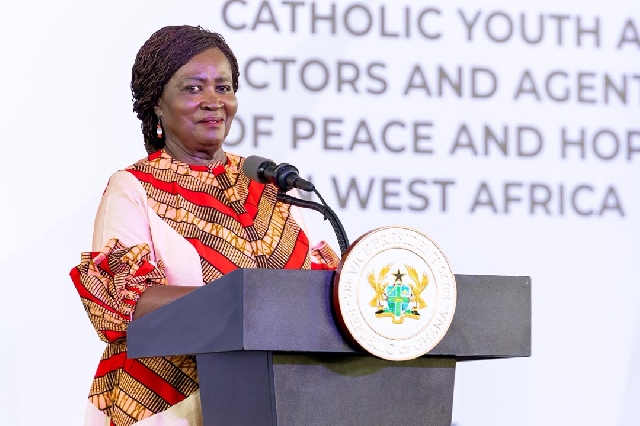
Bank of Ghana Governor Johnson Pandit Asiama delivered the appeal on Tuesday during a meeting of the African Consultative Group in Washington, making clear that the time for incremental adjustments had passed. What Africa needs, he argued, is a fundamental “step-change” in how the IMF responds to debt distress, climate shocks, and the tightening of global financial conditions.
“African economies continue to operate in an exceptionally challenging macroeconomic environment,” Asiama told the gathering, laying out a stark picture of high debt vulnerabilities, shrinking fiscal space and a relentless succession of external shocks. He pointed specifically to spillovers from the conflict in the Middle East, which he said had worsened inflation and placed severe strain on external balances across the continent.
His words resonated in a room where frustration had been building. African policymakers at the meeting made clear they believe the pace of international financial support is falling dangerously short of the scale of the region’s challenges, a sentiment Asiama gave voice to with unusual directness.
At the heart of his critique was the IMF’s existing debt resolution machinery, including the Group of 20’s Common Framework, which he described as too slow and too rigid for the urgency of the moment. Delays in restructuring, he warned, were not merely administrative inconveniences; they were prolonging uncertainty, chilling investment, and keeping countries locked out of international capital markets long after they should have regained access.
“Time-bound restructurings anchored in credible comparability of treatment are essential,” Asiama said, calling for stronger participation by private creditors and clearer rules on burden-sharing, two areas where progress has historically stalled.
He also took aim at how IMF programme design handles delays caused by creditor coordination problems, arguing firmly that such delays should not be recorded as policy failures on the part of borrowing countries. It was a pointed rebuke of a framework that African nations have long felt places an unfair burden on the most vulnerable parties in any restructuring process.
Asiama’s demands extended well beyond debt restructuring. He pressed for broader reforms to the IMF’s policy framework, including improved debt sustainability assessments for low-income countries and wider deployment of the Fund’s Integrated Policy Framework. He urged faster implementation of the IMF’s “three-pillar approach” for countries facing or at risk of crisis. He called for increased use of the Fund’s balance sheet to support vulnerable economies, through scaled-up concessional financing, the institutionalisation of Special Drawing Rights reallocation, and a more responsive Resilience and Sustainability Trust.
“Recent shocks have exposed the need for emergency financing that is adequately resourced and readily accessible,” he said, in what amounted to a direct call for the IMF to match its rhetoric on African development with tangible, timely action.
Rounding out his address, Asiama stressed the importance of capacity-building support in areas including domestic revenue mobilisation, public financial management and financial regulation, with particular attention to emerging risks tied to digital finance and cyber threats, sectors where many African economies remain exposed.
His remarks come at a moment of acute pressure for the continent. Rising borrowing costs, slowing global growth and escalating climate disruptions are converging to test the resilience of economies that, in many cases, have yet to recover from the shocks of recent years fully.
The IMF has not yet formally responded to the calls. But with debt restructuring and crisis financing set to dominate global economic discussions in the months ahead, Asiama’s voice, and Africa’s, will be difficult to ignore.
Source: Apexnewsgh.com