

Finance Minister Forson Vows Disciplined Approach to Project Financing to Safeguard Ghana’s Economy
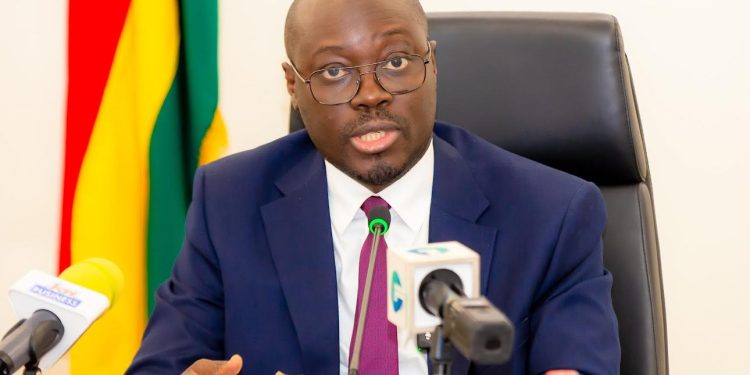
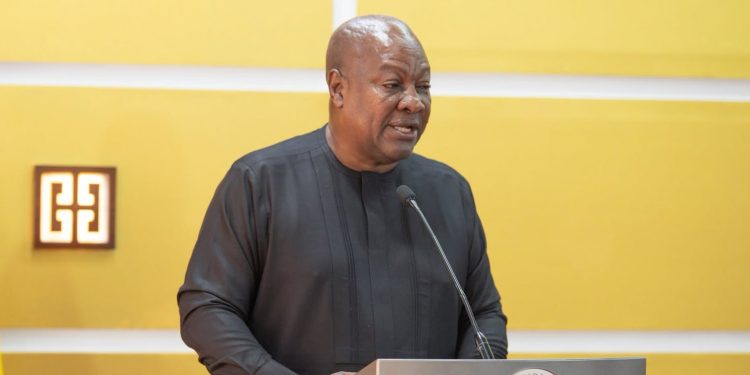
Ghana’s Finance Minister, Dr. Cassiel Ato Forson, has pledged a more disciplined and strategic approach to financing development projects as the country moves to protect its economic stability and avoid another debt crisis. Speaking at the Fifth Session of the Ghana–China Joint Commission on Economic, Trade and Technical Cooperation, Dr. Forson outlined a new set of priorities for government spending and borrowing. “Ghana will now proceed with discipline. We will not borrow simply because financing is available,” Dr. Forson asserted, signaling a shift in policy from past practices that contributed to rising national debt. He emphasized that all projects, whether roads, railways, power plants, or industrial enclaves, must be economically justified, transparently procured, and capable of boosting growth, generating revenue, or reducing costs. “Any road, railway, power plant, industrial enclave or other infrastructure financed through this cooperation must improve productivity, create jobs, increase exports and strengthen Ghana’s ability to repay its obligations,” he said. Dr. Forson stressed the need for measurable economic benefits from every project funded, particularly in partnership with international stakeholders such as China. He also announced that government would diversify its financing sources while maintaining a firm focus on debt sustainability. “We will diversify our financing sources, protect debt sustainability and avoid a return to the conditions that led to the 2022 debt crisis,” he stated, underlining the administration’s commitment to prudent fiscal management. As Ghana looks to the future, Dr. Forson’s remarks set a tone of accountability and discipline, aiming to ensure that development projects deliver real value and that the nation’s finances remain secure. Source: Apexnewsgh.com
BoG Governor Dr. Asiama: Reserve Build-Up Shields Economy from Global Shocks
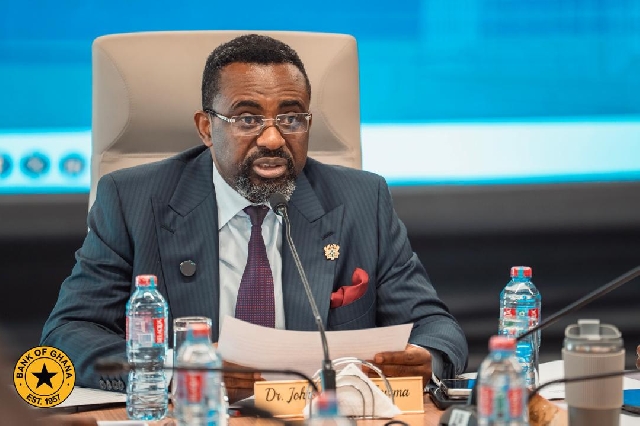
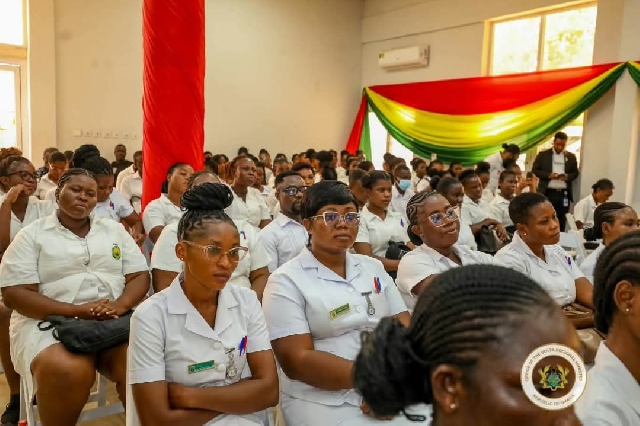
Bank of Ghana (BoG) Governor, Dr. Johnson Asiama, has highlighted the vital role played by Ghana’s international reserves in protecting the nation’s economy from recent global turbulence. Addressing Economics students from the University of Ghana and the University of Ghana Business School during “Time with the Governor,” Dr. Asiama reflected on the country’s response to mounting external pressures, particularly those stemming from tensions in the Middle East. “In the past three to four months, we have faced significant challenges with our international reserves,” Dr. Asiama noted, referencing a US$1.2 billion decline that saw Ghana’s reserves fall from US$14.1 billion to US$12.9 billion, according to the latest Bank of Ghana data. “I am therefore not surprised that we lost 1.2 billion reserves.” Despite the losses, Dr. Asiama credited last year’s strategic decision to build up reserves as a crucial buffer. “One of the good things we did last year was to build some high reserves for interesting times like this,” he told students attending the 131st Monetary Policy Committee meetings as part of the MPC Educational Observership Programme. He explained that the reserve build-up has given the central bank the flexibility to respond to global economic shocks and continue supporting critical sectors. “Managing the impact of external shocks involves difficult choices,” Dr. Asiama said, emphasizing the importance of strengthening Ghana’s foreign exchange earnings. Looking ahead, the Governor called for increased focus on cocoa and non-traditional exports as drivers of reserve growth. He revealed that non-traditional exports currently make up about 10% of total exports but should be pushed to 15%. Dr. Asiama also identified remittances as a potential avenue for bolstering reserves and economic development. He urged that more of the over US$8 billion received annually through remittances be directed into productive investments rather than consumption. As Ghana continues to navigate a challenging global environment, Dr. Asiama’s message was clear: prudent reserve management and strategic export growth are essential to safeguarding the country’s economic stability. Source: Apexnewsgh.com
Concerns Mount Over Future of Aayalolo Terminals Amid Demolition and Redevelopment Plans in Accra
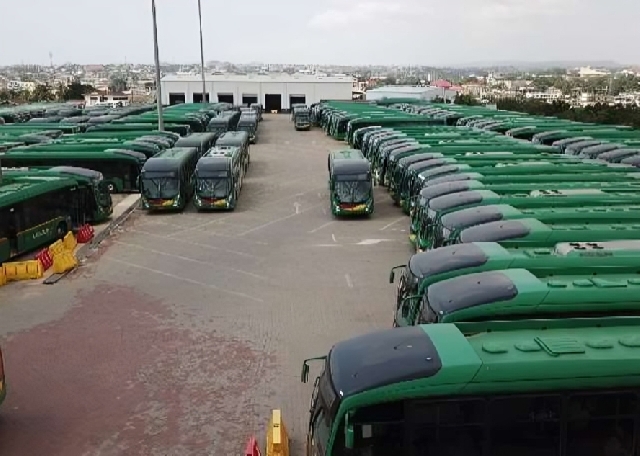
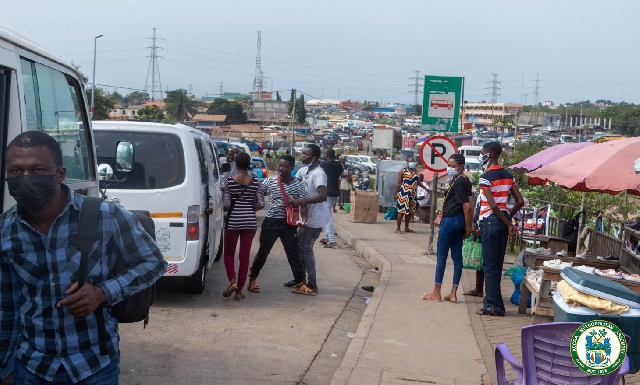
In Accra, growing unease is spreading among urban transport stakeholders as key Aayalolo terminals face uncertain futures. Facilities once hailed as pillars of the city’s modern transport system are now at the centre of debates that could impact efforts to decongest the capital and improve public mobility. At the heart of the controversy lies the Kinbu Terminal, situated in Accra’s bustling Central Business District (CBD). Built with World Bank support as part of the Urban Transport Project, the terminal serves as a critical hub for Aayalolo bus operations. However, recent plans to construct stalls on the premises have sparked tension among drivers, who worry that shrinking parking space could disrupt their services and undermine the terminal’s original purpose. Stakeholders are questioning whether commercial activities are being prioritised over public transportation needs and if the Aayalolo service’s operational requirements are still being considered in long-term planning. Simultaneously, reports of the demolition of the Achimota New Station Bus Terminal to make way for a proposed 24-hour market have alarmed transport experts. The Achimota terminal, also developed under the Urban Transport Project, was designed to serve as a gateway for northbound vehicles and to prevent unnecessary traffic in the CBD. Its removal, stakeholders argue, risks undoing years of progress toward a more integrated and efficient transport system for the city. Concerns go beyond infrastructure. Transport operators say the Aayalolo Bus Rapid Transit (BRT) system, inaugurated in 2016 and operated by GAPTE, has yet to reach its full potential. While the service offers subsidized fares as a social intervention, it continues to buy fuel at commercial rates and lacks sustained government financial backing. The gradual loss of dedicated BRT lanes has forced buses to compete with private vehicles, reducing efficiency and reliability. Promised government interventions, such as additional buses, have often benefited inter-city operators rather than GAPTE’s intra-city routes. Stakeholders highlight that the 2026 Mid-Year Budget Review mentioned plans for more buses, but did not earmark any specifically for GAPTE. As a result, calls are intensifying for the government to provide targeted support: restoring dedicated bus lanes, investing in infrastructure, and ensuring GAPTE receives additional vehicles to ease congestion, especially with increased demand expected during the festive season. With Michael Kpakpo Allotey, Accra’s Metropolitan Chief Executive, also chairing GAPTE’s board, stakeholders are demanding transparency about terminal management and long-term urban transport plans. They warn that Ghana’s investment in modern infrastructure will only pay off if protected and properly managed. As Accra’s population swells and traffic pressures mount, the fate of its urban transport system—and the daily experience of commuters, may hinge on how these pivotal decisions about infrastructure and investment are resolved. Source: Apexnewsgh.com
Rev Charles Owusu Demands Answers Over Gold Losses, Rejects Shielding of GOLDBOD Boss

Rev Charles Owusu has added his voice to the growing chorus of calls for greater transparency over Ghana’s reported gold sector losses, insisting that whether the loss occurred at the Bank of Ghana or the Gold Board (GOLDBOD), the public deserves clear answers. Speaking candidly on Peace FM, Rev Owusu questioned why GOLDBOD Chief Executive Sammy Gyamfi appeared to be shielded from proper scrutiny. While he acknowledged that GOLDBOD has brought significant inflows, over $10 billion, into the country, he argued that this achievement does not excuse the need for accountability regarding the reported $1.7 billion (GH¢22 billion) loss. “So what you’re saying is we shouldn’t question this? Is it because you say you’ve brought over $10 billion into the country and so if there’s a $1.7 billion loss, we shouldn’t ask questions over it?” Rev Owusu challenged, calling for open and honest discussion of the facts. He also pointed out that the Bank of Ghana has not disputed the International Monetary Fund’s (IMF) figure regarding the loss, raising further questions about the lack of accountability. Rev Owusu suggested that GOLDBOD may be receiving special treatment simply because of its current leadership, and questioned whether the same leniency would be extended if the roles were reversed. “Would the NDC ask us to be quiet about it if the NPP had made such a loss in a gold for oil transaction?” he asked pointedly. With the controversy showing no signs of fading, Rev Owusu’s remarks add renewed urgency to calls for transparency and accountability in the management of Ghana’s gold resources. Source: Apexnewsgh.com
Fiifi Boafo Urges GOLDBOD to Address Gold Losses, Not Trade Insults
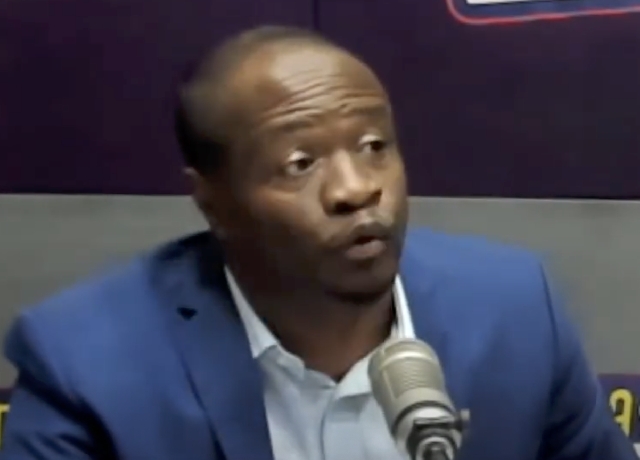
A fresh wave of controversy has erupted over Ghana’s gold transactions, with Fiifi Boafo, spokesperson for former Vice President Dr. Mahamudu Bawumia, taking aim at the Gold Board (GOLDBOD) for its recent handling of public concerns about reported losses. During an interview on Asempa FM, Mr. Boafo criticized the tone and substance of recent statements from GOLDBOD Chief Executive Sammy Gyamfi and NDC communicator Eric Adjei. According to Boafo, instead of providing clarity on the reported $1.7 billion loss, GOLDBOD’s response had become overly emotional and focused on personal attacks, rather than the facts. “If you listen to Sammy Gyamfi’s press conference and Eric Adjei’s comments, it proves that instead of addressing the issues, now emotions are driving the conversation, which should not be the case,” he observed. Boafo referenced an IMF report which, in his view, confirmed that the government incurred losses through gold sales managed by GOLDBOD. “It is true government made losses, and it was through gold, and GOLDBOD went to buy it,” he asserted. He argued that GOLDBOD should have responded by explaining its role in the losses instead of “turning its response into insults and casting aspersions.” The spokesperson drew a contrast with Dr. Bawumia’s measured response to previous allegations linking him to the Hubtel online payment platform, suggesting that GOLDBOD’s leadership should similarly maintain decorum. He added, “We expect GOLDBOD to come and say the loss is not from them but the Bank of Ghana.” Boafo also criticized Sammy Gyamfi’s reaction to Minority Leader Alexander Afenyo-Markin’s remarks about possible bail conditions if the GOLDBOD CEO were to be arrested over the reported loss. “You called Akufo-Addo and Bawumia criminals, but you are upset over talk about bail terms for you? I want him to learn a lesson here, that the whip used on one child will be used on the other child soon after,” Boafo commented pointedly. Recalling the earlier uproar over a GH¢400 million loss under the Gold-for-Oil programme, Boafo said the current government should be especially open to scrutiny. He accused the government of shielding GOLDBOD’s CEO due to his status as an NDC “darling boy” and demanded assurances that such losses would not recur. “We need the assurance that going forward, we will not experience this sort of loss,” Boafo insisted, emphasizing that interventions by the Bank of Ghana involve taxpayers’ money. He concluded that Ghanaians deserve full transparency and accountability regarding how public funds are being managed in the gold sector. Source: Apexnewsgh.com
GOLDBOD Boss Dares Minority to Pursue Parliamentary Probe Over $1.7bn Loss

A heated exchange is brewing between the leadership of Ghana’s Gold Board (GOLDBOD) and the Minority in Parliament, following allegations of massive financial losses at the state-owned agency. Sammy Gyamfi, the Chief Executive Officer of GOLDBOD, has thrown down the gauntlet, calling on the Minority to set aside public rhetoric and instead use parliamentary channels to investigate the agency’s reported $1.7 billion loss in 2025. The Minority, spearheaded by Effutu MP Alexander Afenyo-Markin, has been vocal in its demands for a thorough probe, pushing for Mr. Gyamfi to appear before Parliament and answer questions about the agency’s finances. The issue has sparked press conferences and media debates, keeping the matter in the public eye. But Mr. Gyamfi, speaking boldly on Joy News’ News File program, dismissed suggestions that he was dodging scrutiny. “Do I, Sammy Gyamfi, look like somebody who will be afraid of a Parliamentary probe?” he quipped, urging his critics to channel their efforts through the appropriate committees. He emphasized that Parliament’s committee system provides the mechanisms for accountability, and challenged the Minority to make use of these structures, rather than relying on motions and press releases. “Parliament works in committees, haven’t you heard that phrase? You don’t even need any motion because GOLDBOD is under the oversight of the committee on economy with Kojo Oppong Nkrumah as a ranking member. Not too long ago, they came to GOLDBOD to engage us and ask me questions. They can order me to produce documents,” Gyamfi stated. As the public debate continues, all eyes are now on Parliament to see if the Minority will heed the call and formally initiate committee investigations into GOLDBOD’s operations. Source: Apexnewsgh.com
Ghana Nears Debt Restructuring Completion with Belgium Agreement
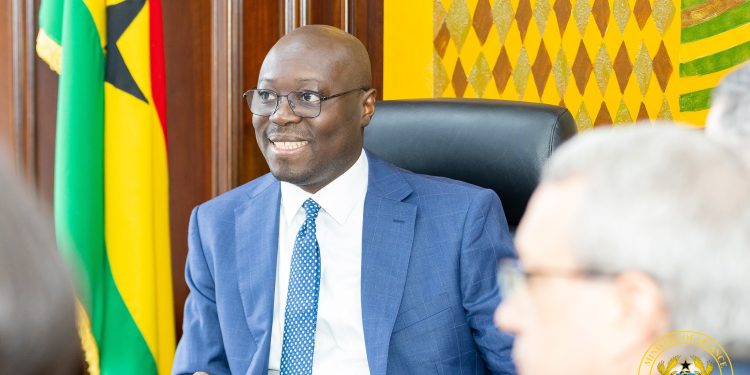
Ghana has taken a major step forward in its efforts to resolve the nation’s debt crisis, following the signing of an agreement with Belgium to restructure €163 million owed to the country’s export credit agency. Finance Minister Cassiel Ato Forson announced the milestone, describing it as a crucial move towards rebuilding trust in Ghana’s economy and ensuring a more secure financial future. “This agreement brings Ghana closer to completing its debt restructuring, restoring confidence and securing a more stable economic future for our people,” Dr. Ato Forson stated after the signing ceremony. Explaining the significance of the deal, the Finance Minister said it would relieve pressure on the national budget by lowering the government’s debt servicing costs. This, he noted, would free up resources to be invested in essential public services and infrastructure projects, directly benefiting citizens. “For every Ghanaian, it means more of our national resources can go towards improving lives rather than paying unsustainable debt,” Dr. Ato Forson emphasized. He highlighted how the agreement would make it possible for the government to allocate more funds to healthcare, education, roads, and other social infrastructure, rather than diverting vital resources to creditors. Beyond its immediate financial impact, the agreement represents a broader shift in Ghana’s fiscal management. Dr. Ato Forson stressed the need to prevent a repeat of past debt problems, revealing that the government is working to enshrine new fiscal rules in law. “Even if this government is not there, the next government will have to make sure that these fiscal rules are respected,” he said. The Finance Minister expressed gratitude to the Belgian government for its cooperation and for contributing to Ghana’s progress in tackling its debt challenges. The agreement with Belgium is the latest in a series of deals aimed at restructuring Ghana’s external debt and restoring fiscal stability after a period of economic turbulence. Source: Apexnewsgh.com
Residents Warned as Spoiled Poultry Products Illegally Dumped in Ho Community
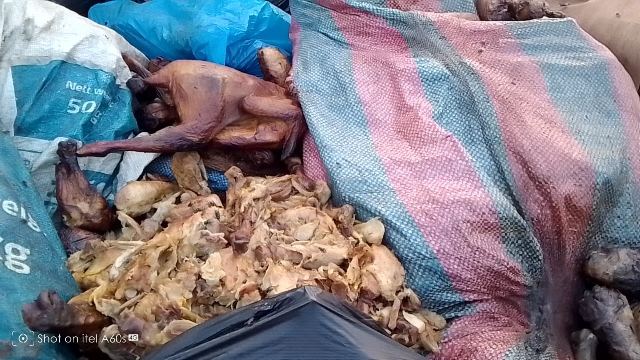
Residents of Tsawenu and Sokode Ando stumbled upon an unusual and troubling scene. Cartons filled with frozen chicken drumsticks, whole chickens, chicken feet, and other poultry parts were scattered along a path leading to the farmlands. The discovery soon sent shockwaves through Ho and its surrounding communities. Lawrence Senya, the Ho Municipal Environmental Health Officer, was quick to issue a public caution: residents should avoid purchasing or consuming poultry products, especially those found in the area, until further notice. Initial reports revealed that some of the chicken was still frozen and had no telltale odor, tempting some locals to collect, prepare, and eat the meat. But the absence of spoilage signs didn’t convince officials of its safety. “We cannot rule out the possibility of contamination, toxins, or other harmful substances,” Mr. Senya cautioned, explaining that unknown individuals may have deliberately disposed of the products for a reason. As word spread, a joint team from the Bureau of National Investigations (BNI), the Food and Drugs Authority (FDA), and environmental health officials launched an investigation to identify those responsible for the illegal dumping. In the meantime, community sensitization efforts began, urging anyone who had collected poultry from the site to voluntarily surrender it. Many residents had already cooked, smoked, or roasted the chicken before learning of the potential risks. To prevent further exposure, environmental health officials have been retrieving the surrendered products for safe disposal. Educational campaigns have intensified, warning residents to steer clear of suspicious poultry products until the authorities complete their investigation. Mr. Senya also reminded cold store operators, wholesalers, and retailers that food waste or expired products should only be disposed of through proper channels, with the supervision of health authorities. The incident has sparked serious conversations about food safety in the municipality. Authorities are appealing to the public to report any suspicious food dumping or unsafe handling to the FDA or local health offices, aiming to prevent a possible outbreak of foodborne illnesses. Wisdom Akorli, the Assemblyman for the area, condemned the act as evil. “This is an evil act for someone to dump spoiled frozen food in my area to destroy my people, but I pray we get the person,” he declared. He encouraged residents to surrender any questionable poultry to the authorities and assured them of his commitment to working with officials to bring the culprits to justice. “If you feel unwell after consuming any of these products, please report immediately to the nearest health facility,” he urged. As the investigation continues, the people of Ho are reminded to remain vigilant and prioritize their health above all else. Source: Apexnewsgh.com
Technical Glitch Disrupts Tax Payments: GRA Moves Swiftly to Restore Normalcy
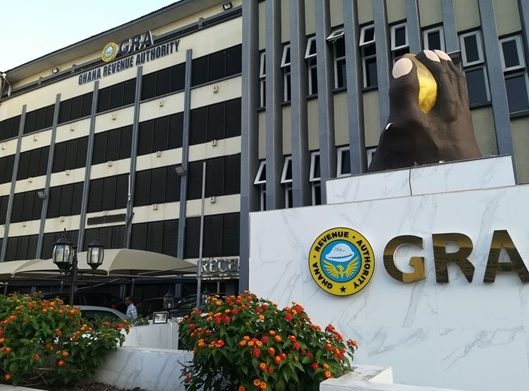
The Ghana Revenue Authority (GRA) has encountered an unexpected challenge. Taxpayers, importers, and clearing agents who logged onto the Ghana.gov payment platform found themselves facing delays in processing their payments. The disruption, traced to technical issues affecting the Integrated Customs Management System (ICUMS), Integrated Tax Administration System (ITAS), and the Ghana Integrated Tax Management and Information System (GITMIS), was soon recognized as a widespread concern. The GRA quickly sprang into action. Working hand-in-hand with its technical partners, the Authority launched an all-hands-on-deck operation to diagnose and resolve the glitches. While the core issue was isolated to payment processing, the filing of tax returns remained unaffected. The platform itself stayed online, but many users noticed that their payments were taking longer than usual to be processed or weren’t immediately reflected on their accounts. Recognizing the potential impact on the nation’s taxpayers and business community, the GRA issued an urgent statement. They assured all stakeholders that technical teams were working around the clock and that resolving the problem was a top priority. The Authority emphasized that delayed transactions would eventually be processed and properly reflected in users’ portals once the system was fully restored. Importers, clearing agents, and taxpayers who depend on these systems for their daily activities were asked to remain patient. The GRA pledged to keep the public informed about progress and to minimize further disruptions as much as possible. In their concluding message, the Authority expressed sincere regret for the inconvenience caused, thanking everyone for their patience and understanding as the technical teams worked diligently to restore normal payment operations. Source: Apexnewsgh.com
Energy Minister Highlights Major Debt Clearance and Savings from Sector Reforms
Ghana’s Energy and Green Transition Minister, Dr. John Abdulai Jinapor, has revealed that sweeping reforms in the country’s energy sector have led to the clearance of about $1.47 billion in legacy debt, alongside substantial cost savings for the nation. The announcement came during a press briefing on Thursday, August 20, where Dr. Jinapor detailed recent achievements and ongoing efforts to stabilize the sector. According to the Minister, one of the most impactful measures has been the government’s shift from expensive liquid fuels to natural gas, a move that has saved Ghana approximately $500 million. Dr. Jinapor also highlighted improvements to the cash waterfall mechanism, which have resulted in significantly better payment flows to Independent Power Producers (IPPs). “Before we came to office, just about 6 billion was declared monthly into the Cash Waterfall. IPPs were receiving just about 42%. Because of the work we did together and the policy reforms that we implemented, today we declare close to about 15 billion every month into the Cash Waterfall mechanism and almost all the IPPs receive about 100% of the invoice bills,” he explained. Further renegotiations with IPPs have delivered an additional $250 million in savings, Dr. Jinapor noted. He added that when the current administration took office, the outstanding bill for the energy sector was about GH¢80 billion, but significant progress has since been made in reducing arrears and enhancing financial sustainability. “These reforms are part of our broader efforts to stabilize Ghana’s energy sector, improve financial sustainability, and reduce the cost of power generation,” Dr. Jinapor concluded, underscoring the government’s commitment to long-term sectoral health and economic growth. Source: Apexnewsgh.com