







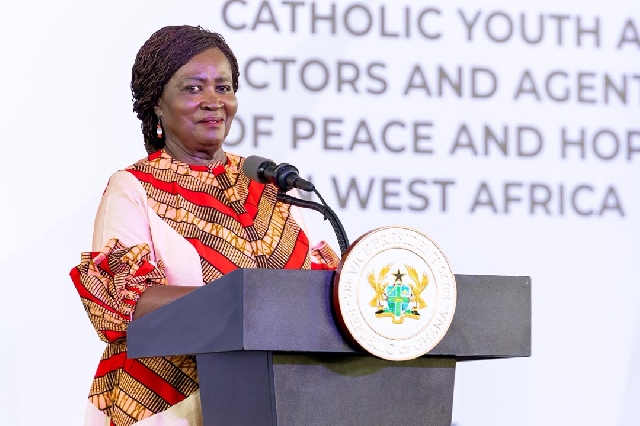
At the grand launch of Prosperity through Enterprise, Agriculture, Resilience and Livelihoods (PEARL) framework, a visionary 10-year framework plan for the Upper East Region, Professor David Millar, serving as Chairman, took center stage to address the congregation.

The initiative, spearheaded by the Regional Coordinating Council, drew stakeholders from across the region, eager to hear from one of its most respected academics.
As he spoke, Prof. Millar offered a thought-provoking perspective on the heart of economic development. “A market economy,” he began, “is just a space and a place.” He paused, glancing around the room before continuing, “I’ve heard comments like, ‘Oh, they are just building markets.’ But marketing, as many great economists will affirm, is a transaction arena. You don’t even need a physical structure for a market to exist, it’s all about transactions.”
To illustrate, he pointed to the example of gold. “If there were no market for gold, we wouldn’t even be talking about it. No one would be struggling to sell it. That is the essence of a market.”
Prof. Millar then turned to the concept of a 24-hour economy, a term buzzing in policy circles. “For us, at my university, the 24-hour economy is not just about a structural m

arket. It’s about a transactional space, and we are positioning ourselves to contribute to this broader discourse.”
He emphasized that the real value lies in the transactional spaces created for the benefit of the entire economy. “Physical structures can be labeled NDC or NPP,” he cautioned, referencing the leading political parties, “but the economy itself is more generic, more nationalist. I hope the planners capture this in their designs.”
With a gentle challenge, Prof. Millar urged the planners not to fall into the trap of viewing markets as mere buildings equipped with electricity and cell towers. “The true price of the challenge,” he concluded, “is to look beyond the visible structures and focus on the vibrant transactions that drive our economy.”
His words set a thoughtful tone for the event, reminding everyone present that the future of the Upper East Region depends not just on what is built, but on how people connect, trade, and innovate within those spaces.
Source: Apexnewsgh.com