







Gurensi Clay Pots: Indigenous Science, Art, and Sustainable Technology of Northern Ghana
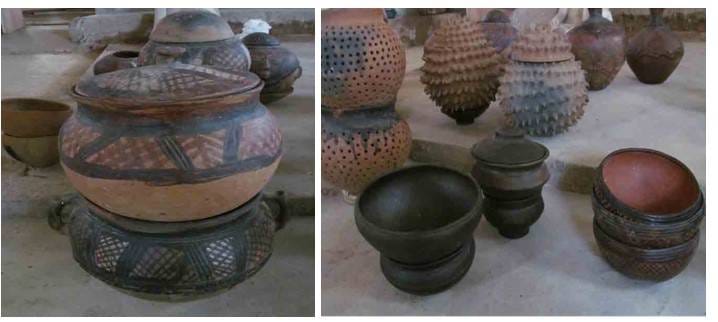
Long before electricity reached the villages of Northern Ghana, long before refrigerators hummed in kitchens, communities discovered a simple, sustainable, and ingenious way to keep water refreshingly cool: the clay pot. Among the Gurensi people, as with other northern communities, the clay pot was not only a household necessity; it was a symbol of practical wisdom, scientific observation, and deep knowledge of the natural environment. It demonstrates how technology does not always need circuits, motors, or complex machinery. Sometimes, it is about listening to the earth, understanding its properties, and working in harmony with nature. These clay vessels are crafted from local earth, carefully selected by the potters for its particular qualities. In many cases, the clay is mixed with kaolin, a fine white clay that lends the vessel strength while retaining microscopic porosity. This porosity is the secret behind the clay pot’s cooling ability. Even after firing in open pits or small kilns, the walls of the pot remain slightly porous, capable of allowing tiny amounts of water to seep through to the surface. When These droplets reach the outer surface of the pot, they begin to evaporate, carrying away heat and leaving the remaining water inside noticeably cooler. For the Gurensi, the creation of these pots is a craft learned over generations, passed from mother to daughter, aunt to niece, and sometimes from elder potters to apprentices. There are no written manuals, no textbooks; the knowledge is tacit, embedded in gestures, rhythms, and careful observation. The potter kneads the clay, feeling its texture and consistency, shaping the vessel by hand using traditional techniques such as coiling or pinching. The form is guided by both utility and aesthetic preference. Some pots are simple and functional, designed for storing and cooling water. Others are decorated with incised patterns, geometric motifs, or symbolic shapes reflecting personal taste, family identity, and cultural expression. The cooling process itself is a marvel of indigenous science. As water slowly seeps through the walls, it evaporates into the air. This phase change—from liquid to vapor—requires energy, and this energy is drawn from the water inside the pot and the surrounding clay walls. The effect is immediate: the water temperature drops, providing refreshment that seems almost magical to those unfamiliar with the principle. In essence, the clay pot operates as a natural refrigerator, a technology powered entirely by the sun, air, and earth. The kaolin mixed into the clay enhances this process. Its mineral structure makes the walls fine-grained and durable, yet still porous enough to allow controlled evaporation. The result is a vessel that cools effectively while remaining long-lasting and resilient under daily use. The “cold taste” of water drawn from a clay pot is not magic—it is physics in action, observed and applied by generations of Gurensi people long before formal science documented it. In a region where the dry season brings soaring temperatures, often exceeding forty degrees Celsius, the simple clay pot is a lifesaver. It provides hydration, preserves health, and supports the demanding daily routines of farming, herding, and household work. Its value is both practical and cultural, connecting people to their environment in an intimate, interactive way. Crafting a clay pot requires more than technical skill; it demands patience, intuition, and a deep understanding of natural materials. The potter must know when the clay has reached the right consistency, how thick the walls should be, and how to shape the opening for optimal use. During firing, the potter controls the heat by adjusting the placement of wood, grass, and other combustible materials, ensuring that the vessel does not crack and that the kaolin’s properties are preserved. Firing is as much an art as a science, requiring keen observation, timing, and experience. The reddish-brown colour that emerges is a signature of the firing process, indicating the pot is ready for everyday use. Beyond their scientific function, these clay vessels carry deep cultural significance. They are central to household life and communal activities. In many Gurensi homes, clay pots stand in the compound, shaded under a tree or placed on a raised platform to keep the water clean. They are used during communal gatherings, ceremonies, and festivals, serving both practical and symbolic roles. A well-made pot signals skill, care, and attentiveness to household needs, while also representing the continuity of cultural knowledge and craftsmanship. Through such objects, the everyday lives of the Gurensi are linked to generations past, connecting present households to their ancestors in an unbroken chain of practice and understanding. The artistry of the clay pot is also significant. Many pots are decorated with simple incised lines, grooves, or textured patterns. These designs are more than decorative—they often carry symbolic meaning, reflecting local cosmologies, agricultural cycles, or community identity. Women, who are traditionally responsible for decoration and finishing, use these designs to express creativity, communicate status, and reinforce social norms. The decorated vessel becomes a living canvas, a medium through which cultural narratives are inscribed onto functional objects. The clay pot is also an example of sustainable technology. Unlike modern appliances, it requires no electricity, no refrigeration, and no synthetic materials. When a pot eventually breaks or reaches the end of its life, it returns to the earth without polluting it. Its production and use exemplify a closed-loop system, one that minimizes waste and harmonizes with the natural environment. In this respect, the clay pot offers lessons for contemporary discussions on sustainability, climate adaptation, and low-impact technologies. It is an object that embodies ecological intelligence embedded in cultural practice. The process of using the pot is equally instructive. Water is poured in, allowed to settle, and gradually cooled by evaporation. There is a rhythm to its use, a daily interaction that teaches observation, patience, and respect for natural processes. Children grow up understanding how the pot works, not through formal instruction but by participating in its care and use. They learn that simple materials can achieve complex results, that nature can be a partner in human comfort, and that technology can
Apexnewsgh Honored as 2025 Best Media Advocacy Institution in Upper East Region

At a special awards ceremony organized by the Narcotics Control Commission (NACOC) in Ghana’s Upper East Region, Mr. Ngamegbulam Chidozie Stephen and his media platform, Apexnewsgh, were recognized as the “2025 Best Media Support and Advocacy Institution in Prevention of Illicit Drug Abuse.” The accolade was awarded in acknowledgment of the platform’s impactful advocacy work, particularly through Ngamegbulam’s recent documentary titled “Swallowed by Drugs,” which was sponsored by Endswell Pharmacy Limited, to explore the growing issue of youth drug abuse in the region and beyond. Mr. Ngamegbulam expressed his surprise and gratitude upon receiving the award. Recalling the moment, he shared, “I was shocked when I received a call from the NACOC media department. When I arrived, I was told that my story had been selected for an award. I was speechless.” He expressed satisfaction at seeing other media outlets in the region begin to address illicit drug issues more seriously following the airing of his documentary. “I was happy to see some of the media platforms engaging the same resource persons I featured in my documentary. That, to me, is the way forward. It shows that Apexnewsgh, in its own way, is making a meaningful impact.” The official citation from NACOC commended Apexnewsgh for its outstanding contributions to public health and advocacy, stating: “In recognition of your outstanding contributions to public health and advocacy activities on prevention of drug abuse, Apexnewsgh is commended for its tireless efforts in educating the public, reducing stigma, and shining a light on the dangers of substance abuse. We extend our sincere appreciation to Apexnewsgh for elevating the national dialogue on drug abuse, providing vital information on recovery, and fostering a community-wide commitment to a drug-free future through its latest video documentary, ‘Swallowed by Drugs.’ We appreciate your exemplary commitment to social responsibility and honor you for using your platform to drive awareness, share stories of hope, and actively combat the spread of drug addiction.” The event drew prominent security officials from the Immigration Service, CEPS, Police, and Military, as well as representatives from the Food and Drugs Authority (FDA), Upper East Youth Association, and Municipal and District Chief Executives (MDCEs) from Bongo, Kassena Nankana, and Bolgatanga. Delivering a speech on behalf of the Upper East Regional authorities, the Bolgatanga MCE congratulated awardees for their dedication and hard work in the fight against illicit drug abuse. He also expressed concern over the alarming rate of youth drug addiction, emphasizing its negative impact on society. Commander DCOI Mr. Felix Bosopem Agyamang, Upper East Regional Commander of the Ghana Immigration Service and chairman of the ceremony, highlighted the strong collaboration between the Narcotics Control Commission and the Immigration Service at the region’s borders, particularly regarding migration and related issues. Standing before the assembled crowd, SNCO Saeed Abdul-Aziz, Upper East Regional Commander of NACOC, delivered a speech that moved hearts and minds. His words echoed the spirit of the evening: “Tonight is not only a moment of celebration, but also a time of reflection, a time to appreciate the teamwork, discipline, and sacrifices made by all officers and partners in the fight against illicit drugs.” He paused to acknowledge the presence of distinguished guests, community leaders, agency partners, and fellow officers, whose support had been pivotal throughout the year. “We are deeply grateful to you all for your influential support. This demonstrates the strong collaboration and shared commitment we have towards impacting our communities and protecting the future of our youth.” Apexnewsgh’s recognition highlights the crucial role of the media in shaping public health discourse and mobilizing communities in the fight against drug abuse. Source: Apexnewsgh.com
Modern Day Social Media Slavery: The Monetization Dilemma Facing African Content Creators

Ngamegbulam Chidozie Stephen Email: apexnewsgh@gmail.com In the digital age, social media has become a global equalizer, bridging continents, cultures, and communities. Platforms like Facebook, TikTok, Instagram, and YouTube have revolutionized how we interact, share stories, and even build livelihoods. Yet, beneath this veneer of democratization, a troubling disparity persists, one that many African content creators and digital entrepreneurs are finding increasingly difficult to ignore. The question that lingers: Why are African creators still largely excluded from direct monetization opportunities offered by these very platforms? Recently, media personality Ngamegbulam Chidozie Stephen voiced his concerns about what he describes as “modern-day social media slavery,” a term that resonates deeply with many across the continent. His frustration and that of countless others stems from the ongoing marginalization of African voices in the digital economy, particularly when it comes to earning money from content creation. Africa’s social media landscape is nothing short of remarkable. TikTok, for example, boasts over 189 million users across the continent, an impressive 11.9% of its global audience. The surge is most notable among Gen Z, with Egypt and Nigeria leading in user numbers at 32.9 million and 27.4 million, respectively, closely followed by South Africa’s 17.5 million. Facebook’s dominance is even more pronounced, with between 290 and 377 million African users as of 2025-2026, representing a staggering 82% market share among all social platforms. Instagram and YouTube also enjoy robust growth, driven by widespread smartphone adoption and improving internet infrastructure. YouTube alone counts roughly 180 million African users, with Egypt, Nigeria, and South Africa topping the charts. These statistics highlight Africa’s immense contribution to the global digital community. The continent’s youth, in particular, are not just passive consumers; they are active creators, trendsetters, and influencers. Yet, despite their numbers and creativity, a significant barrier remains: the inability to directly monetize their creativity on major platforms like TikTok. For millions of African content creators, the lack of direct monetization options is not just an inconvenience; it’s a structural disadvantage. TikTok, in particular, has come under scrutiny for not enabling direct monetization for African users, despite the platform’s rapid growth and deep penetration across the continent. While some African countries have recently gained access to Facebook’s monetization features, TikTok’s policies still leave many creators in the lurch. This exclusion means that, for now, the only way for an African TikTok creator to earn from their content is through complex workarounds. Typically, creators must rely on intermediaries based in the US or Europe, who register accounts, enable monetization, and then share the proceeds with their African partners. This not only complicates the process but also perpetuates a dependence on Western gatekeepers, a scenario that many, including Mr. Stephen, liken to a new form of digital servitude. The frustration is palpable, especially when considering the influence of African content creators on global trends. Figures like Mark Angel, Itsyaboymaina, Carter Efe, Ilyas El Maliki, Wode Maya, Mihlali Ndamase, Aisha Yesufu, and others have amassed millions of followers and generated content that resonates far beyond the continent’s borders. They are proof that African creativity is not only vibrant but also commercially viable. Yet, these same heroes are now being called upon to leverage their influence for change. As Mr. Ngamegbulam passionately argues, they have a responsibility, not just to themselves, but to the broader African creator community, to advocate for policy reforms that will allow direct monetization for all African users. Their collective voices could pressure tech giants to recognize Africa’s value not just as a market, but as an essential part of the global creative economy. Describing the situation as “modern-day slavery” is not mere hyperbole. The current dynamics effectively relegate African creators to second-class status in the digital world. While creators in the West enjoy seamless access to monetization features, sponsorships, and brand partnerships, their African counterparts are forced to navigate a maze of bureaucratic hurdles and rely on international connections just to earn a share of the same opportunities. This is particularly egregious when considering that Africa’s youth are among the most engaged and dynamic users of these platforms. The West reaps the benefits, both in terms of advertising revenue and cultural capital, while Africans are left scrambling for scraps. The exclusion is not only economically damaging, but it also sends a troubling message about whose voices and stories are considered valuable in the digital age. For many young Africans, social media represents more than just entertainment; it’s a lifeline to economic empowerment, self-expression, and global visibility. The inability to monetize content directly stifles entrepreneurship, discourages innovation, and perpetuates existing inequalities. It also means that Africa’s digital economy is not reaching its full potential, with billions of potential revenue lost to foreign intermediaries. Moreover, the absence of direct monetization deepens the digital divide between Africa and the rest of the world. It prevents local creators from reinvesting in their communities, building sustainable businesses, or even supporting themselves and their families. This is especially critical given the continent’s burgeoning youth population and high unemployment rates, conditions that make the promise of digital entrepreneurship all the more appealing. The reasons behind this exclusion are complex. Some platforms cite issues like payment infrastructure, regulatory challenges, or concerns about fraud. Others may simply be slow to adapt their policies to regions outside their primary markets. But whatever the rationale, the effect is the same: African creators are systematically denied the same opportunities afforded to their peers elsewhere in the world. This disparity is all the more galling given the relentless growth of social media usage in Africa. The continent is one of the fastest-growing markets for platforms like TikTok, Instagram, and YouTube. Its users are young, tech-savvy, and eager to engage. They create viral trends, generate massive view counts, and shape conversations on a global scale. The data is clear: Africa is not just a consumer market; it is a creative powerhouse. It is both ironic and troubling that, to monetize their creativity, African content creators must rely on Western infrastructure and intermediaries. This not
DVLA Reiterates Strict Guidelines for Use of DV Number Plates

The Driver and Vehicle Licensing Authority (DVLA) has issued a firm reminder on the correct use of DV number plates, emphasizing that these plates are strictly reserved for licensed car dealers and vehicle manufacturers and are not intended as a substitute for full vehicle registration. Stephen Attuh, Director of Communication at the DVLA, addressed the issue on the Citi Breakfast Show on Thursday, February 5, in response to increasing public confusion and misuse of DV plates on roads nationwide. He clarified that DV plates are designed for limited, temporary use, such as moving vehicles from a dealer’s lot for repairs, defect fixing, or test drives before final sale. Attuh highlighted a widespread misconception among motorists who believe DV plates can be used indefinitely, even after purchasing a vehicle. He stressed, “You are not required to have a DV plate on your vehicle so long as it is not for purposes of fixing a defect on it or test driving. Once the vehicle is sold to you and you are off the dealer’s facility, you are required by law to register the vehicle to be duly identified before it can be on our roads.” He attributed the growing misuse of DV plates to some car dealers who flout regulations, allowing buyers to use the plates unlawfully. Citing Regulation 23 of Legislative Instrument (LI) 2180, Mr. Attuh underscored that the rules governing trade licences are clear, and any breach is a violation of the law. “The DV plate has many limitations, and its use for ordinary driving is not permitted,” he reiterated. The DVLA’s renewed advisory seeks to curb unlawful practices and ensure that vehicles on Ghana’s roads are properly registered and identifiable, in line with existing legal requirements. Source: Apexnewsgh.com
Government Unveils Post-Harvest Initiative to Boost Efficiency and Cut Losses in Agriculture
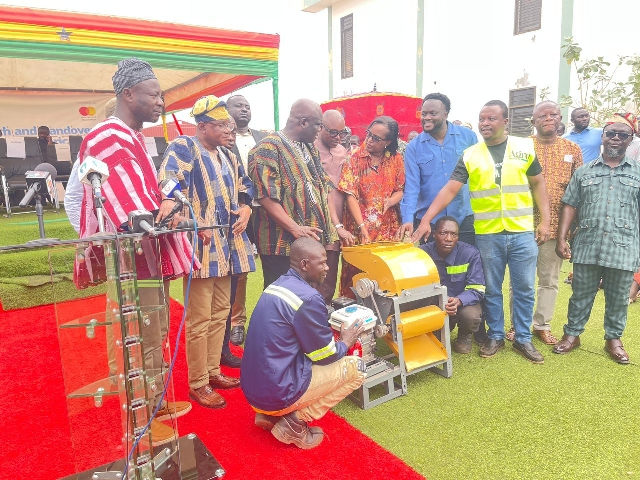
Ghana’s agricultural sector marked a pivotal moment as the Minister for Food and Agriculture, Eric Opoku, reiterated the government’s commitment to building a resilient and efficient food system, one that goes beyond increased production to protecting the hard-earned harvests of farmers. Speaking at the official launch and handover of locally fabricated post-harvest equipment, Minister Opoku described the event as a symbol of Ghana’s deliberate shift towards local innovation, value addition, and sustainability in agriculture. He acknowledged a long-standing challenge: despite investments in boosting output, the country has continued to lose a significant portion of its harvests due to poor post-harvest handling. “Inadequate storage and processing have not only wasted farmers’ effort and income, but have also weakened our national food systems,” the Minister noted. The new initiative seeks to change that narrative by engaging 2,231 youth artisans to fabricate around 300 threshers, 200 for maize and 100 for soybeans, across seven technology solution centres. More than 3,000 farming families nationwide are expected to benefit. Minister Opoku emphasized that the programme is about more than just numbers; it’s about building a skilled workforce to serve Ghana’s agriculture for years to come. The impact will be seen in reduced post-harvest losses, higher farmer incomes, improved produce quality, and stronger rural economies. Sustainability, the Minister stressed, is at the core of the initiative. “Equipment alone is not enough; skills and ongoing technical support are essential,” he said. The programme, therefore, includes comprehensive user training, a technical support system, and the involvement of trained agricultural and engineering graduates to guarantee safety, reliability, and continuity. He underscored that the future of Ghana’s agriculture lies in efficiency, value addition, and the dignity of labour. It also depends on empowering women farmers, equipping young people with relevant skills, and ensuring that every harvest contributes to national development. World Food Programme Country Director praised the initiative as a practical, homegrown solution to Ghana’s persistent post-harvest losses. She noted that significant quantities of maize and soybeans are lost after harvest, undermining incomes, nutrition, and national food security while driving up prices. The WFP supports the holistic approach, which addresses everything from production to processing, storage, and market access. By aligning with Ghana’s Feed Ghana programme and its broader mechanisation agenda, the new initiative promises to enhance food security and transform rural livelihoods for the better. Source: Apexnewsgh.com
Calls Grow to Amend National Peace Council Act to Guarantee Youth Representation

A groundswell of advocacy is emerging from Ghana’s Upper East Region, where youth leaders are urging lawmakers to amend the National Peace Council Act to secure formal youth representation at the national level. The demand comes amid rising consensus that sustainable peacebuilding must reflect Ghana’s youthful demographic and empower young people as central actors in national security policy. The call gained momentum during a two-day consultation in Bolgatanga, where youth, community stakeholders, security agencies, and civil society organisations gathered to contribute to Ghana’s National Action Plan (NAP) on Youth, Peace, and Security. The event, organised by the National Youth Authority (NYA) with support from international and national partners, offered young people a platform to share their experiences, propose policy reforms, and advocate for a more inclusive peace governance structure. While youth are present on local peace committees, participants noted that the absence of a statutory guarantee for their representation at the national level leaves their influence subject to goodwill rather than law. They argued that codifying youth participation in the National Peace Council would elevate their role from symbolic presence to institutional accountability, ensuring their voices help shape crucial peace and security decisions. Discussions drew on United Nations Security Council Resolution 2250, which recognises youth as vital agents in conflict prevention and peacebuilding. With one in four young people worldwide living in or affected by conflict, participants emphasized the urgency of embedding youth voices in peace structures at every level. Francis Takyi-Koranteng, Upper East Regional Director of the NYA, highlighted that young Ghanaians have long been marginalised or unfairly stereotyped as sources of instability. He stressed that, with Ghana’s large youthful population, inclusion is not optional but essential, and the quality of engagement at the consultation demonstrated young people’s readiness to contribute meaningfully to national peace frameworks. UNDP officials commended the consultative process for fostering genuine dialogue and co-creation, moving youth engagement from tokenistic to transformative. They noted that legal backing for youth representation would reinforce the legitimacy and resilience of Ghana’s peace architecture. The Upper East engagement is part of a nationwide effort to craft a National Action Plan that taps into youth creativity and leadership for peaceful, inclusive development. Stakeholders agreed that amending the National Peace Council Act to guarantee youth representation would build trust, accountability, and long-term stability. As Ghana advances its Youth, Peace, and Security agenda, the message from Bolgatanga is clear: young people are not just beneficiaries of peace, they are vital partners whose place at the national table must be protected by law. Source: Apexnewsgh.com
Minister of Energy and Green Transition Explores Stronger Ties with AFD for Ghana’s Energy Future
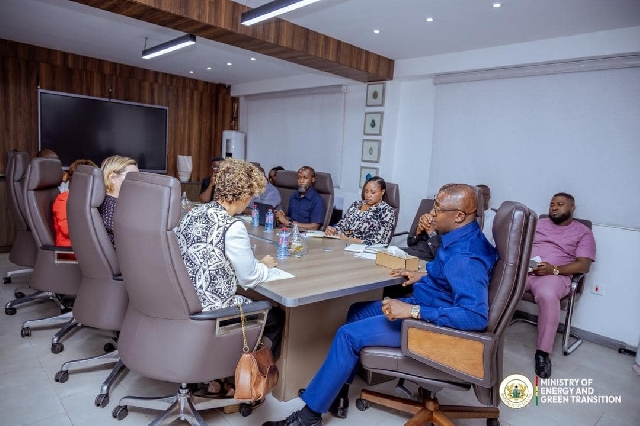
Dr. John Jinapor, Ghana’s Minister of Energy and Green Transition, recently sat down with representatives from the Agence Française de Développement (AFD) for a pivotal discussion on the future of Ghana’s energy sector. The atmosphere was one of collaboration and shared vision as both parties reflected on their partnership’s achievements and mapped out new horizons together. The meeting centered around ongoing and forthcoming projects, with a strong focus on advancing reforms and making investments that foster sustainable growth and transform the energy landscape in Ghana. Dr. Jinapor emphasized the importance of building on the momentum of current initiatives, particularly those designed to improve efficiency, broaden access to electricity, and quicken the shift towards greener, more sustainable energy solutions. Throughout the conversation, AFD was applauded for its steadfast commitment as a development partner. Over the years, AFD’s support has been instrumental in shaping Ghana’s energy infrastructure and informing critical policy decisions. Dr. Jinapor acknowledged the profound impact of this partnership, noting that AFD’s contributions have been vital in helping Ghana achieve key energy development objectives. He also highlighted the need for continued collaboration, especially as the government pursues new strategies to modernize the sector and ensure that every Ghanaian benefits from reliable, sustainable power. The meeting concluded on a hopeful note, with both Dr. Jinapor and the AFD team expressing optimism about deepening their partnership. United by a common goal, they reaffirmed their commitment to building a resilient and sustainable energy sector that aligns with Ghana’s broader development agenda. Source: Apexnewsgh.com
Government Moves to Rename Kotoka International Airport as Accra International Airport
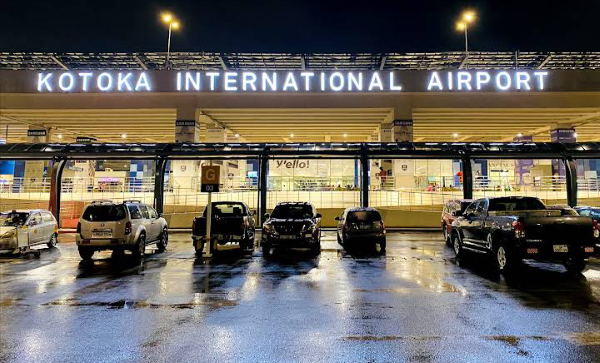
The government has unveiled plans to rename Ghana’s main aviation gateway, Kotoka International Airport (KIA), to Accra International Airport. The announcement was made by Majority Leader Mahama Ayariga during a leadership media briefing held ahead of the Ninth Parliament’s resumption on Tuesday, February 3, 2026. Ayariga revealed that the proposed name change would be formalized through legislation to be introduced in Parliament by the Minister for Transport. “We are changing the name of our airport from Kotoka International Airport to Accra International Airport. A bill will be brought by the Minister for Transport for the name to be changed,” he stated. This move follows years of advocacy by civil society organizations and members of the public who argue that the current name, which honors General Emmanuel Kwasi Kotoka, a leader in the 1966 coup that toppled Ghana’s first government, does not align with the country’s democratic ideals. Ayariga noted that the renaming is part of a broader legislative agenda for the new parliamentary session. The Minister for Transport is also expected to introduce several bills, including the Maritime Offences Bill and the Road Traffic Bill, which will address issues such as the legalization and regulation of commercial motorcycle operations, popularly known as okada, as well as the Ghana Shippers Council Regulation Bill. Parliament is set to debate the airport’s proposed name change and other transport-related legislation in the coming session, marking a significant step in Ghana’s ongoing efforts to align national symbols with contemporary values. Source: Apexnewsgh.com
Ghana’s Customer Service Takes a Hit with D+ Rating in 2026 Index

Ghana’s reputation for warmth and hospitality suffered a serious blow as the nation’s customer service performance plunged to a D+ in the 2026 Ghana Customer Service Index (GCSI), unveiled at the British Council in Accra on Thursday, January 29. The event, hosted by Class News’ Prince Benjamin, marked the 8th edition of the annual assessment, which is spearheaded by the Institute of Customer Service Professionals (ICSP) under the leadership of renowned service expert, Yvonne Ohui MacCarthy. The latest index underscores a dramatic decline from previous years: Ghana had earned a C- in 2021, a C+ in 2022, and then climbed to B grades in 2023 and 2024, before slipping to a D+ (59%) in 2025. This year’s results, therefore, reflect mounting challenges for a country celebrated for its friendly citizens. According to McCarthy, most of the 5,308 survey respondents in 2026 were non-Ghanaians—a sign, she said, of the vital need to protect Ghana’s image through quality service and customer care. She emphasized that as customers’ income rises, so do their expectations for professionalism and trust, which she described as the ultimate measure of service. The Ghana Customer Service Index, an innovative feedback mechanism, gathers input via in-person interviews and its online platform. It reviews customer satisfaction across 11 sectors, which in 2026 were ranked as follows: Insurance, Banking, Utilities, Retail, Petroleum, Hospitality, Healthcare, Transportation, Public Institutions, E-Commerce, and Telecommunications. Data analyst and GIMPA lecturer Emmanuel Djaba, who also serves as lead consultant at Apercu Consulting, detailed the rigorous methodology behind the index. The GCSI employs a cause-and-effect model, measuring factors such as trust, competence, professionalism, ease of doing business, and customer-focused innovation, all feeding into the central customer satisfaction score and, ultimately, customer loyalty. The night concluded with an awards ceremony recognizing sector leaders for outstanding service. Honourees included Activa International, Stanbic Bank, Ghana Water Ltd, Melcom, TOTALEnergies, Aqua Safari, Family Health Hospital, Bolt, Ghana Revenue Authority (GRA), Hubtel, and MTN. Source: Apexnewsgh.com
Banks Woo Borrowers as Bank of Ghana’s Policy Eases Lending Conditions
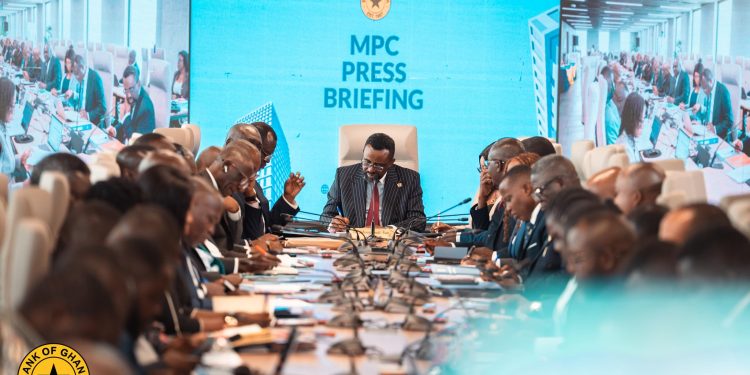
At the 128th Monetary Policy Committee (MPC) press briefing, Governor of the Bank of Ghana, Dr. Johnson Asiama, announced a development that is already being felt by businesses and individuals alike: commercial banks are now actively reaching out to offer loans, often at substantially lower interest rates. “Banks are beginning to call clients if they need loans,” Dr. Asiama shared, recounting a recent conversation where a customer was offered a loan at just 15 percent interest. For many, it’s an unexpected but welcome change, one that signals the banking sector’s renewed confidence and improving liquidity conditions. This lending enthusiasm comes on the heels of the Bank of Ghana’s latest move to cut the Monetary Policy Rate (MPR) by 250 basis points, from 18 percent to 15.5 percent. The decision, following the MPC’s 128th meeting in Accra, marks the central bank’s first policy action for 2026 and continues a trend set by a major rate reduction in November 2025. According to Dr. Asiama, the shift in lending dynamics is a direct result of stronger balance sheets and improved liquidity among banks. The monetary easing, prompted by easing inflation and better macroeconomic conditions, is designed to support economic growth while maintaining price stability. “GDP growth is expected to remain strong in 2026, with the output gap narrowing,” the Governor explained. He acknowledged that moderate demand-side pressures could emerge, but assured that monetary conditions remain tight enough to keep inflation in check. Dr. Asiama emphasized that sustaining Ghana’s economic progress will require disciplined fiscal management, effective policy coordination, and targeted measures to contain food inflation, while staying alert to global risks. With banks now competing for borrowers and credit becoming more accessible, there is growing optimism that the private sector will pick up pace, spurring renewed investment, higher consumption, and robust economic growth in the months ahead. Source: Apexnewsgh.com