









A King and a Governor Debate Ghana’s Cost of Money

The hallowed halls of the Bank of Ghana this week became the stage for a critical national dialogue, one that pit urgent economic revival against the specter of returning inflation. The occasion was a high-profile courtesy visit by the Asantehene, Otumfuo Osei Tutu II, but the conversation swiftly turned from ceremony to substance. With the gravity of his office and the voice of a nation’s entrepreneurs, the revered monarch issued a direct and powerful plea to Governor Dr. Johnson Asiama: lower the cost of borrowing, and do it now. “The private sector is gasping for breath,” his message resonated, cutting to the heart of the nation’s economic tightrope. “Let me be as blunt as I can: no amount of investment by government can give us a sound economy. This moment calls for a private push.” He challenged the central bank to engineer a fundamental shift: “Move the economy from the crippling high interest rate regime to a level where it becomes a stimulant of business and job creation.” For the countless small and medium-sized enterprises (SMEs), this was a long-awaited royal endorsement of their daily struggle. Governor Asiama, custodian of the nation’s price stability, received the call with measured understanding. He stood on a platform of hard-won gains, a historic drop in inflation to 5.4%, robust international reserves soaring above $13.8 billion, and money market yields in retreat. The 91-day Treasury bill rate had already fallen from 13.4% to 10.3% in a single month. “My prayer and wish,” the Governor shared, revealing a personal ambition aligned with the nation’s need, “is that by the end of my four-year tenure, lending rates will not be more than 10 per cent.” Yet, between that wish and the Asantehene’s demand lies a perilous path. The cautionary voice of global consultancy Deloitte echoed in the background of their discussion. While acknowledging the BoG’s successful 10-percentage-point rate cut in 2025, which stabilized the cedi and contained prices, Deloitte warned that excessive easing in 2026 could undo that very progress. “Excessive easing could risk reversing the progress made in controlling inflation,” their analysis stated, a stark reminder of the balancing act. Early signs in 2026 offer a glimmer of hope. The key Ghana Reference Rate has dipped slightly, and average bank lending rates have begun a slow descent from 26.6% to 24.2%. They are movements in the right direction, but for the Asantehene and the business community, they are mere footsteps on a journey that requires leaps. As the meeting concluded, the central challenge for 2026 was crystallized. The Bank of Ghana must now choreograph a delicate dance: unlocking the credit needed to fuel a private-sector-led recovery, without missing a step and reigniting the inflationary fires it just spent a year extinguishing. The trajectory of interest rates is no longer just a monetary policy metric; it is the defining economic story for the year ahead. Source: Apexnewsgh.com
Ghana Unveils Framework for Ethical Banking
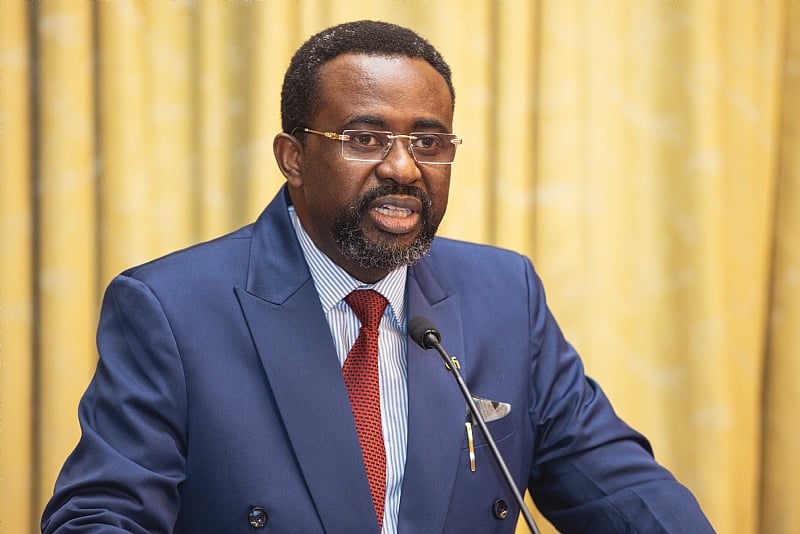
The landscape of Ghana’s financial sector is on the cusp of a transformative shift. In a landmark move, the Bank of Ghana (BoG) has officially unveiled the operational guidelines for Non-Interest Banking (NIB), opening the door to a new era of ethical finance and deeper financial inclusion. This culmination of years of strategic planning is widely credited to the steadfast efforts of BoG Governor, Dr. Johnson Asiama, and the Advisor on Non-Interest Banking and Finance, Professor John Gatsi. The finalized guidelines provide a clear and robust regulatory roadmap, building upon an earlier exposure draft to ensure operators function within strict prudential standards. The excitement within financial circles is palpable. Rumors are swirling of at least five existing conventional banks preparing to apply for dedicated NIB “windows” by the end of January, while several large new investors are lining up to establish full-fledged non-interest banks. This dual-application system is a core feature of the framework, designed to encourage both innovation and stability. The comprehensive guidelines establish a solid foundation for this new banking model: Governance & Expertise: Licensed NIB Institutions (NIBIs) must form a Non-Interest Banking Advisory Committee (NIBAC) of experts in banking, law, and NIB principles to ensure all products are ethically sound and risks are managed. Integrity of Operations: For conventional banks offering NIB through a “window,” a strict separation is mandated. They must operate a separate Non-Interest Finance Fund (NIFF), ensuring these ethical funds are never mixed with conventional banking funds. Inclusive & Voluntary: The BoG emphasizes that NIB is open to all Ghanaians, irrespective of religious belief, and participation is entirely voluntary. Capital & Compliance: Capital requirements align with existing standards, while NIBIs must maintain liquidity through Shari’ah-compliant instruments, steering clear of interest-bearing securities. Tax Clarity Pending: The guidelines acknowledge the crucial issue of tax neutrality, with a resolution expected from a joint team coordinated by the Ghana Revenue Authority (GRA). The implications stretch far beyond bank branches. The BoG is collaborating with the Securities and Exchange Commission (SEC) to develop a harmonized framework for non-interest capital market instruments. This paves the way for the future introduction of Sukuk (ethical investment certificates), which promise to unlock new, shari’ah-compliant capital for Ghana’s critical infrastructure projects. By integrating Ghana with the global non-interest finance industry, this initiative promises to diversify the financial sector, promote resilience, and revolutionize how finance serves the real economy. Welcome to the new, inclusive chapter of banking in Ghana. Source: Apexnewsgh.com
The Twelve-Month Miracle: How Discipline and Policy Tamed Ghana’s Inflation Beast

The year 2024 had ended with a heavy, familiar weight on the shoulders of Ghanaians. Prices seemed to climb an endless ladder, with the inflation rate perched at a daunting 23.8%. In marketplaces and homes, the conversation was the same: the relentless squeeze of shrunken purchasing power. But a quiet, determined battle was being waged. At the Bank of Ghana, Governor Dr. Johnson Asiama and his team held firm to a course of monetary discipline, a tight rein on policy that many hoped would steer the nation toward calmer waters. Month by month, throughout 2025, a fragile hope began to bloom. The numbers started to tell a new story. Each passing month saw the inflation rate dip, a slow but steady retreat from the peaks of pressure. By November, it had fallen to 6.3%, and as the year drew to a close, all eyes turned to the Ghana Statistical Service for the final tally of December. The data, when it came, was not just good news—it was historic. The annual inflation rate for December 2025 had plummeted to 5.4%, marking the twelfth consecutive month of decline. On a month-to-month basis, prices had barely crept up by 0.9%. The most significant relief came from the food basket, where inflation softened dramatically to 4.9%, a testament to improved harvests and smoother supply chains. The contrast was staggering. From 23.8% to 5.4% in just one year. The beast of inflation had been tamed, not by chance, but by design. During a courtesy call by the Asantehene, Otumfuo Osei Tutu II, Governor Asiama stood before the gathering, his voice carrying the weight of vindication and deliberate effort. “This trend reflected the broad-based disinflation process across both food and non-food,” he explained. “Certainly, this has not happened by accident but is the result of sustained monetary discipline we brought on board, improved food supply, and others.” He painted a clear picture: the central bank’s firm hand on monetary policy, working in concert with better conditions for farmers and traders, had systematically eased the pressures that had burdened the economy. It was a victory of strategy over circumstance. As the announcement spread, a palpable sense of relief began to replace anxiety. Households, long navigating a landscape of elevated prices, could finally foresee a period of stability. The sustained decline promised a stronger foundation for the national economy and a restoration of consumer confidence as Ghana stepped into 2026. The Bank of Ghana reaffirmed its commitment to guard this hard-won stability, knowing it was the cornerstone for sustainable growth. The twelve-month miracle was complete, a testament to the power of policy and perseverance, offering a powerful new chapter for Ghana’s economic story. Source: Apexnewsgh.com
Ghana Airports Company Clarifies Firearm Rules for Air Travelers After Spike in Seizures

In the wake of alarming revelations from the 2024 Auditor-General’s report, showing that more than 2,000 illegal firearms and rounds of ammunition were seized at airports, the Ghana Airports Company Limited (GACL) has moved to clarify its firearms policy for air travelers. Appearing before the Public Accounts Committee of Parliament, GACL Managing Director Yvonne Opare addressed concerns about how firearms are handled at the country’s airports. She explained that the company, working under new directives from the Ghana Civil Aviation Authority, has put in place a fortified weapons declaration policy designed to boost safety and security for all passengers. “Anyone who wants to travel with a firearm must have the correct license and must formally declare the weapon to airport security before boarding,” Opare stated. “If you do not have the proper authorization, or you fail to declare your firearm, even if it is licensed, the weapon will be confiscated and handed over to the National Investigation Bureau.” Opare pointed out that, in previous years, there was no clear legal framework regulating the carriage of firearms through Ghana’s airports. Now, however, the rules are strict: only legally registered firearms that have been properly declared are permitted on flights. Any weapon discovered without proper paperwork or declaration is seized immediately. The strengthened procedures, she emphasized, are part of ongoing efforts to keep Ghana’s airports safe and to ensure that all firearms are accounted for before any passenger takes to the skies. Source: Apexnewsgh.com
SWALLOWED BY DRUGS: Ngamegbulam Chidozie Stephen Warns Zamse Students About Dangers of Alcohol and Drug Abuse

One morning in June 2025, the students of Zamse Senior High Technical School were very excited. They gathered for assembly, talking and waiting for a special guest. The air felt electric. They were about to hear from Mr. Ngammegbulam Chidozie Stephen, a famous journalist from Apexnewsgh. Many knew his name from Facebook or had seen parts of his powerful documentaries. He came with an important message. He wanted to talk about a serious problem hurting Ghana’s young people: drug and alcohol abuse. His visit was timely. Following a report from the Narcotics Commission, had shocking news. Out of 50,000 Ghanaians struggling with drugs and alcohol, 35,000 were students. That meant most of those affected were in school, just like them. The country’s future was in danger. Mr. Ngamegbulam was no ordinary reporter. He made award-winning films. His latest documentary, “Swallowed by Drugs,” shared the sad stories of young people whose lives were ruined by addiction. Watch the full video here: When he walked onto the stage, the students clapped loudly. Some knew his face from social media. For others, this was their first time seeing him in person. They were ready to listen. He started speaking straight away, sharing a hard truth. “Many of our youth have used alcohol and drugs to ruin their own futures,” he said. “Some dreamed of being doctors. Others wanted to be nurses. But now, some are sitting at home, lost. Others are in mental hospitals. Their dreams are broken.” He stopped for a moment. The students were reticent, thinking about his words. He then asked them a big question. “Do you know that every year, more than 3 million people around the world die from alcohol and drugs? That number is bigger than most cities in Ghana. Every single one of those people was someone’s child, someone’s friend, or someone’s classmate.” The award-winning journalist looked at all the young faces before him. “This problem often starts right here, in school,” he explained. “You might have friends who think drinking or taking drugs is fun. They might be looking for excitement. But real joy doesn’t come from being drunk or high.” He discussed peer pressure, when friends encourage you to do something. “You might try something because a friend says it’s cool. But that one choice can change your whole life forever.” Then, he asked a direct question: “Who here knows about tramadol?” Almost every hand went up. He explained that tramadol is a strong medicine for pain, not for young people. Yet, some students hide it in their drinks, thinking it will make them strong or brave. He mentioned seeing scary videos online of young people standing stiff, not able to fall. “That is not strength,” he said softly. “That is the drug controlling them. The person inside is gone.” He listed other dangerous things: marijuana, shisha, and other drugs. “If you walk around town, you will see young people whose lives have been taken over by drugs and alcohol. But for you, it is not too late. You can choose a different path.” Mr. Ngamegbulam also corrected lies about drugs. “Some say drugs make you smarter or stronger. That is a falsehood. Drugs do not give you power. They destroy you,” he stated firmly. He told stories of students with big dreams who lost everything to addiction. “Your future matters to your family, to your country, and most importantly, to you,” he reminded them. He made it clear he was not there to criticize them. “I may not know your names,” he said kindly, “but I care about what happens to you. If you grow up to be a better person, your family is happy, your school is proud, and Ghana succeeds.” He encouraged them to support each other. “If you see a friend using drugs or alcohol, talk to them. Give them good advice. You can only truly succeed if you help each other succeed.” To give them hope, he pointed to Ghana’s successful leaders. “Do you know why some people become parliamentarians or ministers? It is because they focused on their dreams. They stayed away from drugs and alcohol. If you do the same, nothing can stop you from becoming great.” Finally, he gave them a task. “Take this message to your classrooms and homes. Tell your friends and family: ‘The future president of Ghana could be one of us. Don’t let alcohol or drugs steal that future.’” When he finished, the students’ excitement was clear. They had listened to a powerful, heartfelt talk full of important advice. The message was simple and clear: their future was precious, and it was worth protecting. Meanwhile, the documentary “Swallowed by Drugs” was supported by Endswell Pharmacy Limited Source: Apexnewsgh.com
Swallowed by Drugs: Substance Abuse Among Health Workers Alarming, Says Upper East Health Director
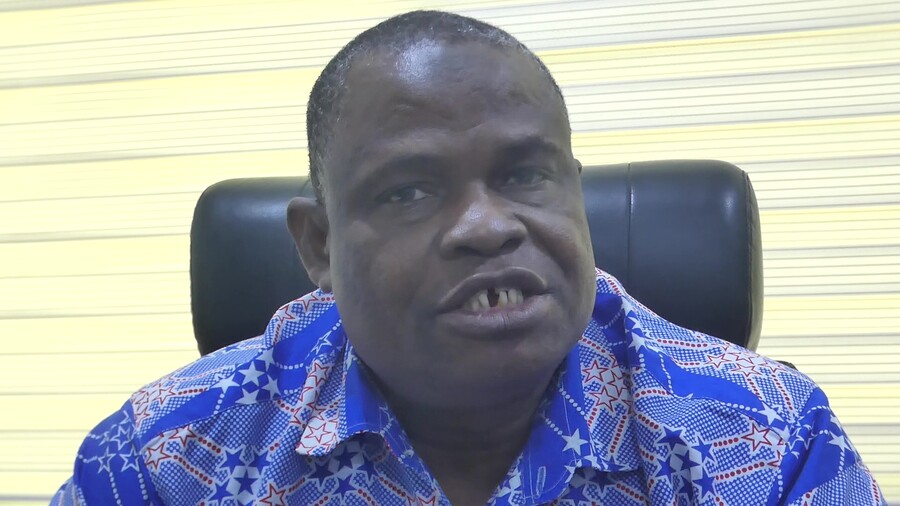
The Upper East Regional Director of the Ghana Health Service (GHS), Dr. Braimah Baba Abubakari, has expressed deep concern over the rising trend of substance abuse, not only among the youth but also within the health profession. Speaking with Ngamegbulam Chidozie Stephen of Apexnewsgh in a documentary titled “Swallowed by Drugs”, Dr. Abubakari revealed that the situation has “escalated beyond imagination” and now affects even health professionals who are expected to safeguard public health. “The issue of substance abuse is not a new thing, but what is frightening now is the age range of those involved,” he said. “We have people as young as 13 or 14 years already engaged in it. Some don’t even complete secondary school before getting hooked.” He warned that the implications for the future are dire, as early exposure often leads to lifelong dependency and social dysfunction. Equally disturbing, according to Dr. Abubakari, is the creeping trend among trainee professionals. “We now have some of our professionals who get engaged in substance use during their stay in training institutions such as nursing and teacher training colleges,” he lamented. “They eventually graduate and are assigned to work, but their addiction affects how they treat clients. This is why complaints about staff attitudes in health facilities are on the rise.” Dr. Abubakari also highlighted the alarming proliferation of drinking spots in the region, which he described as a major contributor to the crisis. “In some communities, every 50 to 100 meters, you find a drinking spot. Alcohol has become too accessible and too cheap, with as little as two cedis, you can buy a drink that gets you high,” he said. On the abuse of drugs like tramadol, Dr. Abubakari criticized the infiltration of unregulated products into the country through unapproved routes along Ghana’s borders. “Most of these drugs come from outside Africa and find their way into the Upper East through unapproved routes. That is destroying our youth,” he warned. “The Food and Drugs Authority and the security agencies must be on high alert to save the lives of the young ones.” In his final words, Dr. Abubakari appealed directly to young people, urging them to resist the lure of substances and instead focus on building their future. “The future is more enjoyable than what you think you’re experiencing now,” he said. “Addiction is not something you can save yourself from. Be courageous, be honest, and seek help. In a short time, you can get your life back on track and build a future for yourself, your children, and for Ghana.” Source: Apexnewsgh.com
Ghana Breaks Free from Energy Debt Shackles: The Story of a Sector Reborn

When President John Dramani Mahama took office in January 2025, Ghana’s energy sector teetered on the edge of disaster. Years of unpaid bills for gas supplied from the Offshore Cape Three Points (OCTP) field had brought the sector to its knees, and the crucial $500 million World Bank Partial Risk Guarantee (PRG), once a bulwark for investor confidence, had been completely depleted. The stakes were high. The PRG, established back in 2015, had been the foundation for nearly $8 billion in private investment, guaranteeing partners like ENI and Vitol that they would be paid even if Ghana defaulted. Without it, faith in Ghana’s energy landscape was crumbling, and the threat of blackouts and business closures loomed large. But 2025 would prove to be a turning point. In a statement released on January 12, the Ministry of Finance revealed how the Mahama administration, acting with urgency and resolve, set out to rescue the sector. By the close of the year, the government had repaid a staggering $1.47 billion to reset the industry’s fortunes. First, the government moved swiftly to restore Ghana’s credibility on the global stage: it repaid $597.15 million (including interest) drawn from the World Bank guarantee, fully replenishing the facility and signalling to international partners that Ghana meant business. Next, it addressed the mountain of unpaid bills to key gas suppliers. By December 2025, all outstanding invoices to ENI and Vitol—amounting to roughly $480 million—had been settled in full. The government also tackled legacy debts to Independent Power Producers (IPPs), disbursing about $393 million after renegotiating contracts for better value. Among the IPPs paid were: * Karpowership Ghana: $120 million * Cenpower Generation: $59.4 million * Sunon Asogli: $54 million * Early Power: $42 million * Twin City Energy (Amandi): $38 million * AKSA Energy: $30 million * Cenit Energy: $30 million * BXC Company: $10.56 million * Meinergy Technology: $8.82 million No stone was left unturned. The government also opened discussions with upstream partners like Tullow Oil and Jubilee Field partners, agreeing on a roadmap to ensure prompt payment for gas supplies and secure a stable electricity supply to power Ghana’s industries. Already, these efforts have begun to bear fruit. Increased gas production is reducing the country’s dependence on costly liquid fuels, and the Ministry announced that the dark days of runaway energy sector debt are gone for good. With robust budgetary provisions in place, Ghana’s energy sector now stands on a foundation of timely payments, restored confidence, and renewed hope for the future. Source: Apexnewsgh.com
Swallowed by Drugs: Upper East Regional Coordinator Issues Warning on Drug Abuse Epidemic

The fight against drug and alcohol abuse among the youth continues to dominate public health discussions, with worrying revelations emerging from the Upper East Region. Gifty Chigayefin Damsongor, the Upper East Regional Mental Health Coordinator, has voiced deep concern about the alarming rise in substance use among young people and its devastating impact on their mental health, education, and family life. She made this important call in a documentary titled “Swallowed by Drugs produced by Apexnewsgh.” “There are a lot of substances the youth are experimenting with, but the most common ones we encounter are alcohol, cannabis, and tramadol,” she explained. “Tramadol comes in different forms, T25, Tramadol 500, and is being misused heavily. On top of that, we now see shisha, nicotine, and even e-cigarettes, which are used in a way that makes it difficult for parents and guardians to detect.” According to Madam Damsongor, many young people underestimate the risks of substances such as energy drinks, which they consume excessively without realizing the long-term consequences. “Some youths don’t consider energy drinks as psychoactive substances. They think they are just normal drinks. But over time, they become addicted without even knowing it,” she said. “Addiction means you are aware of the dangers, yet you cannot stop. That’s when the substance begins to control your brain’s pleasure system.” “You start with a little alcohol and feel the effect. But with time, that same amount no longer satisfies you, so you increase the dose. Before long, you may need 10 bottles to feel what one bottle gave you initially. At that point, the substance has hijacked your brain’s dopamine system.” Madam Damsongor also highlighted how social media and celebrity lifestyles fuel substance abuse. “The youth are curious and easily influenced. When they see adverts for alcohol or celebrities using substances, they are tempted to experiment. Musicians, for example, often rely on substances to overcome stage anxiety. But that performance habit quickly becomes an addiction that extends beyond the stage.” She emphasized that addiction is not only about drugs or alcohol. “We now see behavioral addictions, gambling, pornography, compulsive lying, and even stealing. Some people are addicted to these behaviors in the same way others are addicted to drugs.” “If you’re a responsible and observant parent, you will notice changes. A once-friendly child may suddenly become withdrawn, easily irritated, restless, or perform poorly in school. Some may even experience hallucinations, seeing things that are not real.” She cautioned parents against rushing to prayer camps without medical intervention. “Even if you believe there are spiritual causes, you must first tackle the physical. At the facility, we can run substance tests, detoxify the system, and provide psychotherapy. Afterwards, if you want prayers, you can add that, but ignoring medical treatment is dangerous.” Damsongor recounted how peer and family influences expose children to substance use at a young age. “In many homes, alcohol is kept openly, and children are even sent to buy it. Out of curiosity, they try it, and before long, they are hooked. In other cases, peers introduce them to smoking or drugs. Sadly, I have seen lives destroyed because of what started as mere experimentation.” She called for urgent steps to integrate mental health education into schools to prevent future crises. “If the Ghana Education Service introduces mental health lessons at the JHS and SHS levels, it will help. Students must learn early about the dangers and consequences of substance abuse so they can make informed choices.” “Substance abuse can destroy your health, your education, and your future. If you find yourself addicted, whether to a substance or a behavior, seek help. Mental health experts are available in every district and community. We are here to help you recover and reclaim your life.” Source: Apexnewsgh.com
Swallowed by Drugs: Dr. Denis Warns Drug Abuse Is a Silent Mental Health Time Bomb, Urges Awareness and Stronger Law Enforcement
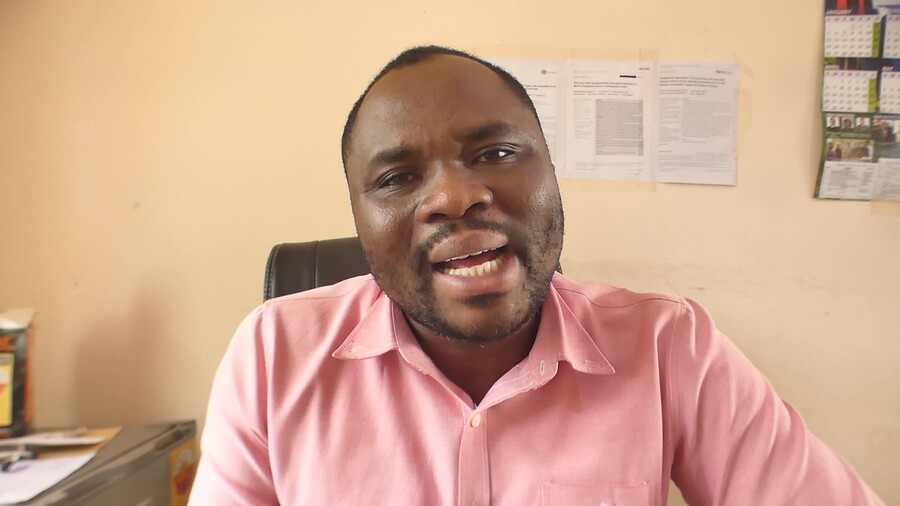
The Medical Administrator of the Presbyterian Psychiatric Hospital, Dr. Denis Bomansang Daliri, has raised alarm over the growing trend of drug and alcohol abuse among the youth, warning that the region faces a “silent mental health time bomb” if urgent steps are not taken. Speaking with Ngamegbulam Chidozie Stephen in a documentary titled “Swallowed by Drug”, Dr. Denis revealed that the majority of young patients admitted to his facility are battling substance abuse, often involving multiple drugs at once. “Currently, the majority of the patients we have, especially the youth, almost everyone admitted actually abuses one substance or the other. Most of them are polysubstance users – mixing alcohol, nicotine, marijuana, tramadol, and more,” he disclosed. Dr. Denis explained that many patients do not come to the hospital claiming they are abusing drugs. Instead, they often present with symptoms like insomnia, hallucinations, or hearing voices. “A person may actually be abusing substances but might not come because of it. They might come because they can’t sleep, or they’re hearing voices. Through our assessment, we’re able to tell them, ‘OK, so you are abusing substances, and this is the reason why you are here,’” he said. He added that the presentations vary depending on the drug: some patients arrive in acute intoxication, others in painful withdrawal, while others may show no symptoms at all but still have long-term dependency. Highlighting the mental health consequences, Dr. Denis noted that many of the substances abused are psychoactive, directly affecting the brain. “These substances play a very big role in destabilizing mental health. They affect your ability to think, your behavior, and in some cases, they trigger psychosis,” he warned. He cited marijuana as an example, saying, “With cannabis, we see what is called cannabis-induced psychosis. The person begins to hallucinate, hear voices, and believe things no one else can see. If the drug is withdrawn, they may return to normal, but the more they continue, the more permanent the damage becomes.” For individuals with a family history of mental illness, he cautioned, the risks are even higher. “If such a person abuses drugs, it can easily trigger a mental health condition that might have otherwise remained hidden,” he explained. Dr. Denis described the youth as particularly vulnerable due to curiosity, peer pressure, and the easy availability of substances. “Their brains are still developing, so anything they get hooked on now, they may be hooked on for life,” he stressed. He also pointed to cultural practices that normalize alcohol consumption and weak border controls that make smuggling drugs easy. “In many places here, alcohol is not even seen as a problem. Young people can walk into a shop, pay, and buy it freely. Combine that with cannabis and cigarettes at drinking spots, and it becomes a deadly mix,” he said. To address the crisis, Dr. Denis emphasized a multi-pronged approach: Law Enforcement: “In our markets, you’ll find someone selling phone accessories but also dealing drugs. Even scrap dealers sell tramadol. Law enforcement must tackle this head-on, and our borders must be secured.” Awareness Creation: “We assume young people know the dangers, but many don’t. Education must start from primary school to prepare their minds before they are introduced to these substances.” Treatment over Punishment: “Substance abuse should not be seen only as a behavioral crime. By the time someone becomes addicted, it has become a biological problem. Arresting and jailing addicts only worsens their plight. What they need is treatment, not punishment.” Rehabilitation Centers: “If someone in the Upper East wants help, they shouldn’t have to travel to Kumasi or Accra. Government must expand rehabilitation centers regionally to make help accessible.” Dr. Denis also cautioned against stigmatizing addicts, noting that rejection only pushes them deeper into addiction. “When we stigmatize and condemn them, they go back to drugs for comfort. But when we accept and support them, they find solace and are more likely to quit,” he advised. He concluded with a strong warning that ignoring the problem will have dire consequences for families and society. “Substance abuse is a silent mental health time bomb. If we don’t strengthen awareness, treatment, and law enforcement now, the cost will be unbearable tomorrow.” Source: Apexnewsgh.com
CSPF Voices Discontent Over 2026 Pension Increment
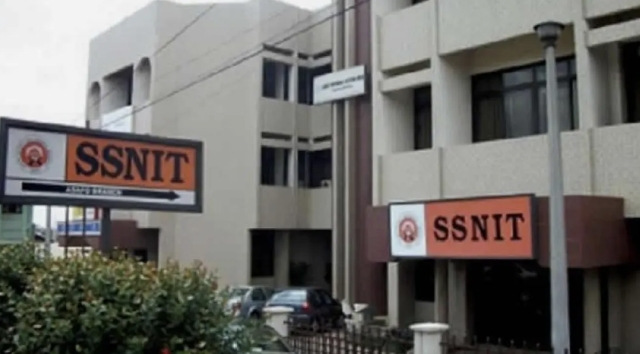
On a brisk morning in Accra, members of the Concerned SSNIT Pensioners Forum (CSPF) gathered, their faces etched with concern. News had just broken that the Social Security and National Insurance Trust (SSNIT) would increase pensions by 10 percent in 2026. For many, this announcement was far from the relief they had hoped for. “We expected more,” said one forum member, echoing the collective sentiment. The CSPF argued that the increment fell short, failing to counter the steady erosion of pension values brought on by persistent inflation. Every year, pensioners watched as their incomes lagged behind the national minimum wage, and this latest adjustment, they felt, would do little to bridge that widening gap. Months before, the forum had formally proposed a more ambitious plan: a minimum monthly pension of GH¢600 and a general increase of 15 to 20 percent to help restore real value to their payments. Their hopes were dashed when SSNIT’s announcement came in at just half their suggested rate. To make matters worse, CSPF members questioned what they saw as inconsistencies in SSNIT’s communication. A statement issued on January 6, 2025, had pegged the minimum monthly pension for the year at GH¢396.58. This, CSPF argued, highlighted a lack of clarity in how the figures were calculated and communicated to pensioners. Amidst the frustration, the forum called for unity and action. They urged a national dialogue to establish a sustainable pension framework, one that would guarantee retirees a life of dignity and security in their later years. Until such changes come, the CSPF remains steadfast, their voices raised in hope for a fairer future. Source: Apexnewsgh.com