










Swallowed by Drugs: Rising Youth Substance Abuse Prompts Warning from FDA Regional Director

The Upper East Regional Director of the Food and Drugs Authority (FDA), Mr. Abel Ndego, has expressed deep concern over the alarming rise in drug and alcohol abuse among young people, describing it as a major threat to public health and national development. Speaking in a documentary titled “Swallowed by Drugs”, Mr. Ndego reminded the public of the FDA’s mandate under the Public Health Act 851 of 2012 to protect health and safety by regulating products that enter, exit, or are manufactured within the country. He stressed that many of the substances abused by the youth are often unregistered and unsafe. “Most of the time, from the information we gather, we realize that the majority of substances being abused are not registered by the FDA. A typical example is tramadol,” he revealed. He explained that in recent years, Ghana witnessed a surge in tramadol misuse, prompting stricter control measures. The FDA now classifies tramadol as a prescription-only drug, which must be dispensed strictly under the endorsement of a licensed medical officer. “Tramadol is not a bad drug. It is a very effective pain reliever, especially after surgery. But the misuse and abuse of it is what has landed us in this situation,” Mr. Ndego explained. Turning his attention to tobacco products, including shisha, the FDA Director debunked myths that flavored or filtered forms are less harmful. “One hour of shisha smoking is equivalent to smoking between 100 and 200 sticks of cigarettes. That is the reality,” he cautioned. He added that tobacco smoke contains more than 3,000 harmful chemicals, including formaldehyde and carcinogens, which expose both smokers and non-smokers to severe health risks. Mr. Ndego reminded the public that smoking in public is illegal in Ghana and encouraged citizens to report offenders. “When it comes to smoking, you can even effect a citizen’s arrest. It is a crime to smoke in public places, including your own car, once the engine is on because it becomes a public space,” he emphasized. On alcohol regulation, Mr. Ndego noted that although the state has not banned alcohol consumption, strict measures are in place to limit youth exposure. Alcohol cannot be sold to anyone under 18, and advertisements are banned on electronic media before 8 p.m. He also condemned the use of celebrities in alcohol promotions, arguing that it sends dangerous signals to impressionable youth. “Unfortunately, many celebrities have been used to advertise alcoholic beverages. And because they are idols to the youth, it creates the impression that alcohol is a booster to success. That is misleading,” he lamented. Mr. Ndego highlighted the importance of joint efforts in fighting substance abuse, stressing that no single institution can solve the problem alone. “This issue is multifaceted, and we must use a multilateral approach. No agency is an island,” he said, calling for stronger partnerships with the police, customs, health institutions, schools, and traditional leaders. He revealed that the FDA is even engaging traditional authorities to consider alternatives to tobacco in cultural practices such as marriage rites. While acknowledging that substance abuse often leads to crime, Mr. Ndego argued that rehabilitation should be prioritized over imprisonment for addicts. “For those who are hooked, we should have a streamlined process that identifies them, puts them through rehabilitation, and reintegrates them into society,” he proposed. The FDA Director concluded by stressing the importance of early education in addressing the menace. “They say catch them young. At the basic level, children must be taught to check expiry dates, look out for FDA registration, and understand the dangers of drugs, alcohol, and tobacco. That way, health consciousness becomes second nature as they grow,” he said. Mr. Ndego reaffirmed the FDA’s commitment to enforcing regulations, carrying out market surveillance, and intensifying public education to protect the youth, the future of the nation, from the dangers of substance abuse. Source: Apexnewsgh.com
Swallowed by Drugs: Paramount Chief Calls for Tobacco Regulation to Safeguard Youth in Upper East Region

In the Upper East Region, concern is mounting over the rising tide of drug and tobacco abuse among the youth. Chiana-Pio, Pe Ditundini Adiali Ayagitam III, the Paramount Chief of the Chiana Traditional Area and President of the Regional House of Chiefs, has stepped forward to address this pressing issue, urging for stronger regulation of tobacco and enhanced community vigilance. The Chief’s impassioned appeal was featured in the recent documentary, “Swallowed by Drugs,” produced by Ngamegbulam Chidozie Stephen of Apexnewsgh. Drawing from both tradition and his deep concern for the future, Pe Ditundini Adiali Ayagitam III highlighted the urgent need to protect the youth from habits that threaten their health and prospects. “Our families, our region, and our country’s future are at stake,” he cautioned. “It is truly worrying to see young people indulging in drugs and behaviors that could ruin their lives. The youth must heed the guidance of their elders and parents, and take their education seriously.” Kindly watch the full video here: The Chief lamented the decline of communal values, recalling a time when every child belonged to the community and could be disciplined or advised by any adult. He stressed the importance of returning to these roots, where collective responsibility ensured children grew up with guidance and support. He also expressed concern over the lack of affordable rehabilitation facilities and counseling services, noting that the existing ones are often too expensive and inaccessible for many families. The Chief called on parents to be vigilant and proactive, intervening early if they notice their children associating with groups that could lead them astray. The challenge, he said, extends beyond the home. “Social gatherings have become opportunities for youth to indulge in drugs. Many traditional areas are developing bylaws to regulate event closing times and the type of music played, and these regulations are crucial.” The Chief noted that tobacco, once reserved for respectful traditional use by elders, is now being abused by youth. “In the past, tobacco was used for customary purposes, and elders knew how to use it responsibly. Today, its misuse is rampant among the young, and regulation has become necessary.” He urged authorities to increase their presence at social events, emphasizing that visible security acts as a deterrent. Organizers, he said, should always inform security services ahead of gatherings to help maintain order. Addressing the specific issue of tramadol abuse, the Chief reaffirmed the Regional House of Chiefs’ commitment to tackling drug misuse. He explained that when such issues arise, the council collaborates with district assemblies and local chiefs to assess and regulate the situation in their traditional areas. “We want the best for our children and citizens,” Pe Ditundini Adiali Ayagitam III concluded. “As much as we can, we will continue to do our best to address and regulate these matters in our communities.” Through his words, the Chiana-Pio calls for a united front, parents, elders, authorities, and the entire community, to protect the youth and ensure a healthier future for the region. Source: Apexnewsgh.com/Ngamegbulam Chidozie Stephen
Swallowed by Drugs: Endswell Pharmacy CEO Refutes Claims That Pharmacies Are Main Source of Tramadol for Youth
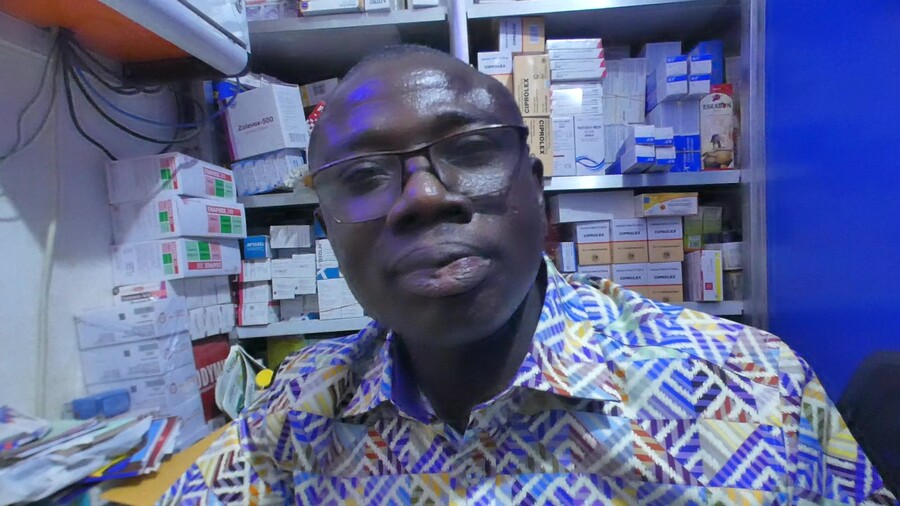
In the revealing documentary “Swallowed by Drugs,” produced by Ngamegbulam Chidozie Stephen of Apexnewsgh, Mr. Lawrence Atongo, CEO of Endswell Pharmacy Limited, provided clarity on a widely held belief regarding the accessibility of hard drugs like Tramadol and Red among the youth in the Upper East Region. Contrary to public perception, Mr. Atongo firmly denied that pharmacies are the primary source for these substances. Addressing the concerns, Mr. Atongo explained, “There is a mindset out there that some of these abusers usually troop into pharmacies to get drugs like Tramadol, but that is not true. If you actually investigate, you’ll find that most of these drugs are being distributed through street tracks and unauthorized vendors.” He pointed to the bustling lorry stations as major hotspots, describing how sellers operate openly, often displaying these drugs as casually as groundnuts or provisions for sale. Mr. Atongo highlighted that porous borders contribute to the inflow of such substances. “Certain people bring in these drugs through the borders, and once inside town, they are distributed at lorry stations and other informal areas, not pharmacies,” he emphasized. Watch the full video documentary: He was adamant that no reputable pharmacy, under the supervision of a licensed pharmacist, would dispense hard drugs like Tramadol or morphine without a valid prescription. “No pharmacist would risk their license or reputation by selling such medications without the proper documentation. The notion that pharmacies are the main source is simply unfounded,” he said. Mr. Atongo also commended the efforts of regulatory bodies, including the Food and Drugs Authority (FDA), the Pharmacy Council, and the Ghana Police, in their ongoing work to clamp down on illegal drug sales at borders and public spaces. He encouraged more frequent and rigorous operations, especially at lorry stations, drinking spots, and other informal venues where illicit drug sales are known to occur. “You’ll even find people mixing these substances into energy drinks at beer bars and joints, which is extremely dangerous,” he warned. In conclusion, Mr. Atongo estimated that about 90% of youth who abuse Tramadol and similar substances obtain them from outside legitimate pharmacy settings. He called for continued vigilance and stronger enforcement at the region’s borders and public gathering spots to stem the flow of these dangerous drugs and protect the youth from further harm. Source: Apexnewsgh.com
Swallowed by Drugs: Rev. Abukari Urges Youth to Reject Substance Abuse, Calls for Stronger Regulation and Honest Conversations
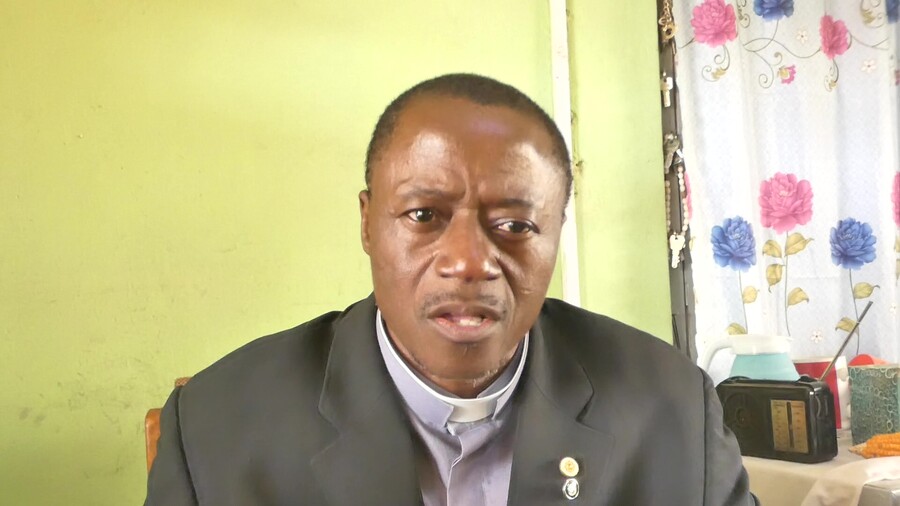
In the impactful documentary “Swallowed by Drugs,” produced by Ngamegbulam Chidozie Stephen of Apexnewsgh, Rev. Thomas Abukari, Head Pastor of the Baptist Church and Chairman of the Christian Council in Bolgatanga, delivered a heartfelt and wide-ranging message on the escalating crisis of drug and alcohol abuse among youth. His words served as both a plea for immediate action and a call for deeper societal reflection, directed not only at young people but also at parents, regulators, and the entire community. Rev. Abukari opened by lamenting the tragic loss of young lives to substance abuse in this generation. “There are a lot of lives going down the drain as a result of substance abuse,” he said, urging community leaders and authorities to take firm steps. He highlighted how the easy availability of drugs and alcohol is a major contributor to the problem, stressing, “Wherever you pass, these substances are accessible. I plead with authorities: let’s restrict their flow in the market, so access is only possible with a medical prescription and supervision.” He further identified peer influence as a significant force shaping youth choices. “Peers can be good, but negative peer pressure leads many astray. The trigger is often wrong information, myths, and lies that convince youth that drugs will help them study longer, work harder, or fit in.” Rev. Abukari called for robust campaigns to correct such misinformation, particularly targeting misleading social media adverts that glamorize substance use. “There should be real monitoring to get these kinds of misleading adverts out of the system,” he insisted. Watch the full documentary below: Curiosity, he observed, often tempts young people to experiment with drugs, sometimes with disastrous consequences. “Some things, once you try, you keep going back. Before you know it, you’re caught in a cycle of dependence. It’s like the lesson from Psalm 1—you start by walking, then sitting, then staying in the wrong place. If you avoid it altogether, you avoid the trap.” Rev. Abukari cautioned the community against relying solely on religious condemnation. “Yes, substance abuse is sinful, but let’s not forget the physical and medical damage. Liver cancer, lung disease, and other illnesses are the consequences of these habits. Fasting and prayer are important, but the body suffers the physical consequences regardless,” he explained. He also warned about the influence of celebrities, pointing out that many young people look up to them without realizing that what is seen on screen is not always real life. “Some even claim they perform better because of drugs or alcohol. They are deceiving people. Celebrities should positively be role models, not promote destructive behavior.” Addressing the desire for quick wealth, Rev. Abukari debunked the myth that drugs help people work harder or earn more. “If you get the money but your health is destroyed, who benefits? Don’t waste your body chasing money only to spend it on hospital bills or more drugs.” He reminded the youth of the importance of rest, drawing on the Biblical example that even God rested on the seventh day. He shared personal anecdotes to highlight that individuals react differently to substances, warning that what works for one person may harm another. “If you see someone claim they can stay up all night on coffee or energy drinks, that may not work for you. Everyone’s physical makeup is different, and chasing those results could harm you.” Rev. Abukari called for a return to dignity and sound-mindedness among young people. “If children see you as an elder stumbling on the streets, what dignity do you have left? Drug and alcohol abuse destroys not only your body but also your social respect, your finances, your spirituality, and your future. Who wants to marry a drug addict, or entrust responsibility to someone whose mind is clouded by addiction?” He encouraged youth to seek joy and fulfillment in healthy, natural ways. “There are traditional drinks with health benefits. Say no to hard drugs and alcohol. Living well and enjoying life doesn’t require substance abuse.” Rev. Abukari concluded with a rallying cry: “We are the people of the future. The future of this generation lies in your hands. Be responsible, be sound-minded; this is what society and your families need. Reject drugs and alcohol, and build a life you, your family, and your community can be proud of.” Through his message in “Swallowed by Drugs,” Rev. Thomas Abukari provides both a warning and a beacon of hope, a call for unity, truth, and responsibility in the fight against substance abuse. Source: Apexnewsgh.com
Swallowed by Drugs: Upper East Regional Deputy Director Augustine Akugri Shares Insights on Rising Youth Drug and Alcohol Abuse
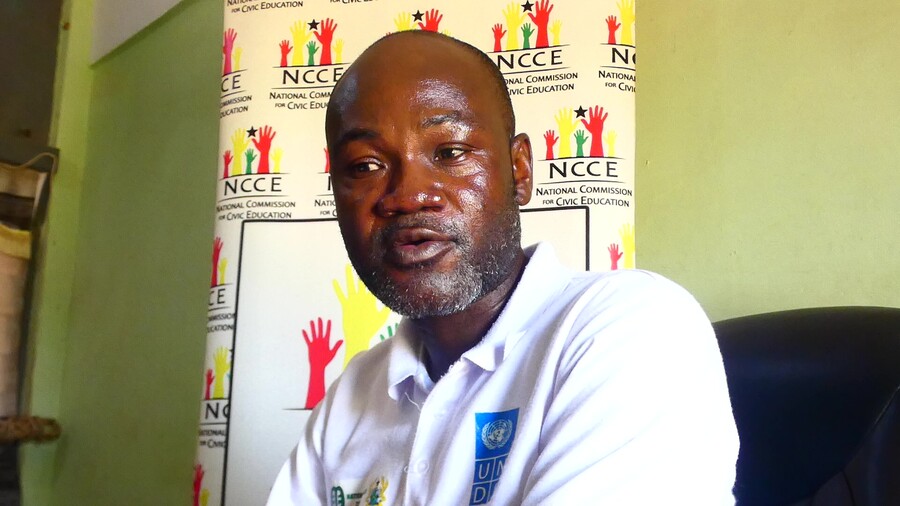
In response to growing concerns about substance abuse among young people in the Upper East Region, Augustine Akugri, Regional Deputy Director of the National Commission for Civic Education (NCCE), has offered valuable insight into the commission’s pivotal role in tackling this challenge. He spoke in the documentary “Swallowed by Drugs,” produced by Apexnewsgh. Mr. Akugri explained that the NCCE, as an independent governance institution, was established to promote civic awareness and education among Ghanaians. Its mandate includes fostering an understanding of constitutional principles, encouraging citizens to defend the Constitution against abuse, and deepening appreciation of civil rights and responsibilities. A key part of the NCCE’s mission, he noted, is to educate citizens about the dangers of substance and drug abuse. “Issues of drug abuse have become a significant challenge in the country, especially within the Upper East. If we are to promote the good name and prestige of Ghana, we must be free from the scourge of drugs,” Mr. Akugri emphasized. He pointed out that substance abuse not only tarnishes the nation’s image but also disrupts unity and peaceful coexistence. Watch the full documentary below: He explained that drug abuse undermines one’s ability to function effectively in society, whether as a worker or a responsible citizen. “For us at the NCCE, we believe that to contribute meaningfully to national development, Ghanaians must abstain from drugs and alcohol,” he said. Highlighting the commission’s strategy, Mr. Akugri described how the NCCE delivers substance abuse education in schools, communities, and through radio programs. The commission also collaborates with institutions such as the Narcotics Control Board to broaden public understanding of the dangers and effects of drugs. He shared sobering statistics, noting that every few seconds someone dies from drug use, according to the World Health Organization. Research further shows that those who start using drugs in their teens are more likely to die decades earlier than those who do not. “Illicit drugs, such as tramadol, codeine, cocaine, heroin, and even certain caffeinated alcoholic drinks, can cause severe health issues, from heart and lung diseases to miscarriages and birth defects,” he warned. Mr. Akugri stressed that drug abuse is not solely about physical consequences. “Drug abuse can affect a person physically and emotionally, impacting not just health but social life,” he said. “No one is immune to the dangers of drug abuse, and every citizen needs to understand the real risks.” Addressing why young people often fall into substance abuse, he identified several factors: peer pressure, curiosity, the desire to fit in or feel grown-up, attempts to rebel against authority, or to escape emotional problems. He underscored the dangers of experimentation, noting that dependency and addiction can quickly develop, making it extremely difficult to break free from the cycle. Mr. Akugri went on to describe the different categories of drugs commonly abused in the region: stimulants such as amphetamines, ecstasy, and tobacco, which increase activity in the central nervous system and can lead to mood swings; depressants such as alcohol and heroin, which calm users but also alter perception of reality; and cannabis, which is particularly problematic due to its hallucinogenic properties that can lead to mental health issues. “The effects of these drugs are wide-ranging,” he explained. “They can cause physical health problems, mental illness, impaired social functioning, and even risky behavior that leads to the spread of diseases.” He also highlighted the NCCE’s outreach efforts, including educational campaigns in schools, markets, and ghettos, aimed at raising awareness about the dangers and consequences of substance abuse and dependency. In conclusion, Mr. Akugri underscored the importance of understanding dependency and addiction. “A drug user can become so dependent that life without the drug seems impossible. This not only destroys the individual but also has ripple effects on families and communities,” he said. The message from Mr. Akugri and the NCCE is clear: substance abuse is a grave threat to both individuals and society, but with education and collective action, the trend can be reversed for a healthier, more productive future. Source: Apexnewsgh.com
Swallowed by Drugs: Apexnewsgh Editor-in-Chief Urges Government to Set Up Regional Rehab Centers for Addicted Youth

Mr. Ngamegbulam Chidozie Stephen, Editor-in-Chief of Apexnewsgh, has issued an urgent appeal to the government, through the Ministry of Health, to establish dedicated rehabilitation centers in every region to address the growing crisis of youth drug and alcohol abuse. His call comes on the heels of his investigative documentary, “Swallowed by Drugs,” which shines a spotlight on the struggles faced by young people caught in the web of addiction. In the documentary, Mr. Ngamegbulam emphasizes the pressing need for government action, stating, “There is a need for the government to establish a rehabilitation center in every region for youth ignorantly abusing drugs. I have come to realize that the majority of these youth need help. Some have fallen into drug abuse not by choice, but due to circumstances beyond their control.” Watch the full documentary below: Through his interactions with youth involved in substance abuse, Mr. Ngamegbulam discovered that many lack parental guidance and have become disconnected from their families. For some, drug abuse is normalized within their homes; parents themselves are sometimes substance abusers, making it difficult for children to recognize the dangers of their own behavior. He also highlighted the plight of children who, instead of being in school, resort to menial jobs like “kayakaya” (loading boys) at transportation stations, simply as a means of survival. For many, drugs have become a crutch, with some youths proudly declaring that they cannot live without substances. “These accounts from my engagement with these youth prove that they need government intervention,” Mr. Ngamegbulam explained. “Instead of arresting these young abusers and placing them in police cells, I suggest government, through the Ministry of Health, should prioritize establishing rehabilitation centers across the regions.” He further noted that existing private rehabilitation centers are often prohibitively expensive, placing them out of reach for the families of most victims. “The fees are exorbitant, and many families simply cannot afford the help their children desperately need,” he said. Through his documentary and continued advocacy, Mr. Ngamegbulam hopes to spur policymakers into action, ensuring that every region has accessible, affordable support for youth struggling with addiction, giving them a chance at recovery, reintegration, and a brighter future. Source: Apexnewsgh.com
The Broken Chalkboards
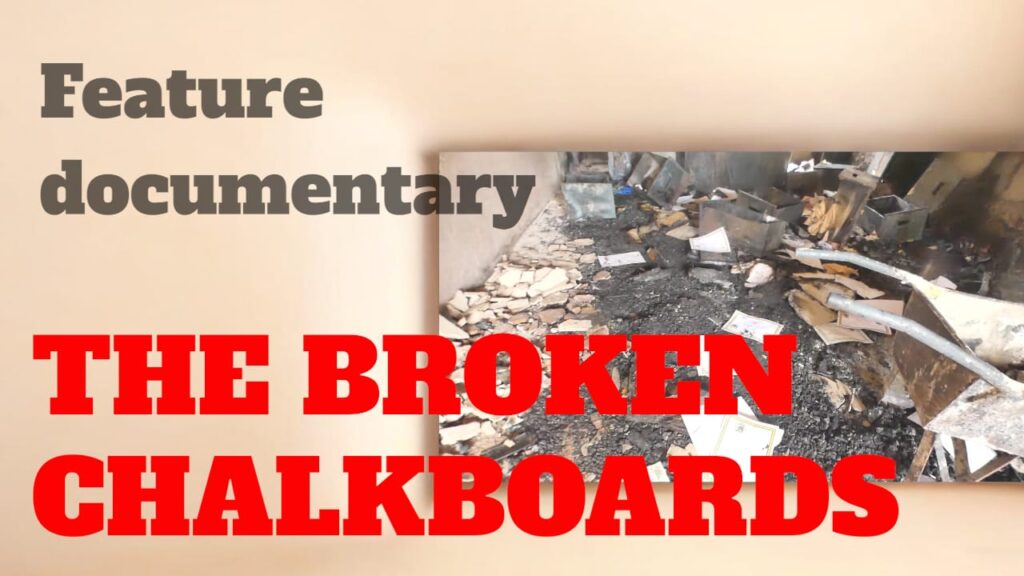
Feature Documentary by Ngamegbulam Chidozie Stephen The sun rises early over Ghana’s Upper East Region, casting a golden hue over the flat plains and scattered school compounds. For generations, these institutions, forty-nine senior high schools and several technical and vocational centers, have stood as beacons of hope, preparing the young for brighter futures. But in recent times, a cloud has settled over these grounds. What once were sanctuaries of learning have become, with troubling frequency, sites of unrest. Desks overturned, windows shattered, staffrooms vandalized, student riots, once rare, have become alarmingly common, leaving educators, parents, and leaders searching for answers It began as a whisper, a phone stolen in a dormitory, a rumor of unfair punishment, or the discontent over a meager meal. But these minor sparks soon flared into flames. Reports from ApexNewsGH revealed a disturbing trend: students, once lauded as the torchbearers of the region’s future, were now, in too many cases, undermining their very schools through acts of defiance and destruction. At the Technical and Vocational Education and Training (TVET) office, the atmosphere was somber. Mr.William Aduum, the regional director, sat behind his desk, stacks of disciplinary reports at his elbow. “Parents are not allowed to give phones to their wards to bring to school,” he explained. “But the students sneak them in. They hide them. When a phone is stolen, investigations begin, by the students themselves. Bullying follows. And when a student is pushed too far, trouble seeks him out.” Such incidents, he noted, were no longer isolated. “Every administration since the Fourth Republic has seen at least one or two riots. These disrupt academic activities and leave lasting scars on the educational landscape.” To understand the surge, one must look beyond the headlines. Professor David Miller, President of the Miller Institute for Transdisciplinary and Development Studies, had spent years studying youth behavior. “Rioting in schools, especially second-cycle institutions, is on the ascendancy nationwide,” he said gravely. “There are several causes. The abuse and misuse of drugs is a major one, both in and outside school. Habits formed at home follow students back to the classroom, poisoning the environment.” Professor Miller listed seven factors behind the unrest, four major, cross-cutting causes and three more specific to individual institutions. Alongside drugs, he identified breakdowns in communication, lack of awareness about the consequences of actions, and shifting generational expectations. “This generation is complex, sensitive, and active,” he said. “We need to reform how we communicate with them. Many don’t understand the full impact of their actions.” Reverend Thomas Abukari Thomas, chairman of the Upper East Regional Christian Council, echoed these concerns. As head pastor of the Baptist Church in Bolgatanga, he saw firsthand the devastation wrought by riots. “The government has spent huge sums on infrastructure, which we desperately need. Yet, students destroy these scarce resources, often over misunderstandings or misinformation.” The role of discipline, or the lack thereof, soon surfaced as a recurring theme. Honorable. Volmeng David Nansong, Upper East Regional Secretary for the Parent-Teachers Association, was blunt: “The abolition of corporal punishment is at the root of this. Teachers are afraid to enforce discipline. Back in the day, strikes and riots were rare. Now, security forces have to camp on campus to prevent unrest from spreading. The Ghana Education Service should reintroduce demotion and promotion based on behavior. Students must know there are consequences.” Yet, even as some called for a return to old methods, others pointed to deeper fractures. Alhaji Sumalia Issaka, Chairman of the Upper East Regional Peace Council, spoke of a worrying trend: tribal divisions among students, which sometimes determined who could become a senior prefect or even a headmaster. “If you’re not a Kassena-speaking boy, you can’t be senior prefect in Navrongo. If you’re not Gurune, you can’t lead in Big Boss. This tribalism is spreading to staff appointments too.” In the midst of turmoil, some students tried to uphold the values their schools instilled. One young student from Zamse, known among peers as an “Elephant,” spoke candidly. “It’s unbearable for those of us who want to learn. We’re influenced by friends into acts we don’t support. If you speak out, you become a target. Sometimes, even the innocent end up paying fines for acts they did not commit. We need more education about the dangers of such behavior.” Francis Adingo, President of the Upper East Youth Association, agreed that grievances, if genuine, should be addressed through proper channels. “There are rules and regulations. Peaceful demonstrations are within our rights, but vandalism is not. Substance abuse is a big part of the problem. And parents are often unconcerned; some don’t even check what their children take to school. Weapons have been found in dormitories. Students have burned down dorms, libraries, places meant for their own growth.” With tensions mounting, school leaders scrambled to respond. The regional TVET director, William Aduum, doubled down on counseling. “We’ve mandated all schools to strengthen their guidance and counseling units. One counselor looking after 2,000 students isn’t enough. I’m visiting schools myself to see how we can improve.” Mr. Razak Abdul Korah, Upper East Regional Director of Education, described the escalating riots as a “major concern for all stakeholders.” Investigations were underway, but he believed the ultimate solution lay in civic education. “Some students don’t realize the long-term consequences of their actions. We need to educate and re-educate them, bring in career people and those who have struggled with drugs to share their stories. We used to have civic education in schools. It’s time to bring it back.” Other voices, like that of social justice advocate Mr. Nyeya Yen, pointed to practical causes. “Poor food is a major trigger. A hungry man is an angry man. Corruption, poor salaries, and theft of school supplies all play a role. Sometimes, cooks take food home, and students are left with less. This can lead to riots.” The Upper East Regional Minister, Honorable Donatus Atanga Akamugri, had seen the unrest up close. “Since I took over, I’ve dealt with
Shattered Dreams: Swallowed by drugs
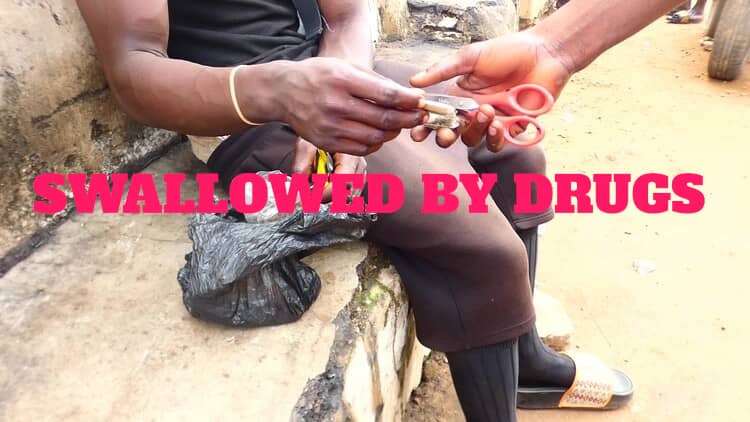
Documentary by Ngamegbulam Chidozie Stephen In the heart of Ghana’s bustling towns and quiet villages, a silent crisis unfolds. Hidden beneath the laughter, ambition, and dreams of the youth, a menace grows, one that threatens not only their futures but the very soul of communities. This is the story of how drug abuse is quietly ravaging the lives of young people, pulling them into a spiral of addiction and despair before their dreams can ever take flight. Felix was once like any other young man, full of hope, with a family that cherished him and a classroom that held the promise of a better future. But somewhere along the way, his path darkened. Drugs became his companion, and soon, he found himself wandering the streets, trading textbooks for a haze of addiction. He remembers the day it all started. “When I was in JHS3, it was when I travelled to Kumasi. That’s when I started taking it,” Felix recalls, his voice heavy with regret. “I came home, then went to school. So, that’s how I entered the job.” The “work,” as Felix calls it, is hard labor, carrying goods for others, hustling for daily survival. “If I don’t take it, I cannot work,” he admits. The drugs numb the pain, but they also sever him from his family. “Right now, I’m not close with them,” he says quietly, the weight of isolation evident in his voice. His family knows about his addiction, but not the full extent of his trauma. “Maybe they don’t know, but I don’t know if they know or not,” he confides. For Felix, every day is a battle; he needs work, but work means drugs, and drugs mean distance from those he loves. His story is one of many, a haunting echo of how quickly and quietly hope can slip away. Known to many as Hunu, he is a father, a son, and a man bearing the weight of choices he never meant to make. His story is marked by the invisible hand of peer pressure and the desperate search for belonging. “Actually, there’s a challenge. A big challenge,” Hunu admits. “I’m a student, alright. However, I cannot simply tell you that this is what happened when I entered into this. It’s all about the friends you follow. Your influence.” He speaks of how easy it is to fall in. “Someone will be there, he will not like to take it, but the moment he follows two or three people who take it, he will like to try it.” The drugs become a necessity, “The moment I wake up, I don’t take it, I will not feel alright. Not that I am sick, but I am not normal. But the moment I take it, I will get to my normal stage.” Hunu’s reflection is a stark reminder of how easily youth can be led astray, not always by malice, but by the natural desire to fit in, to be part of something, even if it leads down a dark path. At just 19, Aduko Jacqueline is already a mother of two. Her life, once filled with dreams, is now a daily struggle against addiction. She is honest about her pain, the stigma, and the longing for rescue. “If I get what I want, there will be damn smoking,” she says, her words tinged with sadness. “I’m not supposed to smoke, I’m a girl, but if I always smoke, I always stink very well. I don’t have the money to do what I want, but if I get it, I will do it. I will stop smoking.” Jacqueline’s self-awareness is heartbreaking. “As I’m sitting here, I always stink. If you only see me sitting now, without talking to anybody, I’m thinking about how to stop it. But if I don’t, it will enter me, you understand. So, unless I get someone to help me, someone behind me, so that the person will be helping me, I will increase myself so that I will stop everything and be free.” Her plea is simple: help. “I’m praying that maybe God will help me, then I will find a job.” Jacqueline’s story is a cry for support, a call to action for communities to rally around those who are struggling before they are lost. Baba, known in the ghetto as Starboy, is in his twenties but has already lived a lifetime in the shadows of addiction. His drug of choice is weed, and for him, it is not just a habit; it is a lifeline. “Weed is my life. And weed is the one that can help me with everything that I need in my life,” he shares. “If I smoke this weed… It’s really good for me. If I think of doing something bad, when I take the weed, I swear to God, I always think it’s good.” Baba’s family has long known of his addiction. “I’ve only let them understand that I’m a weed smoker. And the weeds are killing me, what I have, but what I feel happy about. Because if I smoke the weed, I feel so great.” He started young, just ten years old. Now, he says, “It gives me a lot of health. It gives me a lot of pressure, a lot of things that I can’t handle myself very well.” For Baba, the addiction is both a curse and a comfort, a chain he cannot break but one that gives him a fleeting sense of control in a world that often feels overwhelming. For Emmanuel, addiction is not just a personal battle; it is a family affair. “Well, I choose to smoke this because I can just say that it’s inside the blood of the family,” he says. “Your dad takes some. My uncle takes some. I’ve seen that taking this is normal to me.” He is a young man who should be in school or working, but instead finds himself fighting an enemy that feels almost inherited. “The smoke of the
MTN Ghana Spreads Christmas Joy to New Mothers in Upper East Region

On Boxing Day, the Office of the Upper East branch of MTN Ghana, the country’s leading telecommunications provider, brought smiles to the faces of nursing mothers and their newborns at War Memorial Hospital in Navrongo Municipality and Bolgatanga Regional Hospital. In a heartwarming gesture, the company distributed assorted items, including towels, diapers, blankets, toiletries, clothing, soap, and other essential baby necessities to the mothers of 28 babies born on Christmas Day. This annual act of kindness is a cherished tradition for MTN Ghana. Every December 26th, staff don their bright MTN-branded T-shirts and visit hospitals across the country, sharing essential items with new mothers to help them care for their little ones. The initiative is part of the company’s commitment to supporting communities and making a positive impact where it matters most. Madam Anisa Abdulai, the Senior Midwifery Officer in charge at the Regional Hospital’s maternity ward, expressed her deep appreciation for the gesture. “It is always a delight to see organizations like MTN Ghana showing love and care to our mothers and babies,” she remarked, noting that among the 16 mothers at the ward, one had delivered twin boys. Madam Abdulai also took the opportunity to appeal for continued and increased support from corporate organizations. The atmosphere at the hospitals was filled with excitement as MTN staff handed out the gifts, sharing laughter and warm wishes with the mothers. For many, the gesture was not just about the items received, but a reminder that they and their children are cherished and remembered during this special season. Source: Apexnewsgh.com/Ngamegbulam Chidozie Stephen
GIPC Reaffirms Commitment to Retail Sector Transformation Under 24-Hour Economy Initiative

The Ghana Investment Promotion Centre (GIPC) has reiterated the government’s unwavering commitment to revitalizing the country’s retail trading sector through the ambitious 24-Hour Economy initiative. Addressing the Ghana Union of Traders Association (GUTA) National Quadrennial Conference, GIPC CEO Mr. Simon Madjie underscored the vital role traders play in Ghana’s national development. He highlighted President John Dramani Mahama’s strong support for expanding the retail sector, describing it as a key strategy for economic diversification, job creation, and fostering inclusive growth. Mr. Madjie commended GUTA members for their resilience and their significant contributions to the economy. He reaffirmed GIPC’s readiness to work hand in hand with the association to unlock new investment opportunities that will benefit traders and the nation at large. The GUTA conference, held every four years, brought together representatives from all 16 regions of Ghana. The gathering concluded with the election of Clement Boateng as the new GUTA President, marking a new chapter in the association’s leadership. Source: Apexnewsgh.com