
Talensi DCE Outlines Key Health Sector Achievements Under His Administration
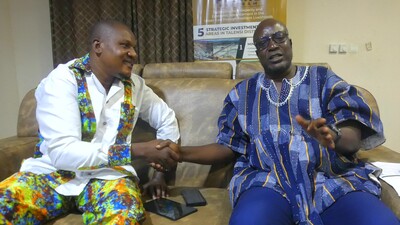
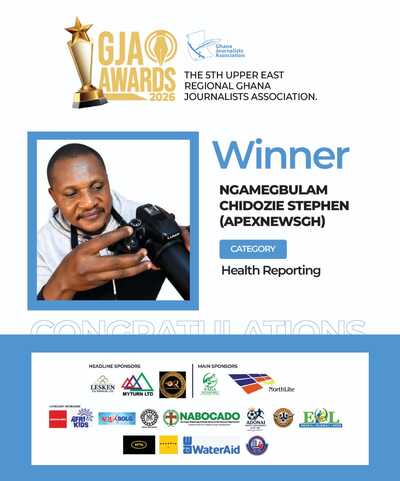
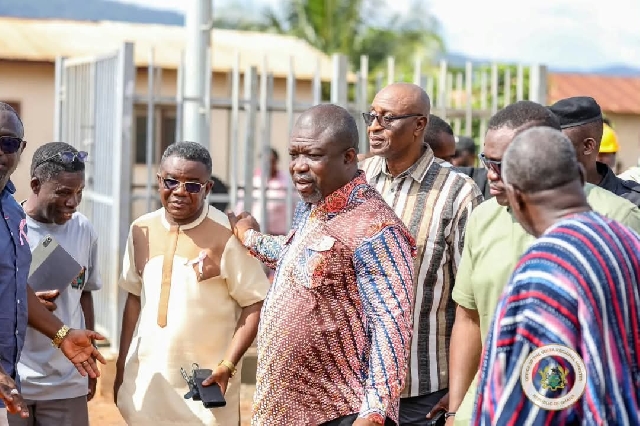
The Talensi District Chief Executive (DCE), Hon. John Millim Nabwomya, has outlined a number of interventions and achievements recorded in the district’s health sector since he assumed office. Hon. Nabwomya made the revelations during an exclusive engagement with Ngamegbulam Chidozie Stephen of Apexnewsgh on the “SPEAKOUT UPPER EAST” programme. According to the DCE, the health sector in Talensi District has witnessed significant improvements through the completion of critical infrastructure, restoration of essential services and collaboration between the assembly, traditional authorities, communities and private sector actors. One of the major achievements highlighted by the DCE is the completion of the Tindongo CHPS Compound, which he said was constructed ahead of schedule. He explained that construction of the facility commenced following a sod-cutting ceremony on October 25, 2025, with the contractor initially given nine months to complete the project. However, the project was completed in six months and subsequently handed over. Hon. Nabwomya noted that the project had particular significance for the Tindongo community, as an earlier attempt to complete it had stalled after the NDC government left office in 2016. He explained that one of the challenges that affected the project was the facility’s distance from the nearest electricity connection point. The assembly therefore used internally generated funds to procure and install electricity poles to connect the CHPS compound to the national grid. The facility, according to the DCE, has also been equipped with a mechanised borehole and polytank to provide a reliable water supply. He said the 20-bed facility also includes a daycare centre and a casework room equipped with a projector, providing additional support for healthcare delivery and community activities. Another major intervention highlighted by the DCE was the restoration of the district’s only ambulance, which had reportedly remained out of service for about three years. Hon. Nabwomya said the ambulance had been left grounded after its engine was removed and sent to Kumasi for repairs, but despite repeated assurances, the engine was not returned. Concerned about the impact of the situation on emergency healthcare delivery, the DCE said he sought support from Unity Mining, a group of small-scale miners operating in the area. He explained that rather than accepting cash directly, the assembly instructed the group to pay the money into the assembly’s official account to ensure transparency and accountability. The funds, he said, were subsequently used to procure a new engine and other necessary parts to restore the ambulance. According to Hon. Nabwomya, the ambulance is now fully operational and has become a major emergency response asset serving Talensi and neighbouring districts. The DCE also spoke about measures taken to address accommodation challenges confronting health professionals in the district. He cited the case of a newly posted doctor who was reportedly evicted from his residence, saying the district leadership responded by renovating an unused government bungalow. The renovation, he said, was completed within 72 hours, allowing the doctor to secure accommodation and continue working in the district. Hon. Nabwomya further attributed some of the improvements in healthcare delivery to regular field visits by himself and his team. He recounted a visit to the chief’s compound at Wakii, where health workers reportedly complained about unstable electricity supply and inadequate water. The challenges, he said, were addressed promptly, contributing to improved working conditions and helping facilitate the return of a midwife to the facility. He noted that the presence of the midwife has contributed to the safe delivery of newborns in the community. The DCE stressed that his administration places considerable emphasis on monitoring projects and health facilities to ensure that public resources are used appropriately. He said joint inspections are conducted with relevant sector directors and engineers to assess ongoing projects and ensure that contractors adhere to approved specifications before facilities are handed over. Beyond infrastructure and emergency healthcare, Hon. Nabwomya said the assembly has also continued to support vulnerable groups, including persons with disabilities. He explained that funds have been distributed to persons with disabilities to enable them to establish income-generating activities and improve their livelihoods. The DCE said the combination of health infrastructure, emergency response, staff welfare, regular monitoring and support for vulnerable groups forms part of the assembly’s broader efforts to improve the wellbeing of residents. He maintained that the progress recorded in the district has been made possible through collaboration among the assembly, traditional leaders, communities, health workers and development partners. The engagement formed part of Apexnewsgh’s “SPEAKOUT UPPER EAST” programme, which provides a platform for district leaders to account to residents on development interventions, achievements and challenges. Source: Apexnewsgh.com
Bawumia Hails Nurses and Midwives as Backbone of Ghana’s Healthcare System
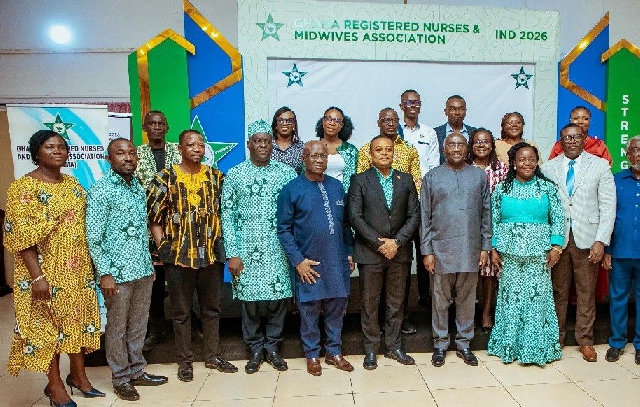
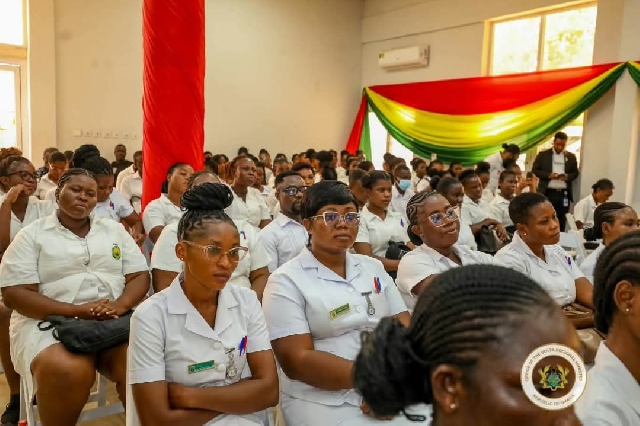
Former Vice President and New Patriotic Party (NPP) flagbearer, Dr. Mahamudu Bawumia, has placed nurses and midwives at the heart of Ghana’s healthcare conversation, describing them as indispensable pillars in building a resilient health system. Dr. Bawumia’s remarks came during a meeting with the national executives of the Ghana Registered Nurses and Midwives Association (GRNMA) in Accra on Wednesday, September 3, 2026. The engagement forms part of his ongoing stakeholder consultations as he refines his policy agenda ahead of the 2028 elections. Calling the session “fruitful and enlightening,” Dr. Bawumia listened intently as frontline health professionals shared their experiences, challenges, and ideas for policy reforms. “Without nurses and midwives, there is no healthcare system. You are the first point of contact, you are the last line of defence, and you are the heart of care delivery in Ghana. You must be seen and treated as indispensable,” he told the Association’s leadership. The GRNMA executives seized the opportunity to highlight urgent issues facing their members and the sector at large. Their presentation zeroed in on the need to enhance nursing education, invest in continuous professional development, address infrastructure gaps in health facilities, and strengthen leadership and management within the sector. They also advocated for innovative and sustainable measures to improve welfare, motivation, and working conditions, calling for clearer career progression, better recognition, and improved service conditions to match the sacrifices nurses and midwives make daily. Dr. Bawumia commended the group for their candor and depth of insight, assuring them that their feedback would help shape his health policy proposals. “What I have heard today is invaluable. You have given me practical insights that you only get from those who are on the ground doing the work every day. My commitment is to work with you to build a healthcare system that values its workers and delivers for the Ghanaian people,” he stated. He reiterated his vision for a modern, well-managed healthcare system, one that motivates, trains, and supports its health workers to deliver quality care for all. The meeting with the GRNMA is the latest in Dr. Bawumia’s series of consultations with key stakeholders, including professional bodies, youth groups, business leaders, and civil society, as he crafts his 2028 policy agenda. Source: Apexnewsgh.com
Nabdam Health Summit Targets 2,000 Residents for Free Eye Screening, Surgeries
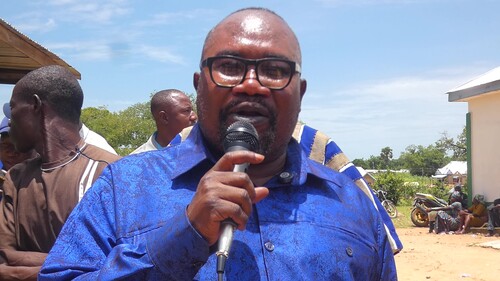
The Member of Parliament for Nabdam Constituency, Dr. Mark Kurt Nawaane, has spearheaded a major health outreach programme aimed at improving access to healthcare and eye treatment for residents of the Nabdam District. The initiative, dubbed “Health Summit 2026,” was organised in partnership with the Heaven of Love Children’s Foundation and seeks to provide free health screening and specialised eye care to thousands of people across communities in the district. Speaking at the opening of the summit, Dr. Nawaane said the initiative builds on previous interventions he had undertaken in the constituency to address common medical conditions. According to him, he had returned to Nabdam on about three or four occasions to perform surgeries for hernias, hydroceles and other minor ailments, resulting in approximately 900 operations over three visits. “Through these interventions, we have practically eliminated hernias and hydroceles in Nabdam. While isolated cases may still exist, reports of these conditions have dwindled to the point where no one comes forward to complain about them anymore,” he said. With significant progress made in addressing those conditions, Dr. Nawaane said the focus had now shifted to primary healthcare, eye diseases and other conditions that contribute to vision loss. He explained that participants would be screened for diabetes, hypertension and eye-related conditions, which are often interconnected and can contribute to serious vision problems. “Our goal now is to screen residents for diabetes, hypertension, and eye diseases, conditions that commonly cause vision problems in our part of the country,” Dr. Nawaane said. He added that the exercise would enable health professionals to identify people requiring specialised treatment and subsequently bring ophthalmologists and other specialists to provide the necessary care. Dr. Nawaane expressed the hope that by November, at least 300 residents of Nabdam would benefit from eye surgeries conducted by medical teams from Accra, Kumasi and the United States. He said the mass approach was adopted after years of encountering constituents seeking financial assistance to travel to health facilities for eye treatment. “Over the past decade as MP, I have often encountered people seeking help for eye problems, many requesting funds to visit clinics. This time, we decided to organise and appeal to NGOs and non-state actors to address the problem collectively, rather than helping individuals one at a time,” he explained. The MP thanked the Haven of Love Students Foundation, as well as the District and Regional Health Directorates, for supporting the initiative. The CEO and Founder of the Haven of Love Students Foundation, Samuel Nana Bekai Djirackor, said the foundation’s intervention was motivated by the healthcare challenges confronting rural communities in northern Ghana. He said the foundation deliberately focuses on rural communities because of limited access to specialised healthcare and the shortage of medical professionals in some parts of the country. “Our foundation is rural-centred because we understand the unique challenges of healthcare in the Upper East and the northern parts of Ghana,” Mr. Djirackor said. He noted that in some areas, the doctor-to-patient ratio could be as high as one doctor to 30,000 people, making access to quality healthcare particularly difficult. The foundation has therefore partnered with ophthalmic nurses, health professionals from district hospitals and specialists from major teaching hospitals, including Komfo Anokye Teaching Hospital and Korle Bu Teaching Hospital, to extend healthcare services to underserved communities. Mr. Djirackor said the partnership with Dr. Nawaane had allowed the foundation to expand the exercise from a single-community intervention to a wider six-community programme over six days. The exercise began at Sakoti and is expected to end at Pelingu, with the organisers targeting more than 2,000 people for screening. Beyond eye examinations, participants are also being screened for underlying conditions such as diabetes and hypertension, which can contribute to vision impairment. The organisers intend to compile a list of people requiring specialised eye treatment and subsequently organise free cataract and other eye surgeries later in the year. Mr. Djirackor said the Nabdam outreach was part of a broader commitment by the Haven of Love Students Foundation to improve healthcare delivery in rural Ghana. Since 2017, he said, the foundation had organised similar programmes across the Upper East Region, providing screening and treatment for conditions including eye diseases, hernias, post-polio paralysis, cancer and dental problems. He cited a recent intervention in the Bawku West District, where the foundation screened about 1,500 people, with 300 subsequently receiving cataract surgeries. According to Mr. Djirackor, the foundation’s volunteers and medical professionals offer their services without financial compensation, driven by patriotism and their desire to support vulnerable communities. “Our volunteers and doctors serve without pay, motivated by patriotism and the love of Christ. We want to be a blessing to these communities,” he said. The programme, he added, is not restricted to residents of Nabdam. Ghanaians from other parts of the country, as well as people from neighbouring Burkina Faso who can access the designated screening centres, are also welcome to participate. The initiative underscores the growing importance of collaboration between political leadership, health institutions, civil society organisations and medical professionals in tackling healthcare challenges in underserved communities. Through the Health Summit 2026, organisers hope to identify and treat residents suffering from preventable or treatable conditions while creating a pathway for sustained access to specialised healthcare in Nabdam and beyond. Source: Apexnewsgh.com
Medical and Dental Council Registrar Highlights Regulation as Key to Universal Health Coverage at AMCOA Conference
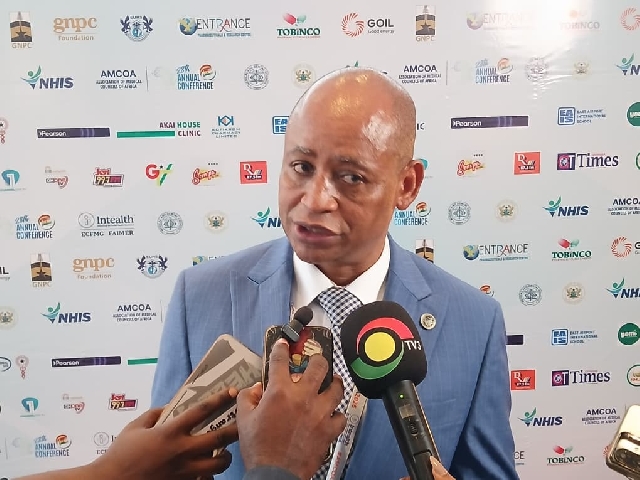
The 28th Annual International Conference of the Association of Medical Councils of Africa (AMCOA) opened in Accra with a resounding message from Dr. Divine N. Banyubala, Registrar of the Medical and Dental Council of Ghana. Speaking on the sidelines of the event, Dr. Banyubala underscored the indispensable role of health professional regulation in achieving Universal Health Coverage (UHC) in Ghana and across the continent. This year’s conference, themed “Responsive Regulation for Safer Communities towards Universal Health Coverage,” brought together over 350 delegates at the Movenpick Ambassador Hotel from August 23-27, 2026. The gathering aims to strengthen regulatory frameworks to ensure safer, more accountable healthcare for all Africans. Dr. Banyubala drew a direct link between the conference theme and President John Dramani Mahama’s free primary healthcare policy. “Universal health coverage, as His Excellency the President eloquently laid out and anchored on his free primary health care policy, means there should be no barrier to access to care by anyone in Ghana,” he explained. However, Dr. Banyubala cautioned that expanding access alone is not enough. “At the heart of it as regulators is not simply just expanding access. If you expand access and the care is not safe or that the practitioner providing the care is not properly trained or is not registered and licensed, or when there is misconduct with no accountability mechanism, then access in this sense may be harmful.” He emphasized that regulation forms the foundation of quality and safe universal access. “We set standards for training, for practice, for entry into the profession, and for professional and ethical conduct. Where things do not go well, we have the statutory obligation to ensure accountability mechanisms work,” Dr. Banyubala noted. According to the Registrar, health professional regulators are, above all, public interest regulators. “Our primary object is to protect the public, the patients. We are all potential patients, and so all of us have a role to play in health professional regulation in general.” Dr. Banyubala concluded by reiterating that regulation is at the heart of the President’s free primary health care policy and is essential for ensuring universal access to quality, basic, and safe care for every Ghanaian. As the AMCOA 2026 conference continues, delegates are set to deliberate on ways to make health regulation even more responsive, building safer communities and moving closer to the goal of universal health coverage. Source: Apexnewsgh.com
BOGISS PTA Condemns Alleged Defilement, Demands Justice and Reassures Parents
The Parent-Teacher Association (PTA) of Bolgatanga Girls Senior High School (BOGISS) has broken its silence amid recent media reports and public concern over the alleged defilement of a student involving two security personnel attached to the school. In a strongly-worded statement signed by Professor Albert Luguterah and Stanley Akamiri Abopaam, BOGISS PTA Executive, the Association voiced deep concern and unequivocally condemned the alleged abuse. “No child entrusted to the care of BOGISS should ever suffer any form of sexual abuse, exploitation, or harm,” the PTA declared, describing the allegations as extremely disturbing. The PTA commended the swift action taken by authorities, including the arrest of the two suspects by the Ghana Police Service and their interdiction by the Ghana Education Service (GES). The Association called for a full, transparent, and expeditious investigation, stressing that the harshest sanctions must be applied to anyone found culpable under the law. Beyond seeking justice, the PTA appealed to the GES, Department of Social Welfare, and child-protection agencies to provide the affected student with counselling, medical care, and protection. They emphasized that the student’s welfare, dignity, and educational future must be safeguarded throughout the process and that any decisions affecting her status as a student should prioritize her best interests. The PTA also addressed the media, supporting the right to report on the case but cautioning against speculative or unbalanced coverage. They urged journalists and commentators to distinguish between confirmed facts and allegations, avoid prejudicing the investigation, and refrain from actions that could traumatize the student or unfairly implicate school authorities who have acted responsibly. To parents and guardians, the PTA offered reassurance that student safety remains their top priority. The Association is working with school management and the GES to review and strengthen safeguarding protocols, including stricter vetting of security staff, tighter access controls, and clearer reporting channels for concerns. Periodic safety audits are also planned to ensure a secure environment for all students. “We will not relent in holding all stakeholders accountable,” the statement emphasized, “to ensure that every child at BOGISS learns, boards, and grows in an environment that is safe, secure, and protective of her dignity.” The PTA encouraged anyone with concerns to report them promptly to school management, the PTA executive, or the appropriate authorities, pledging continued engagement and transparent communication with all stakeholders. Source: Apexnewsgh.com
Mental Health Authority Moves to Close Kumasi Spiritual Healing Centre Over Treatment Concerns
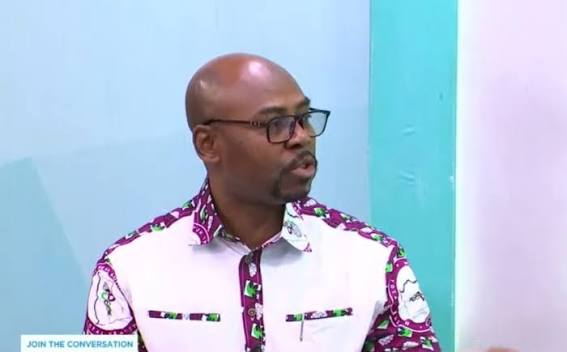
The Mental Health Authority (MHA) has announced decisive action against a Kumasi-based spiritual healing centre where over 2,000 people with mental health conditions are reportedly being housed. According to MHA Chief Executive, Dr. Eugene Kobla Dordoye, the centre is operating with an expired licence and is under scrutiny for concerning practices, including the chaining of some residents. Dr. Dordoye revealed that while the centre’s leader claims to offer spiritual healing, the conditions raise serious questions about the well-being and rights of those in care. “We wanted to close it down. He has a licence, but it has expired,” Dr. Dordoye said, emphasizing the difficulty medical professionals face in providing effective interventions when individuals are restrained. Speaking at the 5th Graduation Ceremony of the Ghana Christian University College, Dr. Dordoye cautioned the public against the dangers of prescribing or administering medication without proper medical oversight. He urged Ghanaians to seek professional mental health care and warned that unregulated practices can endanger the lives of vulnerable individuals. The MHA’s actions underscore a growing commitment to upholding ethical standards and safeguarding the rights of people living with mental health conditions in Ghana. Source: Apexnewsgh.com
It is better to complete Agenda 111 than to spend money on a national cathedral—Attorney General
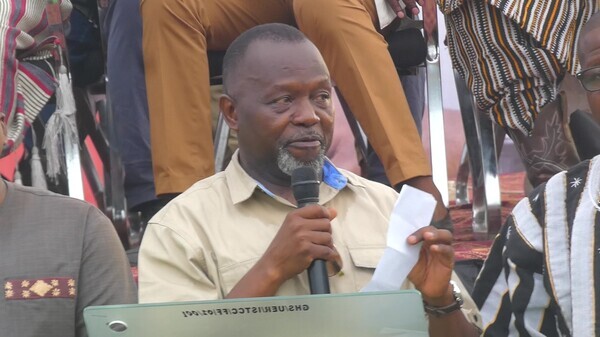
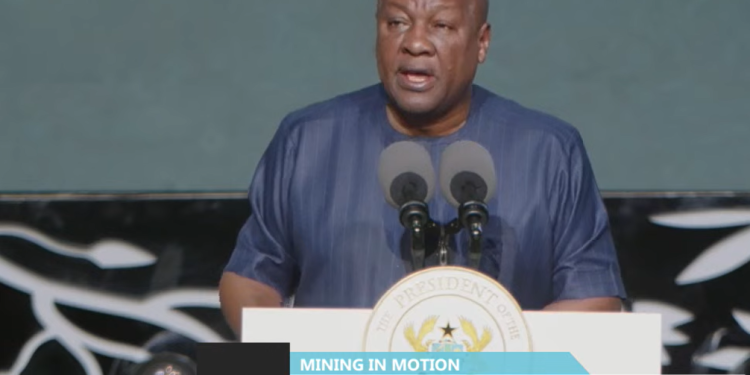
Attorney General and Minister of Justice, Dr. Dominic Ayine, has called for a stronger focus on finishing the government’s flagship Agenda 111 hospital projects rather than allocating resources to the construction of a national cathedral. Speaking during the launch of the FREE PRIMARY HEALTH CARE initiative in Bolgatanga East on Thursday, Dr. Ayine, who also serves as Member of Parliament for the constituency, underscored the urgent need to prioritize healthcare infrastructure. Addressing President and guests, Dr. Ayine revealed his persistent efforts to ensure that the uncompleted Agenda 111 hospital in Bolgatanga East receives the attention it deserves. “I have been on the neck of my colleague, the Health Minister, to ensure that it is completed. Today, I had to exercise my authority as Attorney General to obtain the list of districts included in the Agenda 111 completion program, and Bolgatanga East Zuarungu was right there,” he stated. Dr. Ayine contrasted the unfinished hospital with ongoing discussions about funding the national cathedral, referencing a recent report he received. “You don’t build a house of God in the manner in which they went about it. The money that was spent on the national cathedral, according to a report from PWC, could have been used to complete the district hospital,” he said. He concluded with a clear message: “It is better to complete Agenda 111 than to spend money on a national cathedral.” Dr. Ayine’s remarks come amid renewed debate over national priorities, as calls for the completion of critical healthcare projects grow louder across the country. Source: Apexnewsgh.com
BEWDA Launches Advocacy Project to Empower Journalists and Communities on Climate Justice
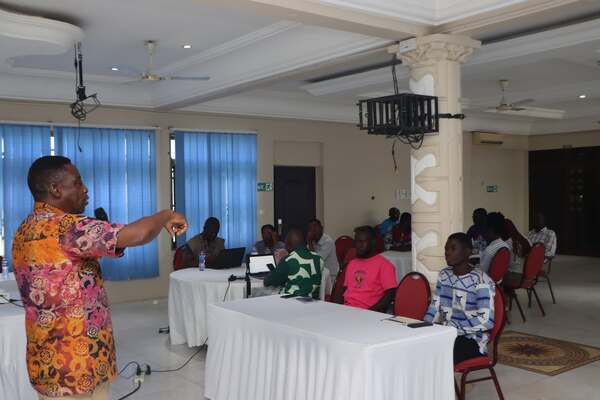
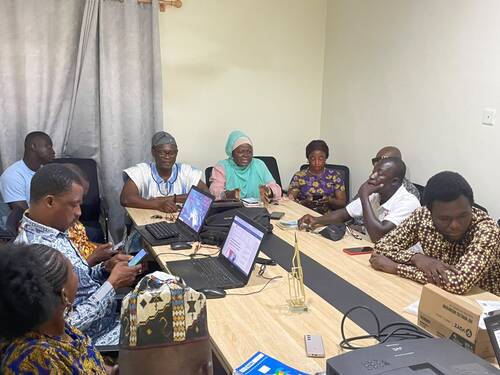
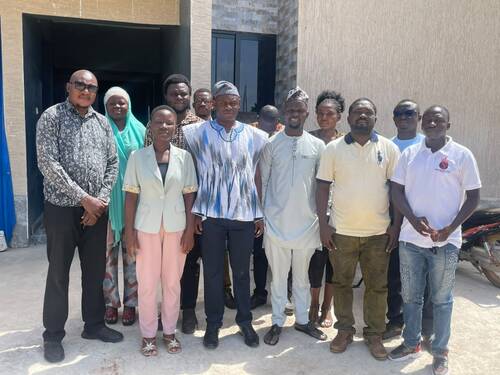
The Belim Wusa Development Agency (BEWDA) has set a new course for climate advocacy in Ghana’s Upper East Region, unveiling a pioneering project aimed at strengthening civil society and amplifying grassroots voices. At the heart of this initiative is the training of 30 WASH (Water, Sanitation, and Hygiene) journalists on climate change reporting, a programme developed in partnership with WaterAid Ghana under the SIDA CLIMB Better WASH Partnership. Speaking at the launch, BEWDA’s Executive Director, Peter Asaal, explained that the project. formally titled “Civil Society Leadership Mobilization for Better Wards”, is designed to support community mobilization and empower residents to address climate justice violations in their districts. “Our role is to see how we can mobilize communities and engage stakeholders and duty bearers in assemblies, making sure their voices are heard and their rights protected,” Asaal said. The project’s roots lie in extensive climate vulnerability assessments across Upper East, where BEWDA identified mounting challenges impacting local communities. The pilot phase in Boko West revealed the urgency for a broader response, prompting WaterAid to support an expansion to four more districts: Nabdam, Bongo, Kassena Nankana Municipal, and Kassena Nankana West, alongside Bawku West. Over three days, journalists have participated in intensive training, gaining deeper understanding of climate change impacts on water and sanitation infrastructure. The goal is to equip them to report accurately and compellingly on climate justice violations, ensuring that the lived experiences of affected communities are brought to light. “We want journalists to amplify the voices of those affected and hold duty bearers accountable,” Asaal emphasized. By empowering journalists with knowledge and storytelling skills, BEWDA aims to foster greater accountability from duty bearers to right holders, those whose lives are most affected by climate change. The project also seeks to influence policy at district, regional, and national levels, ensuring that grassroots realities shape decision-making and resource allocation. Running through March 2028, the project aspires to see a wave of impactful stories published, broadcast, and shared around the world. As these narratives reach wider audiences, BEWDA hopes to catalyze meaningful change, making climate justice a central part of policy and practice, not just in the Upper East, but across Ghana and beyond. Source: Apexnewsgh.com/Ngamegbulam Chidozie Stephen
Upper East Region Grapples with Layered Climate Threats as Journalists Spotlight WASH Crisis
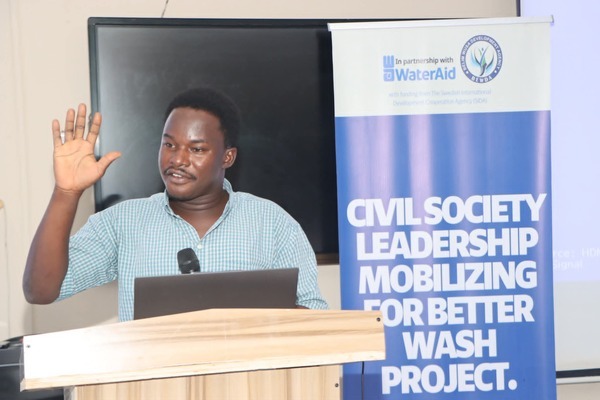
Once celebrated for its resilient communities, Ghana’s Upper East Region now stands as a stark example of climate change’s mounting toll. At the center of this unfolding story, thirty journalists recently convened in Bolgatanga for an intensive three-day training designed not only to strengthen climate change reporting, but also to shine a spotlight on the critical intersections of water, sanitation, and hygiene (WASH) justice. The training, spearheaded by the Belim Wusa Development Agency (BEWDA) in partnership with WaterAid Ghana and the SIDA CLIMB Better WASH Partnership, offered a sobering look at the obstacles facing the region. Project Lead Mr. Sebastian Mbabugri Agumah painted a detailed picture for the assembled journalists: over the past decade, the Upper East has suffered a 10 to 15 percent decline in rainfall. What was once a predictable five- to six-month wet season has shrunk to just three or four months in many areas, stretching the dry season to six months and leaving wells empty and fields barren. Yet drought is only part of the crisis. Rising temperatures have ushered in more frequent and intense heat waves, raising average temperatures by up to 1 degree Celsius, with the specter of a 2-degree increase by 2050 looming ever closer. These heat waves bring not only discomfort but also heightened health risks and disease, compounding the region’s daily hardships. Extreme weather is now an annual ordeal. The Bagre Dam’s controlled spillage and the recent overflow of the Tono Irrigation Dam have both caused devastating floods, sweeping away roads and farmland. In the district of Binduri, fierce windstorms have ripped roofs from homes and schools, including structures. Wildfires and violent rainstorms, too, have become regular threats, stoking fresh anxieties each season. Across the five hardest-hit districts, Bawku West, Nabdam, Bongo, Kassena Nankana West, and Kassena Nankana Municipal, communities face at least three of these climate hazards simultaneously. As drought, flood, heatwave, windstorm, and wildfire layer one upon the next, the result is a compounding crisis that imperils the region’s WASH infrastructure. Source: Apexnewsgh.com/Ngamegbulam Chidozie Stephen
Water Is Not a Donation: Advocates Call for Climate-Resilient WASH Services
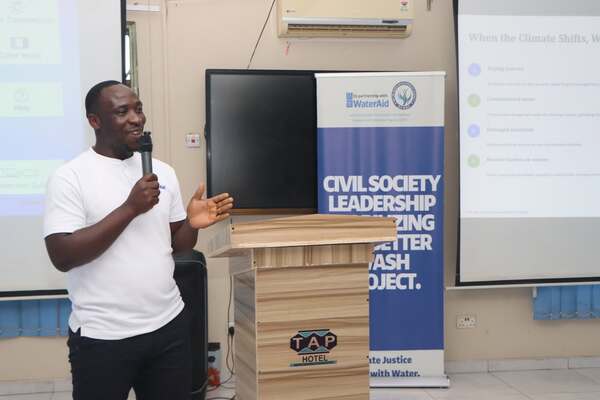
A group of thirty journalists have gathered for a transformative three-day training, focused not just on climate change reporting, but on the deeper issues of water, sanitation, and hygiene (WASH) justice. Spearheaded by the Belim Wusa Development Agency (BEWDA) in partnership with WaterAid Ghana and under the SIDA CLIMB Better WASH Partnership, the event became a platform for frank conversations about the responsibilities of duty-bearers and the rights of community members. Richard Ntibrey, Program Manager for WASH and Climate Change at WaterAid Ghana, did not mince words. “Water is not a donation. It is the duty of duty-bearers to provide it,” he declared, challenging the common misconception that access to clean water is something to be gifted rather than guaranteed. Ntibrey’s message struck a chord among the journalists: “Most times, community members are not aware that it is the duty of the duty-bearers to provide good sources of water in our various communities. We don’t want to see duty-bearers providing water as a donation. It is the duty of the duty-bearers to provide water.” The training, held in Bolgatanga, was more than a lecture, it was a call to action. Ntibrey emphasized the power of advocacy, urging journalists to tell the stories of both duty-bearers and right-holders. “Advocacy and influencing will allow you to reach more people, to target those responsible for providing water, sanitation, and hygiene, and to ensure systemic change. The focus here is on climate justice.” The project, currently running in five climate-vulnerable districts, Bawku West, Nabdam, Bongo, Kassena Nankana West, and Kassena Nankana Municipal, was born out of a climate vulnerability and risk assessment. Data revealed declining rainfall by as much as 15%, decreased borehole yields, and excessive heat, particularly in Nabdam. These findings, coupled with high poverty rates, made the districts a priority for climate-resilient WASH interventions. Ntibrey explained the role of NGOs like WaterAid Ghana: “Our work is to support government in delivering its mandates. But ultimately, it is the government’s responsibility to ensure that communities have sustainable access to water, sanitation, and hygiene services, especially in the face of climate change.” He called for leadership and collaboration from local and national governments, journalists, development organizations, and the communities themselves. “Most importantly, we want governments to invest more in sustainable WASH services that consider the impact of climate change. Beyond climate events, these systems must endure.” The stories journalists uncover, about water scarcity, declining sanitation, and the daily struggles of communities, are key to understanding the true impact of climate change. “Change starts with water,” Ntibrey affirmed. “If you enter a community and see them struggling for water, you know that agriculture, household nutrition, and sanitation are all affected.” The advocacy, he concluded, is about more than infrastructure. It’s about justice. “Wherever you are, you are either a duty-bearer or a right-holder. Duty-bearers must provide; right-holders must demand. Even in the face of climate change, access to water, sanitation, and hygiene is a right, not a privilege.” He stressed Source: Apexnewsgh.com/Ngamegbulam Chidozie Stephen