
From Classroom to Cabinet: Dr Hafiz Bin Salih’s Journey Recognised by ICMP USA
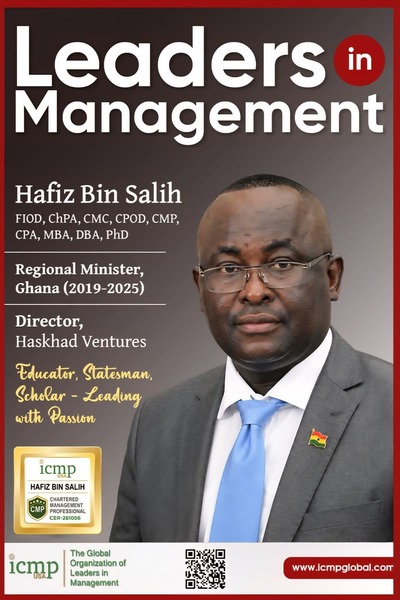
It began with a single classroom in Ghana, a place where young minds were shaped, and where one educator discovered a calling far bigger than textbooks. For three decades, that calling guided a quiet, determined leader through the corridors of schools, the challenges of grassroots educational reform, and eventually into the highest levels of public administration. From leading local institutions to serving as a Regional Minister, every step was driven by the same unwavering belief: that leadership rooted in integrity and strategy can transform communities. Now, that lifelong commitment has earned a new honour. The Institute of Chartered Management Professionals (ICMP USA) has featured this seasoned leader in its prestigious Leaders in Management series, a recognition reserved for those who inspire excellence and advance global management practice. “I am absolutely delighted and deeply honoured,” they shared, reflecting on the milestone. “My focus has always been to lead with commitment, integrity, and a dedication to sustainable institutional development.” As a Chartered Management Professional, this feature feels less like a destination and more like a reaffirmation. It underscores a powerful truth: that professional discipline, governance, and strategic vision, when woven together, can create lasting impact in institutions and across entire regions. With heartfelt gratitude to ICMP USA for championing professionals who empower people and elevate leadership worldwide, this leader looks ahead with renewed excitement. The journey that started in a Ghanaian classroom has come full circle, now inspiring a global audience, one story at a time. Source: Apexnewsgh.com
Minority Accuses NDC Government of Betrayal Over Changes to Anti-LGBTQ+ Bill
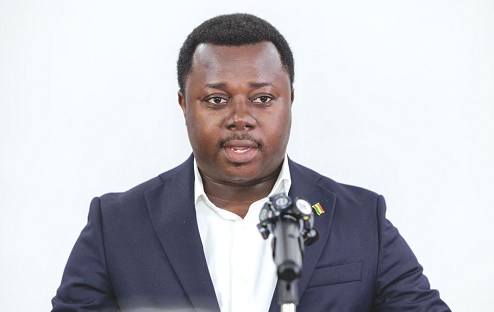
Tensions ran high in Parliament as the Minority caucus leveled serious accusations against the National Democratic Congress (NDC) government, claiming it had broken faith with Ghanaians by significantly altering the Human Sexual Rights and Family Values Bill, 2025, widely known as the anti-LGBTQ+ bill. Speaking passionately at a press conference on Monday, June 1, Rev. John Ntim Fordjour, the Member of Parliament for Assin South and a co-sponsor of the bill, voiced the Minority’s frustration. While reaffirming the caucus’s support for the bill’s objectives, he condemned what he described as sweeping amendments that, in his view, had fundamentally changed the legislation that Parliament originally passed in 2024. Rev. Ntim Fordjour accused the ruling NDC of “mutilating” the bill through extensive deletions, redrafting, and new insertions. He charged that the government’s actions contradicted its earlier stance, reminding the public that the NDC had once demanded the bill be signed into law exactly as passed. “Was that the promise?” he asked, referencing the NDC’s campaign assurances. “Was the promise to come and dilute the bill before he signs? That is a breach of trust. That is hypocrisy, and that is deception.” The controversy arose after Parliament passed the revised bill on Friday, May 30, which introduced several key changes. Under the new provisions, legal professionals offering counsel or representation to LGBTQ+ individuals are now exempt from sanctions. Journalists and media houses reporting on LGBTQ+ matters in their professional capacity are also protected. Additionally, medical professionals, including surgeons, psychologists, and counselors, who provide care to LGBTQ+ persons are shielded from prosecution. Despite the amendments, the Minority insists the government has deviated from its original promise, framing the changes as a betrayal of public trust and a dilution of the bill’s intended impact. Source: Apexnewsgh.com
Ghana Set to Launch Bold “New Economy” Blueprint in 2027 Budget
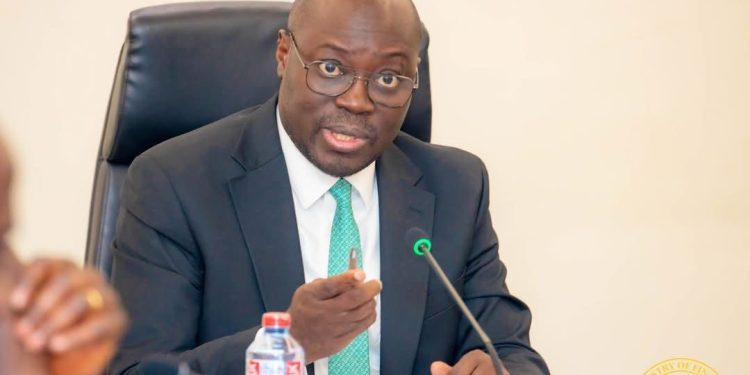
Finance Minister Dr. Cassiel Ato Forson took to the podium with a vision for Ghana’s economic future. Addressing a diverse audience of investors and business leaders, Dr. Forson unveiled plans for a sweeping “new economy” framework, set to be the centerpiece of the 2027 Budget. This ambitious programme, he explained, is designed to attract investment into sectors with the power to transform Ghana’s economy for generations. “We want to channel resources into productive sectors that can expand the economy and create the capacity to repay investments over time,” Dr. Forson stated, underscoring the government’s commitment to sustainable, long-term growth. Central to this new agenda will be a focus on commercial agriculture, the value addition of minerals, energy, and critical transport infrastructure. The framework will pinpoint priority areas where investment can yield the greatest impact, driving industrial development and job creation. Notably, energy projects, particularly gas-to-power and gas-to-fertiliser initiatives, will play a starring role, strengthening Ghana’s energy security and supporting its industrial ambitions. Infrastructure is also in sharp focus. The Western Railway Line, alongside other strategic transport projects, will receive significant attention, with full details to be revealed at the official launch. While the final blueprint is still being fine-tuned, Dr. Forson assured stakeholders that preparations are well advanced. The formal unveiling will be led by President John Dramani Mahama once all elements are in place. To fuel this vision, the government plans to tap into international financing, ranging from UK export finance to hedge funds and private investors. “We want to attract the kind of UK export finance. We want to attract the kind of hedge funds and businesses that you have so that we can get financing to develop the country,” Dr. Forson affirmed, signaling Ghana’s readiness to welcome global partners in its quest for economic transformation. Source: Apexnewsgh.com
President Mahama Declares War on Public Sector Financial Irregularities
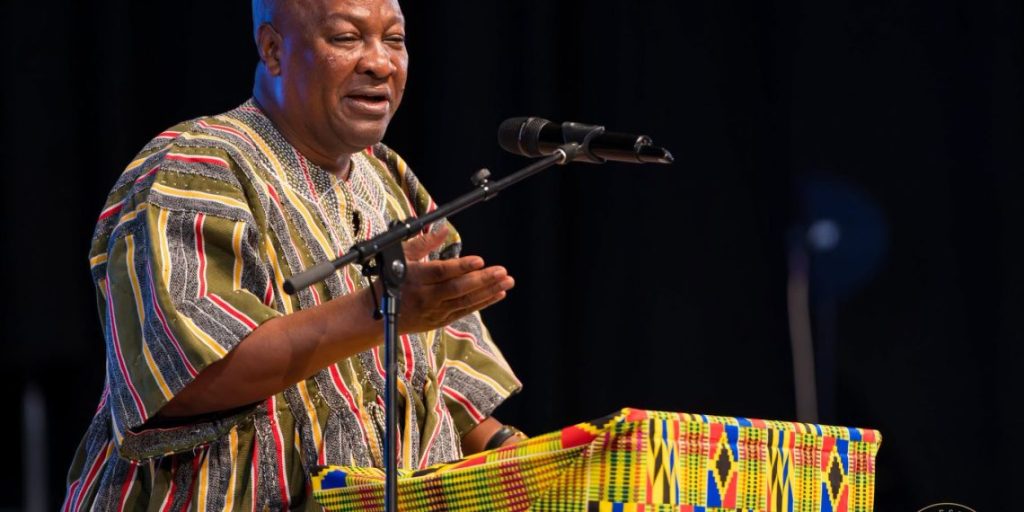
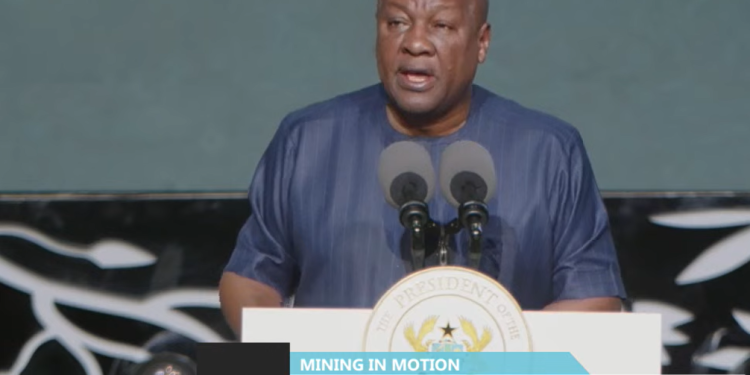
President John Dramani Mahama has sent a clear message: the era of impunity for financial mismanagement in Ghana’s public sector is coming to an end. On Sunday, May 31, during a diaspora town hall meeting, President Mahama voiced his deep concern about the billions of cedis Ghana loses each year to financial irregularities—losses consistently detailed in the Auditor-General’s reports. “Every year, you hear the Auditor General’s report, Ghana loses 12 billion cedis from misappropriations and things,” he lamented, highlighting the persistent drain on the country’s resources and the longstanding weaknesses in public financial management. But this time, the president announced a historic shift. Thanks to the Chief Justice, Ghana now has specialised audit courts designed to handle cases of financial wrongdoing uncovered by the Auditor-General. No longer will those implicated merely appear before Parliament’s Public Accounts Committee; they will stand trial in these new courts, facing real consequences. President Mahama was resolute: anyone found culpable in audit reports will be compelled to refund misappropriated funds or face imprisonment. He emphasized that the Attorney-General and the Auditor-General would collaborate closely to prosecute offenders and recover public money. “We’re putting them in front of those special courts to either refund our money or proceed to NSAWAM and go and catch some rest there,” he quipped, referencing Ghana’s most well-known prison. His vow comes at a time of renewed public scrutiny on financial accountability, following recent high-profile cases examined by Parliament’s Public Accounts Committee. Among them was a directive ordering officials of the Ho Municipal Assembly to refund GH¢138,000 within 60 days. With these new audit courts and a presidential commitment to enforcement, Ghana appears poised to turn a new page in its battle against public sector financial irregularities. Source: Apexnewsgh.com
Ghana and UK: A New Chapter of Economic Partnership
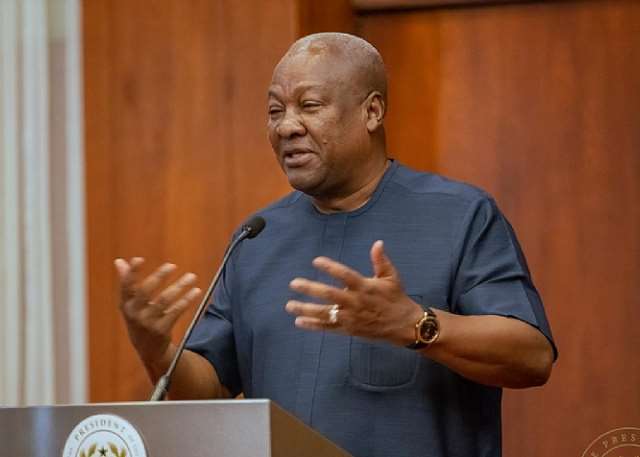
At the bustling Ghana-UK Investment Summit 2026, President John Dramani Mahama stood before a room of eager investors and dignitaries, his message clear: the economic partnership between Ghana and the United Kingdom is entering a new era. The President shared a milestone that brought pride to both nations: annual bilateral trade now surpasses £1.5 billion. Yet, he was quick to remind the audience that this achievement was just the beginning. “This only scratches the surface of what is possible,” Mahama asserted, his vision firmly fixed on the future. He painted a picture of a rapidly changing world, where global businesses are reevaluating their supply chains and searching for resilient, promising destinations for investment. In this landscape, Ghana, Mahama argued, stands out. Political stability, a strong democratic tradition, and a strategic location are just some of the qualities making the country an attractive choice for international investors. Ongoing reforms to strengthen macroeconomic fundamentals further sweeten the deal. “In that changing global landscape, Ghana offers something increasingly valuable: political stability, democratic maturity, strategic geographical access, improving macroeconomic fundamentals, and a government committed to creating a transparent and investor-friendly business environment,” the President told the summit. Mahama emphasized that the Ghana-UK partnership has grown far beyond its historical roots. Today, it is a multifaceted relationship spanning trade, innovation, education, and shared democratic values. Looking ahead, he called for collaboration in critical sectors such as manufacturing, technology, infrastructure, agribusiness, renewable energy, financial services, pharmaceuticals, tourism, education, and the digital economy. “This Summit is therefore not simply a networking event. It is a platform for building long-term partnerships capable of delivering jobs, innovation, industrial growth and shared prosperity,” he declared. With these words, President Mahama invited both countries to seize the opportunity and forge an even stronger economic future together. Source: Apexnewsgh.com
Hundreds of Homes Submerged in Weija as Dam Spillage Forces Mass Evacuation
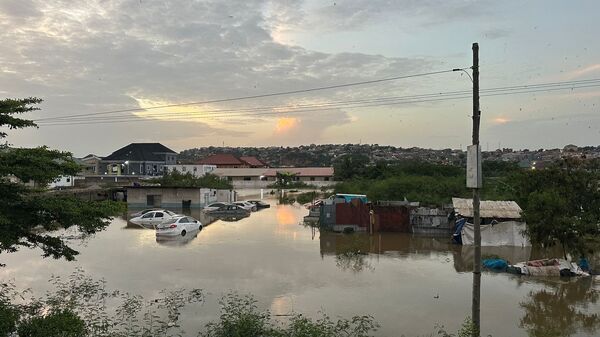
Chaos and uncertainty gripped communities in Weija, Accra, after a controlled spillage from the Weija Dam left hundreds of homes underwater and thousands of residents stranded. The sudden flooding, which began after Ghana Water Limited (GWL) opened all spill gates, forced many families to flee for safety, abandoning homes and treasured belongings. The crisis unfolded after GWL announced on May 27, 2026, that water levels in the dam had surged above 48 feet, well beyond safe operating limits, due to persistent heavy rainfall. In an official statement, the utility company explained that the decision to release excess water was a necessary precaution to protect the dam’s structural integrity and prevent a catastrophic overflow. According to GWL, controlled spillage is a standard safety measure activated when intense inflows threaten to overwhelm the dam’s capacity. However, the move has come at a high cost for the surrounding communities, which have been inundated by floodwaters. Streets have turned into rivers, homes have been engulfed, and residents could be seen wading through chest-high water, clutching whatever items they could salvage. With the scale of devastation still unfolding, emergency response teams are mobilizing to assess the damage and bring relief to those affected. Authorities have pledged to intensify rescue and support operations in the coming days as Weija’s residents face the daunting task of rebuilding their lives after the flood. Source: Apexnewsgh.com
Volta Regional Minister Launches Nkoko Nkitinkiti Programme to Tackle Poverty and Boost Food Security
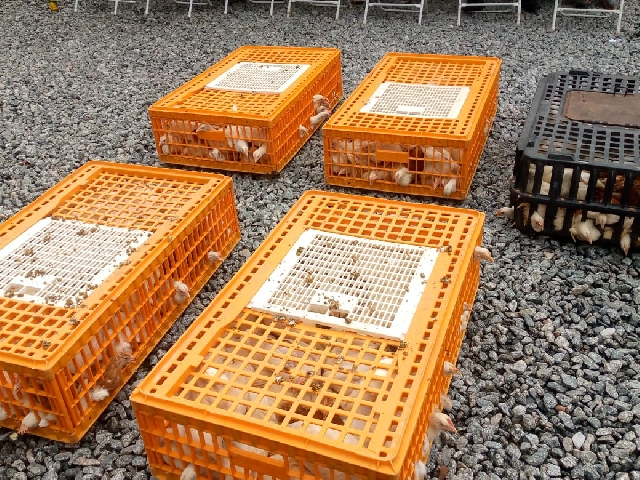
Regional Minister James Gunu officially launched the Nkoko Nkitinkiti Programme, a flagship intervention under the Government of Ghana’s Feed Ghana Programme. The lively event marked the start of a major initiative designed to reduce poverty, create jobs, improve household incomes, and strengthen food security throughout the region. Addressing an enthusiastic crowd at the launch, Mr. Gunu emphasized that Nkoko Nkitinkiti is more than a poultry farming project, it is a practical tool for economic empowerment aimed at households, young people, and aspiring agribusiness entrepreneurs. “This initiative goes beyond rearing chickens,” Mr. Gunu said. “It is about empowering families, stimulating local economies, and setting the foundation for agribusiness success stories across Volta.” At the heart of the programme is a simple but powerful idea: poultry farming as a catalyst for grassroots economic development. As part of the rollout, the region will receive 180,000 day-old chicks, allocated to beneficiaries—especially households and enterprising youth, looking to build sustainable livelihoods. The Minister expressed confidence that this intervention would provide long-term economic relief for families, promote self-employment, and foster the growth of agribusiness throughout the region. Mr. Gunu also drew on the region’s rich history, recalling how, for generations, families relied on the sale of a few chickens to pay school fees, cover healthcare costs, and meet urgent household needs. “Nkoko Nkitinkiti is a revival of an age-old poverty reduction strategy that empowered families at the grassroots level,” he remarked. The Minister reaffirmed the government’s commitment to supporting agricultural programmes that directly benefit rural communities and bolster food security. He applauded the stakeholders and partners behind the initiative and called on beneficiaries to make the most of the support provided, ensuring the programme’s sustainability and lasting impact. The Nkoko Nkitinkiti Programme forms a key component of the broader Feed Ghana vision, which seeks to boost domestic agricultural productivity, improve food availability, and create economic opportunities nationwide. By distributing three million birds to 60,000 households across all 276 constituencies, the government aims to reduce Ghana’s heavy reliance on imported frozen chicken. This practice has cost the country over $350 million annually. Under the Household/Backyard Poultry Initiative, each participating household will receive 50 chicks, feed support, and technical guidance to help them transition from subsistence farming to self-sustaining poultry enterprises. The programme also includes support for 50 commercial anchor farmers, each set to receive up to 80,000 chicks and the resources needed to produce poultry at scale, thus strengthening the supply chain from farm to market. Local leaders echoed the optimism. The Municipal Chief Executive for Ho, Stephen Adom, assured residents that the programme would open up job opportunities for the youth and help reduce poverty and unemployment. He reiterated the John Mahama administration’s commitment to supporting Ghanaians through additional interventions, urging beneficiaries to use the chicks wisely to realize the initiative’s full potential. As the first batch of chicks arrives and households prepare their coops, the Nkoko Nkitinkiti Programme is poised to transform lives, foster food sovereignty, and build a more resilient agricultural future for the Volta Region and beyond. Source: Apexnewsgh.com
Ghana welcomes Pope’s apology over Catholic Church’s role in slavery
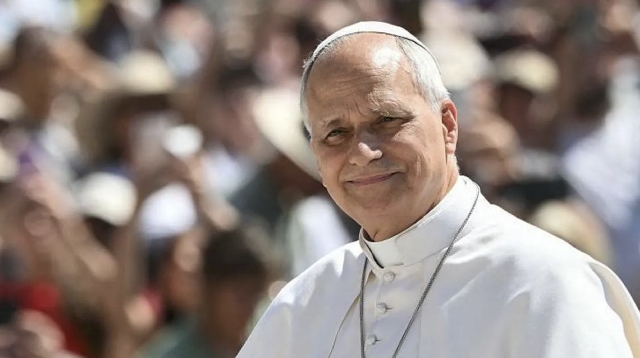
Ghana has welcomed Pope Leo XIV’s apology for the Catholic Church’s historic role in slavery, describing it as an “act of moral courage” that was important in the global pursuit of “truth, human dignity and justice”. The Pope issued the clearest apology yet for the Church’s involvement in legitimising slavery and its delay in condemning it for centuries. Between the 16th and 19th Centuries, 12-15 million Africans were shipped to the Caribbean, with about two million dying during the journey. Ghana has long been leading efforts for compensation and apologies from Western nations for the slave trade. The West African nation’s government said the Pope’s recognition of the painful past was an important step towards healing, reconciliation and a just society. ”[The apology] reinforces the growing global understanding that confronting historical injustices demands truth-telling and moral responsibility as essential foundations for justice and reconciliation,” its statement, released late on Tuesday, said. The Pope’s apology was delivered in what is known as a encyclical – technically a letter to Catholic bishops, but which over recent decades have been how a pontiff passes on messages to the world. In the papal letter – titled “Magnifica Humanitas” (“Magnificent Humanity”) – Pope Leo sincerely asked for a pardon in the name of the Church, adding that it was “impossible not to feel deep sorrow when contemplating the immense suffering and humiliation endured by so many”. Leo said Church authorities had at times responded to requests of rulers by “regulating and legitimising forms of subjugation, including the enslavement of of [non-Christians]”. He also acknowledged that earlier in the Middle Ages, ecclesiastical institutions had their own slaves. “This constitutes a wound in Christian memory,” he said of the Church’s record. In April, Pope Leo completed a 11-day, four-nation of Africa – his first visit to the continent as pontiff – and where he made several forthright remarks including lashing out at foreigners who exploit Africa’s wealth for profit. | AFP via Getty Images (Pic): Pope Leo visited Algeria, Cameroon, Angola and Equatorial Guinea in April Ghana said the Pope’s acknowledgment of the “painful history” was significant, at a time the world was having a “deeper reflection” on the effects of slavery and colonialism. The country successfully pushed for a UN resolution in March, which recognised the enslavement of Africans as the “gravest crime against humanity”. Submitted by Ghana’s President John Mahama and backed by the African Union, it aims to provide a pathway to healing and the payment of reparations. It also seeks to address the enduring consequences of slavery like inequality and racial discrimination. Ghana, which still has some of the forts that were used for holding captives under inhuman conditions as they waited to be shipped to the Americas by European powers, is due to host a conference in June to discuss the next steps following the adoption of the UN resolution. On Tuesday, Human Rights Watch said the Pope’s apology marked an important step, but stressed apologies alone were not enough and that real reparative justice needed to go further. Religious institutions, along with states and corporations that benefited from slavery, should “reckon seriously” with their histories and take part in reparative efforts, the rights group added. Source: bbc
Hajia Charity Rahinatu Asoemah Urges TEIN Students: “Take Your Studies Seriously If You Want a Future in Politics”
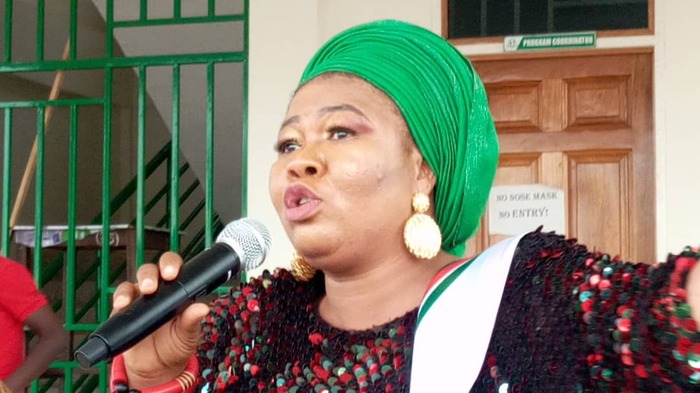
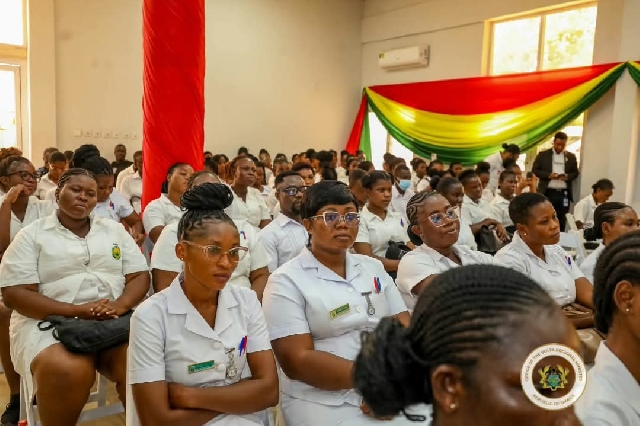
Although Hajia Charity Rahinatu Asoemah could not be physically present at the TEIN ceremony held at the Nursing Training College in Bolgatanga, her words carried immense weight, leaving a powerful impact on the students and igniting fresh hope in their political aspirations. The former Upper East Regional Women’s Organizer of the NDC and now Deputy Director General of Warehouse at NADMO shared a heartfelt and direct message with the eager audience. She reminded the students that while aspiring to be a politician is a noble ambition, it must be built on a solid educational foundation. “Aspiring to be a politician is a noble ambition, but without a solid educational foundation, that dream can quickly turn into frustration,” she cautioned. Drawing from her own life, Hajia Charity spoke candidly about the challenges faced by those who enter politics without proper qualifications. She likened the experience to being a football substitute who never gets the chance to play. “I know this from experience. I’ve worked hard for the party, given everything I had, even sacrificing my own comfort for others. But because I didn’t have the qualifications, I was left behind when it was time for appointments.” She urged the students to learn from the past and avoid repeating the mistakes of her generation. “If we had known earlier, we would have gone back to school and improved ourselves. Education gives you the leverage you need in today’s political landscape. Without it, you might work tirelessly for the party, but when victory comes, you’ll be forgotten while others reap the rewards.” Hajia Charity also warned against the negative trends in modern politics, insults, intimidation, and lies. “I don’t advise any youth to engage in such politics. It doesn’t end well. Lies may spread quickly, but the truth always catches up, even if it’s too late to fix the damage. Focus on your studies, build your career, and let your achievements speak for you,” she advised. Recalling her own struggles, she shared how false rumors had been spread about her loyalty, making her a victim of political machinations. “People lied that the president said not to vote for me, but after the elections, the same president called me back. It was all politics. That’s why I advise you: don’t let lies and pettiness distract you. Stay focused on your goals.” She further encouraged the students to be observant and discerning about whom they trust in politics. “There are people who will ignore the hard work of loyal members and instead reward only their family and friends. This is the reality, but you can rise above it by arming yourself with education.” Hajia Charity concluded with a passionate call to action: “If you want to succeed in politics, build your career first. Get your degree, your masters, your PhD, whatever you can. Then step into politics with confidence, knowing you can stand your ground and claim your rightful place. Don’t let anyone use you, and don’t let your lack of qualifications be an excuse for others to sideline you.” Though she was absent in person, Hajia Charity’s message left a lasting impression. Many students left the ceremony inspired, determined to prioritize their studies alongside their political ambitions. Her story stands as a powerful reminder that with education and integrity, the youth can shape not only their own destinies, but also the future of their communities. Source: Apexnewsgh.com
Upper East NDC Youth Organizer Urges Appointees to Prioritize Service Over Self-Interest
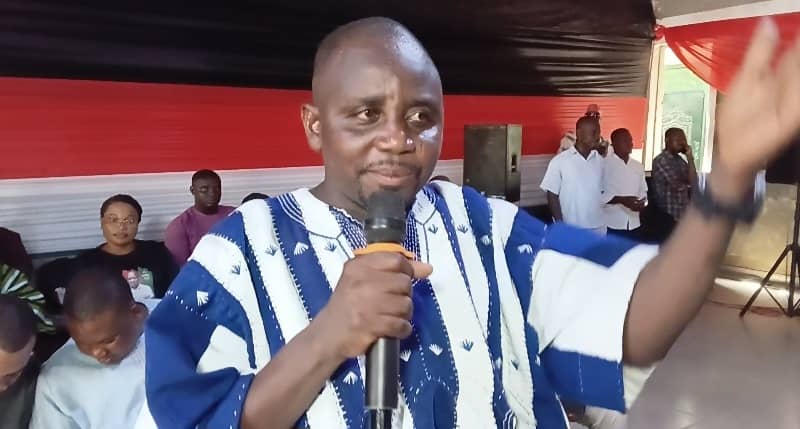
On Saturday at the Bolgatanga Nursing Training College, the Upper East Regional Youth Organizer of the National Democratic Congress (NDC), Abraham Lambon, addressed an enthusiastic gathering of TEIN students. The air buzzed with anticipation as students from eleven institutions and youth organizers across the region came together for a special mentoring event. Abraham Lambon began by highlighting the purpose of the gathering: “We are here to learn from those who have walked this path before us. The best way to grow is to listen to our experienced party members, understand their journey, and carry those lessons into our own communities.” The goal, he explained, was not just personal growth but the betterment of the region and Ghana as a whole. “The party’s current agenda is only starting,” he reminded them, “and it’s up to the youth to keep its momentum alive.” To drive home his message, Lambon shared a story: Once, a wealthy landlord decided to test the loyalty of his servant, who had served faithfully for over ten years. The landlord confided in his wife, saying, “If this man passes my test, I’ll set him up in business so he can uplift others in our community.” In this tale, Lambon drew a parallel to President John Dramani Mahama, who, recognizing the loyalty and hard work of party members, had appointed credible ministers as a test of trust and service. Lambon warned, however, that not all had lived up to this trust. He cited the example of Mr. Hanan from the region of the previous government, who he alleged had stolen government funds, a model he urged other appointees not to emulate. “My plea to the appointees of John Mahama is this: remember, you have been entrusted with your roles to help the ordinary people, especially those who sacrificed for the party’s victory. Do not repeat past mistakes. Let appointments pass through party structures so that the youth and loyal members benefit.” Recalling the sacrifices made during the party’s years in opposition, including the tragic loss of his colleague from Bono East, Lambon emphasized that now was the time to reward loyalty and hard work. “If we see those sacrifices ignored, we will not hesitate to mobilize and demand justice for our youth.” He also celebrated recent successes, announcing that through the efforts of the National Youth Organizer and the National Care Coordinator, every institution in the region had secured local scholarships for ten needy students each , a tangible fruit of the party’s governance. Lambon closed by urging students to network, learn, and identify mentors among the dignitaries present: “In politics, your biggest asset is your network. Seize this opportunity to connect and grow.” The event drew a remarkable array of party dignitaries and political figures from both within and beyond the region, marking it as a memorable and inspiring day for the youth of the Upper East. Source: Apexnewsgh.com