
Roads Minister Reveals How Big Push Rescued 23 Abandoned Road Projects
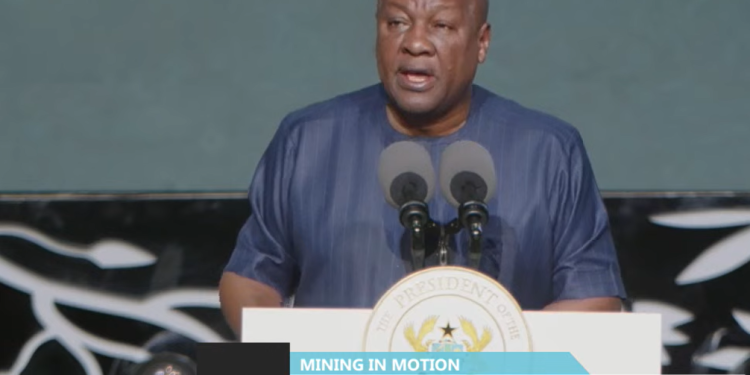
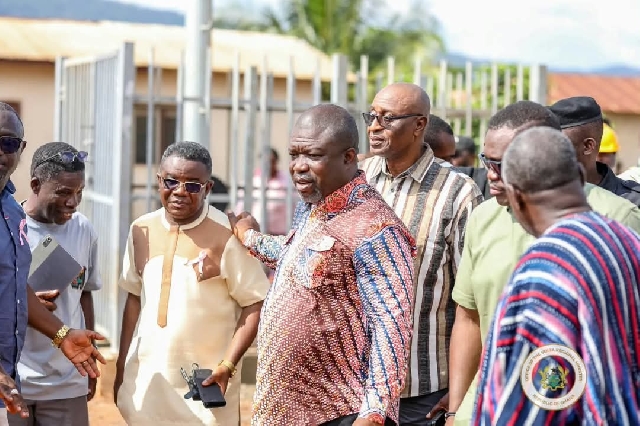
When the previous administration left office, it did not just leave behind a transition binder. It left behind 23 unfinished road projects, abandoned by contractors, starved of funding, and slowly fading into the landscape of Ghana’s infrastructure failures. On Tuesday, March 24, 2026, the man now responsible for fixing that mess stood before Parliament and told the country exactly what had been inherited, and what is being done about it. Minister for Roads and Highways, Governs Kwame Agbodza, used his address on the floor of Parliament to pull back the curtain on a significant but little-discussed dimension of the government’s flagship Big Push infrastructure programme: a large chunk of it is not new at all. “Mr. Speaker, additionally, 23 road projects valued at GHS 14.88 billion, which were awarded by the previous administration and abandoned by contractors due to lack of dedicated funding, were absorbed as part of Big Push,” he told the House. “These projects were novated with a new funding source.” In plain terms, what the minister was describing was a rescue operation. Projects that had stalled, not because they were bad ideas, but because no one had secured the money to see them through, were given a second life under the Big Push. Among the rescued projects are some of Ghana’s most critical road works: the Suame Interchange, the Takoradi–Agona road dualisation, the Kasoa–Winneba road expansion, and a range of upgrading projects spanning the Upper West, Oti, and Volta regions. These are not minor repairs. These are transformational pieces of infrastructure that communities have long been waiting for. The Big Push programme itself, the minister explained, is built around 12 major economic corridors stretching across the country, a framework he referred to as the “12 disciples.” To drive competition and speed up delivery, those corridors have been broken down into 54 lots, ensuring that no single contractor can bottle up progress across the board. But it was the minister’s remarks on procurement that are likely to generate the most discussion. Addressing concerns about sole sourcing, a method that has drawn criticism from some quarters, Agbodza defended its use in specific, legally recognised circumstances. “It is globally acceptable to use sole sourcing even in situations where there is the need to extend the implementation of works which were previously competitively procured to speed up completion,” he told Parliament. He went further, acknowledging that some of the inherited projects had not originally been awarded through competitive procurement processes in the first place, a candid admission that adds important context to the complexities the current administration faces in continuing and financing them. For the minister, the message was straightforward: the Big Push is not about politics or shortcuts. It is about finishing what was started, funding what was abandoned, and building what Ghana needs, regardless of who first broke the ground. Source: Apexnewsgh.com
How Politicians Turned the Bolgatanga–Bawku–Pulmakom Road Into a 117-Year Election Stunt
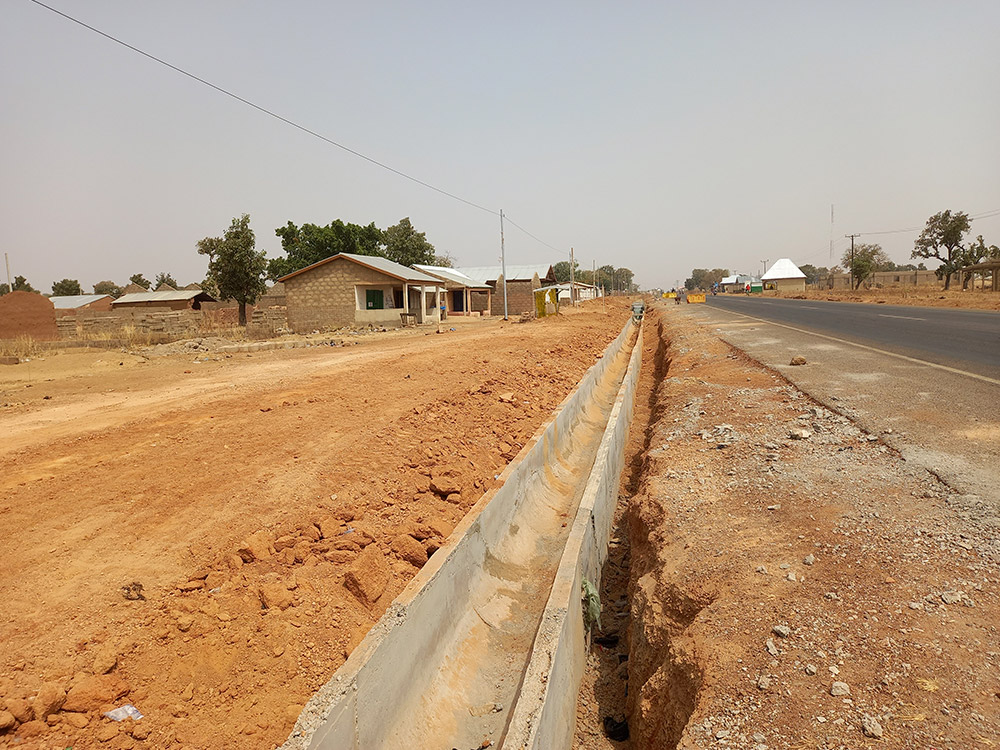
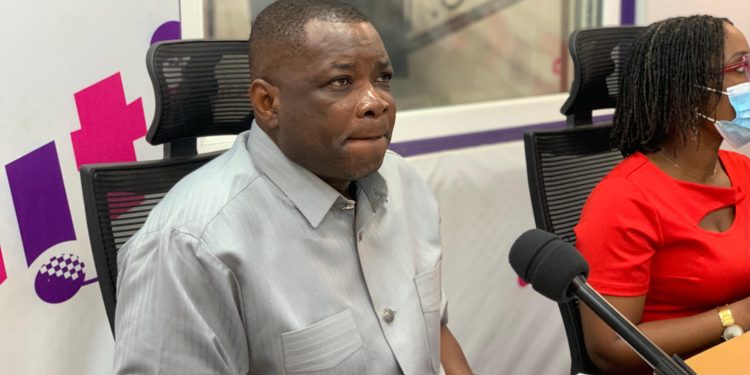
For over a century, the people of Ghana’s Upper East region have been waiting. Waiting for a road. Not just any road, but a road that was first laid out with human labor in 1909, during the era of British colonial rule. A road that, in 2026, remains unfinished. A road that has become the single greatest symbol of political betrayal in the Upper East region. According to historian Mr. Christopher Azaare, the Bolgatanga–Bawku–Pulmakom Road has its origins in 1909, when British colonial administrators mobilized local chiefs to rally communities for its construction. That means this road predates Ghana’s independence by nearly five decades. Yet here we are, 117 years later, and the road still has not seen the light of day. He made the revelation in an exclusive engagement with Ngamegbulam Chidozie Stephen of Apexnewsgh during a segment dubbed SpeakOut Upper East(SoUE) This is not simply a story about poor infrastructure. It is a story about a region that has been systematically failed by the very people entrusted to serve it. Since the return of democratic governance in 1992, the Bolgatanga–Bawku–Pulmakom Road has been recycled as a campaign promise by successive governments. Both the New Patriotic Party (NPP) and the National Democratic Congress (NDC) have made it a fixture in their manifestos, a crowd-pleasing pledge rolled out at every election cycle to win the hearts of Upper East voters. The pattern is painfully predictable. A party campaigns on completing the road. They win power. They do a little work on it. Then funding dries up, contractors abandon the site, and the road becomes “a story for another day.” The next government inherits the same road, the same promise, and the same cycle of disappointment begins again. In 2016, the NDC government commenced construction with funding from the Road Fund, but the project stalled before they left office. The NPP administration that followed continued the work, only for contractors to once again leave the site due to a lack of funding. As of 2026, construction remains stalled. What makes this situation particularly troubling is the attitude of some politicians toward those who dare to demand accountability. Journalists and citizens who raise the issue of the Bolgatanga–Bawku–Pulmakom Road are often branded as NPP or NDC sympathizers, a tactic that silences legitimate voices and shields politicians from scrutiny. This deliberate politicization of development is not just irresponsible. It is a betrayal of the people of the Upper East region. When those in positions of authority treat development as a political weapon rather than a civic duty, it is the ordinary people who suffer, navigating dangerous, deteriorating roads year after year while their leaders trade promises for votes. The Upper East region is not a battleground for political point-scoring. It is home to real people with real needs, people who deserve the same quality of infrastructure enjoyed by citizens in other parts of Ghana. President John Dramani Mahama and the current NDC government must act decisively. Contractors who have abandoned the Bolgatanga–Bawku–Pulmakom Road must be recalled to site. Funding must be secured and protected. And this project must be completed, not as a political gesture, but as a matter of justice owed to a people who have waited 117 years too long. A road that was started in 1909 should not still be making headlines in 2026 for all the wrong reasons. The people of the Upper East region deserve better. And it is long past time they got it. Source: Apexnewsgh.com/Ngamegbulam Chidozie Stephen
Tema Microlight Crash: Lawmakers Demand Transparent Probe, Stronger Aviation Safety Standards
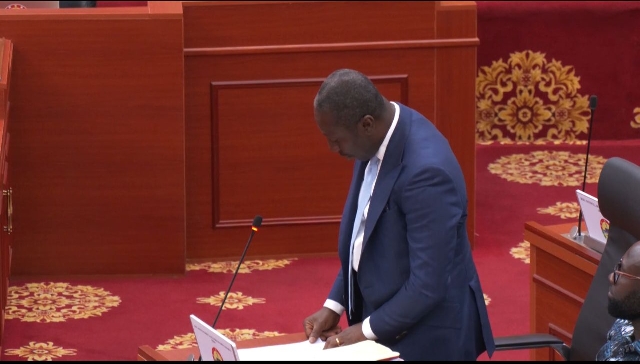
The fatal microlight aircraft crash in Tema that claimed the lives of two brothers has sparked urgent calls from both sides of Parliament, with lawmakers demanding accountability, transparency, and sweeping reforms to aviation safety standards. Leading the charge from the Minority side, Minority Leader Alexander Afenyo-Markin has called for a thorough, transparent, and time-bound investigation into the crash, and has made clear that the findings must not be buried in bureaucratic silence. The Effutu Member of Parliament is insisting that the results of the probe be made public, that aviation safety protocols be comprehensively reviewed and strengthened, and that the bereaved families receive adequate support as they come to terms with their devastating loss. Beyond the immediate tragedy, Afenyo-Markin raised a broader and troubling question: how was a private aircraft permitted to operate over a densely populated area in the first place? His concern points to what he sees as a worrying pattern, noting the recent uptick in aircraft-related incidents and questioning whether existing oversight mechanisms are fit for purpose. On the other side of the aisle, Majority Chief Whip Rockson-Nelson Dafeamekpor echoed the gravity of the moment as he presented a statement on the tragedy. While sharing in the grief over the loss of the two brothers, Dafeamekpor directed his message squarely at those responsible for operating microlight aircraft, urging them to strictly observe maintenance and safety standards to ensure that such a devastating incident is never repeated. Dafeamekpor also called on the Ghana Air Force to step up its engagement with private aircraft owners, stressing the need for a collaborative approach to safety that protects not only pilots but the communities over which these aircraft fly. Both lawmakers agreed on one thing: the incident has left a deep wound, on the bereaved family, and on all those touched by the tragedy. Whether their calls translate into meaningful reform now rests with the relevant authorities. Source: Apexnewsgh.com
NIA Rolls Out Strict New Data Protection Guidelines for Agencies Accessing National Identity Register
Ghana’s National Identification Authority (NIA) has taken a decisive step to tighten control over how personal data is handled across the country, rolling out new guidelines governing the security, storage, and retention of information drawn from the National Identity Register (NIR), effective March 19, 2026. The directive, which targets user agencies, institutions that access the national database in the course of their operations, marks a significant move by the Authority to close gaps in data protection and hold organisations to a higher standard of accountability when dealing with sensitive personal information. The NIA’s authority to issue such guidelines is firmly grounded in law. The new requirements are anchored in the National Identity Register Act, 2008 (Act 750) and its amendment, the National Identity Register (Amendment) Act, 2017 (Act 950), both of which vest the Authority with the mandate to regulate how personal data from the NIR is managed across institutions. At the core of the guidelines is a clear principle: personal data must be securely stored and retained only for as long as it is genuinely needed. Beyond that, the NIA is pushing for a culture shift, one that places responsible data management at the heart of how user agencies operate. The guidelines are also designed to significantly reduce the risk of unauthorised access, misuse, or loss of personal information, while bringing Ghana’s data handling practices in line with both domestic legislation and internationally recognised standards on information security. The timing of the directive reflects a broader strategic push by the NIA to shore up public trust in Ghana’s national identification system. In an era where data breaches and privacy concerns are increasingly in the spotlight globally, the Authority appears determined to ensure that the NIR, which holds some of the most sensitive personal information of Ghanaian citizens, is treated with the highest level of care. User agencies have been put on notice: compliance with the new requirements is not optional. The NIA has signalled that it will be intensifying its oversight of how personal information from the National Identity Register is handled, leaving little room for institutions to fall short of the standards now expected of them. Source: Apexnewsgh.com
Ghana Gears Up for World Shea Expo with Strategic Meeting Between Presidency, ILO and Industry Players
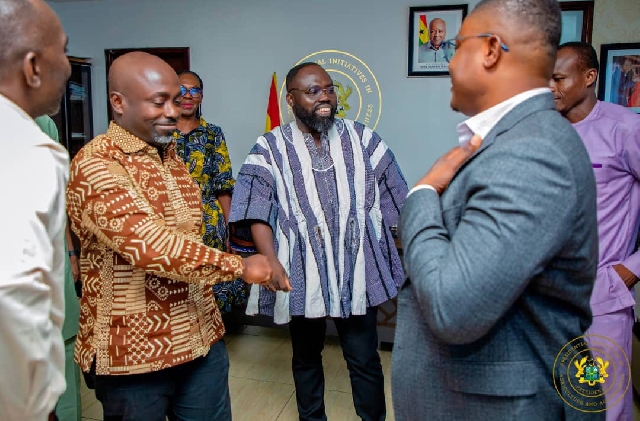
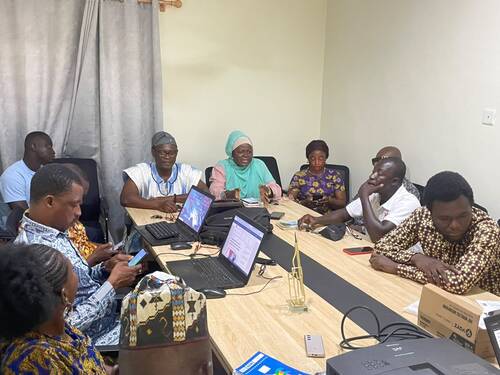
With the World Shea Expo on the horizon, Ghana is leaving nothing to chance. Peter Boamah Otokunor, Director of Agribusiness Development at the Office of the President, has convened a high-level strategic meeting with representatives from the International Labour Organisation (ILO) and Savanna Golden Tree Limited, signalling the government’s intent to make a strong impression on the global shea stage this year. The meeting served as both a planning session and a broader strategic conversation, bringing key stakeholders together to align on preparatory activities for the expo while mapping out Ghana’s wider ambitions for positioning its shea sector as a powerhouse in the international market. At the heart of the discussions was a shared recognition of the shea industry’s untapped economic potential. Participants examined how the sector could be harnessed more effectively to generate sustainable employment and contribute meaningfully to national development, goals that have taken on added urgency as Ghana looks to diversify its economic base and create opportunities in rural communities where shea production is most concentrated. Dr. Otokunor was emphatic on one point: Ghana cannot unlock the full value of its shea industry by working in isolation. He stressed the critical importance of deepening partnerships with international organisations and private sector actors, arguing that such collaborations are essential to expanding market access and driving greater value addition within the sector, moving beyond raw shea exports toward more processed, higher-value products that keep more wealth within the country. All eyes are now on the World Shea Expo, which is expected to be a defining moment for Ghana’s shea industry. The event will offer a prominent platform to showcase the country’s shea potential to a global audience, attract fresh investment, and open new trade doors for local producers who form the backbone of the sector. Source: Apexnewsgh.com
Minority Demands Immediate Scrapping of GHS1 Fuel Levy, Cites Worsening Cost of Living
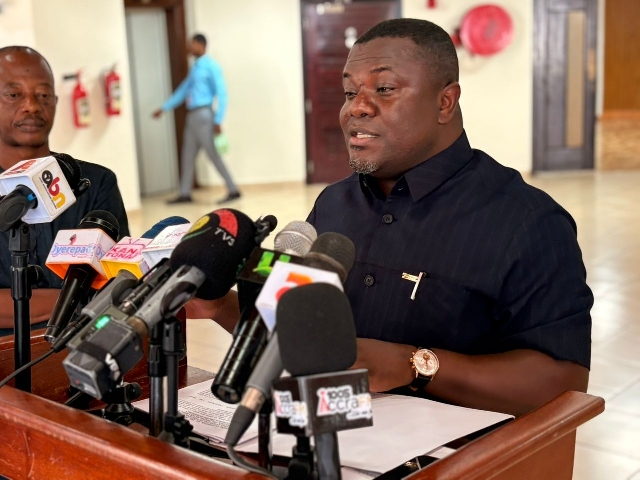
Pressure is mounting on the government to scrap the GHS1 fuel levy, as the Minority in Parliament calls for its immediate abolition, arguing that the charge is deepening the financial strain on Ghanaians already struggling under the weight of soaring living costs. The demand was made by Collins Adomako-Mensah, Deputy Ranking Member on Parliament’s Energy Committee, who voiced the Minority’s concerns to journalists on the sidelines of parliamentary proceedings. His remarks came at a particularly sensitive moment, fuel prices had just risen again, driven by escalating geopolitical tensions involving the United States, Israel, and Iran, compounded by disruptions stemming from the closure of the Strait of Hormuz. For many Ghanaians, the timing could not have been worse. Adomako-Mensah acknowledged that the levy was not introduced without purpose. Enshrined in the Energy Sector Levy Amendment Act 2025, it was designed to support fuel procurement and help the country chip away at longstanding debts in the energy sector. But he was unequivocal: the economic realities of today make its continued existence unjustifiable. Beyond the immediate call to scrap the levy, the Minority is setting its sights on a broader fight. Adomako-Mensah revealed plans to push for a sweeping review of all taxes embedded in petroleum pricing, a move aimed at identifying and eliminating charges that unnecessarily inflate costs at the pump for ordinary consumers. The Minority’s stance is poised to sharpen an already heated debate in Parliament over fuel taxation, as the government finds itself caught between the need to protect revenue streams and mounting public frustration over the relentless rise in the cost of living. Source: Apexnewsgh.com
Mahama Urges Tenants to Report Landlords Flouting Rent Advance Laws
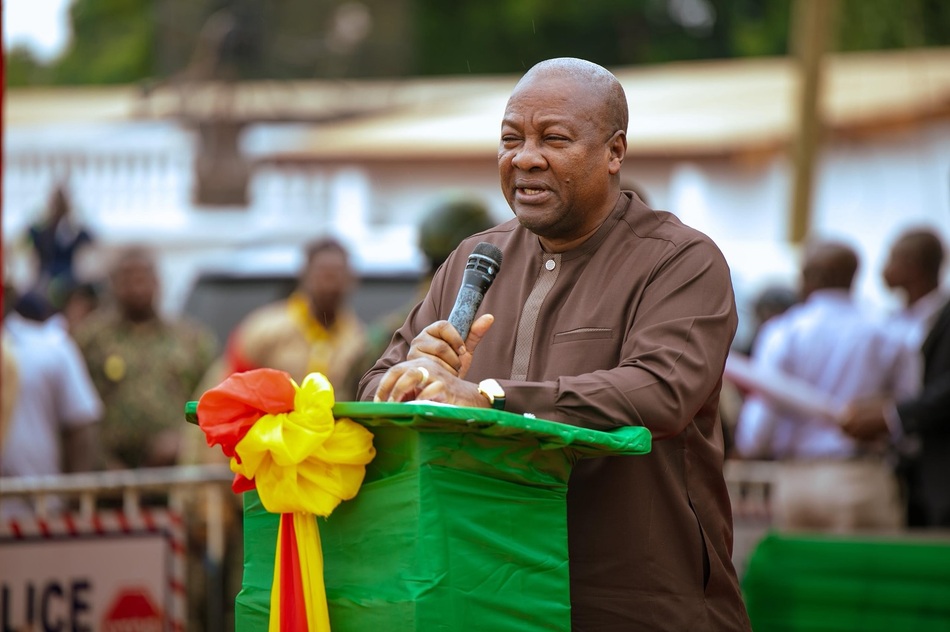
President John Dramani Mahama has urged tenants across Ghana to hold landlords accountable by reporting those who demand rent advances beyond the legally permitted limit, as the government intensifies efforts to protect renters from exploitation in the housing sector. The President made the call during a meeting with Organised Labour at the Presidency, where he underscored the urgent need to enforce existing housing regulations and shield tenants from unlawful financial demands. Mahama acknowledged the mounting pressure that housing costs are placing on Ghanaian households, warning that affordable accommodation is rapidly slipping out of reach for a growing number of citizens. He linked the surge in excessive rent demands to the country’s persistent housing deficit, arguing that the shortfall in available housing has emboldened some landlords to impose illegal charges on desperate renters. The President reminded the public that the law expressly bars rent advances of more than six months, yet enforcement of this provision remains largely ineffective, a situation he partly attributed to the reluctance of both tenants and landlords to pursue grievances through the rent courts. As a way forward, President Mahama proposed convening a national housing dialogue bringing together government, the private sector, and labour groups to craft a robust social housing policy. He stressed that only a well-coordinated, multi-stakeholder approach can meaningfully resolve the housing crisis and guarantee fair, accessible accommodation for every Ghanaian. Source: Apexnewsgh.com
Mahama to Engage Civil Society Organisations After Labour Union Consultations — Kwakye Ofosu
President John Dramani Mahama’s stakeholder consultation drive is set to widen its reach, with Civil Society Organisations (CSOs) next in line for engagement once talks with labour unions are concluded. This was disclosed by the Minister of State in charge of Government Communications, Felix Kwakye Ofosu, during an interview on Channel One TV’s Face to Face on Tuesday, March 17, 2026. According to the minister, the planned outreach to CSOs is a deliberate effort to ensure that a broad spectrum of voices informs government decision-making, moving beyond organised labour to tap into the perspectives of civil society. “Once he’s done with Organised Labour, he will turn his attention to CSOs. He will engage CSOs so that they will also bring their perspective to bear on governance, and through that we can get the best ideas for policy fine-tuning and better implementation,” Kwakye Ofosu said. The minister’s remarks signal a structured and inclusive approach to governance under President Mahama, with the consultations designed not merely as a formality, but as a genuine mechanism for gathering ideas that can sharpen policy formulation and strengthen implementation. By extending the conversation to CSOs, organisations that often serve as the voice of marginalised communities and watchdogs of public interest, the government appears intent on casting a wide net as it shapes its policy agenda. The outcome of these engagements, if effectively harnessed, could prove instrumental in bridging the gap between government policy and the realities on the ground. Source: Apexnewsgh.com
Former Deputy Upper East Regional Minister Daniel Awenyue Syme Dies After Defying the Odds for Years

The doctors had written their verdict years ago. They said he would not make it this long. But Daniel Awenyue Syme, a man who had spent a lifetime in quiet, steadfast service to others, was not one to bow easily, not to illness, and not to fate. On Sunday, March 16, 2026, he finally let go. The family of former Deputy Upper East Regional Minister Daniel Awenyue Syme announced his passing on Sunday, confirming that he died after years of battling health challenges. His son, Jonathan A. Syme, shared the news in a statement that was equal parts grief and gratitude. “Doctors told him years ago that he would not make it this long, but he defied all odds,” Jonathan said. He added that the family found solace in the fact that his father did not suffer in his final moments — a small mercy at the end of a long and meaningful journey. Syme’s story is one of steady, purposeful ascent through the corridors of public service. He began his administrative career as District Secretary of the Builsa District, a role that would eventually grow into that of District Chief Executive — a position he held from 1990 to 2001. During those years, he became known as a man who showed up, rolled up his sleeves, and got things done, earning credit for his contributions to local governance and development in the area. But his ambitions and abilities were not confined to the district level. He climbed the ranks of the audit service with the same quiet determination, eventually reaching the position of Assistant Auditor General, a testament to a career built on integrity and discipline. His public service journey culminated in his appointment as Deputy Upper East Regional Minister, a role he served in from 2012 to 2016. To those who knew him best, he was more than the titles he carried. Family members remembered him as a “model politician and auditor”, a rare combination of words that speaks to a man who managed to hold onto his principles in two fields where principles are often tested. “He gave everything he had to the betterment of others and always put himself last,” Jonathan Syme said of his father, words that, in a few short sentences, paint the portrait of a man whose greatest investment was always in the people around him. Since the announcement, tributes have begun to flow in from community members and colleagues who knew Syme as a leader of dedication, integrity, and quiet strength. The outpouring of remembrance reflects a life that touched far more people than perhaps even he knew. Funeral arrangements are expected to be announced in the coming days. For now, a family mourns — and a region pauses to remember a man who, by all accounts, gave his best to the end. Rest well, Daniel Awenyue Syme. You made it further than they said you would. Source: Apexnewsgh.com
Cardiothoracic Surgeons Take Prof. Frimpong-Boateng and Son to Court Over Land They Say Is Rightfully Theirs

They built these homes with their own money, moved in, paid the bills, and lived there for nearly two decades. Now, four cardiothoracic surgeons and a former secretary say someone is trying to take it all away, and they are fighting back in court. Former Minister of Environment, Science, Technology and Innovation, Professor Kwabena Frimpong-Boateng, and his son, Dr Yaw Frimpong-Boateng, have reportedly been sued over alleged land fraud, according to a report by Asaase Radio on Monday, March 16, 2026. The lawsuit, filed on Thursday, March 12, 2026, by five individuals through their lawyers, Amenuvor and Associates, has cast a long shadow over a land allocation story that dates back more than two decades. The five plaintiffs are not strangers to the world of medicine. They are Dr Kow Entsua-Mensah, Professor Ernest Adibuer Aniteye, Dr David Abraham Kotei, Dr Lawrence Agyeman Sereboe, all cardiothoracic surgeons at the National Cardiothoracic Centre (NCC) at Korle Bu Teaching Hospital, and Lucy Agyemang, a former stenographer secretary at the same institution. Together, they have taken their grievances before the courts, seeking justice over properties they claim are rightfully theirs at Okpoi Gonno in Accra, along the Spintex Road. The roots of the dispute stretch back to around the year 2000, when the National Cardiothoracic Centre, then under the leadership of Prof. Frimpong-Boateng himself, acquired land at Okpoi Gonno with the intention of providing housing for medical practitioners working at the centre. Portions of that land were subsequently allocated to the four doctors, the former secretary, and some nurses, who were asked to complete the buildings themselves and take occupation. Between 2006 and 2009, the plaintiffs say they did exactly that, pouring their personal resources into completing the structures. They moved in, settled down, and have since lived in those properties continuously and without interference from anyone. For nearly two decades, they paid utility bills, maintained the homes, and exercised what they describe as full ownership rights over the properties. Then came February 2026, and with it, a jarring development. According to the statement of claim, Prof. Frimpong-Boateng reportedly filed a complaint at the Rent Control Department in Accra, claiming ownership of the properties and asserting that the occupants had only been allowed to stay there temporarily out of goodwill. In other words, after 17 years, the plaintiffs were suddenly being described as tenants. The five plaintiffs are having none of it. They insist that no landlord-tenant relationship has ever existed between them and Prof. Frimpong-Boateng, and that the attempt to paint them as mere tenants is not only false and misleading, it is, in their words, “unconscionable, wrongful, and contrary to equity and good conscience.” They argue that the defendants allowed them to invest substantial personal funds into completing the buildings and occupying them as homes, and cannot now turn around and deny them ownership of those same properties. Through their lawyers, the plaintiffs are seeking five reliefs from the court. These include a declaration that they are the lawful owners of the properties at Okpoi Gonno, a perpetual injunction to prevent the defendants and their associates from interfering with their ownership and enjoyment of the properties, general damages for trespass and unlawful interference with their property rights, and legal costs. What began as a goodwill gesture, land allocated to dedicated medical professionals to build homes for themselves, has now become a courtroom battle over ownership, equity, and the meaning of home. For the four surgeons and the former secretary at the heart of this case, the message is clear: they built these houses, they have lived in them for nearly 20 years, and they are not leaving without a fight. Source: Apexnewsgh.com