
Aggrieved Talensi Youth Question NDC Communication Officer Over Road Project Materials

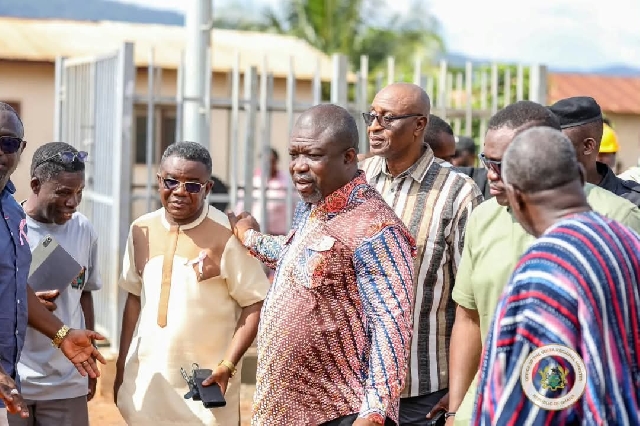
Talensi, Upper East Region, Some outspoken youth in the Talensi Constituency have expressed concern over the progress of the Tongo-Sheaga-Duusi Road project, questioning an earlier communication by the NDC Constituency Communication Officer, Mr. Michael Nangena, regarding the arrival of construction materials. The youth’s concerns followed a video shared by Mr. Nangena showing a long vehicle loaded with what was described as formwork materials intended for the road project. According to the youth, the communication created the impression that the materials would soon arrive in Talensi and facilitate the commencement of construction activities. However, after about a week, some of the youth took to social media to question the whereabouts of the vehicle and the apparent lack of visible construction activity at the project site. They argued that the situation raised concerns about whether political leaders were prioritising publicity over tangible development, particularly regarding the constituency’s long-standing road challenges. “It is becoming painfully clear that our leaders are playing political games with the development of Talensi,” some of the youth stated in their social media reactions. The youth also recalled concerns they had previously raised following the sod-cutting ceremony for the Tongo-Sheaga-Duusi Road. They claimed that weeks after the ceremony, the project site appeared deserted, with little visible activity at the contractor’s camp. They maintained that residents were looking beyond ceremonial events, photographs and political statements and wanted to see sustained construction work leading to the completion of the road. The youth further cautioned political leaders against taking the constituency’s electoral support for granted, pointing to Talensi’s long-standing support for the National Democratic Congress since 1992. “If these roads are not fully tarred before 2028, consider your time in office over,” the youth warned, stressing that their concerns were centred on development rather than partisan politics. They added that residents would ultimately use their votes to assess the performance of political leaders and determine who deserves their support in future elections. However, responding to the concerns when contacted by ApexnewsGh, Mr. Michael Nangena, the National Democratic Congress (NDC) Talensi Constituency Communication Officer disputed the youth’s claims, explaining that the materials in question had already arrived. According to him, the materials were not meant to be permanently stored at the contractor’s camp because they were specifically intended for the construction of culverts. He explained that transporting the materials to the camp and subsequently moving them back to the work location would serve no practical purpose. “The equipment has since arrived, but it seems people didn’t notice,” Mr. Nangena said. He added that the materials were being used for the construction of culverts and therefore did not necessarily have to be moved to or stored at the contractor’s camp. “There’s no logic in moving them to and from the camp unnecessarily,” he explained. Mr. Nangena further urged those questioning the development to verify the situation directly with the contractor, Araco, before drawing conclusions or publishing claims on social media. He accused the aggrieved youth of failing to make the necessary enquiries before taking their concerns to social media, saying their approach could lead to misinformation being circulated among residents. The differing accounts have now generated renewed debate among residents over the progress of the Tongo-Sheaga-Duusi Road project, with the youth demanding visible development while the constituency communication officer insists that work-related materials have arrived and are being deployed for construction purposes. Source: Apexnewsgh.com
Nearly 30 Years of Service Drive Yaa Amponsah Frimpong’s NPP First Vice Chair Bid
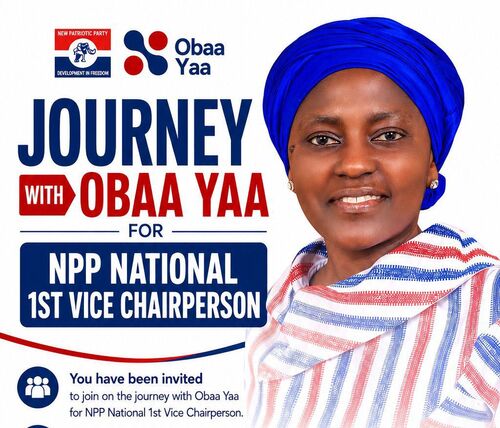
In politics, some journeys are built on loud declarations and dramatic moments. Others are forged quietly, through years of commitment, sacrifice, organisation and an unwavering belief in a cause. For Mrs. Yaa Amponsah Frimpong, popularly known as Obaa Yaa, the journey has been one of the latter. The current Chairperson of the NPP-USA Branch has formally declared her intention to contest the position of National First Vice Chairperson of the New Patriotic Party (NPP) in the party’s forthcoming National Executive Officers Elections scheduled for October 3, 2026. Her decision, she says, is not one born out of political convenience or sudden ambition. Rather, it represents the culmination of nearly three decades of active engagement with the party and a period of deliberate preparation for greater responsibility. “I make this declaration with full understanding of the weight of the office I seek, the sacred trust it demands of its occupant, and the depth of service it requires of anyone who dares to hold it.” For Obaa Yaa, leadership is not simply about occupying an influential position. It is about offering service, stability and direction at a time when she believes the party needs to rediscover its identity, strengthen its structures and prepare strategically for the future. A Childhood Experience That Shaped a Political Conviction Her political story began long before she became a party executive. Born Yaa Amponsah Gyamerah (Frimpong) in Obuasi, Ghana, she grew up in a community shaped by mining, industry and the everyday realities of Ghanaian society. But it was growing up during the PNDC era that left perhaps the deepest political impression on her. She witnessed neighbours and members of the wider community experience what she describes as public humiliation, kangaroo tribunals and exile, with families left behind to bear the consequences. For a young Yaa, these were not distant political stories appearing in newspapers. They involved people she knew and communities she belonged to. Those experiences helped shape a conviction that would eventually guide her political life: that politics must ultimately be about protecting people, defending justice and building a society where citizens can live with dignity. “Justice was denied them… These injustices were the driving force of my interest in politics. I was determined not to let that happen without a fight,” she recalls. Interestingly, she narrowly missed the 1992 voter registration exercise, having turned 18 shortly after the deadline. Rather than allowing that missed opportunity to discourage her, it strengthened her determination to participate in Ghana’s democratic process. In 1996, she cast her first vote for the NPP. That first vote would become the beginning of a political commitment that has now stretched across almost three decades. Nearly 30 Years of Showing Up From her early involvement to leadership at the international branch level, Obaa Yaa’s political career has been defined by progression through party structures. Her record includes serving as Chapter Secretary, Second Vice Chairperson, Acting Chairperson, and eventually Chairperson of NPP-USA, a position she has held for two terms since 2018. She has also served at the Colorado Chapter level for three terms and participated as a delegate in the party’s National Flagbearer Elections in 2014, 2024 and 2026. Beyond internal party administration, her political engagement has included leading NPP-USA ground campaigns in Ghana during four general elections and contributing more than US$1 million, according to her campaign profile, towards the party’s electoral mission. For her, these experiences provide more than credentials. They represent years of learning about party organisation, mobilisation, fundraising, campaign strategy and the responsibilities that come with leadership. Beyond Politics: Service Through Healthcare Perhaps one of the less conventional aspects of Obaa Yaa’s political journey is her interest in healthcare and community service. She is the founder of the NPP Global Medical Team, an initiative focused on providing healthcare support to communities across Ghana. The initiative, according to her profile, reflects her broader understanding of political service: that party leadership should ultimately translate into tangible benefits for communities and ordinary citizens. It is a philosophy that appears to underpin her campaign for national office. Four Pillars for a Renewed NPP At the heart of Obaa Yaa’s campaign is a four-point agenda built around Identity, Structures, Direction and Resources. Rediscovering the NPP’s Identity She wants the party to reclaim what she describes as its identity as a centre-right political organisation, firmly rooted in the traditions and philosophies associated with Danquah, Busia and Dombo. For her, rediscovering that identity is essential to giving members and supporters a clear understanding of what the NPP stands for and where it is headed. Rebuilding Party Structures Obaa Yaa believes a strong national party must begin at the grassroots. Her vision therefore places emphasis on rebuilding robust structures from the polling station to the national level, ensuring that the party’s foundation remains strong enough to support its national ambitions. Providing Clear and Data-Driven Direction In an increasingly sophisticated political environment, she argues that the NPP must evolve into a modern, 21st-century political organisation. That, she says, requires clear direction informed by data, research and evidence rather than assumptions. Building Sustainable Resources No political organisation can function effectively without resources. Obaa Yaa’s approach, however, calls for resource mobilisation that is democratic, transparent and dignified, while resisting what she describes as the corrosive culture of monetisation. Her message is clear: the party must develop sustainable mechanisms for financing its activities without compromising its values or internal democracy. A Candidate Promising Calm Rather Than Conflict Perhaps the most distinctive feature of Obaa Yaa’s declaration is the tone. She does not present herself as a candidate coming to disrupt the party or compete with its leadership. Instead, she describes herself as a potential “pillar of comfort”—someone prepared to complement the party’s leadership with steadiness, wisdom and calm purpose. “I present myself to you not as a voice of discord, but as a pillar of comfort. Not to compete with the bold vision of our party’s leader, but to complement that vision with steadiness, wisdom, and calm purpose.” That
Alhaji Dr Hafiz Bin Salih Joins Shaykh Dr Mustapha Abdul-Hamid in Historic NPP Nomination Walk
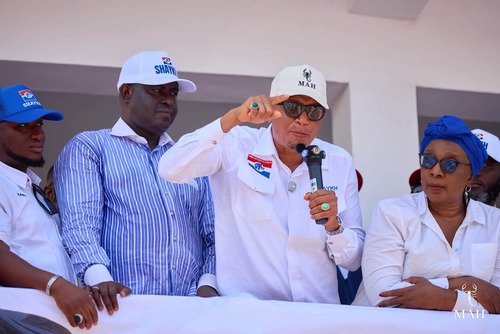
In a momentous show of unity and party spirit, Alhaji Dr Hafiz Bin Salih, Former Regional Minister (Upper West/East) and Former Upper West Regional 1st Vice Chairman, has recounted his distinct honour of walking alongside Shaykh Dr Mustapha Abdul-Hamid and other patriots from Nima Roundabout to the National Headquarters of the New Patriotic Party (NPP). The occasion marked Shaykh Dr Mustapha Abdul-Hamid’s official filing of nomination forms to contest for the position of National 1st Vice Chairman in the upcoming NPP national executive elections. Alhaji Dr Hafiz Bin Salih described Shaykh Dr Mustapha Abdul-Hamid as the very embodiment of a Scholar, Statesman, and Servant. Having observed his commitment and dedication firsthand, Dr Salih expressed unwavering confidence in Shaykh Dr Abdul-Hamid’s leadership, capability, and vision for the party. “When I believe in a cause, I go all out to ensure success, and supporting a leader of his integrity and proven track record is a conviction I hold wholeheartedly,” Dr Salih affirmed. He concluded with a heartfelt prayer, hoping that Allah would crown their collective dedication with a resounding victory, rewarding the efforts of all involved. The walk and nomination filing stand as a testament to the party’s unity and the enduring spirit of service among its leaders. Source: Apexnewsgh.com
Accra High Court Denies Adjournment Request Tied to Appeal, Grants Delay on Health Grounds
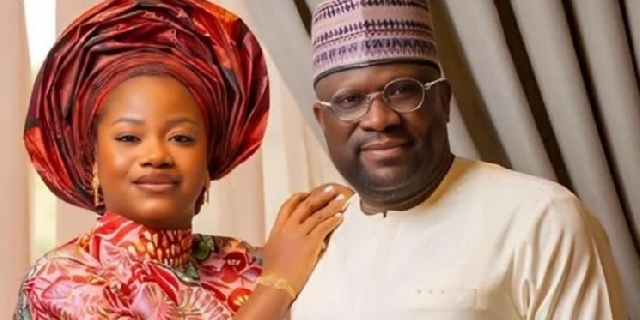
In a dramatic turn at the Accra High Court, a plea by lawyers representing Hanan Abdul-Wahab Aludiba to postpone his trial until October 19 was turned down. The request was based on a pending application for a stay of proceedings at the Court of Appeal. However, the High Court made it clear that simply applying for a stay does not mean the trial must pause. Despite this, the court showed compassion when counsel for the accused presented medical reports detailing health concerns. Accepting these reports, the judge agreed to adjourn the case, but not as long as initially requested. The new dates set for the trial are September 29 and 30, 2026. Hanan Abdul-Wahab and his wife, Faiza Seidu Wuni, are currently facing 11 serious charges, including causing financial loss to the state and money laundering. The legal battle continues, with the next chapter scheduled for late September. Source: Apexnewsgh.com
Mahama Backs Bawku Revitalisation Committee to Lead Area’s Recovery
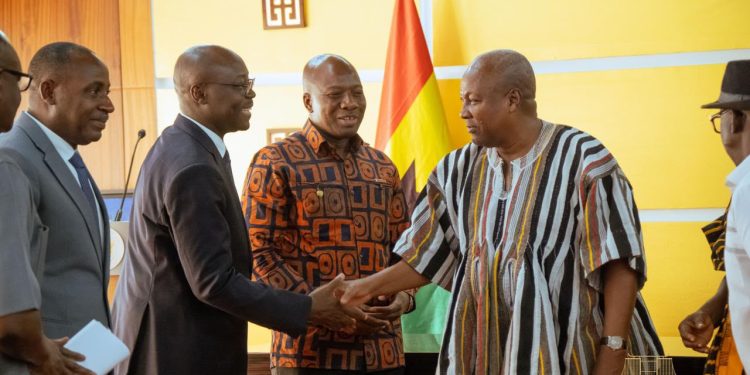
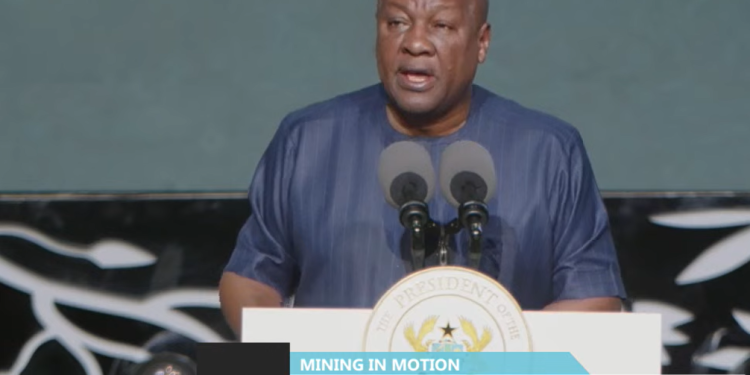
President John Dramani Mahama has voiced strong confidence in the newly inaugurated Bawku Revitalisation Committee, tasking its five members with spearheading the recovery and redevelopment of the conflict-affected Bawku area. The committee’s mandate is to accelerate infrastructure rebuilding and foster economic renewal, paving the way for residents to restore their livelihoods after years of instability. The initiative is a key component of government efforts to reestablish normalcy in Bawku and its surrounding communities, focusing on repairing damaged infrastructure, boosting local economic activity, and laying the groundwork for sustainable development. Chaired by Finance Minister Dr. Cassiel Ato Forson, the committee also includes Bawku Central MP Mahama Ayariga, the Tamapani Chief Cletus Abugre, Upper East Regional Minister Donatus Akamugri Atanga, and Garu MP Thomas Anaba. Together, they are expected to oversee the revitalisation fund and direct resources to priority projects identified as crucial to the area’s recovery. During the committee’s inauguration on Wednesday, August 26, President Mahama emphasized that the government’s ambitions extend beyond physical reconstruction. “Now we have the opportunity to go back and continue the development so that the people of the area will benefit from all the projects that we have been doing so that Bawku will get its fair share of the national cake. The revitalisation fund will go to the provision of infrastructure and any other areas that the committee deems fit,” he stated. He affirmed his full trust in the committee members, praising their integrity and track record in public service. “I have absolute confidence in the membership of the committee and I know that they will handle this assignment with the usual integrity and efficiency that they have shown in their public service over the years,” President Mahama said. The Bawku Revitalisation Committee is poised to play a pivotal role in restoring hope, stability, and prosperity to a region long plagued by conflict, with the government’s backing to ensure tangible and lasting improvements for its people. Source: Apexnewsgh.com
Parliament to Probe $1.7 Billion Gold Board Loss, Summon GOLDBOD CEO

Parliament is set to open an inquiry into the reported US$1.7 billion loss recorded by the Ghana Gold Board (GOLDBOD) under the Domestic Gold Purchase Programme (DGPP). The move follows a formal motion filed by the Minority Caucus, seeking a parliamentary investigation and the summoning of GOLDBOD Chief Executive Sammy Gyamfi to provide explanations regarding the controversial transactions. Speaker of Parliament Alban Bagbin confirmed the development, stating that parliamentary scrutiny would help clarify whether the reported $1.7 billion (GHS22 billion) constitutes a genuine financial loss or a policy-related cost associated with the DGPP’s implementation. “With the motion they have filed, which was received in my office on the 21st of August, 2026, just three days ago, I have gone through the motion myself and I intend to admit the motion because we have to at least have an end to litigation as to whether it’s a loss or it’s a cost,” he said. Bagbin explained that the parliamentary process would allow lawmakers to thoroughly examine the issue and bring clarity to the public. He added that Ghanaians would have the opportunity to follow the proceedings and form their own informed opinions. “This House will have the opportunity to go through it. And please, Ghanaians are very intelligent people. They will listen, they will read in between the lines and they will make their decisions,” he said. The upcoming inquiry is expected to provide much-needed transparency and accountability on the financial management of the DGPP and the reported multi-billion dollar loss. Source: Apexnewsgh.com
National Security Coordinator Calls for United Front Against Political Vigilantism
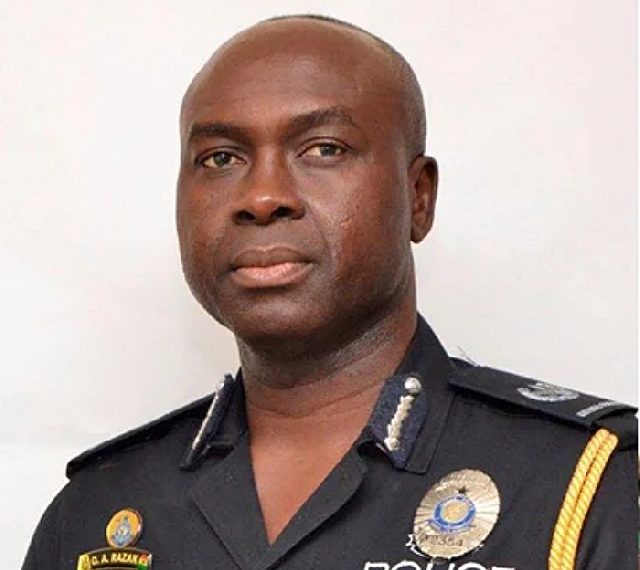
Ghana’s National Security Coordinator, COP Osman Abdul Razak, has called for stronger preventive action and closer collaboration among security agencies, private security firms, and local communities to combat political vigilantism and safeguard the nation’s democracy. Speaking at a National Policy Dialogue organised by Election Watch Ghana on August 25, 2026, COP Abdul Razak addressed the evolving landscape of political mobilisation in Ghana. He warned that while the visibility of vigilante groups may have diminished, the underlying threat remains, with some networks now operating through less visible and more informal channels. “We must not mistake the reduced visibility of these groups, regardless of their name, as meaning the threat has disappeared. Mobilisation has shifted to local businesses, private security arrangements, and other informal channels,” he cautioned. COP Abdul Razak stressed the importance of intelligence-led, early-warning systems, arguing that prevention, not just reaction, must be central to Ghana’s fight against political violence. “Prevention must remain at the centre of our approach to political violence. It is far easier to act when inequalities are emerging than to dismantle entrenched foundations of our political system,” he said. He urged full utilisation of the Vigilantism and Related Offences Act, 2019 (Act 999), to detect and address threats early. He also underscored the crucial role of private security firms and communities as partners in maintaining security, provided they operate within the law and complement state authority. “Private security companies and communities must become part of the security architecture. But they must operate within the law and in a manner that complements, rather than substitutes for, the legitimate authority of the state,” COP Abdul Razak emphasised. He further highlighted the need to de-politicise enforcement and link it to broader legal and systemic reforms. The National Policy Dialogue, attended by security officials, politicians, civil society organisations, and other stakeholders, focused on reviewing the implementation of Act 999 and strengthening Ghana’s ability to prevent political violence and protect its democratic foundations. Source: Apexnewsgh.com
President Mahama Signs 10 Major Bills into Law, Ushering in Wide-Ranging Reforms
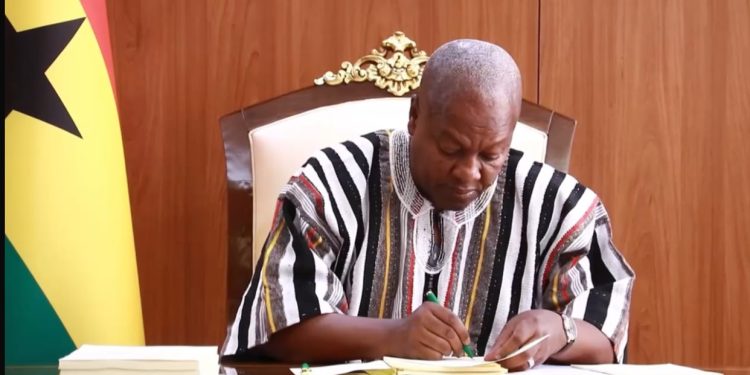
President John Dramani Mahama has given his assent to 10 significant Bills passed by Parliament during the Second Meeting of the Second Session of the Ninth Parliament, paving the way for sweeping legislative reforms across key sectors of the Ghanaian economy. The presidential endorsement, which took place following the parliamentary sitting that concluded on July 31, 2026, officially transforms the approved Bills into law. This move enables relevant government agencies and institutions to begin implementing the new measures contained in the legislation. The newly enacted laws span a diverse range of areas, including taxation, revenue mobilisation, justice administration, national defence, maritime regulation, and the cocoa sector. The Acts signed include the Customs Act, 2026; Community Service Act, 2026; Tribunals Act, 2026; Maritime and Related Offences Act, 2026; National Defence University, Ghana Act, 2026; Income Tax (Amendment) Act, 2026; Energy Sector Levies (Amendment) Act, 2026; Ghana Cocoa Board Act, 2026; Value Added Tax (Amendment) Act, 2026; and Excise Act, 2026. Among the most impactful are the Income Tax (Amendment) Act, Value Added Tax (Amendment) Act, Excise Act, and Energy Sector Levies (Amendment) Act, which are set to shape Ghana’s approach to taxation and revenue collection going forward. The passage and enactment of these laws underscore the government’s commitment to strengthening justice delivery, regulating vital economic activities, ensuring national security, and enhancing government revenue. The reforms are expected to have far-reaching implications for trade, the cocoa industry, and the administration of justice in Ghana. Source: Apexnewsgh.com
NPP Vows Relentless Pursuit of Answers Over $1.7 Billion Gold Programme Loss
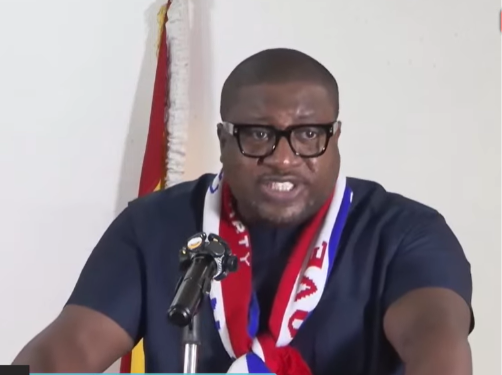
The New Patriotic Party (NPP) has declared its unwavering commitment to seeking full accountability over the US$1.7 billion loss reported by the International Monetary Fund (IMF) in connection with Ghana’s Domestic Gold Purchase Programme (DGPP). Addressing journalists on Tuesday, August 25, 2026, NPP National Organiser Henry Nana Boakye emphasized that the party would not relent in its demands for answers until every detail of the reported loss is publicly explained and scrutinized. “We are not backing off. Not now, not tomorrow, not until every question is answered in full, and in public, and under proper scrutiny,” Nana Boakye stated. He called on the Minority Leader and NPP members in Parliament to use all available parliamentary procedures to extract the truth from government and relevant institutions. “Use every relevant law in the books, every question on the floor of Parliament, every committee hearing, every request for documents, every order paper, every point of order. Fight for the people of Ghana in the court of public opinion as well. Fight until the Ghanaian people receive all the answers they deserve, in writing, under oath if necessary,” he urged. The NPP’s renewed push for transparency follows the IMF’s assessment of a significant loss linked to the DGPP, sparking calls for deeper scrutiny of the programme’s transactions and their impact on public finances. Nana Boakye assured that the NPP would persist through Parliament and other appropriate channels until the circumstances surrounding the reported loss are fully addressed. The party insists that only thorough and public accountability will satisfy the concerns of the Ghanaian people. Source: Apexnewsgh.com
Appointments Committee to Vet Mahama Ayariga and Other Presidential Nominees

The Appointments Committee of Parliament is set to vet Majority Leader and Chairman of the Business Committee, Mahama Ayariga, on Tuesday, August 25, 2026, following his nomination by President John Dramani Mahama as Minister-designate for Local Government, Chieftaincy and Religious Affairs. Mr. Ayariga is among three high-profile nominees scheduled to appear before the committee as Parliament advances its review of recent presidential nominations to key ministerial and judicial positions. Also appearing for vetting on Tuesday is Dr. Zanetor Agyeman-Rawlings, nominated as Minister-designate for Environment, Science and Technology, alongside a nominee for appointment to the Supreme Court. During parliamentary proceedings on Monday, August 24, Mr. Ayariga, in his capacity as Business Committee Chair, outlined the timetable and procedures for the upcoming vettings. “On Tuesday, August 25, 2026, the Appointments Committee should consider the two ministerial nominees and one justice of the Supreme Court. And then on Wednesday, August 26, 2026, the Appointments Committee should also consider the nominations of two justices of the Supreme Court. So those are the schedules that the Business Committee is recommending for adoption by this House.” According to the proposed schedule, the committee will begin with the two ministerial nominees and one Supreme Court nominee on Tuesday, and follow up with two additional Supreme Court nominees on Wednesday, August 26. Mr. Ayariga’s vetting will allow committee members to scrutinise his qualifications, experience, and policy positions, and assess his suitability for the Local Government, Chieftaincy and Religious Affairs portfolio. The vetting process is part of Parliament’s broader consideration of several presidential nominations that require approval. To facilitate the process, Parliament’s Business Committee requested a waiver of the Standing Orders’ usual publication requirement for nominations, enabling the committee to proceed with the vetting schedule without delay. Following the vetting sessions, the committee’s reports on the nominees will be presented to the full House for consideration and approval, in accordance with parliamentary procedures. Source: Apexnewsgh.com