
Minority Leader Afenyo-Markin Finally Sues GoldBod CEO Over Extortion Allegations
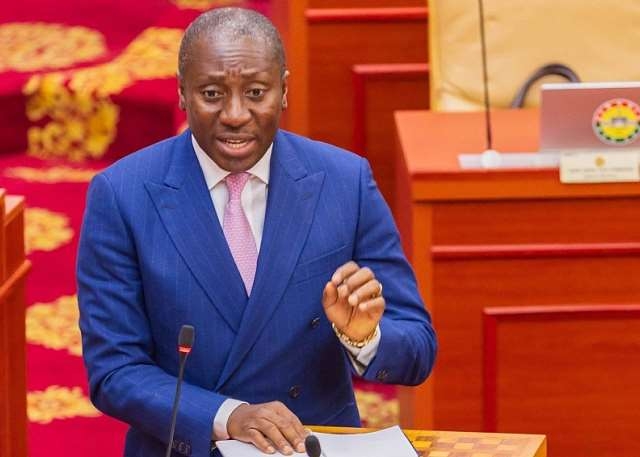
Parliament resumed on Monday, August 24, 2026, under a cloud of controversy as Minority Leader Alexander Afenyo-Markin announced that he had begun legal proceedings against Sammy Gyamfi, Chief Executive Officer of the Ghana Gold Board (GoldBod). The Effutu MP’s lawsuit, revealed on the floor of Parliament, marks a new escalation in the ongoing dispute over the financial management of the Domestic Gold Purchase Programme (DGPP). At the heart of the matter is a reported US$1.7 billion loss recorded by the Bank of Ghana in 2025, which Mr. Afenyo-Markin has repeatedly cited in his calls for government and GoldBod accountability. Mr. Gyamfi, however, has staunchly defended his agency, rejecting the Minority Leader’s interpretation and insisting the losses cannot be laid at GoldBod’s door. Tensions reached a boiling point when Mr. Gyamfi described Mr. Afenyo-Markin as an “extortionist” amid intensifying scrutiny of the gold purchasing initiative. The Minority Leader responded by informing Parliament that he has not only sued Mr. Gyamfi but has also initiated legal action against media outlets that published or broadcast the disputed remarks. “I am ready to submit myself to the Office of the Special Prosecutor and the other agencies for more investigations,” Mr. Afenyo-Markin said, confidently asserting that the courts would determine the truth based on evidence and the law. He stressed the importance of maintaining decorum in public discourse, stating, “There is a limit to political discourse and there are lines that must not be crossed, and once crossed, there must be dealt with.” Mr. Afenyo-Markin further affirmed his commitment to integrity, hard work, and service to Parliament and his constituents, declaring his readiness to defend his actions and statements in court. He revealed details of the lawsuits, stating, “I have accordingly caused writs to be filed in Suit Number GT/1029/2026, titled Osahen Alexander Afenyo-Markin versus Samuel Adu Gyamfi and Multimedia Group Limited at the Accra High Court, and Suit Number GR/ACH/CC/C5/02/2026, titled Osahen Alexander Afenyo-Markin versus Eric Adjei and Peace FM at the Achimota Circuit Court.” Throwing down the gauntlet, he challenged his accusers to “muster courage to report the issue to the various security agencies for further investigation.” As the legal battle unfolds, the nation watches closely, with the outcome likely to set a precedent for the boundaries of political debate and accountability in Ghana’s Parliament. Source: Apexnewsgh.com
Political Currents and Predictions: Why Lawyer Lamtiig Apanga Believes Bawumia Will Replace Afenyo-Markin as Minority Leader
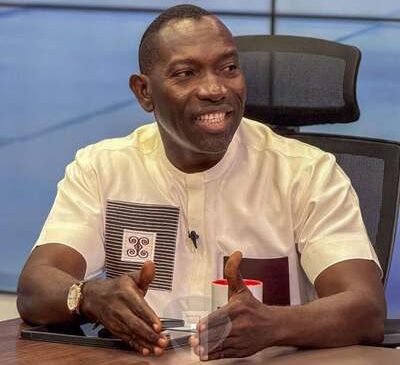
In the vibrant world of Ghanaian politics, predictions are as common as debates. But when a seasoned observer and Deputy Chief Executive Officer of the Gaming Commission, Lamtiig Apanga, shares his insights, the political class tends to listen. In a frank and exclusive conversation with Apexnewsgh, Lawyer Apanga made a prediction that has stirred conversations within the New Patriotic Party (NPP) and beyond: Dr. Mahamudu Bawumia, the NPP’s 2028 flagbearer, could soon replace Alexander Afenyo-Markin as Minority Leader in Parliament. Apanga, drawing on his background as both a politician and a student of political science, explained that his forecast isn’t based on mere speculation but on careful observation of political trends. He recalled the internal dynamics leading up to the NPP’s presidential primaries, where Afenyo-Markin openly supported rival candidate Kennedy Agyapong over Bawumia and He is not also in good relationship with Samira Bawumia, the wife of the elected NPP flagbearer. That decision, Apanga argued, created a rift between Afenyo-Markin and the Bawumia camp, a divide that was further reflected in voting patterns in the central region and in subsequent committee appointments, where key supporters of Ken, including Afenyo-Markin, found themselves sidelined. But the story does not end with personal relationships. Apanga pointed out that Afenyo-Markin has presided over a significant shift in the NPP’s Parliamentary fortunes, moving from majority to minority status under his leadership. Coupled with perceived dissatisfaction from party insiders and the Bawumia camp, Apanga sees a clear path toward change at the top. “It’s only a matter of time,” he predicted, before Bawumia moves to replace the current Minority Leader. As for who might step into the role, Apanga remains uncertain, but his certainty about an imminent shake-up is unwavering. Naturally, such predictions invite debate. Some NPP supporters have been quick to defend Afenyo-Markin’s record, pointing to his vocal defense of party interests in Parliament. But Apanga is undeterred. “Disagreement is the beauty of democracy,” he noted, insisting that defending the party is simply part of the job description for any Minority Leader. Yet, Apanga argues that Afenyo-Markin’s conduct and body language reveal a leader fighting to stay relevant amidst mounting internal dissatisfaction. He points to the party’s loss of seats in Parliament as a key indicator, coupled with controversial decisions and public statements, such as recent comments on the Gold Board and Bank of Ghana issue, that, in Apanga’s view, have left the Minority Leader vulnerable to criticism and accusations of integrity lapses. Ultimately, Lawyer Apanga’s assessment is not just a critique of one politician, but an example of how shifting alliances, performance metrics, and public perception can converge to shape political fortunes in Ghana. Whether or not his prediction comes to pass, the ongoing debate underscores the dynamic, and sometimes unpredictable, nature of leadership within the NPP and the country’s broader political landscape. Source: Apexnewsgh.com
Ghana Nears Debt Restructuring Completion with Belgium Agreement
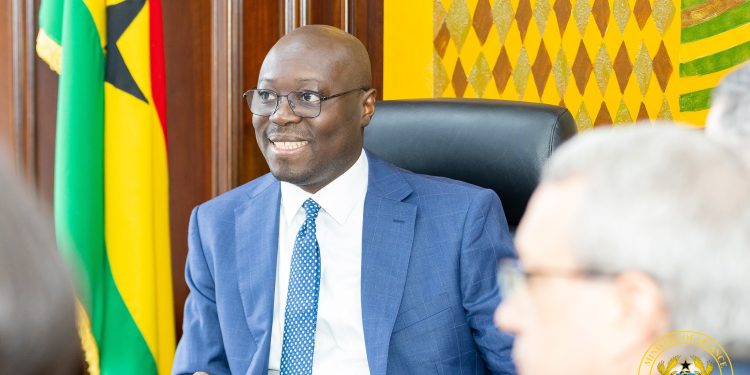
Ghana has taken a major step forward in its efforts to resolve the nation’s debt crisis, following the signing of an agreement with Belgium to restructure €163 million owed to the country’s export credit agency. Finance Minister Cassiel Ato Forson announced the milestone, describing it as a crucial move towards rebuilding trust in Ghana’s economy and ensuring a more secure financial future. “This agreement brings Ghana closer to completing its debt restructuring, restoring confidence and securing a more stable economic future for our people,” Dr. Ato Forson stated after the signing ceremony. Explaining the significance of the deal, the Finance Minister said it would relieve pressure on the national budget by lowering the government’s debt servicing costs. This, he noted, would free up resources to be invested in essential public services and infrastructure projects, directly benefiting citizens. “For every Ghanaian, it means more of our national resources can go towards improving lives rather than paying unsustainable debt,” Dr. Ato Forson emphasized. He highlighted how the agreement would make it possible for the government to allocate more funds to healthcare, education, roads, and other social infrastructure, rather than diverting vital resources to creditors. Beyond its immediate financial impact, the agreement represents a broader shift in Ghana’s fiscal management. Dr. Ato Forson stressed the need to prevent a repeat of past debt problems, revealing that the government is working to enshrine new fiscal rules in law. “Even if this government is not there, the next government will have to make sure that these fiscal rules are respected,” he said. The Finance Minister expressed gratitude to the Belgian government for its cooperation and for contributing to Ghana’s progress in tackling its debt challenges. The agreement with Belgium is the latest in a series of deals aimed at restructuring Ghana’s external debt and restoring fiscal stability after a period of economic turbulence. Source: Apexnewsgh.com
NPP Elections Committee Chair: Chairman Wontumi Free to Pick Nomination Form, Final Eligibility Rests with Vetting Committee

The Chairman of the New Patriotic Party’s (NPP) National Elections Committee, Fredrick Opare-Ansah, has clarified that Bernard Antwi Boasiako, familiarly known as Chairman Wontumi and currently incarcerated, remains free to pick up a nomination form for the party’s 2026 national elections. Speaking to the media on August 21, 2026, Mr. Opare-Ansah addressed reports that Chairman Wontumi had obtained a form to contest a national executive position. He emphasized that the Secretariat has no mandate to prevent any person from acquiring nomination forms, regardless of their current circumstances. “Nothing stops anybody from buying a form,” he said. “But I can tell you that the eligibility of aspirants is not determined by the Secretariat. It’s determined by the Vetting Committee.” Mr. Opare-Ansah explained that anyone interested in contesting can access the forms online or in person and submit them for consideration. However, he was quick to point out that picking up a form does not guarantee a spot on the ballot. “It is only when you appear before the Vetting Committee that, if there is any reason why you cannot be cleared to contest, then that will come up,” he stated. He added that he was still awaiting the Secretariat’s final report to confirm if Chairman Wontumi had indeed picked up a form, noting, “I’ve gotten the statistics of how many people picked up forms today, and the breakdown: the Chairman category, the Vice-Chair category. I’m yet to receive the end-of-the-day report, which will tell me exactly which persons picked up forms.” The NPP has also extended the deadline for filing completed nomination forms by two days, shifting the closing date from Thursday, August 27, to Saturday, August 29, 2026. The extension aims to give prospective aspirants more time to complete the process, reflecting the strong interest in the upcoming elections. Source: Apexnewsgh.com
Interior Minister Orders Crackdown on Vigilantism and Unauthorized Security Groups
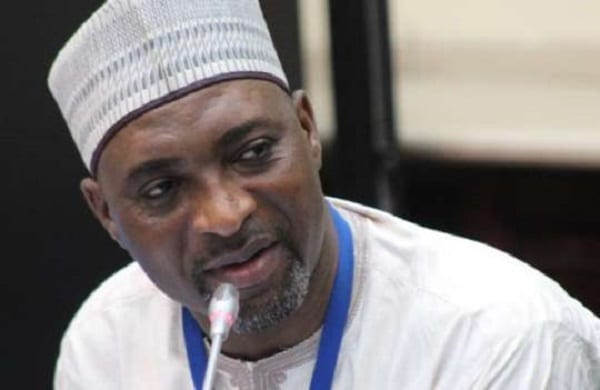
Interior Minister Muntaka Mubarak has addressed the nation’s top police commanders. With a firm voice and unwavering resolve, he outlined a growing threat to Ghana’s peace, the rise of self-styled security groups formed by political parties, traditional leaders, individuals, and organizations. “These groups,” the Minister warned, “pose a real danger to our stability. The law is clear: only state-sanctioned security agencies are permitted to provide protection.” He referenced the Vigilantism and Related Offences Act, 2019 (Act 999), reminding everyone that the formation of private security outfits without government approval is strictly prohibited. Standing before the assembled officers at the regional commanders’ conference, Mr. Muntaka issued a directive: the Ghana Police Service must intensify its efforts to root out vigilantism. Police commanders, he said, should act decisively to identify, investigate, and prosecute those involved in setting up illegal security groups. But his concerns didn’t end there. The Minister also turned his attention to a worrying new trend—the unauthorized recording and circulation of videos showing security recruits in training. He cautioned that such practices, especially when training footage appears on social media, risk undermining the integrity and confidentiality of the country’s security institutions. “Protecting the secrecy of our training is vital,” he stressed. “We cannot allow the professionalism and effectiveness of our security services to be compromised by careless publication of sensitive material.” With that, Mr. Muntaka called on all security service commanders to implement strict measures, ensuring that images and videos of recruits remain confidential unless officially approved. His message was clear: Ghana’s safety, professionalism, and peace must be preserved at all costs, and the law must be enforced without fear or favor. Source: Apexnewsgh.com
Energy Minister Highlights Major Debt Clearance and Savings from Sector Reforms
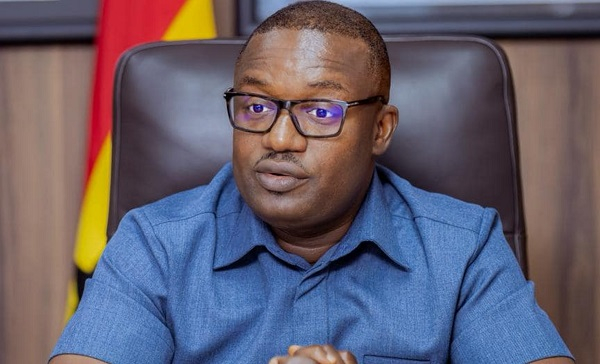
Ghana’s Energy and Green Transition Minister, Dr. John Abdulai Jinapor, has revealed that sweeping reforms in the country’s energy sector have led to the clearance of about $1.47 billion in legacy debt, alongside substantial cost savings for the nation. The announcement came during a press briefing on Thursday, August 20, where Dr. Jinapor detailed recent achievements and ongoing efforts to stabilize the sector. According to the Minister, one of the most impactful measures has been the government’s shift from expensive liquid fuels to natural gas, a move that has saved Ghana approximately $500 million. Dr. Jinapor also highlighted improvements to the cash waterfall mechanism, which have resulted in significantly better payment flows to Independent Power Producers (IPPs). “Before we came to office, just about 6 billion was declared monthly into the Cash Waterfall. IPPs were receiving just about 42%. Because of the work we did together and the policy reforms that we implemented, today we declare close to about 15 billion every month into the Cash Waterfall mechanism and almost all the IPPs receive about 100% of the invoice bills,” he explained. Further renegotiations with IPPs have delivered an additional $250 million in savings, Dr. Jinapor noted. He added that when the current administration took office, the outstanding bill for the energy sector was about GH¢80 billion, but significant progress has since been made in reducing arrears and enhancing financial sustainability. “These reforms are part of our broader efforts to stabilize Ghana’s energy sector, improve financial sustainability, and reduce the cost of power generation,” Dr. Jinapor concluded, underscoring the government’s commitment to long-term sectoral health and economic growth. Source: Apexnewsgh.com
Paga Pio Appeals to President Mahama for Key Infrastructure and Security Upgrades- Says They Are living in Fear
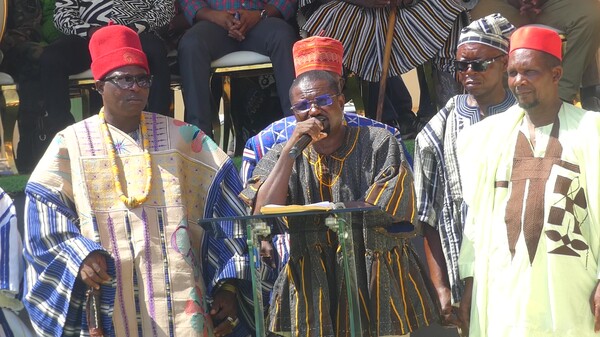
During President John Dramani Mahama’s Resetting Agenda visit to the Paga Constituency, the Paga Pio seized the opportunity to present a series of heartfelt appeals aimed at addressing pressing needs in the area. At the top of the list was the completion of the Agenda 111 district hospital project, which the Paga Pio described as “dear to our hearts.” He passionately urged both the President and the Minister of Health to prioritize the hospital’s completion for the benefit of Paga and the surrounding communities. Turning his attention to transport and safety, the Paga Pio highlighted the challenges posed by the limited space at the Custom Park on the Paga border. The current facility struggles to accommodate the heavy trucks, many carrying petroleum products or explosives bound for Burkina Faso and Mali, that cross the border daily. To temporarily ease congestion, he revealed that some trucks had been diverted to nearby filling stations during the President’s visit. However, he called for a permanent solution: expanding the Custom Park, ideally doubling its size, to better handle the influx and keep the highway clear for local commuters. The Paga Pio also appealed for the construction of a critical bridge linking major towns in the district, noting that the absence of a bridge has, for over five years, made travel impossible during the rainy season. Further, he requested that the Burkina Faso township be connected to the Ghana Water Company Limited network to ensure a constant and reliable water supply, as is enjoyed by other towns. Recognizing rising security concerns in the border region, the Paga Pio called for an increased presence of security agencies, including police, army, and customs officers, and the establishment of more offices and facilities to support them. He emphasized the importance of these measures in light of the volatility in neighboring countries and the risks associated with cross-border activities. The Paga Pio’s appeals reflect the community’s urgent needs for infrastructure, water, and security, and he expressed hope that President Mahama’s ongoing Resetting Agenda would bring meaningful change to the region. Source: Apexnewsgh.com/Ngamegbulam Chidozie Stephen
Mahama Unveils Development Plans for Upper East at Citizens’ Engagement in Navrongo
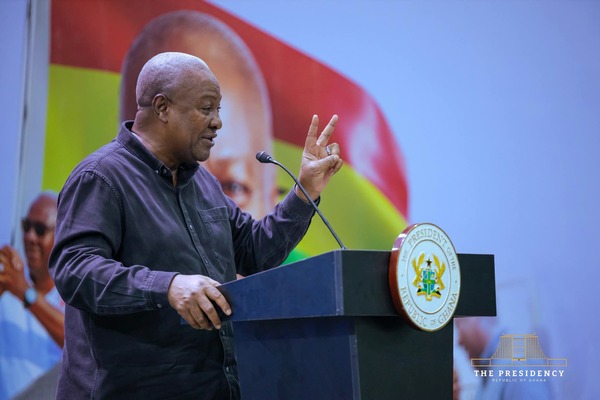
President John Dramani Mahama has outlined a series of measures aimed at accelerating development, strengthening public institutions and creating more economic opportunities for Ghanaians, with particular attention to the Upper East Region. The commitments were announced during President Mahama’s citizens’ engagement in Navrongo, which brought together key members of government to account for ongoing initiatives and outline plans to address pressing development challenges. Attorney General and Minister for Justice, Dr Dominic Akuritinga Ayine, disclosed that government intends to establish a Constitution Review Implementation Committee to begin work on implementing the recommendations of the Constitution Review process that have been accepted by government. Dr Ayine also highlighted the government’s legal interventions and ongoing court proceedings, stressing the role of the Attorney General’s Office in supporting the administration’s governance and institutional reform agenda. On infrastructure, the Minister for Roads and Highways, Kwame Governs Agbodza, announced that President Mahama has directed the ministry to take all necessary steps to ensure the completion of the Bolgatanga-Bawku-Polimakom Road by the end of 2027. He assured residents that contractors would remain on site until the project is completed, signalling government’s determination to address the long-standing road infrastructure challenges in the region. President Mahama also pointed to the restoration of calm in Bawku as an important opportunity to accelerate development and improve the livelihoods of residents. As part of efforts to strengthen agriculture and create jobs, the President announced plans to rehabilitate the Pwalugu Tomato Factory to support local tomato production and processing. Government, he added, is also working to expand onion production as part of measures to reduce Ghana’s dependence on imported onions. President Mahama identified job creation and the expansion of economic opportunities for young people as a major priority, particularly following efforts to stabilise the national economy. He further reaffirmed government’s commitment to improving the road network linking Bolgatanga and Wa, which is expected to enhance transportation, trade and economic activity across the northern parts of the country. In the education sector, the Minister for Education, Haruna Iddrisu, announced plans to establish an expanded, state-of-the-art Science, Technology, Engineering and Mathematics (STEM) institution in Bolgatanga. He also disclosed plans for the construction of special-needs education schools in Ho and Sunyani, alongside preparations for the commencement of work on regional libraries in the Ahafo and Volta Regions. The announcements formed part of government’s broader engagement with citizens to communicate its development priorities, account for ongoing programmes and identify practical measures to improve livelihoods and strengthen public services across the country. Source: Apexnewsgh.com
Upper East Region to Benefit from 267.52km Road Expansion Under Government’s Big Push Initiative
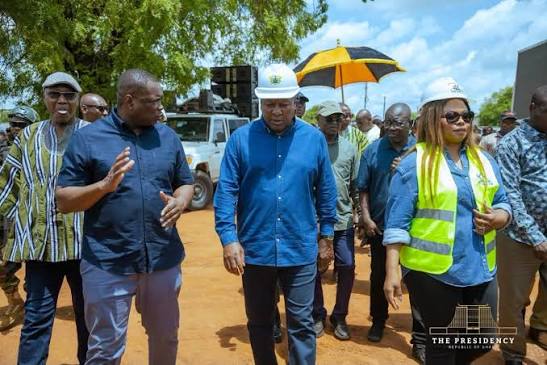
The government has earmarked 267.52 kilometres of roads for construction and rehabilitation in the Upper East Region under its Big Push infrastructure programme, marking a major investment aimed at improving connectivity and boosting socio-economic development. The announcement was made by the Minister for Roads and Highways, Kwame Governs Agbodza, during a stakeholders’ engagement held at Desert Pastures in Bolgatanga on Friday, August 14, 2026, as part of President John Dramani Mahama’s Resetting Ghana Tour. According to the Minister, the programme comprises 18 road projects, a significant increase from the previous allocation of between 50 and 60 kilometres under earlier road initiatives. He noted that President Mahama had directed that the programme should not only focus on major highways but also prioritise feeder roads that connect farming communities, schools, health facilities and rural settlements. Mr. Agbodza disclosed that approvals for the projects would be issued next week, paving the way for procurement processes, while contractors are expected to move to site within a month. The projects include the upgrading and rehabilitation of several feeder roads such as Gurumongo–Mayoro, Saboro–Wusunga, Gbedema–Kandiga, Catholic–Kpandem–Health, Chuchuliga–Awulansa, Kandiga Junction–Sirigu, Zaare Market–Zeseri, Yakubu Corner–Kpatia, and Asonge–Perlungu. Other planned works include the upgrading of the Y-Junction–Domeabra–Tempane, Bongo Central–Namoa Border, and Zebilla Hospital–Tanga roads, as well as rehabilitation of the Basyonde–Kongo road. Additional projects cover the Zaare–Nyariga–Ayonore, Zuarungu–Tongo, Bawku–Narungu, Navrongo–Pungu–Natungnia roads and township roads in Pusiga. As part of the programme, government will also construct two steel bridges along the Paga–Sirigu route—a 30-metre bridge over the Kolalibali River and a 36-metre bridge over River Gugura. Further road improvements will target routes including Asorekobisi Guinea Fowl Junction–Nyariga Canal, Extee–Azimson Bypass, Azorebisi–Nyariga Junction, Magori–Gentriga, Mogoni–Tampizua, Sakpare–Chief Palace, and Nidi–Naranzua, alongside other feeder roads within the Bawku area. The Minister also provided updates on ongoing road developments in the region. He said construction on the Navrongo–Chuchuliga–Tumu corridor is progressing steadily, while the long-stalled Bolgatanga–Bawku–Pulmakom road project has resumed, with completion targeted for 2027. He further announced plans to rehabilitate the deteriorated Bolgatanga–Tamale Highway and undertake major repairs on sections of the Eastern Corridor, particularly around Nakpanduri, Garu and Kulungugu. The projects form part of government’s broader agenda to improve road infrastructure, strengthen regional connectivity and support economic activities across the Upper East Region. Source: Apexnewsgh.com
A Message of Caution and Reflection to the NPP Delegates Across Ghana by Alhaji Dr Hafiz Bin Salih.
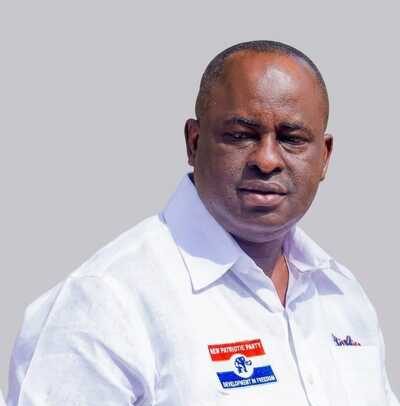
As voting day approaches on Saturday, 15th August 2026, our party faces an important choice. The decisions we make in these internal elections will shape the strength, unity, and future of the New Patriotic Party (NPP). As campaigns have intensified, we have heard many lofty promises from candidates across all regions. While hope is important in politics, we should let experience guide us. History shows that promises made during campaigns are rarely kept after the votes are counted. The Unspoken Cost of Broken Promises We need to be honest about the challenges our party still faces. In the past, delegates were promised important support, such as motorbikes, to help them work in their communities, but those motorbikes never arrived. In some regions, there were promises to build party offices in every constituency and region, but those offices were never built. These broken promises are not just empty campaign talk; they have serious consequences: • Fractured Unity: When promises are broken, resentment grows, and divisions form within our group, making it harder to work together and win important elections. • Eroded Trust: When leaders do not keep their word, the important trust between the grassroots and leadership is badly hurt. • Dampened Spirit: Nothing discourages loyal party members more than feeling used during elections and then forgotten afterwards. If a candidate truly wants to support you, they should show it before you vote, not just make empty promises after the election. Real commitment is proven by real actions, not just words. Delegates Deserve Respect, Not Deception Delegates are the heart of the New Patriotic Party. You give your time, resources, and energy to keep the party strong in every part of the country. You deserve respect, honesty, and dignity—not empty promises or dishonesty. To keep our party strong, candidates must be held to a higher standard of honesty. Leadership is not just about saying whatever it takes to win votes; it is about character, humility, and a genuine desire to serve others. Our True Focus: Victory in 2028 Let’s learn from our past. Instead of listening to empty talk, let’s judge candidates by their actions, their humility, and their real dedication to our party. We must win the 2028 general elections for the NPP. To do this, we cannot trust our party to people who make empty promises. We need leaders who are ready to work hard with the grassroots and build a strong team. When you vote, remember our past challenges, keep your dignity, and choose those who will respect you and work hard for our shared success. Development in Freedom! Long live the New Patriotic Party! God bless our homeland, Ghana! Dr Hafiz Bin Salih Member, National Council of NPP Former Regional Minister (Upper West/East) Former Upper West Regional 1st Vice Chairman Source: Apexnewsgh.com