




MD of ARB Apex Bank Paid a Working Visit To Upper East Association of Rural Banks
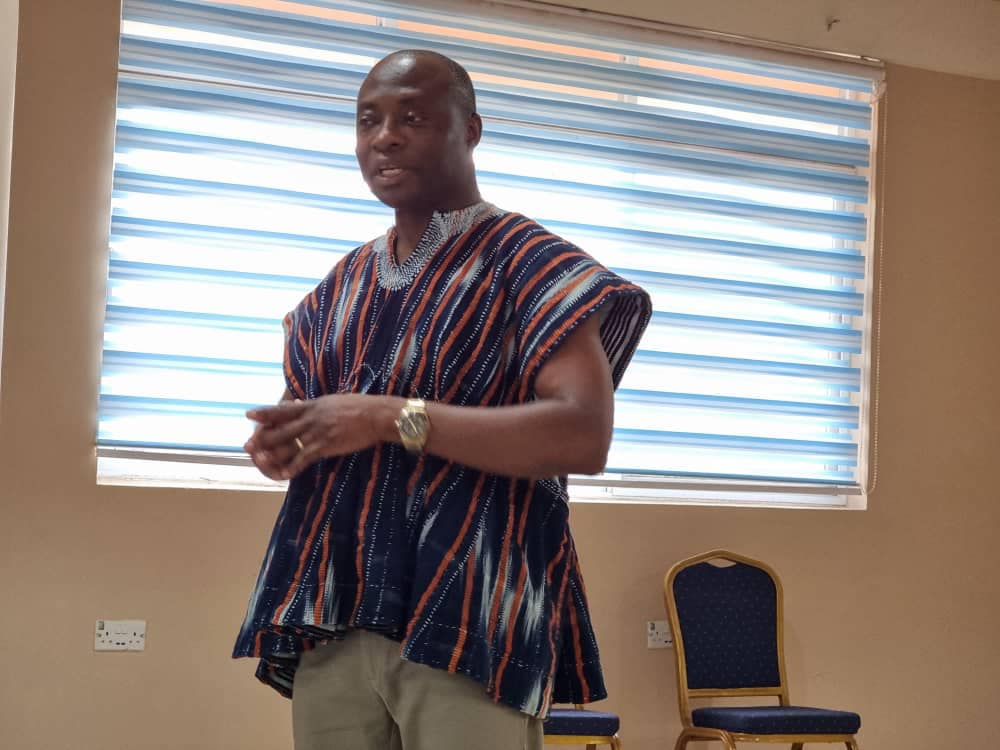
Managing Director of ARB Apex Bank Mr. Alex Kwasi Awuah has paid a working visit to the Upper East Region Chapter of the Association of Rural Banks. According to the MD, the purpose of his coming is to introduce to them the key highlights of the bank’s strategic plan from 2022 to 2025 which will need the rural banks as the major stakeholder of the ARB-APEX Bank. He said: “Knowing the strategic plan is about its objectives and what the expectations are. The key thing is the next strategic period of 5 years. At our annual general meeting recently, we announced that the BoG has approved for us to be introduced to the Euro banks who are our shareholders a capital subscription of Twenty-five Million Ghana Cedis (Ghc 25million), Five million Ghana cedis each year (Ghc 5 million) and we needed to come down do a sensitization for them to know the content of the strategic plan and the stages that will inure to the benefit as far as improving their services and operations are concerned”. “As a bank, there is a need for us to improve the financial position of the bank i.e, the capital requisite position of the bank, which will mean that they contribute additional capital for us to increase our present stated capital of Ghc 9 million and add Ghc 25million to it in the next 5 year period. So, is all in the interest of the Apex bank and the rural banks in the sense that we believe that when ARB-APEX Bank is transformed and made stronger, it will respond to the needs and expectations, and service needs of the rural banks, and we can together play a major role in the financial services industry of Ghana”. Mr. Awuah stressed However, responding to some of the challenges affecting their banking activity, Mr. Awuah pointed out the continuous rise in interest rates. He said, mobilizing funds at high-interest rates will not allow banks to lend to customers at a lower rate. “So, it is a conversation we need to have so that from where we operate, we can price well so that as many people as possible will come to accept the financial services. Finance inclusion, and expanding it, is the basic objective, and the key objective of the government of Ghana, and from where we operate, we also see it as a duty to do that. We can expand financial institutions when financial services are made affordable and I believe that if the economic environment improves, that should be possible for us to bring the rate down so that our people can also assess credit at an affordable rate. He said However, Mr. Azaabi Cletus President of the Association of Rural Banks Upper East Chapter expressed satisfaction with the working visit by the Managing Director of ARB Apex Bank Mr. Alex Kwasi Awuah to them the Upper East Chapter. He said the MD visit to discuss issues regarding ARB-APEX Bank and the Rural and Community Banks in the Chapter is a good move. “As a new MD, there is a new strategic plan that has been developed and he needed to communicate that plan to the grassroots, so that the Rural and Community bank within the area can also infuse their strategic objectives to that of the bigger banks, to enable some level of synergy within the industry”. Meanwhile, responding to the issue regarding the Bank of Ghana and Police directive for every bank to secure an armored bullion Van for their smooth transport of funds Mr. Azaabi said they are doing everything possible at the APEX level and the RCB level to be sure they fulfill that regulatory requirement from Bank of Ghana. Apexnewsgh.com|Ghana|Ngamegbulam Chidozie Stephen Please contact Apexnewsgh.com on email apexnewsgh@gmail.com for your credible news publications. Contact: 05555568093/0256336062
GHS22bn worth of new money printed by gov’t without approval of Parliament – Minority

The Minority Parliament has registered dissatisfaction about the government’s support to the Bank of Government (BoG) to print more money without parliament’s approval. According to the Minority led by Mr. Cassiel Ato Forson, between the periods of January 2022 to June 2022 the BoG has printed an amount of GHS 22 billion on the orders of the government and Finance Minister, Ken Ofori-Atta. Mr. Cassiel Ato Forson raised the issue at a press conference after the Mid–Year Budget Review was delivered by Finance Minister Ken Ofori-Atta on Monday, 25 July 2022. He noted that no wonder inflation is galloping and Ghana’s reserve dwindling under the watch of the managers of the economy. Mr. Forson was of the view that this was gross illegality committed by the Governor of the Bank of Ghana (BoG), Dr. Ernest Addison. He said the records indicate that the government has encouraged the BoG to print an amount of GHS 48 million and GHS22 billion respectively without due process. Apexnewsgh.com/Ghana Please contact Apexnewsgh.com on email apexnewsgh@gmail.com for your credible news publications. Contact: 05555568093
Concerns of our branch and constituency executives is key to the NDC’s reorganization–Dr. Duffour
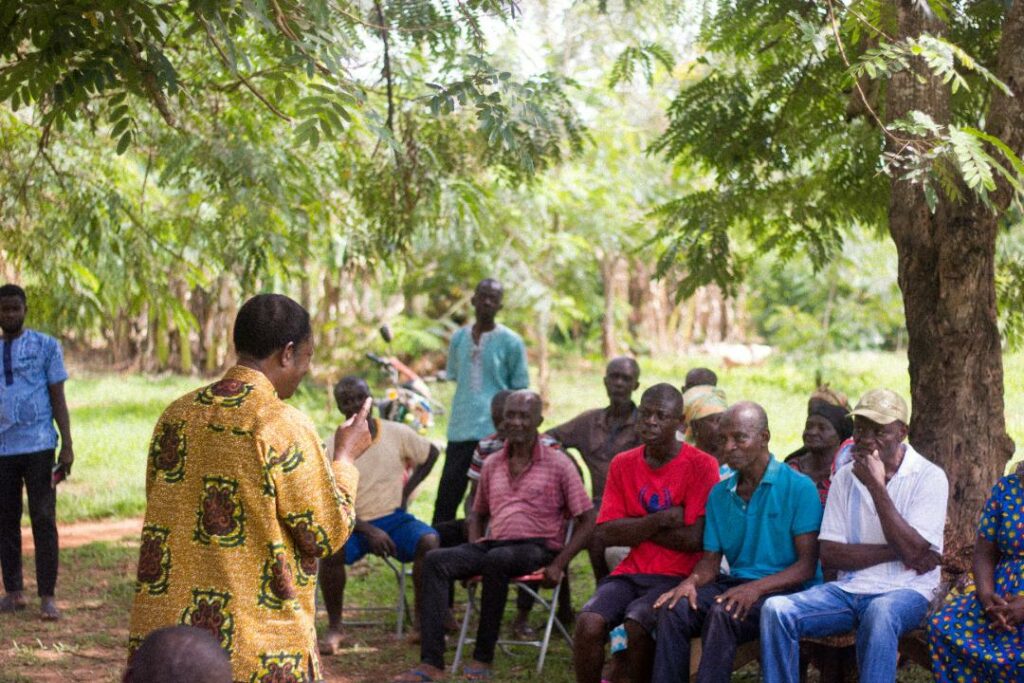
The leading member of the opposition party and former Governor of the Bank of Ghana (BoG), Dr. Kwabena Duffuor is on the view that tackling NDC party grassroots members at some branches and constituencies is the way to go. Mr. Duffour, made the pronouncement during an outreach that forms part of the party’s reorganization efforts towards the 2024 general elections. “Addressing the concerns of our branch and constituency executives is key to the NDC’s reorganization. In view of this, I was once again in the Ashanti Region over the weekend to interact with some local executives, as part of the NDC’s outreach program to local branches and constituencies. It is always important to touch base with our grassroots” He posted. Apexnewsgh.com/Ghana/Ngamegbulam Chidozie Stephen Please contact Apexnewsgh.com on email apexnewsgh@gmail.com for your credible news publications. Contact: +2335555568093
BoG, tasked EOCO to probe huge, alleged remittance claims
Bank of Ghana (BoG) said, they have submitted five (5) separate requests to EOCO for investigations into claims of persons to investigate specific cases of suspected financial crimes and liaises with the appropriate agencies for possible prosecution of suspected persons. Pursuant to this, a number of referrals have been made by BoG to EOCO for investigations, as summarized below. SUSPICIOUS REQUESTS TO BOG FOR PAYMENT OF LARGE SUMS OF INWARD REMITTANCES APPARENTLY WITHHELD BY BOG Following an emerging trend observed by the BoG over the last few years, BoG has since October 2020 submitted five (5) separate requests to EOCO for investigations into claims of persons (individuals, businesses, and law firms acting on behalf of clients) who have persistently made claims on the BoG to the effect that certain large sums of money purportedly remitted to them by foreign counterparties through the banking system have been withheld by BoG. These claimants often attached documentation alleged to be messaging from the SWIFT international funds transfer system, as proof of the receipt and retention of their funds by BoG. Following BoG’s preliminary investigations which have shown that these claims are fake, BoG has referred such matters to EOCO for further investigation. EOCO has made significant progress in these investigations and has initiated prosecution in some of these cases, while investigations in other cases continue. REQUESTS BY RECEIVERS FOR INVESTIGATIONS INTO DEFUNCT SAVINGS & LOANS COMPANIES AND MICROFINANCE INSTITUTIONS In its public notices in 2019 announcing the revocation licences of certain defunct Savings and Loans Companies, Finance Houses, and Microfinance Institutions, BoG cited a number of potentially criminal actions on the part of these institutions and their shareholders, directors or management, as the case may be. Following further investigations into the failure of these institutions by the Receivers appointed by BoG, these cases were referred to EOCO for advice. EOCO has conducted independent investigations into a number of these cases as listed below and has made recommendations to the Attorney General’s Department for consideration and possible prosecution. Savings and Loans Companies Microfinance Companies 1. Ideal Finance 1. Goldman Capital Microfinance 2. GN Savings and Loans 2. Dwadifo Adanfo Microfinance 3. CDH Savings and Loans 3. CIG Microfinance 4. Midland Savings and Loans 4. Noble Dream Microfinance 5. Legacy Capital Savings and Loans 5. Adom Sika Microfinance 6. FirsTrust Savings and Loans 6. Nationwide Microfinance 7. Express Savings and Loans 7. Cypress Microfinance 8. IFS Savings and Loans 8. Jorbies Microfinance 9. UniCredit Savings and Loans 9. DPF Microfinance 10. Dream Finance Co Ltd 10. FTS Capital Microfinance EOCO continues to work with the Attorney General’s Department towards speedy prosecutions of persons suspected to have been complicit in the failures of these institutions. In the meantime, EOCO has frozen and/or impounded some assets of such persons to help with reimbursements of the claimants of the defunct institutions. BoG continues to deepen its collaboration with EOCO and other law enforcement Agencies in the country, to help promote financial integrity and trust and confidence in our banking system. Apexnewsgh.com/Ghana/Ngamegbulam Chidozie Stephen Please contact Apexnewsgh.com on email apexnewsgh@gmail.com for your credible news publications. Contact: 05555568093.
Policy rate increases to 14.5% by Bank of Ghana

The Bank of Ghana, has decided to raise the policy rate by 100 basis points to 14.5 per cent. This was after its Monetary Policy Committee meeting. The Monetary Policy Committee, last week, held its 103rd meeting, the last meeting for the year. Meanwhile, the first Monetary Policy Committee (MPC) meeting for 2022 is scheduled for 25 to 28 January 2022. The meeting will conclude on Monday, 31 January 2022 with the announcement of the policy decision. Here is a summary of the developments and key considerations that the committee considered in arriving at its 14.5 per cent decision is provided below: 1. The growth recovery in the global economy has persisted notwithstanding the softened momentum observed in the third quarter of 2021, which is largely attributed to supply chain bottlenecks and concerns about renewed COVID-19 outbreaks. The International Monetary Fund, has subsequently in October, marginally lowered its earlier 2021 global growth forecast from 6.0 per cent to 5.9 per cent. This forecast is, however, conditioned on the evolution of the COVID-19 pandemic and new waves of infection especially in Europe, progress with the global vaccination drive, and supportive financing conditions. 2. Global price pressures, on the other hand, have intensified with headline inflation rising above targets in several advanced and emerging market economies. The rise in inflation broadly reflects rising energy prices, a resurgence in global demand, and supply chain constraints. Although the rise in inflation was deemed transitory in the first half of 2021, it is becoming embedded, raising policy uncertainties in the outlook. The Federal Reserve Bank has started tapering its asset purchase programmes to contain the inflation threat. In Emerging Market and Developing Economies (EMDEs), increased commodity and food prices, supply bottlenecks and pass-through to exchange rate depreciation resulted in rising inflation. While some EMDEs have raised their policy rates to contain inflationary pressures, others have adopted a wait-and-see attitude to further observe the price dynamics. 3. Despite the policy uncertainty introduced as a result of mounting inflationary pressures, global financing conditions remain supportive of growth. In the financial markets, long-term bond yields have increased amid growing concerns about the above-target inflation trends across several advanced economies. In EMDEs, financing conditions have tightened to some extent, reflecting the rise in policy rates Bank of Ghana Monetary Policy Committee to contain rising inflation, rising long-term bond yields in Advanced Economies (AEs), strengthening of the US dollar, and widening sovereign spreads in some vulnerable frontier economies. Additionally, capital flows to emerging markets and developing economies have become volatile due to concerns about the strength of the global recovery and rising inflationary pressures. These developments — the recovery in global growth conditions, rising global inflation trends, and volatility in capital flows — are likely to have spillover effects on the Ghanaian economy, mainly through their potential impacts on trade, portfolio flows, external financing, and exchange rate movements. 4. On the domestic front, economic activity during the third quarter continues to point to a sustained recovery from the pandemic. The Bank’s updated Composite Index of Economic Activity (CIEA) recorded an annual growth of 11.2 per cent in September 2021, compared with 10.8 per cent and 4.2 per cent in the corresponding periods of 2020 and 2019, respectively. The stronger growth in the CIEA was driven by domestic VAT, industrial consumption of electricity, port activity, imports, and air-passenger arrivals. Construction activities, however, slowed down somewhat. 5. The results of the latest confidence surveys signalled a continued improvement in both business and consumer sentiments. Businesses met short-term company targets and were optimistic about company and industry prospects as the yuletide approaches, despite concerns about the high cost of raw materials and exchange rate depreciation. Similarly, consumer confidence improved on account of positive economic prospects. 6. Provisional data at the end of October 2021 show a marked slowdown in the pace of expansion of key monetary aggregates. Broad money supply (M2+) recorded an annual growth of 14.5 per cent in October 2021 relative to 29.9 per cent in the corresponding period of 2020. The moderation was explained by a 19.5 per cent year-on-year contraction in Net Foreign Assets of the banking system, despite the 21.4 per cent growth in Net Domestic Assets. Reserve money went up by 25.9 per cent compared with 26.1 per cent growth over the same review period. 7. The banking sector remains sound and well-capitalised with strong growth in total assets, investments and deposits. In the first ten months of the year, total assets increased by 16.1 per cent to GH¢173.8 billion, reflecting strong growth in investments in government securities by 25.5 per cent to GH¢83.4 billion. The gradual growth in gross advances has continued, with 8.9 per cent growth as of the end of October 2021 compared to the end-June position of 5.2 per cent growth. Deposits grew by 17.2 per cent year-on-year to GH¢117.4 billion on the back of strong liquidity flows. 8. The industry’s Capital Adequacy Ratio of 19.8 per cent as of end-October 2021 was well above the current regulatory minimum threshold of 11.5 per cent. Core liquid assets to short-term liabilities were 24.6 per cent in October 2021 compared with 27.0 per cent in October 2020. Net interest income grew by 15.2 per cent to GH¢10.5 billion, compared with 19.9 per cent growth over the same review period. Net fees and 3 commissions recorded a stronger growth of 22.9 per cent to GH¢2.3 billion, relative to 6.1 per cent growth for the same period last year, reflecting a continued recovery in trade finance-related and other ancillary businesses of banks. Accordingly, total operating income grew by 14.3 per cent to GH¢14.1 billion, marginally lower than the previous year’s growth of 16.6 per cent. Operating costs increased by 11.0 per cent, relative to the 9.9 per cent growth for the same period in 2020. Growth in loan loss provisions, however, moderated to 6.5 per cent as of end-October 2021 from 18.9 per cent a year ago. These developments resulted in a profit before tax of
BoG abolishes bank charges on savings account and other ‘unfair’ fees
The Bank of Ghana has directed banks and Specialized Deposit-Taking institutions to desist from charging some fees and charges, as well engaging in some practices it describes as unfair to the banking populace. The fees and charges, and practices identified by the central bank as unfair include, Credit Insurance Premium Overcharges, Maintenance Fees on Savings Account, Over the Counter (OTC) Withdrawal Charges as well as the requirement by some banks for borrowers to make them part owners in some assets they present for use as collateral for loans. On Credit Insurance Premium Overcharges, the Central Bank says while it acknowledges the importance of holding credit insurance against eventualities such as death, permanent disability, and termination of employment, as a loss mitigating norm in credit management, a number of banks and SDIs take advantage of this, to overprice the premiums charged to customers, resulting in the increased cost of borrowing. It said going forward, banks and SDIs that opt to use their pre-determined insurance companies to underwrite borrowers’ loans, shall apply the same premium charged by the underwriting company to borrowers. Banks and SDIs are also not permitted to retain insurance premiums collected from customers with the intention of implementing an internal insurance policy. This however excludes commissions for Bancassurance arrangements. Banks and SDIs have also been directed to desist from charging “Account Maintenance Fees” on savings accounts. The Bank of Ghana goes on to state that the application of “Account Maintenance Fees” by Banks and SDIs on savings accounts inhibits deposit mobilisation and discourages the use of banking systems by the public. This bank, however, does not include charges for services provided by banks and SDIs with the explicit prior subscription by customers. Concerning Over the Counter (OTC) Withdrawal Charges, the Central Bank has also abolished the same. The authority notes that some banks and SDIs impose penal charges on customers who withdraw their own funds from the banking halls of affected banks and SDIs. The reason commonly attributed to this practice it says is to encourage customers to use digital platforms provided by the banks/SDIs for such withdrawals, in order to decongest banking halls. While the Bank of Ghana acknowledges the support of banks and SDIs in the digitization agenda, this action it says deters some customers, especially those who are averse to the use of digital platforms, from opening and operating accounts. The Bank of Ghana has therefore directed Banks and SDIs to desist from levying penalties on customers who withdraw their own funds below certain thresholds from the banking halls. In addition, banks and SDIs shall also not levy penalties against customers who request account balances within banking halls. The practice where Banks and SDIs require borrowers who secure credit facilities with movable assets, to transfer ownership of such assets into the joint names of the borrower and the Bank or SDI involved, according to the bank of Ghana is contrary to section 7 of the Borrowers and Lenders Act, 2020 (Act 1052) which does not permit a security interest to operate as a transfer of title from a borrower to a lender. Banks and SDIs are henceforth barred from engaging in the practice of changing ownership of collaterals presented by borrowers to secure credit facilities from the borrower to the bank or SDI. Application of interest on Penal Charges as well as the Quotation of Monthly Interest Rates on Credit Facilities have also been abolished. Please contact Apexnewsgh.com on email apexnewsgh@gmail.com for your credible news publications. Contact: 05555568093
BoG reduces policy rate to 13.5%
The Monetary Policy Committee of the Bank of Ghana has reduced its lending rate by a 100 basis point from 14.5 percent to 13.5 percent. What this means is that individuals and businesses will be seeing a drop in the cost of borrowing. This is the first time the Prime rate has been lowered post-coivd-19. According to Governor of the Bank of Ghana, Dr. Ernest Addison, their redecision was based on the global financing conditions which remain favorable in the first quarter of this year as well as on the domestic front, underlying inflation which subdued marginal signaling growth in the economy post-covid-19. Governor of the Bank of Ghana, Dr. Ernest Addision announced this to journalists at the 100th MPC Meeting on Monday, 31 May 2021. Classfm Please contact Apexnewsgh.com on email apexnewsgh@gmail.com for your credible news publications. Contact: 05555568093
Ghana’s debt stock hits GHS304.6bn
Latest figures from the Bank of Ghana’s Summary of Economic and Financial Data, show that Ghana’s debt stock rose by GHS13 billion to hit GHS304.6 billion as of March 2021, representing 70.2% of Gross Domestic Product (GDP). The additional GHS13 billion debt came about between December 2020 and March 2021. The $3 billion Eurobond raised by the government in March substantially constituted to the GHS13 billion rise in debt. Ghana’s total debt stock, as of December 2020, was GHS291.6 billion. Of the total debt stock, the domestic debt is GHS163.6 (37.3% of GDP) as of the end of March 2021. It was GHS149.8 billion in December 2020. The external debt component was GHS141 billion (37.7% of GDP). Please contact Apexnewsgh.com on email apexnewsgh@gmail.com for your credible news publications. Contact: 05555568093
BoG encourages repatriation of export funds to strengthen national reserve
The Bank of Ghana (BoG) has encouraged exporters to remain committed to the national regulation that required the repatriation of export proceeds for the development of the country. Speaking at an Exporter’s forum in Accra, Eric Kwaku Hammond, the assistant director of the banking department, BoG, said despite the existence of the Foreign Exchange Act, 2006 (Act 725) and other legislation, Ghana was still losing billions of dollars because some exporters failed to repatriate their export proceeds as required by the law. “Unfortunately, the law does not grant the BoG the power to prosecute defaulters (those who fail to repatriate these funds), so the Bank only refer them to the appropriate authorities for redress,” he said. Hammond said repatriating export proceeds into the country was very crucial for building a strong national currency reserve and stabilising the Ghana cedi to become resilient to other foreign currencies, thereby ensuring macro-economic stability. “We need to build our export currency reserves to get enough money to pay for our exports. We need surplus resources,” he said. The forum, which was organised by the Ghana Shippers’ Authority, brought together exporters, transport companies and regulatory agencies, including the Bank of Ghana, Ghana Standards Authority and the National Insurance Commission. It was to discuss issues about their operations and also dialogue on how best to address the challenges faced in successfully transporting products to destination countries. Hammond said due to the important role that such export funding played in enhancing the Gross Domestic Product (GDP) of the country, the Letters of Commitment (LOC), which was a simple word-based Information Technology (IT) infrastructure, was introduced in 2016 by the BoG, to guide exporters in the processes of repatriating their proceeds. He explained that although exporters had at least 60 days after the sale of their products to repatriate funding after which the system would block the account of an exporter, the BoG often allowed some flexibility in enforcing the regulation. Hammond encouraged all exporters to contact Ghana Link Limited, which hosted the platform, to apply for enlistment. Dr Charles Kuranchie, the chief scientific officer of the Standard Directorate, Ghana Standard Authority (GSA), educated exporters on the need to ensure the standard and quality packaging for their export products. He cautioned that there could be negative consequences to the quality of products if they compromised on quality packaging leading to losses of investments. Dr Kuranchie advised exporters to select packages based on considerations, including the weight and type of product, shelf life, as well as temperature, and also ensure proper labeling to guide handlers in taking caution. Teye Kitcher, AfCFTA, spoke about the pursuant of the Single Africa Transport Market (SATM), aimed at connecting the continent to other markets globally, through an unhindered transporting system, eliminating what pertained currently, where airline operations were limited to some countries. He gave some of the benefits of the SATM as opened connectivity of airlines from and to countries globally, reduction in taxes, reduced airline fares and enhanced services due to competition, creation of free-market trading, enhanced tourism, employment opportunities and economic development. Charlse Ansong Dankyi, the senior manager, supervision department at the National Insurance Commission (NIC), underscored the importance of insuring goods in transit to safeguard investment against accidents. The exporters during a panel discussion complained about the LOC impeding their swift operations and cited other challenges such as getting cargo transport for their products and the high cost of transportation, which must be reduced. The panelists encouraged the tightening of partnership and collaboration with the various institutions to help address all concerns of exporters and other systemic challenges for effective operations. Please contact Apexnewsgh.com on email apexnewsgh@gmail.com for your credible news publications. Contact: 05555568093
Converting NIB, adb to DBG would’ve been ‘very costly’ – Ofori-Atta
Finance Minister Ken Ofori-Atta has explained that the government decided to set up the Development Bank Ghana (DBG) from the scratch rather than converting one of the state-owned commercials banks such as National Investment Bank (NIB) and the Agricultural Development Bank (adb) for that purpose because it would have been too costly going for the latter option. DBG is an integral feature of the GH¢100-billion Ghana Cares ‘Obaatampa’ Project, which is seeing to the revitalisation of the Ghanaian economy following the onset of COVID-19. The Ministry of Finance and the European Investment Bank (EIB) recently signed an agreement for the provision of a €170-million facility for the establishment of DBG. This signing event took place on Wednesday, 19 May 2021, when President Nana Addo Dankwa Akufo-Addo held a meeting with the President of EIB, Dr Werner Hoyer, as part of his official visit to Belgium. The €170-million facility, according Dr Hoyer, is the largest facility provided by EIB for the establishment of a development bank in Africa or for any other project, for that matter, on the continent. Speaking at the signing ceremony, President Akufo-Addo noted that “the Development Bank Ghana is going to play a very important part in the rapid economic transformation of Ghana, following the onset of COVID-19.” According to him, “we want to restructure the economy, and move it from being a mere producer and exporter of raw materials, to one that places much greater emphasis on value addition activities. We see this Bank (DBG) as one that will play a pivotal role in this”. Dr Hoyer, for his part, was confident that the establishment of DBG will help unlock opportunities for growth in Ghana, as well assist in the rapid recovery of the Ghanaian economy from the ravages of COVID-19. He noted that the establishment of the Bank is in line with the objectives of the European Union, and will help develop Ghana’s private sector, agri-business, manufacturing and ICT initiatives. While describing the decision to establish DBG as “a wise one”, the EIB President added that the bank sees the partnership with Ghana as a fruitful one, indicating that the EIB will follow keenly the development and workings of DBG in Ghana. Some critics, however, raised issues about the move to set up a new bank after the government, through the Bank of Ghana, collapsed some nine local banks in the financial sector clean-up exercise during President Akufo-Addo’s first term of office. One of those critics is A Plus, who questioned why the Akufo-Addo administration spent more than GHS21 billion “to collapse banks that needed about GHS9 billion to survive” but now “borrowing 170 million euros to establish a new national bank when you already have NIB which is struggling; adb which is struggling”, as well as GCB Bank and CBG. “Ghana beyond aid but you are borrowing money to start a national bank”, A Plus observed. Addressing such criticisms at a press conference on Thursday, 20 May 2021, Mr Ofori-Atta said: “Work on the DBG started in 2018 with a task force of industry experts established by the government to recommend the best approach to establish a modern and dynamic development bank”. Based on the recommendation of the task force, he said the government decided to set up DBG “as a new non-deposit-taking-wholesale-bank under the Companies Act”. DBG, as a wholesale and non-deposit taking bank, Mr Ofori-Atta added, “requires no branch network and minimal staff”. “It will, therefore, be very costly – financially and in terms of closure of branches and employment loss – to try to convert adb or NIB into a viable modern development bank”, he noted. “The advantage we foresee of a greenfield approach is that one gets to start from a clean slate, with no legacy financial, governance and other issues. This allows us to focus on the future and move straight into setting up DBG equipped with modern and sound design principles”, Mr Ofori-Atta explained. According to him, the greenfield approach also has the potential to attract more private and international institutional capital “as we have witnessed with EIB’s €170 million facility”. “It also the government’s plan to attract other shareholders, both domestic and international, so as to increase DBG’s capital base and also reduce the government’s share over time”, he added. Read the Finance Minister’s full statement below: A New Engine for Ghana’s Economic Transformation Good Evening Ladies and Gentlemen of the media, senior staff of the Ministry. It is a pleasure to hold a press conference today on the back of the President of the Republic, Nana Akufo-Addo signing of a €170m loan agreement with the European Investment Bank in Brussels yesterday. As it was captured, the European Investment Bank, among other international development institutions, are supporting our effort to establish a new development finance institution here in Accra, the Development Bank Ghana (DBG). DBG is a key pillar in our efforts to quickly recover from the effects of the COVID-19 pandemic and quickly resume our economic transformation path as articulated in the Ghana CARES/Obantanpa Programme. It is intended to be a model institution that supports the financial system to play its role in supporting the private sector to expand and create jobs. DBG will help address two important constraints in our financial system, namely the lack of long-term funding, and the lack of adequate funding to the productive sectors of the economy. Currently, less than 15% of loans given out by banks are for 5 years or longer, making investment in long gestation project very difficult for our private sector. The agriculture and manufacturing sectors receive around 4% and 8%, respectively, of banks loans compared to their shares in GDP and employment and potential for driving economic transformation. Primary Focus Areas of DBG will be: Agribusiness, with a focus on off-farm value-chain activities Manufacturing ICT, software, and allied services, including Business-Process Outsourcing, and Tourism Boosting homeownership through affordable and longer tenure Mortgage Finance DBG is not similar to the existing commercial banks that we have