
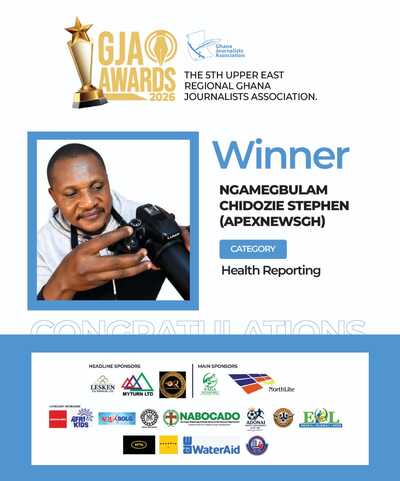
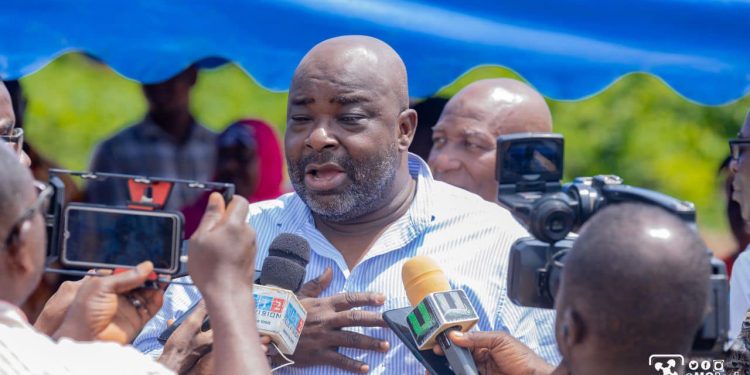



The Upper East Region of Ghana, despite its immense potential, continues to lag in development, a situation that, according to Ngamegbulam Chidozie Stephen, Editor-in-Chief of Apexnewsgh, can be traced to an overreliance on government intervention and a lack of proactive citizen involvement.
In his candid opinion, Mr. Ngamegbulam challenges residents to shift their mindset from waiting for politicians and government officials to take action to becoming active participants in the region’s progress.
The Journalist observes that most developmental projects in the Upper East Region are the result of government interventions, often financed through public funds such as the Common Fund, GETFund, or NHIA. Rarely, he notes, do you find projects initiated and funded by individual citizens or local philanthropists. “It will be hard for you to go to a constituency and trace what even our politicians have done with their pocket money,” he asserts, highlighting a culture where even affluent residents refrain from using their resources for community development.
He points out that this attitude has become deeply ingrained in the region. Despite the presence of wealthy individuals, most residents prefer to wait for politicians to take the initiative, resulting in a cycle where only Members of Parliament and District Chief Executives are recognized for developmental achievements. As he puts it, “Why always politicians? Why always hoping for these politicians?”
Mr. Ngamegbulam further illustrates his point with examples across various constituencies, including Talensi, Bolga Central, Bongo, and Nabdam. In all these areas, development is typically credited to MPs or political office holders, while other well-resourced individuals remain passive. This, according to him, stifles the region’s progress and perpetuates underdevelopment.
However, the region has seen glimpses of what citizen-led development can achieve. Mr. Ngamegbulam cites the Vea community, which came together to build a bridge through communal effort, as a model for others to emulate. He also lauds the Alagumgube group, which spearheaded the establishment of a regional passport office in Bolgatanga. Although government support was eventually necessary, the initiative began with the group’s own resources and determination, demonstrating the impact collective action can have.
The ongoing discussions about constructing an airport in the region further reinforce his argument. The Alagumgbe group did not wait for the government to act; instead, they began preliminary work, clearing the site and drawing public attention. Their initiative has pressured the government to take the project seriously, proving once again that citizen action can catalyze development where political promises have stalled.
Mr. Ngamegbulam concludes by emphasizing that the spirit of community initiative is essential for the region’s advancement. He challenges residents to move beyond waiting for the government or using development as a political tool. “If such spirit is alleviated in the region, I bet you that the Upper East Region will be a very developed region,” he asserts.
He laments that the region still lacks basic infrastructure, such as a stadium, and warns that continual passivity will only prolong underdevelopment. “If we continue to hope only on politicians to bring development, the region will continue to be underdeveloped as far as the Upper East is concerned,” he says.
Source: Apexnewsgh.com