



Valuable Resource: Nuisance Grass Used in Africa to Combat Climate Change
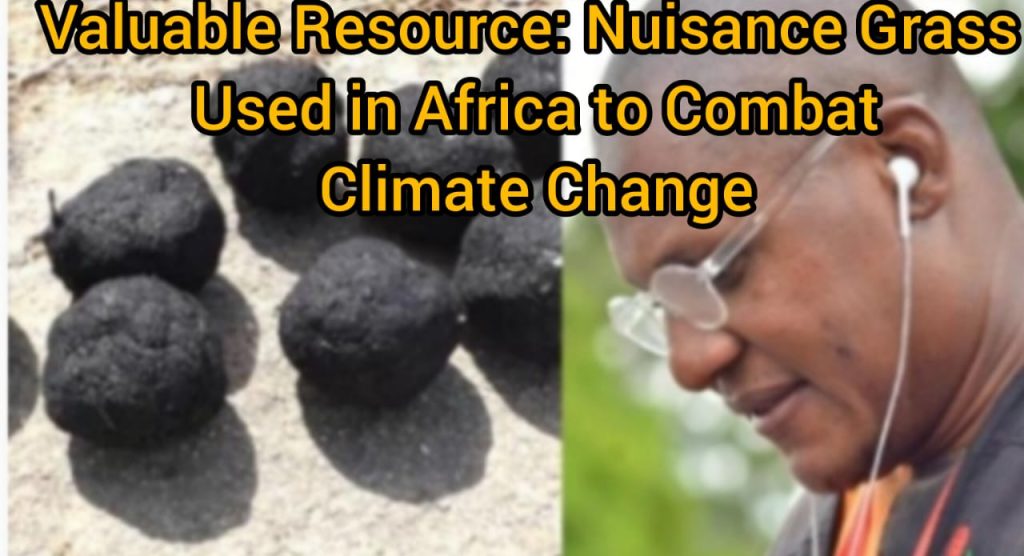
Grass, often viewed as a nuisance in Africa due to its persistent growth and tendency to invade fields and gardens, may soon be recognized for its value as a raw material. While it may seem surprising, grass has the potential to become a valuable resource, with opportunities for economic development and innovation. Apexnewsgh reports. In recent years, researchers and entrepreneurs have been exploring the possibilities of utilizing grass for a variety of purposes. From turning it into biofuels to using it as a sustainable building material, there are numerous ways in which grass can be harnessed for its beneficial properties. This shift in perspective is transforming the way we view this seemingly ordinary plant. One of the key advantages of utilizing grass is its abundance in Africa. With vast swathes of land covered in grass, there is a huge potential for harnessing this resource for economic gain. By finding innovative ways to process and utilize grass, countries in Africa can create new industries and job opportunities, contributing to overall economic growth. Meanwhile, utilizing grass as a raw material offers environmental benefits. By promoting sustainable practices for grass harvesting and processing, we can reduce our reliance on non-renewable resources and lower carbon emissions. This not only benefits the environment but also contributes to the fight against climate change. Increasing LPG Prices Drive Citizens to Wood Fuels in Africa In a recent investigation by Ngamegbulam Chidozie Stephen of Apexnewsgh.com, a troubling trend has emerged in which citizens are increasingly turning to wood fuel products such as firewood and charcoal due to the rising cost of Liquefied Petroleum Gas (LPG). This shift is primarily affecting the lower class of citizens, who are finding it increasingly difficult to afford the higher prices of LPG. The price of LPG has been steadily increasing, making it a less viable option for many households, particularly those with limited financial resources. As a result, individuals are resorting to traditional wood fuels as a more affordable alternative for cooking and heating purposes. While the use of wood fuels may provide temporary relief for those struggling to afford LPG, it also comes with significant drawbacks. The reliance on wood fuels contributes to deforestation and environmental degradation, leading to long-term negative impacts on the environment and public health. It is imperative for policymakers and stakeholders to address the underlying issues driving the increase in LPG prices and provide affordable alternatives for citizens. Promoting sustainable practices and investing in clean energy solutions can help mitigate the reliance on wood fuels and reduce the negative impacts on the environment. As citizens in Africa grapple with the rising cost of LPG, the need for accessible and affordable energy solutions becomes more urgent. By addressing the root causes of the issue and promoting sustainable energy sources, we can ensure a more sustainable future for all. The Environmental Impact of Charcoal Production on Economic Trees Charcoal is a key component in our cooking activities, but the continued felling of economic trees such as rosewood and shea trees for charcoal production raises an important question. These trees not only contribute significantly to the economy but also provide vital benefits to citizens as especially the vulnerable. Meanwhile, in addition to their economic value, the felling of these trees for charcoal production poses a significant threat to the environment. In an era of climate change, the loss of these trees can have devastating effects on our ecosystem and overall well-being as a society. It is important to consider the long-term consequences of prioritizing charcoal production over the preservation of valuable economic trees. Sustainable practices must be implemented to ensure that we can continue to enjoy the benefits of these trees without causing harm to our environment. It is essential that we strike a balance between our short-term needs for charcoal and the long-term health of our planet. Grass-Charcoal Innovation: A Hidden Gold in the Open for Africa In a groundbreaking development, Professor David Millar, the President of Miller Institute for Transdisciplinary and Development Studies in Ghana, has introduced a new innovation that could potentially revolutionize the way people view grass as a commodity in Africa. Described as a “Hidden Gold in the Open,” grass has now emerged as a solution to various challenges including bushfire burning, deforestation caused by the felling of economic trees, and the creation of job opportunities, especially in rural areas. The concept of Grass-Charcoal, a charcoal product made from grass briquettes, is poised to become a viable alternative to wood fuels. As awareness of this innovation spreads, more people are expected to recognize the economic potential that nuisance grass holds. The process of producing grass charcoal is less labor-intensive and environmentally harmful compared to traditional methods of charcoal production, making it an attractive option for both producers and consumers. Professor Millar’s Grass-Charcoal innovation represents a significant opportunity for African countries to address unemployment, particularly in rural communities. By embracing this innovative approach, African leaders can support the creation of more job opportunities while simultaneously promoting sustainable practices that benefit both people and the environment. The Grass-Charcoal innovation is indeed a “Hidden Gold in the Open” for Africa, waiting to be explored and utilized for the greater good. Recommendation Therefore, it is recommended that local governments, communities, and individuals work together to promote sustainable forestry practices, reforestation efforts, and alternative sources of fuel to reduce the reliance on charcoal production. By taking action now, we can help protect our forests, wildlife, and future generations. Let us prioritize the preservation of our economic trees and work towards a more sustainable future for all. Source: Apexnewsgh.com Please contact Apexnewsgh.com on email apexnewsgh@gmail.com for your credible news publications. Contact: 0256336062
Stakeholders of Ghana Federation of Forest and Farm Producers endorses newly introduced grass charcoal

Stakeholders with the Millar Institute for Transdisciplinary and Development Studies in the new grass charcoal innovation have given some exciting testimonies, following the grass charcoal training they have acquired from the Millar Institute. Grass charcoal or if you like briquettes is a new innovation introduced by Prof. Millar of the Millar Institute for Transdisciplinary and Development Studies. The new innovation came along with huge benefits and some communities have described it as a life changer, especially for the people living in rural communities. Through this innovation, bush fire burning and even farmers who continuously cry about losing their farm produce through bush fire burning will cry no more. This is because what we do know as a nuisance grass has now become an essential commodity to landowners across the Savannah ecological zones. Stakeholders, who were part of the dialogue engagement organized by the Millar Institute on Friday, February 24, 2023, say they are particularly excited because the innovation makes use of a very simple material and also makes use of locally available materials. Mr. Mark Akparibo, Executive Director of Tere- Bere lauded Millar Institute for the new innovation. According to Mr. Akparibo, they are looking at how they can improve upon the environment and key issues are basically fire and its environmental effects. “The Millar Institute has been able to develop through research brought about grass charcoal which has also been translated into the training of various Forest and Farm Producers. My organization Tere-bere is one of the organizations that benefited from the training program and we are quite excited to be sharing some of the results we are having in grass charcoal production and other Organic matter from crops that are also been used for grass charcoal”. “We are particularly excited because the innovation makes use of a very simple material and also makes use of locally available materials”. “I can say that for my group, we decided that we will go beyond just grass and to look for other locally available materials to be able to produce the grass briquette and i must say that we have been able to produce some grass charcoal which our members are using within their localities”. “Through our various research programs, we have realized that close to about 90% of biodiversity in the northern savannah ecological zone is been reduced through bush burning. So, a lot of what is happening is as a result of bush burning which also reduces the tree cover in the ecological zone but also prevents another biodiversity from thriving. So, we believe that if bush burning is able to stop, close to 90% of our forest resources will grow up”. Mr. Akparibo expressed Executive Director of Community Action in Development and Research Eric Dalinpuo, told Apexnewsgh.com that, his group members received the new innovation with excitement. According to him, his members were able to produce what they are using daily in their various households. However, stressing they are now looking at producing in a commercial quantity. Explaining Further he said, “We had a project with FAO called the FFF project and under the FFF project, we have a number of organizations that comes together as beneficiaries of FFF project and these organizations come together and formed what we called Ghana Federation of Forest and Farm Producers GhaFFAP and under the umbrella of GhaFFAP, the Millar Institute has gotten also some funding from FAO to take us through this lovely new product that’s coming up call grass briquette and fortunately all the organization under GHaFFAP were eligible to get training from Millar Institute and they did well, they went round and train all the organizations and these organizations that have huge membership are also trickling down the training to their membership. So, we are beneficiaries. Since we received the training from Millar Institute, we have to replicate it to so many member groups and the member groups are so happy and so much interested in the new learning and some of them are making the charcoal at their household level. Now, what we want to do, is to see how we can go commercial because this is something we have the material available everywhere and they can fetch this grass to begin to make income for themselves. So, is the income-making aspect that is important to us as an organization, It is true they can use it for their house cocking but how will they make extra income for themselves? So, we will see how we can get a potential buyer and see if we can also bring our women together to produce in the commercial quantity we can supply. Nana Kwame Paul Executive Director of Organic Farming Association (ABOFA) who was also part of the Dialogue meeting organized by the Millar Institute on Friday said, with regards to the production of the grass briquette which was introduced to them in the year 2022, they took the initiative and decided to expand and train more on the briquettes innovation. “Initially when the call came, people had some perceptions and they were asking whether is possible to produce charcoal with grass but luckily for us, we had training at the Ofrokrom at the Chief Palace. “We started with a few women that were committed to producing the grass, we try to bring in other things that were not used and were thrown away by people such as coconut hats, maize stalls, maize sticks, and the normal grass”. “A lot of stakeholders have come on board hopefully to be trained and other NGOs want us to train their groups in these charcoal briquettes”. “Honestly speaking, I have tested it, I have used it in my house and I have seen the difference because I have the normal charcoal and the briquettes and when you compare the period of using it, will tell you that you have to go for grass briquette. It takes a longer time to reduce in size and have more of the dust. It also has
Grass Charcoal: Millar Institute for Transdisciplinary and Development Studies organizes a dialogue conference….

Millar Institute for Transdisciplinary and Development Studies a well-known research institution operating in the Upper East Region has organized a dialogue conference that brought together a working group of renewable energy practitioners and policy actors to share information and make inputs into the ongoing organic briquettes production policy alternatives to regulate wood fuels in Ghana. The dialogue conference saw partners actively participate by asking interesting questions on the way forward, especially with the new grass-to-charcoal innovation which has come as a remedy to eliminate bushfire burning and even felling of resourceful trees such as shea nuts trees for the production of wood charcoal in the northern part of Ghana. Meanwhile, addressing participants at the dialogue conference on Friday, November 25, 2022, at the Nana Addo Dankwa Akufo-Addo Conference Hall, Millar Institute for Transdisciplinary and Development Student (MITDS) Prof. David Millar, the originator of the grass charcoal and grass brown paper innovation said, at this level, they are two major areas and one is to have a business offtake to a business enterprise, a business man or business entrepreneur who would pick it and upscale it and aside that, the impact will be bigger than what we have done so far. So, that business component is yet to come on board”. “The second one is the policy because there has to be some policy alternative to support this initiative”. Prof. Millar has done an extensive study on the use of organic material to make breakers and it has come out clear that the experiences internationally in Africa and in West Africa so far have been on assorted farm buy products, not on grasses. We couldn’t find a single experience on the use of grass in making breakers within the subregion and not in Africa. So that’s something very unique and we think that if we want to upscale its uniqueness we need the policy support for that. Prof. Millar stressed However, the Forest and Farm Producer Organizations (FFPO’s) trained by the Millar Institute on Organic briquettes production technology also participated in the dialogue conference as they share their experiences and lessons learned. Source: Apexnewsgh.com/Ngamegbulam Chidozie Stepehen/Ghana For publication please kindly contact us on 0256336062 or Email apexnewsgh@gmail.com
A Professor should at least profess some local innovation in their local communities—Prof. Millar

President of the Millar Institute for Transdisciplinary and Development Studies Professor David Millar is advocating for those with the title ‘Professor’ to redirect their effort by way of professing some local innovation in their local communities. Speaking in an exclusive interview with Apexnewsgh.com, Prof. Millar said, that is the only way the community people will recognize those rooming and calling themselves Professors in Africa. “Academia in Africa as a whole especially the Professors should redirect their effort by way of professing local innovation in our local communities. Once you start professing that, your people will appreciate the school you have gone to. For now, they don’t know you are a professor, they only know you have gone to school and you have come to solve this problem for them”. Meanwhile, Pro. Millar through his innovation in Ghana has started changing the narrative, especially for the people in the rural communities in the northern part of Ghana by way of using what is mostly described as nuisance grass to produce charcoal and brown paper. The grass initiative alone is expected to create jobs for the community people and as well reduced bush fires which in the past have affected some innocent farmers after losing their hard earn effort throughout the farming season. However, another interesting part of the grass innovation by Prof. Millar proves that the grass conversion into brown paper will massively address the issue of plastic and environmental pollution in Ghana. Apexnewsgh.com/Ghana/Ngamegbulam Chidozie Stephen Please contact Apexnewsgh.com on email apexnewsgh@gmail.com for your credible news publications. Contact: 05555568093