
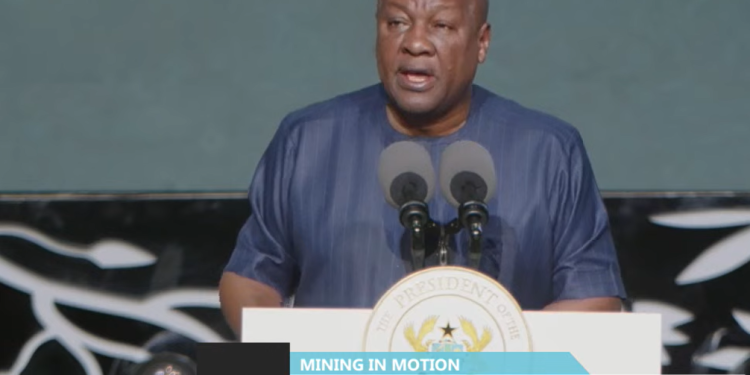
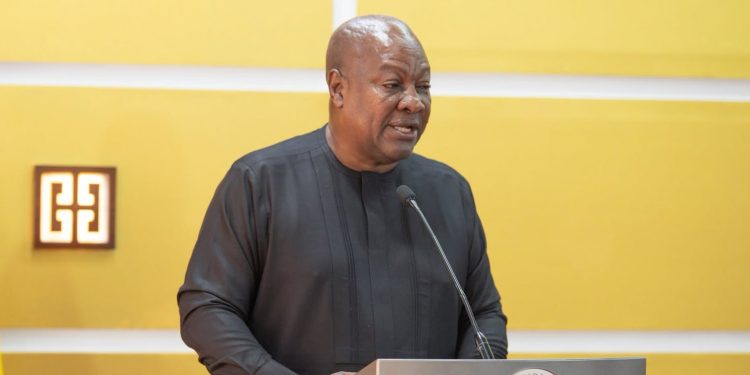
From the heart of Philadelphia, President John Dramani Mahama stood before a gathering of Ghanaians in the diaspora and delivered a message that resonated far beyond the walls of the meeting hall, a promise to transform how Ghana is governed.
With conviction in his voice and urgency in his words, the President laid out a sweeping agenda of reforms designed to root out corruption, restore public trust, and redefine what it means to hold public office in Ghana.
“We are committed to building a government that Ghanaians can trust — a government that is accountable, transparent, and fully responsible to the people,” President Mahama declared.
At the center of this agenda are two landmark initiatives: a new national anti-corruption strategy and the Public Office Accountability Bill. Both, the President stressed, are being fast-tracked for implementation, a signal that his administration is not content with promises alone, but is moving with deliberate speed toward action.
The anti-corruption strategy, as President Mahama described it, is not a routine policy document. It is a direct assault on systemic graft, a comprehensive framework built to detect, prevent, and prosecute corruption at every level of government. Beyond enforcement, it aims to cultivate a culture of ethical conduct among public officials, reinforcing the idea that integrity is not optional but foundational.
Complementing this is the Public Office Accountability Bill, which will enshrine in law the standards expected of those who serve in public roles. It will create binding legal frameworks to hold officials answerable for misconduct, drawing a clear line between public service and personal impunity.
“Public office is a public trust,” the President said firmly. “If you choose to serve the people, you must be prepared to be held accountable. These reforms are about ensuring that trust is never violated.”
For Mahama, these are not merely regulatory measures, they are transformative tools, the bedrock upon which Ghana’s development must be built. He painted a vision of a nation where public resources are managed with care, where leadership is guided by conscience, and where institutions are strong enough to stand on their own.
“Our people deserve a government that works efficiently, responsibly, and transparently,” he said. “With these initiatives, we are ensuring that the systems managing our resources are accountable, and that leadership is guided by integrity and service to the nation.”
The Philadelphia engagement also carried a deeper symbolism. By taking this message to Ghanaians abroad, President Mahama acknowledged the diaspora not merely as spectators of Ghana’s story, but as active partners in writing it. He described them as vital contributors to the country’s socio-economic growth, a community whose investment, ideas, and influence are woven into the fabric of national development.
As the President concluded his address, his words carried the weight of both a challenge and a commitment.
“These reforms are central to Ghana’s progress,” he said. “They are about protecting our democracy, empowering our institutions, and ensuring that public service remains a noble calling, guided by the highest standards of integrity.”
In Philadelphia, far from Accra, President Mahama made one thing unmistakably clear, the work of rebuilding Ghana’s public trust has already begun.
Source: Apexnewsgh.com