








Prof. Millar advocates for the construction of Dams to be included in the SOCO project
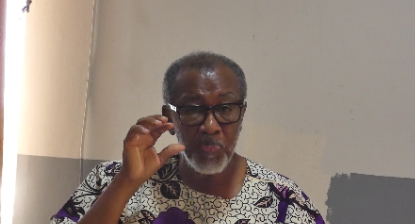
President of the Millar Institute for Transdisciplinary and Development Studies (MITDS) Professor David Millar has made a passionate appeal to those responsible for the SOCO project to consider including the construction of a dam in the SOCO project. “I heard about the SOCO Project and the amount that is committed to the project launched by the Vice President to enter into livelihood development by having in place projects that will minimize conflicts. I think that is a good project. But, I will suggest strongly the inclusion of the construction of a dam to this project” The Gulf of Guinea Northern Regions Social Cohesion (SOCO) Project was launched by Dr. Mahamudu Bawumia Ghana’s Vice President in the Upper East Regional Capital Bolgatanga. The project is expected to reach over 4,600 border-zone communities across the northern Gulf of Guinea sub-region and in Ghana, specifically 48 Metropolitan, Municipal, and District Assemblies (MMDAs) in six regions in the north will be direct beneficiaries of the SOCO project. Out of total financing from the World Bank International Development Association (IDA) of $450 million for four countries Ghana, Cote d’Ivoire, Togo, and Benin, Ghana benefitted with a share of $150 million. Addressing the congregation exactly a year ago at the SOCO launch, Dr. Bawumia said the project has been conceived and designed to address the effect of the spillover of conflict and extremism from the Sahel region to reduce vulnerability because of exposure to the impact of climate change, strengthen local institutions and through economic opportunities and build trust. Apexnewsgh.com/Ghana Please contact Apexnewsgh.com on email apexnewsgh@gmail.com for your credible news publications. Contact: 0256336062
1V1D: Over Ghc 200 Million shared by party boys for no work done –NORPRA Report
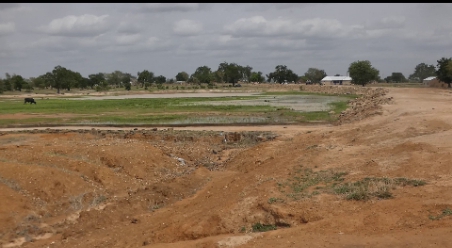
A report conducted by the Coalition of Northern Ghana CSOs led by the Northern Patriots in Research and Advocacy (NORPRA) after a 6-month implementation of the One Village, One Dam (1V1D) Expenditure and Performance Tracking project in five regions in the northern part of Ghana clearly reveals the monies were shared by party boys in the name of 1V1D for no meaningful work done. The extensive report dubbed ‘Ghana’s Oil Money on Dried Dams’ was supported by the Africa Centre for Energy Policy (ACEP) under its Extractive Industry and Climate Change Governance Fund (EICCG). Engaging journalists during the report launch On Monday, May 29, 2023, the Executive Director of Northern Patriots in Research and Advocacy (NORPRA) Bismark Ayorogo explained, “We went round to do expenditure and performance tracking of One Village One Dam across the 5 regions in northern Ghana and to also find out from communities members through focus view discussions, interviews, and assessment, what they make of the dam in terms of its performance. And this is at the back of the policy of government to provide One Village One Dam, so that there will be increased agricultural productivity, increase food security, creation of jobs, and a reduction in migration from the rural communities to the urban centers particularly the Southern part of the country from the north”. Mr. Ayorogo said upon their study: “They were able to track expenditures of 285 One Village One Dam and at the end of it all, we realized that government spent over Two Hundred Million Ghana Cedis (Ghc 201,000.000.00) on these dams and when we strike the average we realized that government spent over Six Hundred and Seventy Thousand Ghana Cedis (Ghc 670,000.000.00) per dam against the contract sum as we saw in award letters Two Hundred and Fifty Thousand”. According to Mr. Ayorogo most of the places they visited, the community members were saying they have not contributed in any way to increase food security or agricultural productivity in their communities. So, we want to find out more from other communities. The policy says, the dams are there to help create jobs, increase food security, agricultural productivity. “We went to most of the communities and one of them is Gbedembilisi Community in the Builsa South, we got there and we were able to get 20 farmers and the first we asked is, has One Village One Dam benefitted and all the 20 disagreed that, the dam doesn’t have enough water for all year farming because the dam was dried. We went to Jadema Community and asked the question if, One Village One Dam has enough water for all-year farming. One Village One Dam has contributed to increased agricultural productivity? One Village One Dam has contributed to food security? And One Village One Dam contributed to reducing migration as a result of Job opportunities? These are statements we picked from the policy document of the government from the 2017, 2018,2019, and 2020 to 2021 budget statements and the economic policies of the government and regrettably, the community members who participated in the focus group discussion and backed it with a community score card, said the dams did not contribute in any way. So, went further to the dams to see it ourselves and shockingly, almost all the dams were dried. No single dam was functioning, no single dam was having water and there was no dry season farming around any of the dams we visited”. He revealed We decided to continue, who knows, if the 285 dams may not be enough to conclude what we have gotten, there is still a need to extend to other communities and fortunately, because of the good leadership of this community who are always ready to participate in the development process of their community, we got the Chief and Assemblyman of Dachio to help us talk to the community members. Meanwhile, when journalists were transported to the Dachio shoddy constructed dam, the evidence available revealed the shoddy job done by the contractor was rather causing more harm than good. Evidence also shows that the Dachio Dam spillway is just at the same high-level size with a building block which has resulted to massive erosion at the community even to the extent of affecting Chief House. Engaging the Chief of the Dachio community Naaba Akaliga II at the dam site when we visited his community, he openly told pressmen that, the government did not mean well for his community with their poverty eradication project. “They only came to punish us in Dachio, they don’t want to give us any dam, that is why I described it at the initial stages that it was a football park and not a dam. This dam doesn’t help anybody in Dachio, and neither do we drink from it. Maybe, some people are fetching water from it to build their houses, is the only thing I can say. This dam does not help us anywhere. This is not the site for the dam, why would they leave the site and come where houses are built to construct a dam? They wanted to destroy us. I regretted convincing my people to vote for this government” the chief expressed. Hon. Zakari Abdul Aganbire, a Dachio Assemblyman who was also present at the dam scene when a team of journalists visited the scene said: “Looking at the land that was handed over to the contractor, if they had moved up a little, all these places would have been the land for the people to use for the dry season farming. But they came and landed at the land and constructed the dugout. In fact, there was no supervision. “Looking at the spillway, the least rain that falls gathers a little water and the rest dashes out, which has created a galley in the community”. The last time people of Cape Coast came to do research, when I brought them this way it wasn’t easy for us, because the community members thought they were
Graduation: MITDS graduates PhDs and MPhils completed students, introduces new programme

Millar Institute for Transdisciplinary and Development Studies has introduced a new programme to help upgrade the research skills, techniques, and knowledge of young academics who will want to conduct cutting-edge research of international quality. This was made known by the President of Millar Institute for Transdisciplinary and Development Studies Prof. David Millar during his speech at the 5th congregation of the Institution on Saturday, May 27, 2023. Meanwhile, Prof. Millar hinted that the school is securing funds to kick-start the programme. Addressing the congregation, the President of the Millar Institute with excitement also announced the school’s seventh edition of the internal refereed journal: Ghana Journal for Culture and Development (CULTRAD) is out, as he encourage scholars and particularly students to get a copy. Meanwhile, the new MITDS Council Chairman Naa Lawyer Ganglaar Bog-Belagr Tater V who also participated in the graduation ceremony also eulogized the graduating students for their relentless effort in seeing themselves through such a milestone despite some of the challenges along the way. Expressing his gratitude to the graduating students and the institution, Naa Lawyer Ganglaar Bog-Belagr Tater V said, it is an honor and a dream come true for him to be presiding over the congregation for the second time as the Chairman of the occasion. “For me, this is the first time I feature as Council Chairman although I was a member of the previous Council. We are yet to be inaugurated but it is only proper for me and the newly constituted Council to say a very special thank you to the Prof. Saa Dittoh regime. The choice of Prof. Saa Dittoh to chair was the best thing to ever happen to MITDS”. Naa Lawyer Ganglaar Bog-Belagr Tater V said. Director of Academic Planning and Quality Assurance at UDS Prof. Shamsu-Deen Ziblim who delivered a speech at the graduation ceremony on behalf of the UDS Vice Chancellor Prof. Seidu Alhassan said, without government support, he is already amazed at the quality of teaching, research and community service currently going on in Millar Institute for Transdisciplinary and Development Studies; as he strongly supports the call for the government to be visible in their endeavors. Extending his congratulatory message to the graduands, Prof. Shamsu-Deen Ziblim said, they should see the conferment of a degree at today’s graduation as another phase of their academic life. He encourages them to feel challenged and continue to keep expanding their horizon in other to make themselves even more relevant and marketable for themselves. Meanwhile, giving a valedictory speech on behalf of the graduands, Dr. Emmanuel Batesim Atami said, the enterprise of embarking on a postgraduate study at MITDS appeared a never-ending enterprise. Narrating some of their challenging times as students, Dr. Atami said: “There were times they got to the academic wonderland and uncertainty and a modicum of frustration asked themselves, “What at all brought us here?” stressing that the hour of fulfillment is here”. Meanwhile, extending their gratitude the graduands said, their first appreciation and high sense of indebtedness goes to the president of the MITDS, Prof. David Millar, the astute academic. “Prof. your patient and facilitative spirit is your most distinguishing urge. Please, keep that nitch, never let go of it, and both you and this esteemed institution will witness great dimensions of progress never imagined”. “To the faculty and staff of the university, we register our most sincere gratitude. You collectively cultivated in us several critical rudiments to shape us into real academic thinkers. You will forever remain in our memories and be a guiding touch in practice wherever we will find ourselves” However, graduands further used the occasion to extend an appeal, especially to agencies interested in the growth of education in the country to consider turning an eye to the MITDS as a young and developing institution there a myriad of logistical, academic, and human resource areas that require partnership, collaboration, and support to propel the institution deliver improved services. Source: Apexnewsgh.com/Ghana Please contact Apexnewsgh.com on email apexnewsgh@gmail.com for your credible news publications. Contact: 0256336062
MITDS Matriculation: Prof. Millar extends an appeal to the government, GETFund, Donors or any Philanthropist for assistance
President of Millar Institute for Transdisciplinary and Development Studies Prof. David Millar has made a passionate appeal to the Ghana Government, GETFund, and any Donor or Philanthropist, to assist the Institution at this toddling stage of our life with more academic facilities such as ICT Services, Library, and Classroom. He added: “We also need an Administration Block to enable us to relinquish the made-shift facility we currently are in” Prof. Millar appealed the Seventh Matriculation Ceremony of 2022/2023 students held at the school hall on Saturday, February 25, 2023 Meanwhile, MITDS matriculated 14 Ph.D. and 3 MPhil students at its seventh matriculation ceremony. Addressing the congregation Prof. Millar said: “We are proud to announce that we have the following application for our Post- Graduate Programme. Ph.D. we have 14 (fourteen) students and it brings our last index number to Eighty Seven (87). So, it means this small space has positioned itself to give birth to 87 seven doctors if they so desire. And is a full fee pay. So you can understand that if 87 students paid their money in full that means that the people appreciate what we do here”. He further reminded Matriculants that by swearing the Matriculation Oath and signing the Matriculation Register, they have accepted to abide by all the Rules and Regulations governing the conduct of Junior Members of this Institute as specified in the Handbook for Junior Members. “Dear Matriculants, examinations are an important aspect of your training in this Institute If any student refuses to write examinations, for no reason or without any written permission and approval, he or she will face the necessary punishment”. Prof. Millar stated The President reiterated that MITDS is committed to providing balanced access to female applicants, physically challenged persons, and socially excluded/ marginalized persons to pursue our academic programmes. As an Open University, we are committed to engaging with all well-meaning NGOs/CSOs to provide quality community service. We are also committed to an enhanced ICT-based education to expand access to quality education and the best practices both locally and internationally”. He said Source : Apexnewsgh.com/Ghana Please contact Apexnewsgh.com on email apexnewsgh@gmail.com for your credible news publications. Contact: 0256336062
Stakeholders of Ghana Federation of Forest and Farm Producers endorses newly introduced grass charcoal

Stakeholders with the Millar Institute for Transdisciplinary and Development Studies in the new grass charcoal innovation have given some exciting testimonies, following the grass charcoal training they have acquired from the Millar Institute. Grass charcoal or if you like briquettes is a new innovation introduced by Prof. Millar of the Millar Institute for Transdisciplinary and Development Studies. The new innovation came along with huge benefits and some communities have described it as a life changer, especially for the people living in rural communities. Through this innovation, bush fire burning and even farmers who continuously cry about losing their farm produce through bush fire burning will cry no more. This is because what we do know as a nuisance grass has now become an essential commodity to landowners across the Savannah ecological zones. Stakeholders, who were part of the dialogue engagement organized by the Millar Institute on Friday, February 24, 2023, say they are particularly excited because the innovation makes use of a very simple material and also makes use of locally available materials. Mr. Mark Akparibo, Executive Director of Tere- Bere lauded Millar Institute for the new innovation. According to Mr. Akparibo, they are looking at how they can improve upon the environment and key issues are basically fire and its environmental effects. “The Millar Institute has been able to develop through research brought about grass charcoal which has also been translated into the training of various Forest and Farm Producers. My organization Tere-bere is one of the organizations that benefited from the training program and we are quite excited to be sharing some of the results we are having in grass charcoal production and other Organic matter from crops that are also been used for grass charcoal”. “We are particularly excited because the innovation makes use of a very simple material and also makes use of locally available materials”. “I can say that for my group, we decided that we will go beyond just grass and to look for other locally available materials to be able to produce the grass briquette and i must say that we have been able to produce some grass charcoal which our members are using within their localities”. “Through our various research programs, we have realized that close to about 90% of biodiversity in the northern savannah ecological zone is been reduced through bush burning. So, a lot of what is happening is as a result of bush burning which also reduces the tree cover in the ecological zone but also prevents another biodiversity from thriving. So, we believe that if bush burning is able to stop, close to 90% of our forest resources will grow up”. Mr. Akparibo expressed Executive Director of Community Action in Development and Research Eric Dalinpuo, told Apexnewsgh.com that, his group members received the new innovation with excitement. According to him, his members were able to produce what they are using daily in their various households. However, stressing they are now looking at producing in a commercial quantity. Explaining Further he said, “We had a project with FAO called the FFF project and under the FFF project, we have a number of organizations that comes together as beneficiaries of FFF project and these organizations come together and formed what we called Ghana Federation of Forest and Farm Producers GhaFFAP and under the umbrella of GhaFFAP, the Millar Institute has gotten also some funding from FAO to take us through this lovely new product that’s coming up call grass briquette and fortunately all the organization under GHaFFAP were eligible to get training from Millar Institute and they did well, they went round and train all the organizations and these organizations that have huge membership are also trickling down the training to their membership. So, we are beneficiaries. Since we received the training from Millar Institute, we have to replicate it to so many member groups and the member groups are so happy and so much interested in the new learning and some of them are making the charcoal at their household level. Now, what we want to do, is to see how we can go commercial because this is something we have the material available everywhere and they can fetch this grass to begin to make income for themselves. So, is the income-making aspect that is important to us as an organization, It is true they can use it for their house cocking but how will they make extra income for themselves? So, we will see how we can get a potential buyer and see if we can also bring our women together to produce in the commercial quantity we can supply. Nana Kwame Paul Executive Director of Organic Farming Association (ABOFA) who was also part of the Dialogue meeting organized by the Millar Institute on Friday said, with regards to the production of the grass briquette which was introduced to them in the year 2022, they took the initiative and decided to expand and train more on the briquettes innovation. “Initially when the call came, people had some perceptions and they were asking whether is possible to produce charcoal with grass but luckily for us, we had training at the Ofrokrom at the Chief Palace. “We started with a few women that were committed to producing the grass, we try to bring in other things that were not used and were thrown away by people such as coconut hats, maize stalls, maize sticks, and the normal grass”. “A lot of stakeholders have come on board hopefully to be trained and other NGOs want us to train their groups in these charcoal briquettes”. “Honestly speaking, I have tested it, I have used it in my house and I have seen the difference because I have the normal charcoal and the briquettes and when you compare the period of using it, will tell you that you have to go for grass briquette. It takes a longer time to reduce in size and have more of the dust. It also has
Prof. David Millar presents draft concept paper for PBL in NAVASCO as part of his Birthday Anniversary

As part of his birthday Anniversary, President of the Millar Institute for Transdisciplinary and Development Studies Professor David Millar who also doubled as an old student of Navrongo Senior High School have put up a ‘draft concept paper’ for what he called a Novel Approach to Teaching and Learning in Secondary Institutions in Ghana Problem-Based Learning (PBL) in Navrongo Senior High School (NAVASCO). According to Professor Millar, “The records show that University for Development Studies, Tamale was first to introduce PBL in her Medical Programs in Ghana, and University of Cape Coast, Cape Coast, was first to do likewise in a Social Science Programs. The same records show that PBL is alien to Secondary Institutions”. “The public have bemoaned the education standards in the country and the general perception is that they are following along with the fact that they are not relevant for purpose. A clarion call from stakeholders but especially from the Education Minister during his recent visit to the UN Submit (September 2022) added to the need for proactive strategies to salvage Ghana’s Education”. He said: “In sharing with these concerns the Old Students Association of Navrongo Senior High School (NABIA), is attempting at heeding the call by all a sundry to come out with innovations to help salve her Alma Mata”. Meanwhile, as part of his birthday anniversary, Profession David Millar presented the concept paper to the school management and staff of her Alma Mata NAVSACO. Apexnewsgh.com can confidently report that the management of the school was extremely excited when the draft concept paper was presented to them by astute Professor Millar, as they immediately requested for urgent implementation of the concept. Kindly read the full concept below PROBLEM-BASED LEARNING (PBL) IN NAVRONGO SENIOR HIGH SCHOOL (NASVASCO)(DRAFT CONCEPT PAPER) PUT TOGETHER BY PROF. DAVID MILLAR OCTOBER, 2022 PROBLEM-BASED LEARNING (PBL) INTRODUCED IN NASVASCO: A NOVEL APPROACH TO SECONDARY TEACHING AND LEARNING IN GHANA 1.0 Prelude Problem-Based Learning (PBL) at the Second Cycle Institutions Level is not new in the Advanced Countries but it is relative new in Africa; and in Ghana not known to be practice anywhere at the Secondary Levels. This approach to teaching and learning is very prominent at various Medical Schools the world over. The records show that University for Development Studies, Tamale was first to introduce PBL in her Medical Programs in Ghana, and University of Cape Coast, Cape Coast, was first to do likewise in a Social Science Programs. The same records show that PBL is alien to Secondary Institutions. Recent events in the Education Programs in Ghana has given rise to a need for major reforms towards emphasis on TVET and Hands-on Education for various educational offerings. The public have bemoaned the education standards in the country and the general perception is that they are following along with the fact that they are not relevant for purpose. A clarion call from stakeholders but especially from the Education Minister during his recent visit to the UN Submit (September, 2022) added to the need for proactive strategies to salvage Ghana’s Education. In sharing with these concerns the Old Students Association of Navrongo Senior High School (NABIA), is attempting at heeding the call by all a sundry to come out with innovations to help salve her Alma Mata. Hence, the Old Students Association, with her own voluntary contributions, mobilized from Old Students Local and International have offered to launch the PBL program at NAVASCO, in collaboration with GES, the School Authorities, PTAs, and the Student Body. This will be organised first as an ICT-Science Club for PBL (starting with Biology, Chemistry, and Physics as pioneer courses). The experiences from this experiment, if impactful, will then be expanded to other programs of learning. 2.0 What is Problem-Based Learning (PBL)?(This is sub-chapter is extensively from literature)The term “Problem-Based Learning” (PBL) was originally developed by Barrows and Tamblyn (1980) for Medical Education. It is based on the Constructivist Theory of Learning.PBL is a pedagogical strategy that uses open ended / ill-structured problems that mirror real-world problems. The authenticity of the problems helps students to transfer their knowledge and skills beyond the classroom, preparing them for the workplace and life in a rapidly changing world. The open ended nature of problems gives students the flexibility to approach it from different angles, to take different thematic sidelines according to their personal interests. This gives them control of the learning process, capturing their interest and motivating them to learn.Lewis et al. (1998) emphasises that the act of posing problems is integral to the process of solving problems. Finding or posing problems is a creative endeavour that can occur prior to, during, or after the act of problem solving. By keeping the problem definition open, the students can “frame and reframe” their perspective on a problem so they reach “goal clarity”. Educational psychologists have discovered that solving a problem is a back-and-forth (recursive) process, not a linear one (Pea, 1985). In this way the student takes ownership of the problem thus enhancing their engagement and responsibility for the learning process. Suggested principles of PBL (Slavery and Duffy, 1995)• Anchor all learning activities to a larger task or problem.• Support the learner in developing ownership for the overall problem or task.• Design an authentic task.• Design the task and the learning environment to reflect the complexity of the environment they should be able to function in at the end of learning.• Give the learner ownership of the process used to develop a solution.• Design the learning environment to support and challenge the learner’s thinking.• Encourage testing ideas against alternative views and alternative contexts.• Provide opportunity and support for reflection on both the content learned and the learning process.• Gudzial et al. (1997) consider the two most important aspects of Problem-Based Learning to be the authentic real world problems and students reflection on their experiences. • The teacher’s role changes from the provider of content to the facilitator of the learning process. Teachers present students with authentic problems and provide an
A Professor should at least profess some local innovation in their local communities—Prof. Millar

President of the Millar Institute for Transdisciplinary and Development Studies Professor David Millar is advocating for those with the title ‘Professor’ to redirect their effort by way of professing some local innovation in their local communities. Speaking in an exclusive interview with Apexnewsgh.com, Prof. Millar said, that is the only way the community people will recognize those rooming and calling themselves Professors in Africa. “Academia in Africa as a whole especially the Professors should redirect their effort by way of professing local innovation in our local communities. Once you start professing that, your people will appreciate the school you have gone to. For now, they don’t know you are a professor, they only know you have gone to school and you have come to solve this problem for them”. Meanwhile, Pro. Millar through his innovation in Ghana has started changing the narrative, especially for the people in the rural communities in the northern part of Ghana by way of using what is mostly described as nuisance grass to produce charcoal and brown paper. The grass initiative alone is expected to create jobs for the community people and as well reduced bush fires which in the past have affected some innocent farmers after losing their hard earn effort throughout the farming season. However, another interesting part of the grass innovation by Prof. Millar proves that the grass conversion into brown paper will massively address the issue of plastic and environmental pollution in Ghana. Apexnewsgh.com/Ghana/Ngamegbulam Chidozie Stephen Please contact Apexnewsgh.com on email apexnewsgh@gmail.com for your credible news publications. Contact: 05555568093
There is a need for the word ‘INNOVATION’ to be added to your institution name–Prof Millar told

Director of Academic Planning and Quality Assurance of UDS Prof. Shamsu-Deen Ziblim has made an interesting suggestion to the President of the Millar Institute for Transdisciplinary and Development Studies Prof. David Millar for consideration. According to the Director of Academic Planning and Quality Assurance of UDS, there is a need for the word ‘INNOVATION’ to be added to your institution name such as Millar Institute for Transdisciplinary Innovation and Development Studies. “When I came here for the graduation this morning, the question I asked myself is, what is the name of the institution? Millar Institute for Transdisciplinary Innovation and Development Studies and I say wow, is it not better we add ‘innovation’? Because of the novelty, we have here. The innovation will be important. Stressed According to the UDS Professor, “even the first technical University Kwame Nkrumah University Science and Technology, we are yet to hear and touch the indigenous development using local resources to develop things that will help in environmental management and in less than two decades MITDS is able to produce grass charcoal and grass brown paper”. Apexnewsgh.com/Ghana/ Ngamegbulam Chidozie Stephen Please contact Apexnewsgh.com on email apexnewsgh@gmail.com for your credible news publications. Contact: 05555568093
COVID: The timing for the reopening of schools is a problem–Prof. David Millar
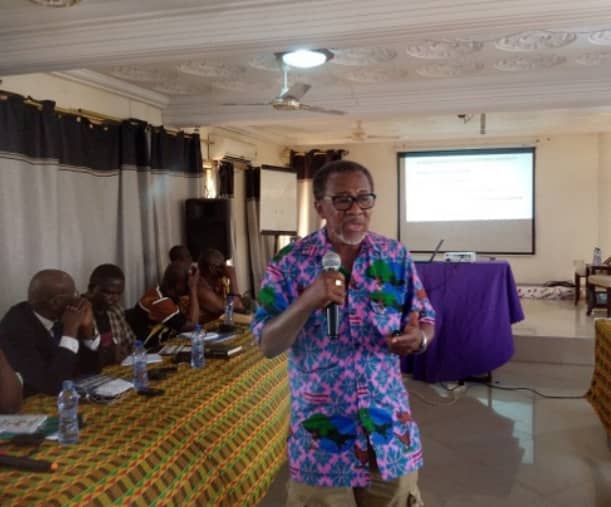
Government and Ghana Education Service (GES) should have waited a little to observe this new strain of COVID before the reopening of schools for our kids on Tuesday. In a press statement released by Ghana Education Service on January 15, 2021, sighted by Apexnewsgh.com it says, “Management of Ghana Education Service (GES) wishes to inform students, teachers parents, and the general public that schools officially reopen on Mondays 18th January 2021 for the academic year”. “Management of GES, therefore, directs that all schools should use Monday to tidy up their classrooms and compound. Academic work will therefore begin on Tuesday 19th January 2021”. “In the light of that, Management wishes to inform all stakeholders that the annual event dubbed ‘MY FIRST DAT AT SCHOOL’ observed to welcome children entering school for the first time, will be held across all District and Regional Education Directorate on Tuesday 19th January 2021”. However, Professor David Millar, the President of the Millar Institute for Transdisciplinary and Development Studies holds a different view following the directive of reopening of schools by the Ghana Education Service. According, to Prof. Millar who spoke to Ngamegbulam Chidozie Stephen of Apexnewsgh.com in an exclusive interview on Sunday, January 17, 2021, looking at the current experience and the dimension of the new COVID, government and Ghana Education Service (GES) should have waited a little to observe this new strain of COVID before reopening schools for our kids on Tuesday. “Basically, we now need to learn how to leave with COVID like we are living with other diseases, so I think it natural coming that in one way or the other we have to start the school system. But, the timing for me is the problem. They are saying there is a new strain of COVID and therefore the coronavirus incident is sparkling so that makes the timing a bit worry. Because, if it would have been the good old COVID that knew since the beginning of last year that one will see we live with it but, with his new strain that, they don’t know what it is, they say is worst than the first strain we got, is now very disturbing. So, we should hold on a bit, see how that pounds out then we send the kids to school. Because if, is really as devastating as they say it is, then we are subjecting all the kids to danger. This is a new COVID, we don’t know how it is but, we know is very deadly and colleagues and friend elsewhere have told me how deadly this particular one could be, and this new one, unlike the first COVID, doesn’t discriminate between the young and elderly and is even appearing to be more dangerous to the young than the elderly”. He told Apexnewsgh.com Apexnewsgh.com/Ghana/Ngamegbulam Chidozie Stephen Please contact Apexnewsgh.com on email apexnewsgh@gmail.com for your credible news publications. Contact: 0555568093.