




Heavy security presence at A’Ibom INEC Headquarters

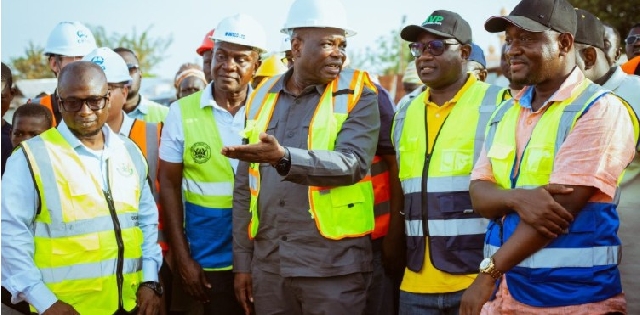
There has a heavy presence of security operatives especially the Police and Nigerian Security and Civil Defence Corps (NSCDC) all in front and inside the State Headquarters of the Independent National Electoral Commissíon, along Udo Udoma Avenue, Uyo. This is as only five ⁿElectoral Officers have been spotted at the Presidential collation center, INEC Headquarters as at the time of filing this report. Some political party agents have even arrived at the centre more than two hours ago. Meanwhile, findings revealed that the collation of results for the Senate and House of Representatives are still in progress. Source : Apexnewsgh.com/Ghana Please contact Apexnewsgh.com on email apexnewsgh@gmail.com for your credible news publications. Contact: 0256336062
Hon. Dominic Ayine, is not bringing enough development, vote him out–UER-NPP Regional Youth Organizer to voters
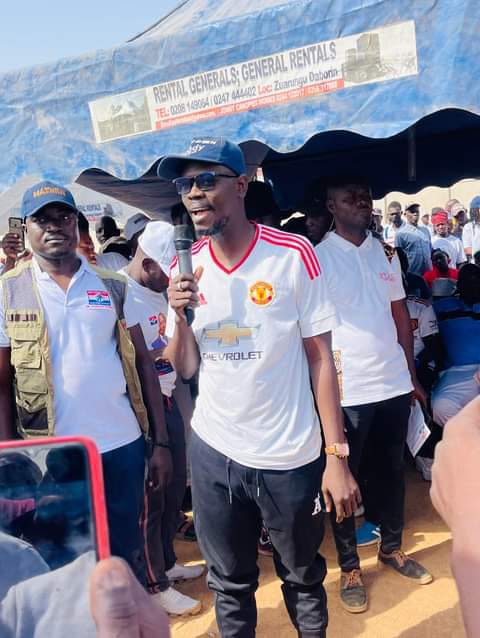
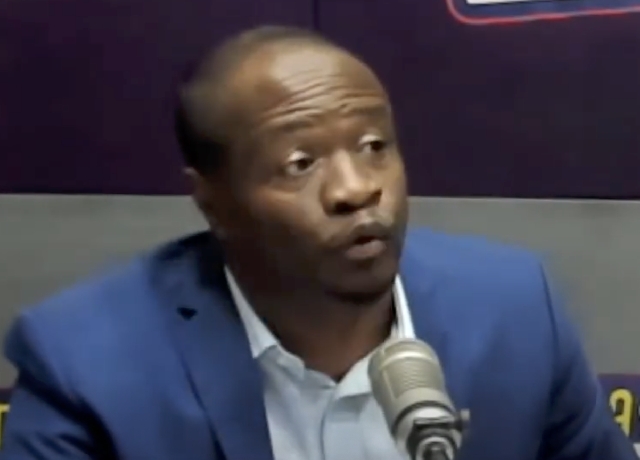
The Upper East Regional Youth Organizer of the governing New Patriotic Party (NPP), Salahu- Deen Musah Al-Khomeini has admonished electorates in the Bolgatanga East constituency to unanimously vote out their current Member of Parliament, Hon. Dominic Akuritinga-yine for not bringing development that directly affects their lives positively in the constituency. The Regional Youth Organizer did not miss any words whiles addressing the media during a Health Walk organized in the Constituency on Saturday, February 25, 2023. According to him, “Dr. Dominic Ayine has done nothing since he went to parliament. The library project that he started is still uncompleted but the Gh2.5 million party office that he built has been completed. Do you know what that money can do for this constituency? Do you know the number of boreholes that would have been constructed?” The Youth Organizer further tasked the youth to remain resolute and steadfast: “We have only one seat but with a united front, we can win more seats and the Bolga East seat is one of them, there is no doubt about that. I, therefore, urge the youth of the party in this constituency to continue to remain resolute and steadfast and I know with that commitment, God will reward us.” The health walk saw dignitaries of the party in the constituency and the region, such as the former 1st Vice Chairman, Dr. Moses Atanga, Regional Youth Organizer, Sala-Hudeen, Regional first Vice, Mr. Isaac Atesige, Regional Organizer, Charles Ndaabon, Regional Secretary, Figo, Awonekai, and all constituency executives and other high profile executives were in attendance. Source : Apexnewsgh.com/Ghana Please contact Apexnewsgh.com on email apexnewsgh@gmail.com for your credible news publications. Contact: 0256336062
Stakeholders of Ghana Federation of Forest and Farm Producers endorses newly introduced grass charcoal

Stakeholders with the Millar Institute for Transdisciplinary and Development Studies in the new grass charcoal innovation have given some exciting testimonies, following the grass charcoal training they have acquired from the Millar Institute. Grass charcoal or if you like briquettes is a new innovation introduced by Prof. Millar of the Millar Institute for Transdisciplinary and Development Studies. The new innovation came along with huge benefits and some communities have described it as a life changer, especially for the people living in rural communities. Through this innovation, bush fire burning and even farmers who continuously cry about losing their farm produce through bush fire burning will cry no more. This is because what we do know as a nuisance grass has now become an essential commodity to landowners across the Savannah ecological zones. Stakeholders, who were part of the dialogue engagement organized by the Millar Institute on Friday, February 24, 2023, say they are particularly excited because the innovation makes use of a very simple material and also makes use of locally available materials. Mr. Mark Akparibo, Executive Director of Tere- Bere lauded Millar Institute for the new innovation. According to Mr. Akparibo, they are looking at how they can improve upon the environment and key issues are basically fire and its environmental effects. “The Millar Institute has been able to develop through research brought about grass charcoal which has also been translated into the training of various Forest and Farm Producers. My organization Tere-bere is one of the organizations that benefited from the training program and we are quite excited to be sharing some of the results we are having in grass charcoal production and other Organic matter from crops that are also been used for grass charcoal”. “We are particularly excited because the innovation makes use of a very simple material and also makes use of locally available materials”. “I can say that for my group, we decided that we will go beyond just grass and to look for other locally available materials to be able to produce the grass briquette and i must say that we have been able to produce some grass charcoal which our members are using within their localities”. “Through our various research programs, we have realized that close to about 90% of biodiversity in the northern savannah ecological zone is been reduced through bush burning. So, a lot of what is happening is as a result of bush burning which also reduces the tree cover in the ecological zone but also prevents another biodiversity from thriving. So, we believe that if bush burning is able to stop, close to 90% of our forest resources will grow up”. Mr. Akparibo expressed Executive Director of Community Action in Development and Research Eric Dalinpuo, told Apexnewsgh.com that, his group members received the new innovation with excitement. According to him, his members were able to produce what they are using daily in their various households. However, stressing they are now looking at producing in a commercial quantity. Explaining Further he said, “We had a project with FAO called the FFF project and under the FFF project, we have a number of organizations that comes together as beneficiaries of FFF project and these organizations come together and formed what we called Ghana Federation of Forest and Farm Producers GhaFFAP and under the umbrella of GhaFFAP, the Millar Institute has gotten also some funding from FAO to take us through this lovely new product that’s coming up call grass briquette and fortunately all the organization under GHaFFAP were eligible to get training from Millar Institute and they did well, they went round and train all the organizations and these organizations that have huge membership are also trickling down the training to their membership. So, we are beneficiaries. Since we received the training from Millar Institute, we have to replicate it to so many member groups and the member groups are so happy and so much interested in the new learning and some of them are making the charcoal at their household level. Now, what we want to do, is to see how we can go commercial because this is something we have the material available everywhere and they can fetch this grass to begin to make income for themselves. So, is the income-making aspect that is important to us as an organization, It is true they can use it for their house cocking but how will they make extra income for themselves? So, we will see how we can get a potential buyer and see if we can also bring our women together to produce in the commercial quantity we can supply. Nana Kwame Paul Executive Director of Organic Farming Association (ABOFA) who was also part of the Dialogue meeting organized by the Millar Institute on Friday said, with regards to the production of the grass briquette which was introduced to them in the year 2022, they took the initiative and decided to expand and train more on the briquettes innovation. “Initially when the call came, people had some perceptions and they were asking whether is possible to produce charcoal with grass but luckily for us, we had training at the Ofrokrom at the Chief Palace. “We started with a few women that were committed to producing the grass, we try to bring in other things that were not used and were thrown away by people such as coconut hats, maize stalls, maize sticks, and the normal grass”. “A lot of stakeholders have come on board hopefully to be trained and other NGOs want us to train their groups in these charcoal briquettes”. “Honestly speaking, I have tested it, I have used it in my house and I have seen the difference because I have the normal charcoal and the briquettes and when you compare the period of using it, will tell you that you have to go for grass briquette. It takes a longer time to reduce in size and have more of the dust. It also has