





SWFA Trains Members on Innovative Grass Charcoal and Biochar Production

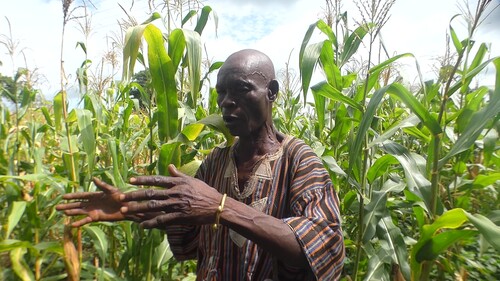
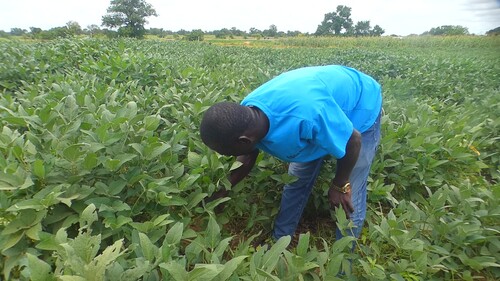
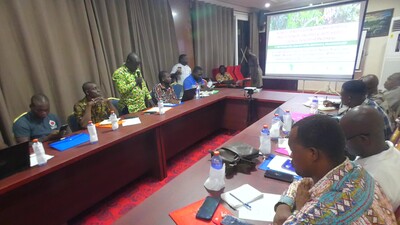
The Savannah Women Farmer Association (SWFA) has successfully trained its members on the production of grass charcoal and grass biochar, thanks to the expertise of the Millar Institute for Transdisciplinary Development Studies. Apexnewsgh reports SWFA Project Coordinator, Mr. Oseni Kabiru, shared the impact of this training during a regional stakeholder’s dialogue in Tamale on Monday. According to Mr. Kabiru, the training empowered members to harness the potential of nuisance grasses, preventing bushfires and the destruction of farmlands. By harvesting these grasses, members were able to produce charcoal for domestic use, reducing the need to cut down trees for fuel. Although the goal is to scale up production for commercial purposes, members are currently using the charcoal for personal consumption. The training also focused on using grass as organic manure to enhance agricultural productivity. By adopting this innovative approach, SWFA members are reducing their reliance on chemical fertilizers, promoting sustainable agriculture practices, and enriching their soil. Mr. Kabiru expressed pride in the progress made, stating that the initiative has not only eliminated the need for tree cutting but also empowered members to manage their natural resources effectively. The successful implementation of this project is a testament to the impact of collaborative efforts in promoting sustainable development and environmental conservation. Source: Apexnewsgh.com Thanks for reading from Apexnewsgh as a news publishing website from Ghana. We encourage you to freely share this story via social media platform and follow us on; Facebook on APEXNEWSGH-Tv or Please contact Apexnewsgh.com on email apexnewsgh@gmail.com for your credible news publications. Contact: 0248250270/0256336062
Innovative Biochar Production from Grasses: A Laudable Solution to Bushfires and Soil Fertility– Isaac Kofi Ntori

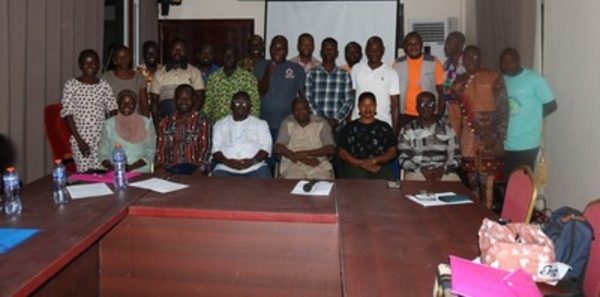
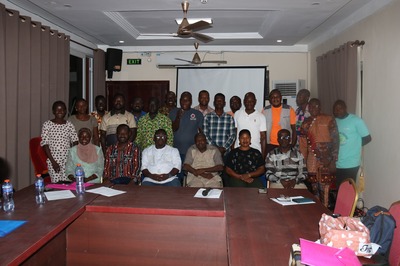
Mr. Isaac Kofi Ntori, a project officer with A-Rocha Ghana, has commended the innovative idea of producing biochar from grasses, describing it as “very laudable”. Apexnewsgh reports Speaking at a stakeholder’s dialogue meeting organized by the Millar Institute for Transdisciplinary and Development Studies in Tamale on Monday, July 8, 2024, Mr. Ntori highlighted the potential of grass biochar production to address two major challenges in the northern region of Ghana: bushfires and soil fertility. According to Mr. Ntori, grasses are a major cause of bushfires, which pose a significant threat to the landscape, agricultural farms, and properties. However, by harvesting these grasses and converting them into biochar, the soil structure and fertility can be enhanced, leading to increased productivity and reduced bushfires. He emphasized that this innovation has multiple benefits, including reduced carbon emissions, increased forest cover, and enhanced environmental and agricultural security. Mr. Ntori believes that this approach has great prospects, particularly in the agricultural sector, and encourages stakeholders to embrace this innovative solution. He believes, by converting grasses into biochar, Ghana can reduce the risk of bushfires, improve soil fertility, and promote sustainable agriculture practices. This laudable innovation he said has the potential to transform the agricultural landscape in Ghana and ensure a more secure and sustainable future. Source: Apexnewsgh.com Thanks for reading from Apexnewsgh as a news publishing website from Ghana. We encourage you to freely share this story via social media platform and follow us on; Facebook on APEXNEWSGH-Tv or Please contact Apexnewsgh.com on email apexnewsgh@gmail.com for your credible news publications. Contact: 0248250270/0256336062
Grass Biochar: The Sustainable Solution to Soil Degradation and Food Insecurity–Bilal Taimako

Mr. Bilal Taimako Shamsudeen , a representative from the Edugha Institute for Social Development (EISD) and founder of Taimako Plants and Herbal Centre, has emphasized the importance of adopting grass biochar as a sustainable solution to reclaim lost nutrients in soil and promote food security. Apexnewsgh reports Speaking at a stakeholder’s dialogue meeting organized by the Millar Institute for Transdisciplinary and Development Studies in Tamale on Monday, July 8, 2024, Mr. Taimako stressed that chemical fertilizers have destroyed lands and the environment, and that grass biochar is the way forward. He expressed his excitement about the conversation around biochar, stating that it is a necessary step to save the environment and ensure food security. According to him, grass biochar solves several environmental issues, including pollution, bush burning, and soil degradation, while also providing employment opportunities, especially for women. Mr. Taimako emphasized that the impact of biochar on food security, health, and education is enormous, and that it is essential to move beyond talk and into action. He encouraged stakeholders to embrace biochar as a better alternative to inorganic fertilizers, which have negative impacts on soil and the environment. “We don’t have a choice; we need to adopt biochar to save our environment and ensure food security,” he emphasized. “Let’s get to work and make a positive impact on our soil, food, and communities.” The meeting aimed to bring together stakeholders to discuss alternative approaches to sustainable agriculture and environmental conservation. Mr. Taimako’s call to action on grass biochar adoption is a significant step towards promoting sustainable practices and ensuring a food-secure future. Source: Apexnewsgh.com Thanks for reading from Apexnewsgh as a news publishing website from Ghana. We encourage you to freely share this story via social media platform and follow us on; Facebook on APEXNEWSGH-Tv or Please contact Apexnewsgh.com on email apexnewsgh@gmail.com for your credible news publications. Contact: 0248250270/0256336062
GMOs are Tools of New Colonialism– Professor Felix Longi

Associate Professor Felix Y. T. Longi of the University of Development Studies has sounded a warning against the use of Genetically Modified Organisms (GMOs) in Ghana’s agricultural sector. Apexnewsgh reports Speaking at a regional stakeholders’ dialogue organized Millar Institute for Transdisciplinary and Development Studies at the northern regional capital Tamale on Monday, July 8, 2024, Prof. Longi described GMOs as “tools of new colonialism” designed to maintain Ghana’s dependence on its former colonial masters. The renowned historian emphasized that the adoption of organic manure, such as grass biochar, is critical to breaking free from the shackles of colonialism. He noted that many farmers in northern Ghana are unable to produce their own seeds and are forced to rely on perpetual seed suppliers, perpetuating the cycle of dependence. Prof. Longi believes that by embracing grass biochar and organic manure, Ghana can decolonize its agricultural sector, enrich its lands, and produce bio-organic food. He urged researchers to focus on this critical area to promote indigenous knowledge systems and break away from Westernized colonial ideas that have hindered Ghana’s progress. The professor’s call to action resonates with the need for sustainable and self-sufficient agricultural practices in Ghana. As the country moves forward, it is essential to prioritize indigenous knowledge systems and environmental sustainability over colonialist ideologies that have hindered progress for far too long. Source: Apexnewsgh.com Thanks for reading from Apexnewsgh as a news publishing website from Ghana. We encourage you to freely share this story via social media platform and follow us on; Facebook on APEXNEWSGH-Tv or Please contact Apexnewsgh.com on email apexnewsgh@gmail.com for your credible news publications. Contact: 0248250270/0256336062
Empowering Persons with NTDs in Zorkor: KURADEC Provides Soap Making Training

In an effort to improve the lives of individuals affected by Neglected Tropical Diseases (NTDs) in Zorkor-Kadare, Bongo District, Upper East Region, Kunkua Renaissance Development Centre (KURADEC) has provided training in soap making. Apexnewsgh reports This economic and livelihood empowerment training aims to enhance the hygiene and development of persons with NTDs, enabling them to generate income and improve their overall well-being. Coordinator of KURADEC, Mr. Donatus Awine Adua, explained that the training is part of a larger initiative funded by ANESV Foundation through Development Research and Advocacy Center (DRAC). The goal is to equip affected individuals with skills to produce soap, which can be sold to generate income. Last year, KURADEC conducted LED intervention training for community volunteers and affected persons, identifying 65 beneficiaries, including men and women. NTDs, such as elephantiasis and hydrocele, expose affected individuals to vulnerabilities, including stigma, reduced mobility, and inability to access healthcare services. KURADEC’s training aims to address these challenges by promoting personal hygiene and economic empowerment. Mr. Adua appealed to other organizations and government agencies to prioritize support for persons with NTDs, particularly in rural areas. He emphasized the need for skills development and economic empowerment to improve their lives. KURADEC plans to provide additional support, including livestock, to enable beneficiaries to generate sustainable income. The organization encourages other NGOs and government agencies to join forces in empowering persons with NTDs, promoting a better quality of life for these vulnerable individuals. Freda Alowri, Midwife in charge of Zorko Health Centre, narrated how she witnessed firsthand the devastating impact of Neglected Tropical Diseases (NTDs) on individuals and communities. Despite the challenges, she remains committed to educating and empowering those affected to seek medical attention and improve their hygiene practices. The stigma surrounding NTDs, particularly leprosy, has led to many sufferers being ostracized and hidden away by their families. However, through home visits and community outreach, Freda and her team have managed to convince many to come forward and seek help. The introduction of soap making training has been a game-changer, providing economic empowerment and improving hygiene practices. Beneficiaries can now generate income by selling soap, and the community has come together to support those affected. Despite progress, challenges persist. Deep-seated mentalities and human behavior changes are difficult to overcome, and some individuals still hide their conditions due to shame or fear of association. Freda acknowledges the humanitarian efforts of organizations like Kunkua Renaissance Development Centre (KURADEC) and appeals for continued support to address the lingering challenges. She believes that together, they can make a significant impact and improve the lives of those affected by NTDs. The Zorko Health Centre’s dedication to combating NTDs has led to notable improvements in the community’s health and well-being. As Freda emphasizes, “We are not just treating conditions, we are restoring dignity and hope to those who need it most.” However, Janet Nsobila and Paul Awobgo beneficiaries of soap making activity could not hide their excitements. They extended their gratitude to Kunkua Renaissance Development Centre (KURADEC), Development Research and Advocacy Center (DRAC) and ANESV Foundation for such kind empowerment. Source: Apexnewsgh.com Thanks for reading from Apexnewsgh as a news publishing website from Ghana. We encourage you to freely share this story via social media platform and follow us on; Facebook on APEXNEWSGH-Tv or Please contact Apexnewsgh.com on email apexnewsgh@gmail.com for your credible news publications. Contact: 0248250270/0256336062
Prof. Felix Y. T. Longi Advocates for Grass Biochar Adoption in Ghana

Associate Professor Felix Y. T. Longi, a social historian at the University of Development Studies, has thrown his weight behind the promotion of grass biochar as a sustainable alternative to traditional charcoal. Apexnewsgh reports Speaking at a regional stakeholders’ dialogue organized by the Millar Institute for Transdisciplinary and Development Studies on Monday, July 8, 2024 in Tamale , Prof. Longi emphasized the enormous benefits of grass biochar, including environmental protection, climate change mitigation, and improved agricultural production. He envisioned a future where a consortium of like-minded individuals would come together to organize a national or international conference to share research findings and best practices on grass biochar. By adopting grass biochar, Ghana can reduce its reliance on fuel wood and chemical fertilizers, which have harmful environmental and health impacts. Prof. Longi also pointed the importance of decolonizing knowledge production and promoting indigenous knowledge systems. He believes that by embracing grass biochar and organic manure, Ghana can break free from the shackles of colonialism and develop a more sustainable and self-sufficient agricultural sector. The historian emphasized that the time has come for Ghana to take steps towards self-reliance and environmental sustainability, citing examples of other countries that have successfully made the transition. He urged stakeholders to support the grass biochar initiative, which he believes has the potential to transform Ghana’s agricultural landscape. Source: Apexnewsgh.com Thanks for reading from Apexnewsgh as a news publishing website from Ghana. We encourage you to freely share this story via social media platform and follow us on; Facebook on APEXNEWSGH-Tv or Please contact Apexnewsgh.com on email apexnewsgh@gmail.com for your credible news publications. Contact: 0248250270/0256336062
GhaFFaP President Advocates for Sustainable Practices and Grass Biochar Application
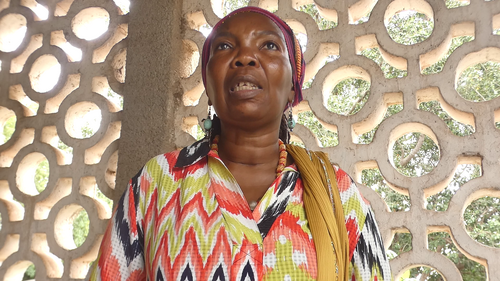
The National President of the Ghana Federation of Forest and Farm Producers (GhaFFaP) and a leader for Savannah Women Farmer Association (SWFA), Madam Alima Sagito Saeed, has stressed the need for sustainable practices and the application of grass biochar to improve soil fertility and promote environmentally conscious farming methods. Apexnewsgh reports Speaking at a stakeholders’ dialogue in Tamale, Madam Alima highlighted the federation’s goal of ensuring its members achieve the best possible outcomes from their investments in land and farming practices. She noted that soil fertility has become a significant issue affecting farmers but emphasized that alternatives like grass biochar can provide opportunities for improvement. The GhaFFaP president further emphasized the importance of adopting environmentally conscious practices to ensure sustainability and highlighted the federation’s efforts to restore sustainable practices and promote knowledge management over the past four years. According to Madam Alima, the federation has collaborated with the Millar Institute for Transdisciplinary and Development Studies, a research and knowledge management institution, to produce sustainable products and promote sustainability awareness. The stakeholders’ dialogue brought together state institutions, community development organizations, and partners to discuss alternative approaches to restoring forests, lands, and livelihoods. Madam Alima stressed the importance of adding value to grassroots initiatives and promoting sustainable practices to ensure a sustainable future for farming communities. She believes, the application of grass biochar, as introduced by the Millar Institute, is seen as a key solution to improving soil fertility and promoting sustainable farming practices. “By adopting this approach, farmers can improve their yields, reduce environmental degradation, and contribute to sustainable agriculture practices in Ghana”. She stressed Source: Apexnewsgh.com Thanks for reading from Apexnewsgh as a news publishing website from Ghana. We encourage you to freely share this story via social media platform and follow us on; Facebook on APEXNEWSGH-Tv or Please contact Apexnewsgh.com on email apexnewsgh@gmail.com for your credible news publications. Contact: 0248250270/0256336062