





The Monitoring, Evaluation and Accountability Coordinator of NABOCADO, Dr. Michael Ayamga, has disclosed that 51.1 percent of the 7,200 farmers supported under the organisation’s SCRAS Project have comprehensively adopted sustainable agricultural practices.
According to him, the farmers are spread across six districts and 16 rural communities where the project is being implemented.
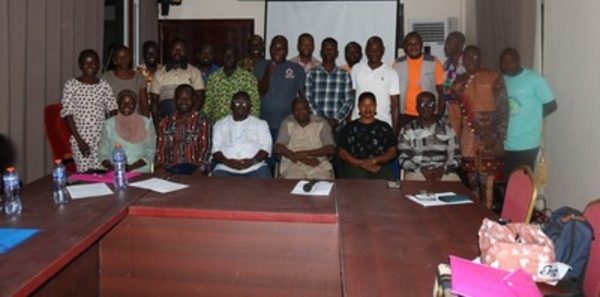
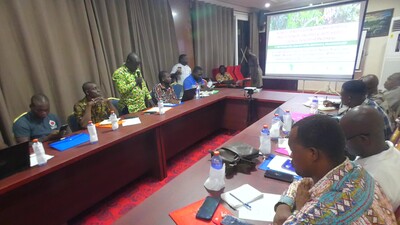
Dr. Ayamga made the disclosure during an exchange learning activity organised under the Strengthening of Smallholder Farmers’ Resilience towards a Changing Climate and Promotion of Environmentally Friendly Agriculture in the Diocese of Navrongo-Bolgatanga SCRAS Project.
He explained that the project focuses on promoting sustainable agriculture, climate change adaptation and mitigation, as well as women’s enterprise development to help farming households diversify their sources of livelihood. Dr. Ayamga said 51.1 percent of the farmers have so far comprehensively adopted the sustainable agricultural practices being promoted by the project.
He explained that “comprehensive adoption” refers to farmers who have consistently adopted compost application and at least two other sustainable farming practices on their fields over a number of years.
He, however, noted that almost all the farmers supported by the project have adopted at least one or two of the sustainable practices.
The target crops under the project include millet, sorghum, beans and groundnuts, with Dr. Ayamga indicating that assessments have recorded an average 13 percent increase in yields across the crops.
He said although the project had set a target of a 15 percent increase, the results represented progressive improvement and farmers were being encouraged to continue adopting the practices to further improve or sustain their yields.
According to him, the yields recorded by farmers using sustainable practices are not significantly different from those of farmers who rely heavily on external inputs such as synthetic fertilisers.
Dr. Ayamga said the SCRAS Project also encourages farmers to develop and use local solutions to address challenges affecting agricultural production. He said the innovations cover areas including soil fertility, pest control and post-harvest storage.
According to him, assessments conducted by the project indicate that the adoption of plant-based and other locally available solutions has contributed significantly to reducing post-harvest losses.
He noted that food shortages are not caused only by low agricultural yields, but are also linked to poor storage practices, which can result in significant quantities of harvested produce being destroyed.
He said the use of plant-based materials and shrubs to control pests in storage facilities has contributed to a 64 percent reduction in post-harvest losses among participating farmers.
Dr. Ayamga further disclosed that local innovations promoted under the project have also contributed to reducing livestock losses, particularly among guinea fowl farmers.
He explained that many smallholder farmers rear guinea fowls, chickens, goats and other livestock as an alternative source of income when they are unable to immediately sell their farm produce. However, guinea fowl mortality has been a major challenge.
According to him, the adoption of locally developed interventions has resulted in a 44 percent reduction in guinea fowl mortality among participating farmers. He said farmers visited during the exchange learning activity had been able to raise guinea fowls beyond the stages where mortality is usually high.
On climate change, Dr. Ayamga said the project works directly with communities to develop Community Climate Change Adaptation Action Plans. He explained that communities identify the climate-related hazards they face and, with support from the project, develop practical measures they can implement to reduce the impact of those hazards.
He stressed that communities may not be able to prevent climate-related events from occurring, but they can strengthen their capacity to withstand their effects. According to him, 26 communities across the six districts have so far developed such climate change adaptation plans. He said the plans are guiding communities in implementing adaptation and mitigation activities.
Tree planting and the integration of trees into farming systems, he added, are among the activities being implemented under the plans.
Dr. Ayamga said the interventions are intended to strengthen the adaptive capacity of communities so that households can continue their livelihood activities and secure food even when climate-related hazards occur.
The NABOCADO coordinator also highlighted the project’s focus on women’s economic empowerment.
He further explained that the project recognises the vulnerability of women who depend heavily on agriculture for their livelihoods and therefore promotes alternative income-generating activities.
According to him, women are supported with technical training, basic record-keeping and financial management skills to enable them to establish and manage sustainable businesses.
He disclosed that approximately 2,580 women are currently engaged in various livelihood and income-generating activities across the project communities.
He said the livelihood diversification programme is intended to reduce households’ overdependence on a single source of income, particularly agriculture, which can be severely affected by climate change.
Dr. Ayamga emphasised that the SCRAS Project is not primarily an input-distribution programme but a knowledge-based intervention designed to encourage farmers and communities to adopt sustainable practices.
He explained that the project engages communities over several years to allow farmers to understand, test and eventually adopt the practices. According to him, demonstration farms play an important role in the process, with early adopters serving as examples for other farmers.
He said Bongo and Talensi have been part of the programme since 2011 and are expected to exit the project this year. Builsa South and West Mamprusi were subsequently brought into the programme in 2017 and are expected to exit next year.
Dr. Ayamga said communities that have been engaged for several years are increasingly becoming learning centres for farmers from newer project areas because of their experience with sustainable agricultural practices. He explained that farmers from newer communities are taken to these established communities to observe and learn from farmers who have already adopted the practices and experienced their benefits over time.
The Monitoring, Evaluation and Accountability Coordinator disclosed that the SCRAS Project is currently being implemented in Kassena-Nankana West, Builsa South, Bongo, West Mamprusi, Nabdam and Talensi.
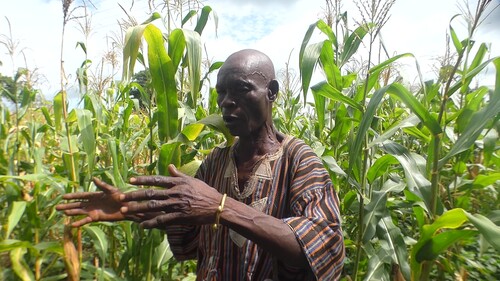
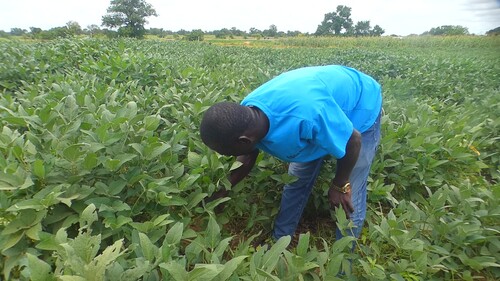
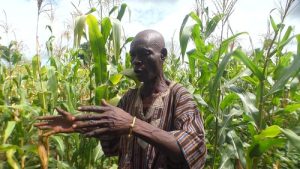
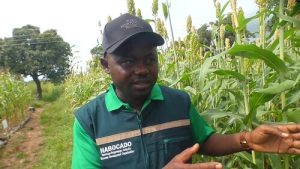
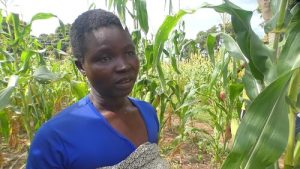
However, the farmers could barely contain their excitement as NABOCADO Team visited their various farms. Smiling and exchanging cheerful words, they expressed heartfelt gratitude to NABOCADO for giving them the chance to learn how to farm in a more meaningful way using compost. This new knowledge had transformed their approach to agriculture, and their appreciation was as vibrant as the crops before them.
The SCRAS Project is funded by Misereor and Bistum Münster.
Source: Apexnewsgh.com/Ngamegbulam Chidozie Stephen