
Dr. Amoako Baah Ditches NPP, Launches New Patriotic Front Over Leadership Concerns

Dr. Richard Amoako Baah, a prominent political scientist and former NPP member, has launched the New Patriotic Front (NPF), citing deep disillusionment with the party’s current leadership. Apexnewsgh reports The NPF aims to provide a credible alternative to Ghanaians seeking honest and accountable leadership. According to Dr. Amoako Baah, the NPP has deviated from its core values and principles, succumbing to arrogance, incompetence, and corruption under President Nana Addo Dankwa Akufo-Addo’s leadership. “The NPP that we once knew and believed in is no more. It has been destroyed by arrogance, incompetence, and deeply rooted corruption,” he stated. Dr. Amoako Baah accused the Akufo-Addo administration of betraying the ideals of the Danquah-Busia-Dombo tradition, stating that governance has become centered around self-interest and sycophancy rather than service to the nation. “What we are witnessing is not just poor leadership—it is a complete collapse of values. The NPP has become a tool for personal enrichment,” he added. The New Patriotic Front plans to unveil its national leadership structure and policy priorities soon. Dr. Amoako Baah also hinted at fielding parliamentary and possibly presidential candidates. This development marks a significant internal split from the NPP, coming at a time when the party is working to consolidate support ahead of the December general elections. Source: Apexnewsgh.com
Ghana to Assume Control of Damang Mine After Gold Fields’ Exit

The Ghanaian government has announced plans to take over the Damang Mine after Gold Fields’ mining lease expires in April 2025. Apexnewsgh reports According to Isaac Tandoh, Deputy Chief Executive Officer of the Minerals Commission, the country is ready to assume full control of the mine. “We will run it,” Tandoh stated bluntly when asked about Ghana’s plans for the mine after Gold Fields’ departure. He emphasized that mining agreements cannot last indefinitely and that the government will support foreign investments but take over when agreements expire. Tandoh dismissed concerns about Ghana’s capacity to manage the mine, highlighting that local expertise can immediately begin working on several unmined smaller pits within the Damang concession. “People have been talking about capacity and capital, but we have a lot of local capacity, including rock shovels, BCMs, engineers, and planners,” he said. The Damang Mine, spread across 23,666 hectares, is located 30km north of Tarkwa in Southwest Ghana. Gold Fields Ghana Holdings Limited currently owns 71.1% of the mine, IAMGOLD owns 18.9%, and the Ghanaian government holds 10%. Tandoh revealed that all discussions held so far point to a state-led operation of the Damang Mine after Gold Fields’ exit. “In all the meetings I have been in and all the discussions I have had, we are looking at the state running the mine. No individual will be made to do that,” he added. With local technical know-how readily available, Ghana is poised to take control of the mine and develop its resources. Source: Apexnewsgh.com
Ghana’s Health Sector Grapples with Donor Funding Shortfall
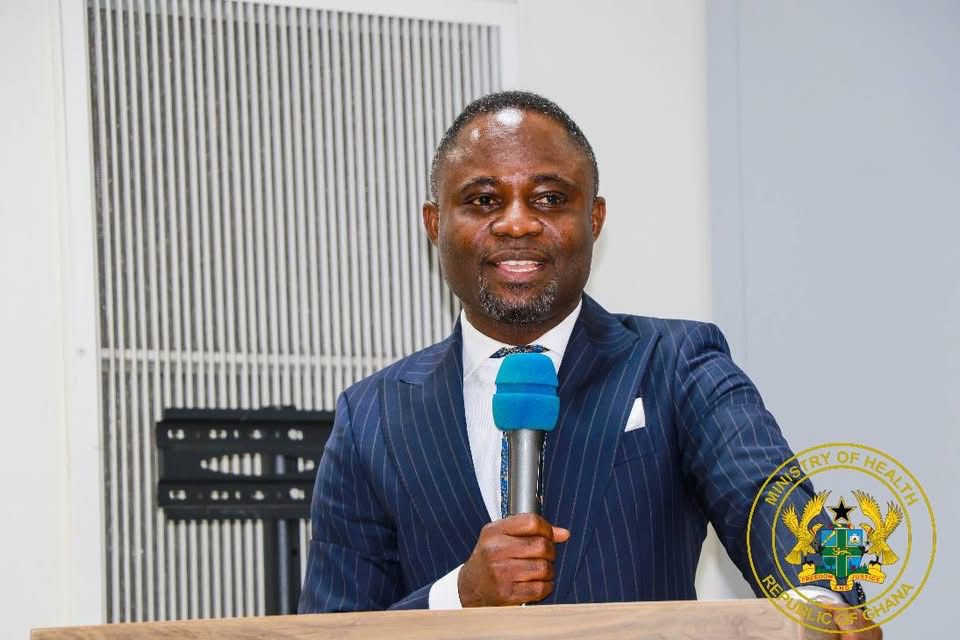
Ghana’s Minister of Health, Kwabena Mintah Akandoh, has revealed that the government requires approximately $25 million to procure essential vaccines for the country this year. Apexnewsgh reports This pressing need stems from the gradual withdrawal of donor support, a trend Akandoh describes as “troubling”. The dwindling aid has left the government with limited alternatives, forcing it to seek new funding avenues. The funding shortfall follows significant cuts to USAID, previously a major contributor to Ghana’s healthcare system. These cuts have affected the supply of essential drugs and financial support, further straining the country’s healthcare resources. Akandoh emphasized the gravity of the situation, stating, “our partners who assist us in procuring most of our vaccines are gradually fading”. Despite these challenges, Ghana has made progress in strengthening its healthcare infrastructure. The European Union has awarded €32 million to support local vaccine manufacturing and pharmaceutical production. This initiative aims to develop a comprehensive ecosystem for training skilled workers, enhancing research and development, and strengthening regulatory frameworks. The EU’s commitment to supporting Ghana’s development goals includes investments in local vaccine manufacturing and pharmaceuticals. Ghana has also received support from other international organizations, including Gavi, the Vaccine Alliance. Through Gavi, Ghana has accessed funding for various health programs, including vaccine procurement and immunization initiatives. In 2024, Ghana received approval for proposals worth millions of dollars to support its health sector, including IPV support and TCA support. Additionally, the EU and German Development Cooperation have jointly launched a project to strengthen the Ghana Food and Drugs Authority’s capacity to regulate vaccine manufacturing. The Ghanaian government is working to mitigate the impact of the funding shortfall by exploring alternative funding sources and strengthening local vaccine production. With the EU’s support, Ghana aims to become a regional vaccine manufacturing hub, reducing its reliance on external aid. As the country navigates these challenges, the government remains committed to ensuring access to essential healthcare services for its citizens. Source: Apexnewsgh.com
Free Dialysis Program Expanded Nationwide to Aid Renal Patients
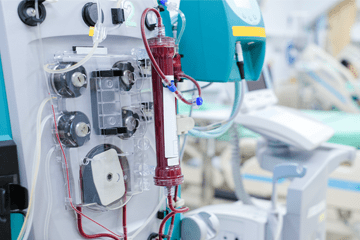
The National Health Insurance Authority (NHIA) in Ghana is set to expand its free dialysis program nationwide, aiming to increase access to life-saving treatment for renal patients. Apexnewsgh reports Under this initiative, the NHIA will acquire more dialysis machines and essential medical supplies for healthcare facilities across the country. According to Dr. Victor Bampoe, Chief Executive Officer of the NHIA, the program seeks to incorporate more patients with kidney conditions into the National Health Insurance Scheme (NHIS). “The previous government started the free dialysis, and there are 20 centers where the service is offered free of charge. What is needed is to expand it to make it more sustained in terms of funding,” Dr. Bampoe explained. By doing so, the program will transition from relying on specific funds to becoming a standard part of the NHIS, covering dialysis treatment like any other disease. This expansion is expected to alleviate the significant financial burden on patients and their families, many of whom struggle with the high costs of dialysis treatment in Ghana. By providing greater access to critical healthcare services, the NHIA’s initiative aligns with the government’s broader strategy to improve healthcare outcomes for its citizens Source: Apexnewsgh.com
Harvard in Standoff with Trump Administration Over Federal Funding

The Trump administration has announced a freeze on $2.2 billion in federal grants and $60 million in contracts for Harvard University due to the school’s refusal to implement policy changes demanded by the administration. Apexnewsgh reports These demands include ending diversity, equity, and inclusion (DEI) programs, banning masks at campus protests, enforcing merit-based admissions and hiring, and reducing the influence of faculty viewed as politically active. Harvard University President Alan Garber坚ently rejected these demands, stating, “We will not surrender our independence or constitutional rights.” Garber added that most of the demands amount to government overreach into academic freedom. The university’s firm stance has led to a growing standoff between elite academic institutions and the federal government. Harvard faculty and the American Association of University Professors have filed a lawsuit seeking a temporary restraining order to block the funding freeze. The lawsuit argues that the administration is violating the First Amendment and attempting to dictate university policy. This move underscores the university’s commitment to defending its autonomy and academic freedom. The funding freeze could significantly impact Harvard’s research initiatives, potentially forcing some researchers to halt their work. However, the Department of Education has clarified that federal student loans and Pell grants will remain unaffected. Harvard President Garber assured students that they should continue to register for and attend classes without interruption. The standoff between Harvard and the Trump administration has sparked widespread debate, with some lawmakers expressing support for the administration’s actions. House Speaker Mike Johnson defended the order, stating it’s an application of common sense. Conversely, critics argue that the freeze would harm scientific research and local governments. Massachusetts Attorney General Andrea J. Campbell has joined 22 other state attorneys general in announcing plans to sue the White House, calling the freeze unconstitutional. Source: Apexnewsgh.com
Teen killed parents as part of Trump assassination plot, says FBI

A high school student from Wisconsin killed his parents as part of a larger plot to assassinate US President Donald Trump, the FBI has said. Nikita Casap, 17, has been charged with the killing of his mother, Tatiana Casap, 35, and his stepfather Donald Mayer, 51, who were found dead at their home on 28 February. A newly unsealed search warrant also alleges that the suspect’s phone contained material relating to a neo-Nazi group called the Order of Nine Angles and praise for Adolf Hitler. Investigators also discovered antisemitic writings in which the accused allegedly detailed his plans to kill Trump as a part of a broader goal to overthrow the government, according to the court document. The suspect is accused of first-degree intentional homicide and seven other felony counts, including hiding a corpse and identity theft. The parents were found dead when local officials visited their home in the village of Waukesha, near Milwaukee, after the boy failed to attend school for two weeks. Mr Mayer had died from a gunshot wound to the head, while Ms Casap died from multiple gunshot wounds on or about 11 February, according to a criminal complaint concerning the teenager. The same day their bodies were discovered, the defendant was pulled over by police in the state of Kansas while driving a 2018 Volkswagen Atlas belonging to Mr Mayer, investigators said. In the car was Mr Mayer’s Smith & Wesson .357 pistol, four credit cards belonging to the couple, “multiple pieces” of valuable jewelry, a pried-open safe and $14,000 (£10,700) in currency, most of which was inside a Bible, said the criminal complaint. In writings found by investigators, the suspect expressed white supremacist beliefs and called for Trump’s assassination to start a political revolution, according to the search warrant. The alleged double murder “appeared to be an effort to obtain the financial means and autonomy necessary to carrying out his plan”, investigators wrote. The court documents allege the suspect was speaking with people in Russia about plans to kill his parents. Authorities said the teenager paid for a drone and explosives to use in an attack – and had plans to escape to Ukraine. “He was in touch with other parties about his plan to kill the president and overthrow the government of the Unites States,” investigators wrote. The suspect had a preliminary court hearing on 9 April. He has not entered a plea to the charges. He is next due to appear in court for an arraignment – where he will be formally given the charges against him – on 7 May, according to the Waukesha County Court. He is being held on a $1m (£764,000) bond. Source: BBC
MP Questions Government’s Sanitary Pad Allocation

Member of Parliament for Akim Swedru Constituency, Kennedy Osei Nyarko, has expressed strong disappointment over the government’s decision to allocate GHC300 million for procuring sanitary pads for female students in public schools. Apexnewsgh reports In a statement shared on social media, Nyarko questioned the rationale behind this expenditure, suggesting that the funds could be better utilized establishing a local factory to manufacture sanitary pads. Nyarko believes that setting up a factory would not only reduce costs but also create jobs and ensure a steady supply chain for schools and health institutions nationwide. “If the Government has 300 million Ghana Cedis to procure sanitary pads for female students in our public institutions, why can’t the Government use the same money to set up a factory to produce them? That will even cost less than the 300 million allocated for 2025,” he wrote. Government officials have defended the allocation, stating it’s a pro-poor intervention aimed at improving menstrual health and promoting girl-child education. However, critics argue that this approach lacks long-term vision. “This country cannot continue to rely on imported solutions to basic needs when we have the capacity to manufacture them here,” Nyarko added. Nyarko’s comments have gained traction among development economists and local manufacturing advocates. They argue that a sanitary pad factory would deliver lasting economic and social benefits, aligning with Ghana’s growing focus on promoting local industries. He believe by investing in local production, Ghana can reduce reliance on imports and create sustainable solutions for its citizens. Source: Apexnewsgh.com
Newly Posted Teachers Protest at GES Headquarters

Hundreds of newly posted teachers from the Colleges of Education, assigned to the Ashanti Region in July 2024, staged a protest at the Ghana Education Service (GES) headquarters in Accra on Monday, April 14, demanding immediate payment of their outstanding salaries. The teachers, who have not received their salaries for seven to eight months, are struggling to make ends meet. According to Adomako Korankye, President of the group, over 700 newly recruited teachers have been affected by the delay. Many are finding it hard to survive without a steady income, and some have even been forced to take up other jobs to make ends meet. Additionally, a significant number of teachers are yet to receive their staff identification numbers, a key requirement for salary processing. The protesting teachers are calling on the Ministry of Education and the GES to act swiftly to resolve the issue and ensure that staff IDs are issued without further delay. “The financial burden is becoming unbearable. Many of us are struggling to make ends meet after months of dedicated service without pay,” Mr. Korankye stated. They are also seeking clarity on when their arrears would be settled. Following the protest, the Director-General of GES, Professor Ernest Kofi Davis, met with representatives of the teachers behind closed doors. During the meeting, GES assured the group that a committee had been established to address their concerns, including representatives from the affected teachers to ensure transparency and expedite solutions. The teachers, however, remain vigilant, stating they won’t feel fully relieved until the money is in their accounts. Source: Apexnewsgh.com
Tema Community Rises Up Against Potential MCE Appointment

Tension is escalating in Tema as traditional priestesses, known as Wulomoi, from Tema Newtown staged a dramatic spiritual protest against the rumored nomination of Madam Ebi Bright as the next Metropolitan Chief Executive (MCE) for the Tema Metropolitan Assembly (TMA). Apexnewsgh reports The protest, held at the TMA forecourt, featured a powerful display of traditional rites, including the slaughtering of a sheep, libations with schnapps, and spiritual incantations. Dressed in red cloths and chanting war songs, the priestesses invoked their ancestral spirits to reject what they termed an “imposition” of a non-indigene on the people of Tema. This demonstration comes amid widespread speculation that President John Dramani Mahama is considering appointing Madam Ebi Bright, former Parliamentary Candidate for Tema Central in the 2024 elections, as MCE. The priestesses, backed by other traditional figures, argue that the position of MCE should be reserved for a native of Tema who is deeply familiar with the area’s traditions, values, and governance needs. They emphasize that Tema has shown restraint in the past, allowing the government to appoint MCEs in neighboring Ashaiman without interference. However, they warn that such tolerance will not extend to Tema itself. “We will not accept anyone who is not an indigene,” stated the spokesperson for the group. “We will continue to resist this appointment until our voice is heard and an indigene is named as MCE.” The community’s resolve is clear: they will not back down until their demands are met, and a native son or daughter is appointed to lead the TMA Source: Apexnewsgh.com
Ghana Nears Staff-Level Agreement with IMF

As the IMF wrapped up its fourth review mission, there were whispers of a potential staff-level agreement on the horizon, despite the country having missed some crucial targets the previous year. Apexnewsgh reports Behind closed doors, sources close to Citi Business News revealed that a provisional agreement was still a possibility. However, this would depend heavily on the government’s commitment to implementing some vital corrective measures. The stakes were high, and the government knew it had to act decisively. As officials gathered to discuss their strategy, a clear focus emerged. The government identified two key areas that needed immediate attention: tax reforms and improvements in public procurement. They understood that enhancing revenue mobilization and strengthening public financial management would be essential to their success. Additionally, streamlining expenditure and increasing fiscal transparency in public procurement were seen as necessary steps to regain the confidence of international stakeholders. With the IMF’s two-week review commencing on April 2, Ghana’s economic performance and structural reforms were scrutinized. The outcome of this review was particularly critical; a positive result could unlock approximately $360 million in financial support for the nation. As June approached, the IMF was expected to present Ghana’s situation to its Executive Board, a pivotal moment that could set the stage for the next tranche of funds. Progress was already evident in Ghana’s economy. The nation had received $1.92 billion under the $3 billion Extended Credit Facility, and recent data painted a promising picture. The country experienced a GDP growth rate of 5.8% in the first half of 2024, spurred by positive developments across various sectors. Furthermore, Ghana had managed to outperform the inflation targets set in the program and was making strides in its debt restructuring efforts. As officials looked ahead, the importance of reaching a successful agreement with the IMF grew clearer. Such an agreement would not only bolster macroeconomic stability but also restore investor confidence, guiding Ghana along its recovery path. The government remained steadfast in its commitment to implementing sound fiscal policies, strengthening its financial sector, and working tirelessly to rebuild trust in the country’s economy. In this crucial moment, the hope was that Ghana would emerge stronger and more resilient than ever before. Source: Apexnewsgh.com