
Bolgatanga Technical Institute Shut Down After Violent Student Protest
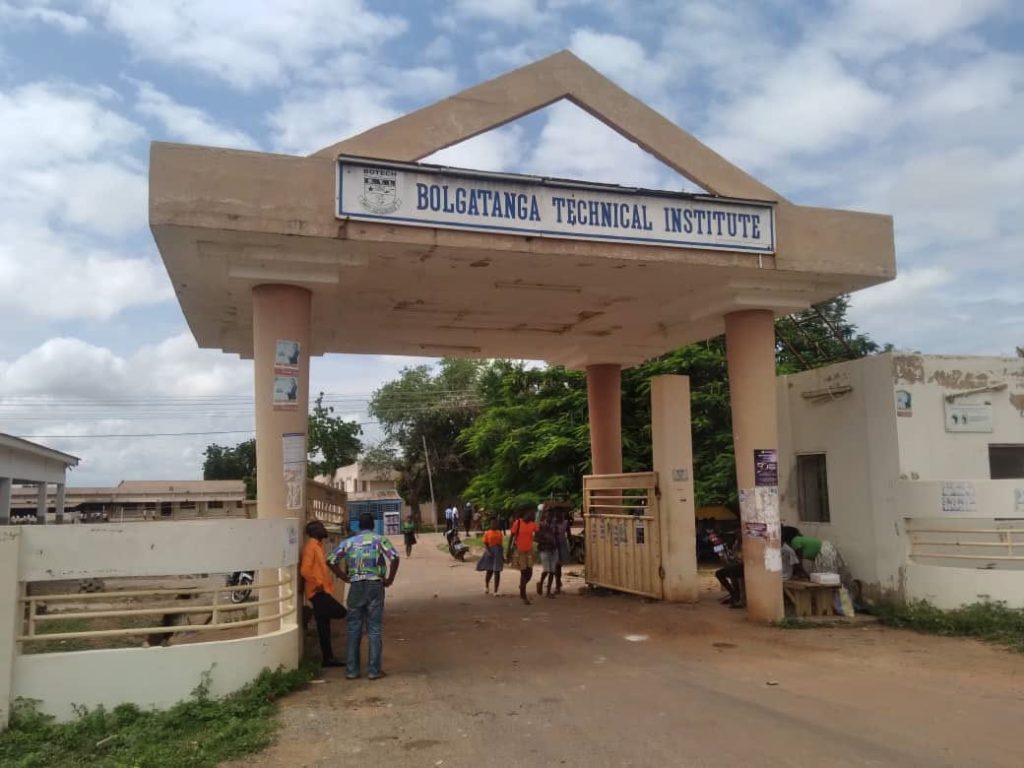
The Bolgatanga Technical Institute in Ghana’s Upper East Region has been closed down indefinitely following a violent student protest that erupted early Friday morning. The disturbance, which began around 12:30 am, resulted in six students being injured and several school properties destroyed by fire, including the library and the senior housemaster’s office. According to reports, the violence was sparked by the suspension of six students for misconduct. Their friends, in a show of solidarity, allegedly mobilized on Thursday night and launched an attack on the school in retaliation. The situation quickly escalated, with police and fire personnel rushing to the scene to restore calm and extinguish the blaze. The injured students were rushed to the Upper East Regional Hospital for treatment, while the Regional Security Council ordered the closure of the school to help de-escalate tensions and support ongoing investigations. Six students suspected to be behind the violence are currently wanted by the police. This is not the first time the Bolgatanga Technical Institute has experienced student unrest. In 2022, the school was temporarily shut down after students protested against strict invigilation during exams, vandalizing school properties and clashing with police. Similarly, in 2015, the school was closed down indefinitely after students rioted over the deplorable condition of the dormitory buildings. The Upper East Regional Minister, Stephen Yakubu, has called on the students to be disciplined and desist from taking the law into their own hands when they have grievances. The school’s principal has also appealed for calm, stating that the damages to the school and personal properties will be paid for by the students responsible. Source: Apexnewsgh.com
Fuel Prices in Ghana Set for Mixed Adjustment in August’s Second Pricing Window
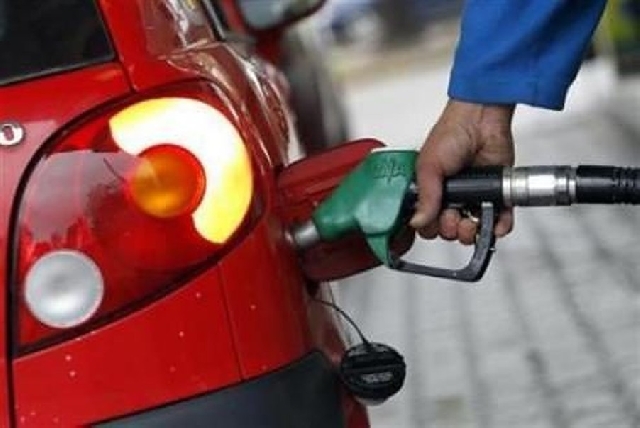
Ghanaians are bracing for a mix of changes at the fuel pumps. According to the Chamber of Oil Marketing Companies (COMAC), petrol and liquefied petroleum gas (LPG) are expected to climb slightly, while diesel will see a modest decrease. COMAC’s projections indicate that petrol prices at the pump may rise between 0.39% and 2.71%. LPG, too, is set to increase by 0.15% to 2.34%. In contrast, diesel is forecast to drop marginally by 0.21% to 0.72% starting August 16. What’s behind these shifts? COMAC explains that global petroleum product price trends are mixed, and Ghana’s cedi has experienced a slight depreciation against the US dollar. Each product’s supply and demand dynamics are also playing a role. In a recent statement, COMAC elaborated: “Following the slight dip in crude prices, diesel fell sharply by 5.22%, while petrol and LPG rose marginally by 1.89% and 2.87%, likely due to product-specific demand and supply factors. “For the 1st August 2025 pricing window, based on average exchange rates from July 27th to August 12th, the Ghanaian cedi experienced a slight depreciation against the US dollar. The rate shifted from GHS 10.68 to GHS 10.77, reflecting a 0.87% decline.” During the review period, Brent crude slipped 0.23% to $70.26 a barrel, as higher output from OPEC+ and non-OPEC producers, softer market sentiment, and reduced speculative positions weighed on prices. This environment led to a sharper global drop in diesel prices by 5.22%, while petrol and LPG rose by 1.89% and 2.87% respectively. The weakening cedi, sliding 0.87% from GHS 10.68 to GHS 10.77 per dollar, also nudged import costs higher. Overall, COMAC says the projected adjustments at the pump reflect current global market trends, with minimal increases expected for petrol and LPG in the upcoming pricing window. Source: Apexnewsgh.com
UK, France and Germany ready to reimpose sanctions on Iran over nuclear programme
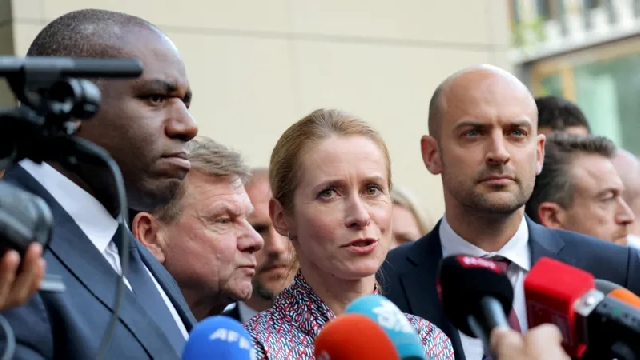
The UK, France and Germany have told the UN they are ready to reimpose sanctions on Iran over its nuclear programme if it fails to resume talks by the end of August. The three countries, known as the E3, said they were prepared to trigger a “snapback” mechanism – meaning previous sanctions would be reinstated – unless Iran resumes negotiations. The E3 said they had offered to extend a deadline for negotiations to the end of August, which they said Iran has not replied to. Iranian lawmaker Manouchehr Mottaki said Iran’s parliament was ready to withdraw from a nuclear deal which restricted its nuclear programme if new sanctions were put in place, the Iranian Defa Press news agency reported. The E3’s letter comes after initial talks between their delegations and Iranian diplomats took place in Istanbul, Turkey last month. In the letter to the UN and its chief António Guterres, three foreign ministers – Jean-Noël Barrot from France, David Lammy from the UK and Johann Wadephul from Germany – said they would enforce severe sanctions on Iran unless it agrees to limit its nuclear programme. The E3 said their offer of an extension to the negotiations “remained unanswered by Iran”. “We have made it clear that if Iran is not willing to reach a diplomatic solution before the end of August 2025, or does not seize the opportunity of an extension, the E3 are prepared to trigger the snapback mechanism,” the letter said. They added they were committed to using “all diplomatic tools” to ensure Iran does not develop a nuclear weapon – something Iran has denied intending to do. Last month, Iran said it was prepared for further talks but only once sanctions already in place were lifted and its right to a civilian nuclear programme was agreed. Sanctions on Iran’s nuclear programme were previously lifted in 2015 after Iran signed a nuclear deal with the E3, the US, Russia and China, agreeing limits on its nuclear operations and to allow international inspectors entry to its nuclear sites. The deal is due to expire in October. The US withdrew from the deal in 2018 during President Donald Trump’s first term, with the leader saying it did too little to stop Iran from creating a pathway to a nuclear bomb. With its withdrawal, all US sanctions were re-imposed on Iran. Iran retaliated by increasingly breaching the restrictions. In May, the UN nuclear watchdog, the International Atomic Energy Agency (IAEA), said it had more than 400kg of uranium enriched to 60% purity – well above the level used for civilian purposes and close to weapons grade. In June Iran’s parliament suspended cooperation with the IAEA after tensions with Israel and the US came to a head. Israel launched attacks on Iran’s nuclear facilities the same month, triggering a 12-day war. The US bombed a number of Iran’s nuclear sites, bringing US-Iran talks to an abrupt end. Following the strikes, the E3 countries stepped up warnings to Iran about its suspension of cooperation with the IAEA. The BBC has contacted the UK Foreign Office for comment. The Iranian mission to the UN did not immediately respond to the BBC’s request for comment. Source: bbc.com
GFA considering VAR introduction again with new GPL broadcaster unveiled

Alex Kotei, Referees Manager, Ghana Football Association (GFA), has broached the Video Assistant Referee (VAR) technology being introduced into the Ghana Premier League (GPL) again. His comment followed GFA revealing Adesa Production Limited (APL) as the GPL’s new broadcast partner to handle production, ahead of the 2025/2026 football season. “We could not implement VAR in the past because the league’s broadcasting was not up to standard,” Kotei said, speaking to Akoma FM. “For VAR to work effectively, you need excellent broadcasting,” he explained. “With the new broadcaster (APL), we believe that in the coming matches we will then know whether to start using the VAR or not,” he noted. GPL 2025/26 is set to begin on September 12. Read: VAR might rule on yellow cards in EPL in future Source: Citifmonline
Ghana’s High Commissioner-designate Calls for Tough Measures to Tackle Galamsey

Ghana’s High Commissioner-designate to South Africa, Mr. Benjamin Quarshie, painted a vivid picture of the urgent need to curb illegal mining, known locally as galamsey, in Ghana. Mr. Quarshie did not mince words as he proposed bold and controversial steps to deter illegal miners. “The galamseyers must be made to drink water from the contaminated rivers if arrested, so they come to terms with the destruction they have caused,” he stated. His remarks were aimed at driving home the devastating environmental impact galamsey has had on Ghana’s water bodies and communities. Drawing on his observations from South Africa, Mr. Quarshie recounted how a tragic landslide involving illegal miners, known there as Zama Zama, prompted the South African authorities to take a hardline approach. The government’s refusal to show leniency or sympathy, he explained, discouraged others from continuing such environmentally destructive activities. Mr. Quarshie emphasized that Ghana must shift its focus beyond the small-scale operators, whom he referred to as “the small flies.” Instead, he called on the government to go after the real kingpins and financiers who fuel illegal mining operations across the country. To find a sustainable solution, Mr. Quarshie advocated for a national dialogue on galamsey. He urged all stakeholders to come together and address the environmental and socio-economic challenges posed by illegal mining, hoping that such a conversation would pave the way for long-term strategies to combat the menace. With these strong words and practical suggestions, Mr. Quarshie has set the stage for renewed debate on how Ghana can finally put an end to galamsey. Source: Apexnewsgh.com
Schools Under Siege
By Mabel Darko Boateng “Children must be safe and feel safe in school; only then can they truly learn.” — Arne Duncan (Former U.S. Secretary of Education, 2009 – 2016) Introduction Ghanaian schools, once regarded as safe havens for learning and discipline, now face an alarming wave of violence that threatens education at all levels. From Senior High Schools (SHSs) to universities, conflict, weapon possession, and serious fights have created fear and uncertainty for students, teachers, and communities. Incidents of School Violence In January 2025, clashes broke out between Accra Technical Centre and Kinbu Secondary Technical School, followed by a machete fight between Kumasi Technical Institute and Kumasi Anglican SHS. Again, February recorded a stabbing at Salaga SHS, where police recovered a pistol and ammunition, arresting 20 students. Also, Sokode SHS in the Volta Region was shut down after violent confrontations with residents. Tragedy struck Adventist SHS at Bantama in April, when second-year student Suzzy Pinamang suffered a permanent eye injury after a male classmate allegedly brought a gun to class and accidentally discharged it. In June, ethnic tensions at Nkwanta SHS in the Oti Region claimed three lives: two girls shot on their way home and a boy killed by a stray bullet in class. July brought a grim succession of incidents as Bawku SHS became a centre of tragedy when final-year student Hakim Kundima was fatally shot on campus. That same day, two students at Nalerigu SHS were killed in related shootings. While it can be said that these occurred in conflict areas, school violence is no longer confined to conflict zones. The month also saw a fatal stabbing over money at St Joseph Technical Institute, the killing of a Wa T.I. Ahmadiyya SHS student after a quarrel over an unwanted video, chaos at Zuarungu SHS over a stolen phone, and a viral video from Accra Academy showing students attacking a junior with a cutlass. The violence has also reached tertiary institutions. In February, Kwame Nkrumah University of Science and Technology was shaken by the suspected murder of final-year student Joana Deladem Yabani. A University of Energy and Natural Resources student survived a machete attack while returning from night classes in March. In contrast, gunmen killed one student and injured another at Gambaga College of Education. Also, in April, a first-year student at the University of Education, Winneba, died by suicide. Teachers have also become targets. Assaults on educators are increasing, with unions accusing authorities of inaction and advising members to withdraw services when threatened. When those entrusted with shaping young minds cannot feel safe, the foundation of education begins to crumble. Causes of School Violence The drivers of this surge in violence are complex: weak discipline enforcement, peer pressure, poor parental supervision, social media glorification of aggression, and easy access to illegal weapons. In troubled areas like Bawku, machetes, pangas, and guns have entered campuses. Response by Authorities In Bawku and Nkwanta (Oti region), authorities closed all affected schools, evacuating students preparing for the West African Senior School Certificate Examination (WASSCE). The Small Arms Commission and Peace Council are working to curb the flow, while the GES and National School Inspectorate Authority have intensified code-of-conduct enforcement, inspections, and security agency collaboration. Education Minister Haruna Iddrisu’s July 2025 directive for urgent inspections and disciplinary action signalled official recognition of the crisis. Consequences of School Violence The cost is profound: lives lost, physical and psychological trauma, eroded trust between teachers and students, and disrupted academic activities. Beyond discipline issues, these attacks undermine education’s mission to provide safe, supportive spaces for growth and social cohesion. Closures and curfews derail exam preparation, while repeated exposure to violence leaves students traumatised, affecting attendance and performance. Way Forward Addressing this siege demands a comprehensive approach, stronger campus security, peer mediation, counselling, positive student leadership, and deeper parental and community involvement. Ethnic and communal disputes that spill into schools must be addressed at their roots. Securing campuses must be non-negotiable, with long-term measures like risk mapping, reinforced perimeters, and rapid-response systems. Alternative learning platforms, from radio lessons to safe temporary sites, should ensure education continues during crises (activating Education-in-Emergencies should be non-negotiable). Schools must also rebuild civic responsibility. Discipline should be firm but fair. Counselling services should be expanded, and teachers trained in trauma-informed care and conflict resolution. The justice system must act decisively; those who bring weapons to school or orchestrate attacks must face swift consequences. “Investigations are ongoing” will not save the next student. When impunity ends, deterrence begins. Conclusion Ghanaian schools are at a crossroads. Ending this siege requires not just soldiers at the gates, but a collective refusal by parents, chiefs, pastors, and policymakers to normalise violence. If we lose the classroom as a place of peace, we will lose more than exam results and the very citizens who can hold our democracy together. That is a price the nation cannot afford to pay. ***The writer is a Communications Associate with the Institute for Education Studies (IFEST_Ghana), an education think tank in Ghana.
NPP needs Dr. Adutwum as Presidential candidate because of his Leadership skills–Opoku
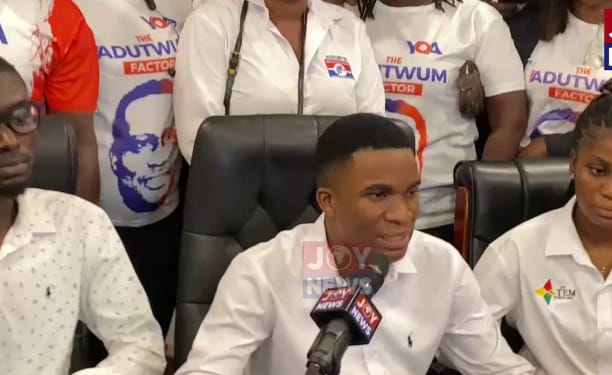
A massive group of students and supporters of Dr. Yaw Osei Adutwum, the former Education Minister, has thrown their weight behind his presidential ambitions within the New Patriotic Party (NPP). Led by Prosper Opoku, the students believe that Dr. Adutwum is the ideal candidate to lead the party to victory. According to Opoku, the NPP doesn’t need just any flagbearer; it needs a president with the leadership skills and vision to drive the party forward. “As of now, the NPP doesn’t need a flagbearer; we need a president,” Opoku declared when he led the student group to pick up a nomination form on behalf of Dr. Adutwum. Opoku praised Dr. Adutwum’s performance as Education Minister, highlighting his achievements and leadership skills. “The Former Education Minister did massively well in his role as a minister of education and as well has the leadership skills to represent NPP,” he stated. The students’ leader called on all party loyalists to rally behind Dr. Adutwum and support his presidential bid. With Dr. Adutwum’s vision and leadership, the students believe that the NPP can achieve great things and build a brighter future for Ghana. As Dr. Adutwum embarks on his presidential journey, the support of these students and party faithfuls will undoubtedly play a crucial role in his campaign. With their backing, Dr. Adutwum is poised to make a strong bid for the NPP’s leadership and potentially Ghana’s presidency. Source: Apexnewsgh.com