
Ghana’s President Mahama Slams US Over Visa Denial to Palestinian Leader

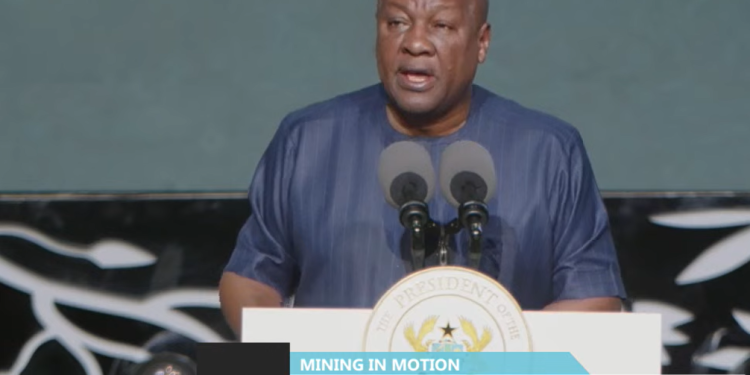
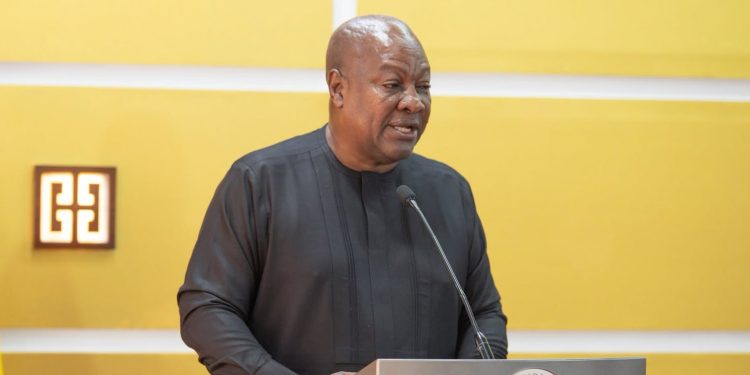
Ghanaian President John Dramani Mahama has strongly criticized the United States for denying visas to Palestinian Authority President Mahmoud Abbas and his delegation, preventing them from attending the 80th UN General Assembly. Mahama described the move as “deeply troubling” and warned that it sets a dangerous precedent for the United Nations. Delivering his address at the UN General Assembly in New York on September 25, 2025, Mahama reaffirmed Ghana’s unwavering support for Palestine, recalling the country’s formal recognition of the State of Palestine in 1988. He emphasized Ghana’s consistent backing of a two-state solution, dismissing claims that this would reward militant groups like Hamas. Mahama also highlighted the dire humanitarian situation in Gaza, condemning the “collective punishment” of Palestinians. He criticized the UN for using vague language to describe the situation, stating, “For nearly two years, and for fear of reprisals, we here in this General Assembly have been playing hide and seek with language to find the right words to help us avoid or excuse what we all know is taking place in Gaza.” The President urged the UN to take decisive action to end the “crimes” being committed in Gaza, warning that continued delays in global intervention would lead to more unnecessary loss of life. Thousands of Palestinians have already lost their lives in the past two years, Mahama lamented. In his address, Mahama called on the UN to demonstrate moral courage and act decisively to resolve the Israel-Palestine conflict. This incident highlights the complexities of international diplomacy and the challenges faced by global leaders in addressing sensitive geopolitical issues. Source: Apexnewsgh.com
Government Disburses Over GHS2 Billion for Community Development Through District Assemblies Fund
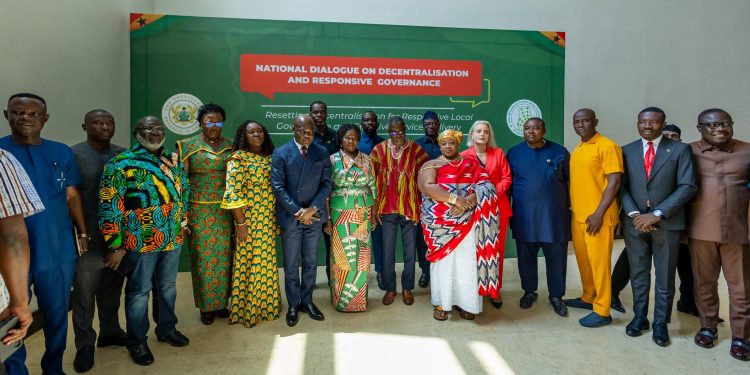
The government has released more than two billion Ghana cedis through the District Assemblies Common Fund (DACF) to bolster development projects at the grassroots level. The announcement was made by Vice President Prof. Naana Jane Opoku-Agyemang during the National Dialogue on Decentralisation and Responsive Governance. The two-day event, themed “Resetting Decentralization for Responsive Local Governance and Effective Service Delivery,” brought together key stakeholders and development partners to chart a course for reforming and strengthening Ghana’s local governance system. Prof. Opoku-Agyemang highlighted that the substantial allocation is aimed at improving service delivery and ensuring that resources are distributed equitably across all districts. “As government works to improve the disbursement of resources to our districts, we must also note that unprecedented amounts are being transferred directly to our local governments. You must be happy about that. So far, over 2 billion Ghana cedis have been disbursed through the District Assembly Common Fund to support development initiatives and improve essential service delivery at the community level. This is just one demonstration of our resolve to see to it that resources are used responsibly, and that the promise of decentralisation translates into tangible improvements,” she stated. The Vice President also stressed the importance of tailoring development interventions to the needs of citizens and grounding all strategies in robust data. “We must ensure that our development interventions respond to the needs and aspirations of our citizens. Our approach must be data and evidence-driven,” she added. The dialogue is expected to shape future policy and drive effective service delivery across Ghana’s local governments. Source: Apexnewsgh.com
President Mahama Declares “The Future is African” at UN General Assembly, Urges Global Recognition of Africa’s Role
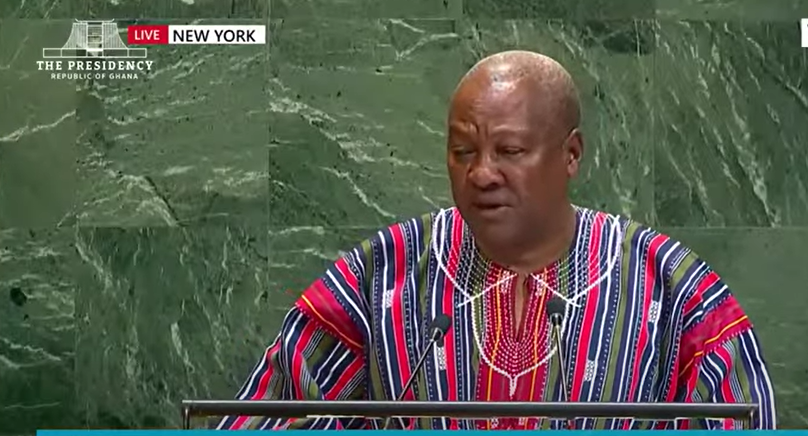
President John Dramani Mahama has boldly proclaimed that the future of the world belongs to Africa, urging the international community to acknowledge the continent’s rising influence in shaping global development and transformation. Addressing world leaders at the 80th Session of the United Nations General Assembly on Thursday, September 25, Mahama spotlighted demographic trends positioning Africa as a central force in humanity’s future. “According to this organisation’s own projections, by the year 2050, more than 25% of the world’s population is expected to come from the African continent. Additionally, by 2050, one third of all young people, aged 15 to 24, will be residing on the African continent,” he stated. Mahama underscored that Africa’s growing, youthful population is more than just a number, it’s a clear signal that the continent will drive global innovation, economic growth, and progress. “So, you see, the future is African,” he declared, adding with emphasis, “Allow me to say this once again, a little louder for the people in the back. The future is African!” He went on to highlight Africa’s current role as a catalyst for change across various sectors, challenging persistent global narratives that overlook the continent’s contributions. “Already today, Africa is a catalyst for human potential and development, as well as for economic reform and ecological stability. Africa is a catalyst for systemic change,” Mahama noted. Acknowledging that some may find this perspective challenging, Mahama pointed to the lingering effects of colonialism, racism, and imperialism. “If this reality, which is fact-based and straightforward, seems provocative or unsettling, perhaps it’s because you’re viewing it through the lens of centuries of racism, colonialism, imperialism, and the resulting implicit bias,” he said. President Mahama’s address served as a clarion call for the world to recognise and embrace Africa’s pivotal role in driving the future of humanity. Source: Apexnewsgh.com
President Mahama Demands Action on Gaza at UN, Condemns Global Silence on Atrocities

President John Dramani Mahama has delivered a forceful appeal for an end to what he called crimes against Palestinians in Gaza, urging world leaders to confront the crisis directly and to call out atrocities for what they are. Speaking at the 80th United Nations General Assembly in New York, President Mahama criticized the Assembly’s reluctance to address the situation head-on. “For nearly two years, and for the fear of reprisal, we here in this General Assembly have been playing hide-and-seek with language to find the right words to help us avoid or excuse what we all know is taking place there. But here’s the thing, it doesn’t matter what you call it: if it looks like a duck, swims like a duck, and quacks like a duck, well then… It must be a duck. The crimes in Gaza must stop,” he declared. Mahama asserted that the suffering of Palestinians could no longer be ignored, pointing to “hundreds of thousands of innocent people” enduring collective punishment and forced starvation simply because they are Palestinian. Reaffirming Ghana’s recognition of Palestine since 1988, President Mahama reiterated his support for a two-state solution, rejecting claims that this would reward Hamas. Instead, he maintained, it remains the best path toward justice and relief for civilians caught in the conflict. President Mahama also condemned the recent decision to deny visas to Palestinian President Mahmoud Abbas and his delegation, calling it a “bad precedent” and a threat to the integrity of the United Nations system. While acknowledging other global challenges, including the rise of nationalism, economic instability, and the erosion of multilateralism, Mahama warned that the crisis in Gaza stands as a moral test for the world’s leaders. Source: Apexnewsgh.com
Vice President Opoku-Agyemang Champions Decentralisation at National Dialogue, Outlines Reset Agenda Reforms

Vice President Prof. Jane Naana Opoku-Agyemang has reaffirmed the government’s dedication to deepening Ghana’s decentralisation process, calling it a central pillar of the Reset Agenda for national development. Speaking at the Maiden National Dialogue on Decentralisation and Responsive Governance, held at the Kempinski Hotel in Accra, the Vice President underscored the vital role of empowered local governments in advancing democracy and sustainable growth. “Building a capable state must begin with functional and ethical local governments. We must commit to giving citizens a stronger voice, as prescribed by the directive principles of state policy in our constitution,” she stated. Highlighting tangible progress, Prof. Opoku-Agyemang revealed that over GHS 2 billion has already been disbursed through the District Assemblies Common Fund, fuelling community-level development and essential services. However, she emphasized that resources alone are not sufficient, urging data-driven, evidence-based approaches that directly address citizens’ needs. Drawing on international lessons, the Vice President pointed to Uganda’s success, where fiscal transfers paired with robust citizen monitoring have led to marked improvements in health and education. “When decentralisation is matched with real empowerment and accountability, the results can be profound,” she remarked. Unveiling the government’s priorities under the Reset Agenda, she announced several key reforms: increasing allocations to the District Assemblies Common Fund, moving towards the election of Metropolitan, Municipal, and District Chief Executives (MMDCEs), supporting assemblies to boost their own-source revenues, and leveraging local income to attract private investment for development. Prof. Opoku-Agyemang also disclosed that work is progressing on the National Decentralisation Policy and Strategy (2026–2030), which aims to devolve greater power and resources from the centre to local governments. The two-day dialogue convened government officials, Members of Parliament, development partners, traditional and religious leaders, and civil society actors to help shape Ghana’s policy direction for the next five years. “Let us envision a Ghana where governance is closer to the people, where institutions are responsive, and where citizens are active participants in shaping their paths,” the Vice President declared as she officially opened the dialogue. Source: Apexnewsgh.com
Ghana Law Society Pledges Support to Chief Justice, Reaffirms Commitment to Justice and Democracy

The newly incorporated Ghana Law Society (GLS) has formally introduced its executive members to the recently nominated Chief Justice, His Lordship Paul Baffoe-Bonnie, offering their full support and a commitment to strengthening the administration of justice in Ghana. At a press briefing, GLS General Secretary, Lawyer Samuel Atukwei Quaye, explained that the visit was to congratulate the Chief Justice on his nomination and to assure him of the Society’s readiness to collaborate with the Judiciary. “We are, first and foremost, lawyers, and as part of the Bar, it is crucial that we do everything possible to help deepen democracy and ensure a fair and just administration of justice in this country,” Lawyer Quaye stated. He added, “We came to assure him of our support and to formally introduce the Ghana Law Society, as he will be the head of the Judiciary in Ghana.” Outlining the GLS’s core mission, Quaye emphasized supporting the Judiciary, strengthening the legal profession, and safeguarding democracy. Since its incorporation in 2022, the GLS has grown to over 500 members, establishing itself as a strong voice within the legal community. When asked about the formation of a new lawyers’ Association alongside the longstanding Ghana Bar Association (GBA), Lawyer Quaye stressed the importance of Freedom of Association as enshrined in the constitution, noting that institutional growth is a hallmark of a developing democracy. “The Ghana Law Society is simply another organisation of lawyers that has emerged, and we believe the country will accept and support it to grow,” he explained. Quaye clarified that the GLS’s purpose is not to rival the GBA but to complement its work. With more than 7,000 lawyers in Ghana, he argued, a single association cannot represent all legal professionals. “At the right time, we will have joint programmes to demonstrate that we are not here to compete or fight but to support what is already being done.” The GLS executives, accompanied by the Society’s founding fathers, reaffirmed their dedication to advancing justice and contributing positively to Ghana’s democratic progress. Source: Apexnewsgh.com
Ghana’s Tourism Sector Soars as Visitor Spending Hits GHS15.2 Billion
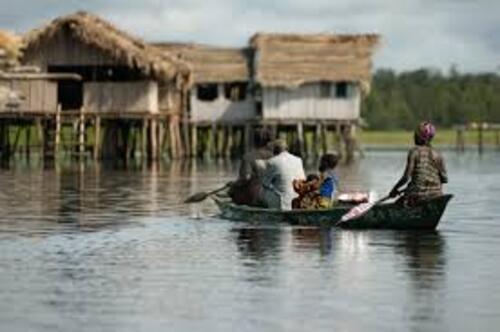
Ghana’s tourism sector is experiencing a remarkable upswing, with the latest figures from the Ghana Statistical Service revealing that inbound overnight visitors spent a record GHS15.2 billion between October 2022 and September 2023. According to the new report, 888,584 overnight visitors—representing nearly 99% of all international arrivals—powered a sharp rebound in both travel and spending. The tourism boom reached its peak in the third quarter of 2023, with arrivals surging by 61.6% compared to the final quarter of 2022. This growth was propelled by tourists from West Africa, Europe, the Americas, and Asia. Accommodation and food services emerged as the biggest winners, accounting for almost 63% of total spending. Hotels saw a notable rise in demand, recording 146,571 stays in Q3 2023 alone. Business and professional travellers led the way in expenditure, contributing GHS2.7 billion in a single quarter. Meanwhile, American tourists posted the highest per-capita spending, averaging GHS28,233 each. Top attractions such as Cape Coast Castle, Independence Square, and Kakum National Park drew the largest visitor numbers, with cultural tourism and heritage experiences at the forefront of the sector’s appeal. Despite these successes, officials caution that tourism remains heavily focused around Accra and the central corridor, highlighting untapped opportunities in other regions. Government Statistician Dr. Alhassan Iddrisu noted that the findings provide a roadmap for further growth, recommending the diversification of attractions beyond the capital, enhancement of visitor services, and greater integration of tourism revenues into local communities and small businesses. With an average stay of 12 nights and a growing appetite for cultural and leisure travel, Ghana is cementing its reputation as a leading African destination—not only for heritage tourism but also for business, festivals, and high-value leisure experiences. Source: Apexnewsgh.com
Health Minister Akandoh Urges Self-Financing as U.S. Aid Suspension Exposes Ghana’s Vulnerability
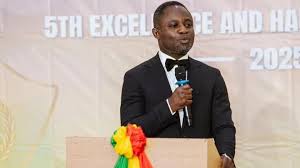
Minister of Health Kwabena Mintah Akandoh has sounded the alarm over Ghana’s reliance on foreign aid, emphasizing the urgent need to establish a robust, self-financing structure for the nation’s health sector. His warning comes in the wake of the recent suspension of U.S. assistance to Ghana, triggered by an executive order that halted most foreign aid, including vital USAID programmes. The abrupt withdrawal has created a funding shortfall estimated at $156 million. In an exclusive interview, Mr. Akandoh described the situation as a wake-up call for the country, urging Ghana to take full ownership of its health financing. He pointed to the creation of the Accra Reset Fund as a pivotal step toward sustainable domestic funding, aimed at insulating essential health programmes from external shocks and disruptions. Backing the Minister’s stance, Acting Chief Executive of the National Health Insurance Authority (NHIA), Dr. Victor Asare Bampoe, underscored the importance of health in the reset agenda, suggesting that the same self-financing model could eventually be applied to other sectors of national development. Expanding on the government’s vision, Deputy Chief of Staff Nana Oye Bampoe Addo reaffirmed the NDC administration’s commitment under President John Dramani Mahama to building a self-reliant governance framework. She noted that internally funding crucial programmes—particularly in health—would ensure their continuity and resilience in the face of global uncertainties. Source: Apexnewsgh.com
Former Minister Joseph Cudjoe Urges National Security Status for Ghana’s Major Rivers
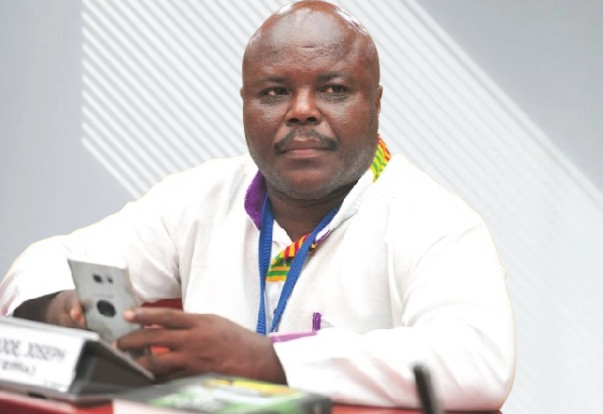
Former Minister for Public Enterprises, Joseph Cudjoe, has called for Ghana’s major rivers to be classified as critical national security assets. His proposal aims to shield these vital water bodies from ongoing destruction and pollution, which he warns could threaten the nation’s survival and future development. Speaking on the issue, Mr. Cudjoe stressed the urgent need to place rivers such as the Volta, Black Volta, White Volta, Pra, Ankobra, Tano, Densu, and all rivers with water treatment plants and irrigation systems, under the protection of a specialised security force or the regular military. He argued that any harmful activities near these rivers should be treated as acts of aggression against the state, warranting a strong security response. “These rivers are indispensable for our agriculture, hydroelectric power generation, transportation, and drinking water supply,” Mr. Cudjoe explained. He pointed out that other countries, including the United States, China, India, Brazil, Egypt, and Israel, have already implemented robust measures to secure their river systems. Mr. Cudjoe further asserted that enacting this proposal into law, supported by a dedicated budget, could curb illegal mining (galamsey) and provide a lasting solution to river pollution. “We may face resistance from those mining in and around the rivers, but many Ghanaians will welcome this decisive step, knowing that the government is confronting the issue head-on,” he concluded. Source: Apexnewsgh.com
President Mahama Champions African Self-Reliance with Accra Reset Initiative
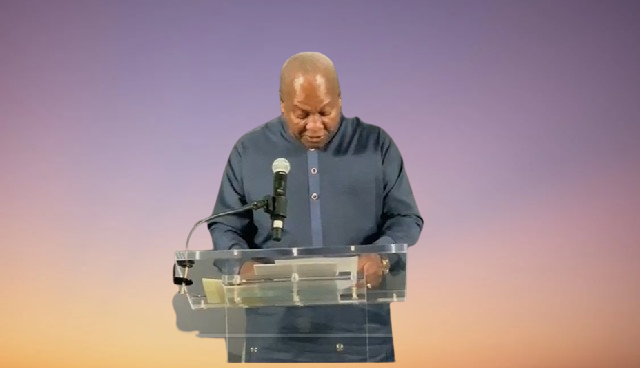
In a momentous gathering in New York, President John Dramani Mahama officially launched the Accra Reset Initiative, a bold vision designed to chart new, self-sustaining pathways for funding healthcare and other vital sectors across Africa. The high-level roundtable drew together an impressive assembly of world leaders, former presidents, and heads of global institutions. Co-chairing the event alongside former Nigerian leader Olusegun Obasanjo, President Mahama welcomed the participation of the Director-General of the World Health Organisation (WHO), the World Trade Organisation (WTO), and top officials from major international financial institutions. Taking the stage for the keynote address, President Mahama delivered a passionate call to action. He urged African leaders to break free from the cycle of donor dependency and to unite around collective, homegrown financing solutions. Mahama argued that Africa’s future security and prosperity hinge on building robust internal mechanisms capable of weathering global shocks and uncertainties. He outlined the ambitious vision behind the Accra Reset Agenda, emphasizing the need for African nations to learn from decades of unpredictable donor support. External assistance, he stressed, can no longer serve as the bedrock for the continent’s development. “We cannot continue to gamble Africa’s future on the unpredictability of foreign aid,” Mahama affirmed. “The time has come for us to take charge of our own development path.” With the Accra Reset Initiative, President Mahama has ignited a crucial continental conversation. The agenda aims to inspire African countries to mobilize domestic resources, strengthen regional cooperation, and innovate new financing models, laying the groundwork for sustainable healthcare systems and broader development achievements across the continent. Source: Apexnewsgh.com