
Tragedy at Nangani Checkpoint: Immigration Officers Attacked by Gunmen in Upper East Region
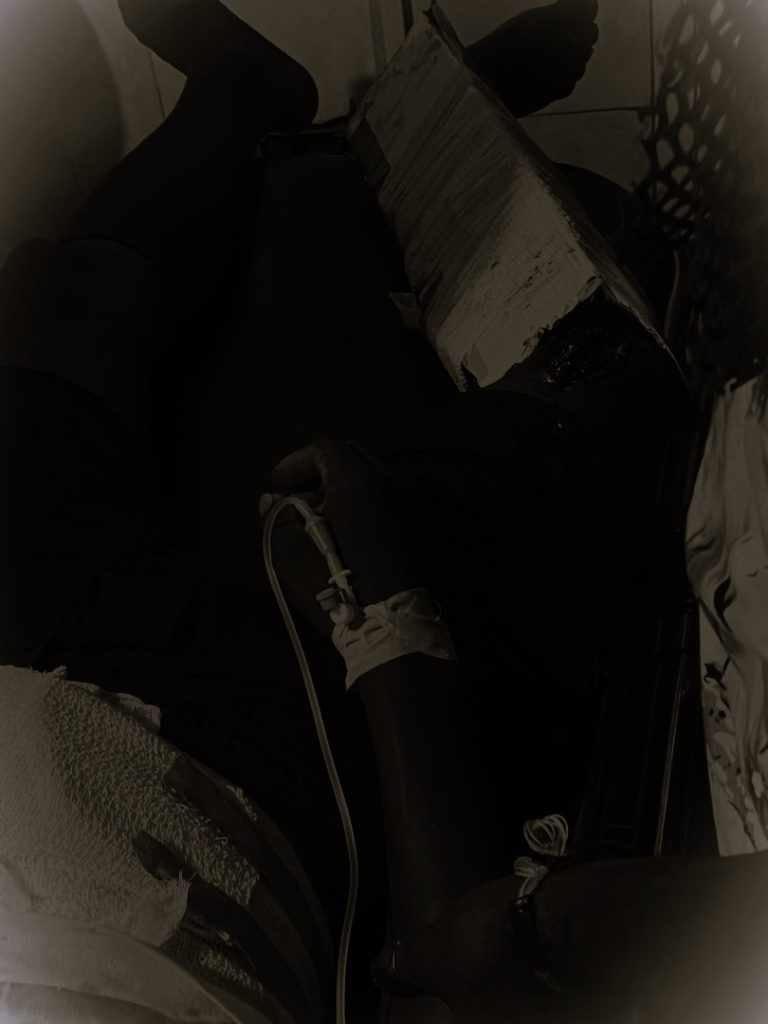
A wave of shock and sorrow has swept through the Upper East Region following a violent attack on Ghana Immigration Service officers at the Nangani checkpoint in the Tempane District. The harrowing incident, which occurred between 10:00 p.m. and 11:00 p.m., has left two officers shot and another critically injured, according to information circulating on social media and confirmed by Apexnewsgh sources. The circulated social media post indicates that the attack was carried out by unidentified gunmen, suspected to be bandits operating in the volatile Bawku area. Emergency responders rushed the wounded officers to the nearest hospital, but despite medical efforts, one of the victims sadly succumbed to his injuries. The remaining officer is reported to be in critical condition, fighting for his life as colleagues and family members anxiously await updates. The incident has heightened concerns about the security situation in the region, especially for frontline officers tasked with maintaining order and protecting Ghana’s borders. Authorities have launched a manhunt for the perpetrators, and security has been tightened at key checkpoints across the district. Source: Apexnewsgh.com
Unemployed Teachers Urge Government to Fulfill Recruitment Promise Amid Growing Uncertainty

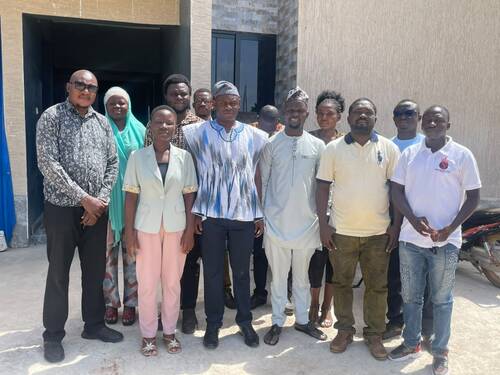
With the year drawing to a close, anxiety and frustration are mounting among thousands of newly trained teachers in Ghana. The Coalition of Unemployed Trained Teachers (CUTT), representing 2023 graduates from public Colleges of Education, has issued an urgent appeal to the government to honor its pledge to recruit 60,000 personnel, 50,000 teachers and 10,000 non-teaching staff, into the education sector before the end of 2025. The promise, made by Minister of Education Haruna Iddrisu on June 25, 2025, during a parliamentary session, brought hope to thousands of unemployed graduates. However, with less than two months left in the year, CUTT says there has been little progress. The critical step of financial clearance from the Ministry of Finance, required to kickstart the recruitment process, remains outstanding. For the members of CUTT, the delay is not just a bureaucratic setback, it is a source of economic hardship and emotional distress. Many are struggling to make ends meet, grappling with uncertainty about their future despite their eagerness to serve in classrooms across the nation. “We are appealing to the government to expedite our recruitment into the teaching service before the start of the second term of the 2025/2026 academic year,” CUTT stated in a recent release. The coalition’s leadership, including President Agyei Godwin Dakede, 1st Vice President Atakorah Nelson, 2nd Vice President Eshun De-Graft Brown, Secretary Toboase Frank Kwasi, and Organiser Paul Offeh Karikari, have been at the forefront of advocacy efforts. They say the government’s silence is weighing heavily on thousands of qualified teachers who feel sidelined after years of rigorous training and national service. CUTT’s concerns are echoed in communities nationwide, where the shortage of teachers is already affecting classroom learning. Schools in both urban and rural areas report overcrowded classrooms and a lack of instructional support, impacting the quality of education for Ghanaian children. “Our strong desire is to contribute to Ghana’s educational development, but we remain jobless and uncertain about our future,” the coalition emphasized. To draw attention to their plight, CUTT has called on the media to highlight their situation through interviews, coverage, and feature segments. The group believes that greater public awareness could help sway policymakers and accelerate the recruitment process. “We urge the media to help amplify our plight. Increased public awareness could help influence policymakers to act swiftly,” the coalition stated. The sense of urgency is palpable. With the academic calendar advancing, many worry that further delays could see another cohort of qualified teachers left on the sidelines. The coalition argues that filling these vacancies would not only offer relief to unemployed graduates but would also strengthen Ghana’s education system, improve student outcomes, and reduce the burden on overworked staff in schools. CUTT maintains that with timely government intervention and robust media support, the issue of teacher unemployment can be tackled head-on. For the thousands waiting for a chance to step into classrooms and make a difference, the hope is that the government will keep its word and act, before the opportunity is lost yet again. As the clock ticks toward the end of 2025, the voices of Ghana’s unemployed teachers grow louder, unified in their plea for action, dignity, and the chance to serve the nation’s children. Source: Apexnewsgh.com
Germany’s President Pledges €65 Million Support and Deeper Ties During Landmark Ghana Visit
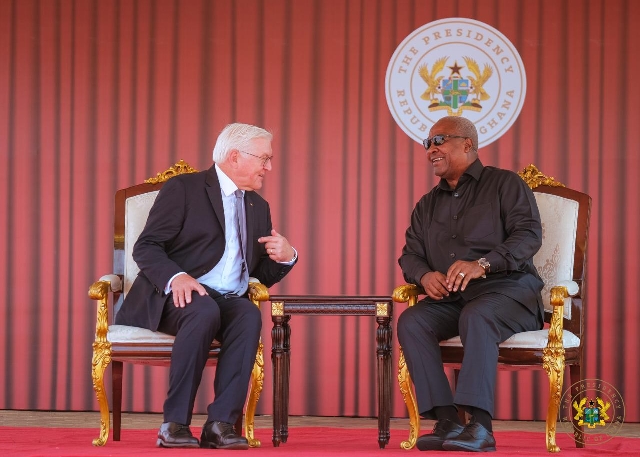
President of the Federal Republic of Germany, Frank-Walter Steinmeier, reaffirmed his country’s enduring partnership with Ghana during a three-day state visit marked by historic milestones and new pledges of support. Addressing dignitaries at the seat of government, President Steinmeier hailed Ghana as “a living democracy, a key regional actor, and an important partner for Germany in West Africa.” His visit, the fourth since becoming president, was especially significant as it marked 50 years of German–Ghanaian development cooperation. Central to the visit was the announcement of a €65 million (about GH₵823 million) support package, newly approved by the German Bundestag, for a range of development projects in Ghana. President Steinmeier explained that this funding would bolster joint initiatives in health, digital innovation, and vocational training. “Together, we are creating the foundations for sustainable economic development that will benefit both Ghana and Germany,” he said. The German leader emphasized his country’s commitment to Ghana’s youth, pointing to ongoing programs designed to equip young Ghanaians with skills in healthcare, pharmaceuticals, and the digital economy. He also highlighted efforts to expand renewable energy and improve energy efficiency—areas where Germany’s expertise continues to play a key role. President Steinmeier announced a new agreement for regular high-level consultations between the two countries, covering bilateral, regional, and global issues of mutual concern. On the economic front, he noted that Ghana had become one of Germany’s most important partners in sub-Saharan Africa. Bilateral trade grew by more than 25 percent last year, reaching €626 million (GH₵8.3 billion)—a testament to deepening commercial ties. Citing Ghana’s stability, educated workforce, English-language advantage, and geographical proximity to Europe, the president described the country as an attractive destination for German investors. He was accompanied by a delegation of business leaders from sectors including infrastructure, technology, and medical innovation, all seeking to explore opportunities in Ghana. Scientific collaboration was another highlight, with President Steinmeier praising partnerships like the Kumasi Centre for Collaborative Research in Tropical Medicine, where Ghanaian and German researchers work together on vaccine research and epidemic prevention. Germany is also supporting the expansion of a vocational training centre and a new nursing school near Kumasi, which will train 200 specialised nurses annually for Ghana’s health sector starting next year. Education remains a pillar of the partnership, with over 1,500 Ghanaian students and researchers benefiting from German Academic Exchange Service (DAAD) scholarships in 2024. President Steinmeier reiterated Germany’s support for academic exchange and capacity building. Turning to regional security, the German president commended Ghana’s leadership in promoting peace and stability in West Africa, pledging continued support for joint efforts against terrorism and transnational crime in the Sahel. He also reaffirmed Germany’s backing for Africa’s permanent representation on the United Nations Security Council. President Steinmeier’s itinerary included meetings with young tech entrepreneurs in Accra and a tour of Kumasi to inspect joint projects and interact with researchers and trainees—a testament to the expanding scope and promise of Ghana–Germany relations. “We have many common tasks ahead of us, and I am convinced that there is still a great deal of potential in our partnership that we will continue to build together,” he concluded. Source: Apexnewsgh.com
Arrest of GRA Legal Head Deepens Controversy Over SML Revenue Assurance Contract
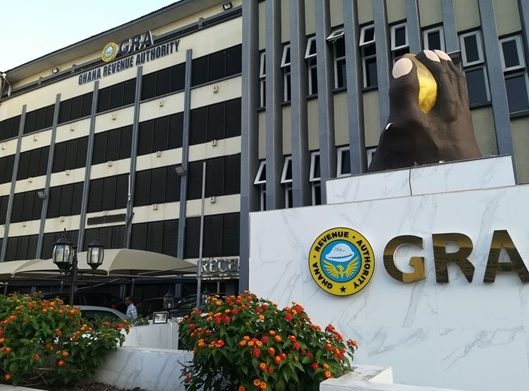
The ongoing controversy surrounding the multi-million-dollar revenue assurance contract between the Ghana Revenue Authority (GRA) and Strategic Mobilisation Ghana Limited (SML) took a dramatic turn this week, as the Office of the Special Prosecutor (OSP) arrested Freeman Sarbah, the Acting Head of Legal at the GRA. The arrest, which was publicly confirmed by the OSP, marks a significant escalation in the high-profile investigation into alleged corruption and obstruction of justice linked to the deal. According to a statement released by the OSP, Mr. Sarbah is under investigation for suspected corruption and corruption-related offences, as well as obstruction of justice, in connection with the GRA–SML contract. The contract, designed to enhance revenue monitoring in Ghana’s petroleum downstream sector, has attracted intense public scrutiny in recent months due to concerns about its cost, scope, and procurement process. While the OSP has not disclosed specific details of Mr. Sarbah’s alleged conduct, officials noted that his arrest forms part of a wider probe into irregularities and possible acts of corruption surrounding the agreement. The Special Prosecutor’s office emphasized that investigations are ongoing and appropriate action will be taken based on their findings. The SML contract has been a lightning rod for criticism from civil society organizations, anti-corruption campaigners, and members of the public, many of whom have questioned its overall value to the state and called for greater transparency. The OSP’s investigation has already seen several officials and corporate representatives invited for questioning, but Mr. Sarbah’s arrest stands out as the most significant development to date. In a parallel development, the GRA last week issued an official statement confirming that SML Ghana Limited had fully executed its contractual obligations under its agreements with the Authority, directly countering claims that the company was paid for “no work done.” The clarification was provided in a letter dated October 14, 2025, signed by Mr. Sarbah himself prior to his arrest. The letter detailed the findings of an internal GRA review covering the period from January 2019 to December 2024. According to the review, SML Ghana performed Transaction Audit, External Price Verification, and Revenue Assurance activities in the petroleum downstream sector in accordance with the contracts. “The Authority’s records and accompanying technical documentation confirm that SML Ghana Limited undertook work related to the assigned services,” the letter stated, adding that all relevant reports and evidence are available for inspection. The GRA’s statement, which comes after months of political debate and public scrutiny, asserted that all payments made to SML were based on verified deliverables. The Authority further explained that all disbursements to the company during the period under review were properly documented, reconciled, and approved in accordance with standard financial procedures. While the Transaction Audit and External Price Verification agreement was terminated in November 2024, SML’s Downstream Petroleum Revenue Assurance contract remained active until June 2025, when it was suspended following the launch of the OSP investigation. The GRA’s clarification significantly shifts the public narrative, indicating that SML Ghana did, in fact, deliver on its contractual obligations, despite ongoing controversy. However, the arrest of Mr. Sarbah has deepened uncertainty, raising new questions about the management of public contracts and the commitment of authorities to accountability and transparency. As the OSP continues its investigation, the case remains a focal point for public debate on corruption, governance, and the prudent use of state resources. Both the Special Prosecutor and the GRA have pledged to uphold due process and transparency as the inquiry unfolds, leaving Ghanaians and observers awaiting further developments in this unfolding saga. Source: Apexnewsgh.com
Upper East Minister Calls for Action on Electricity Access at PURC Public Engagement
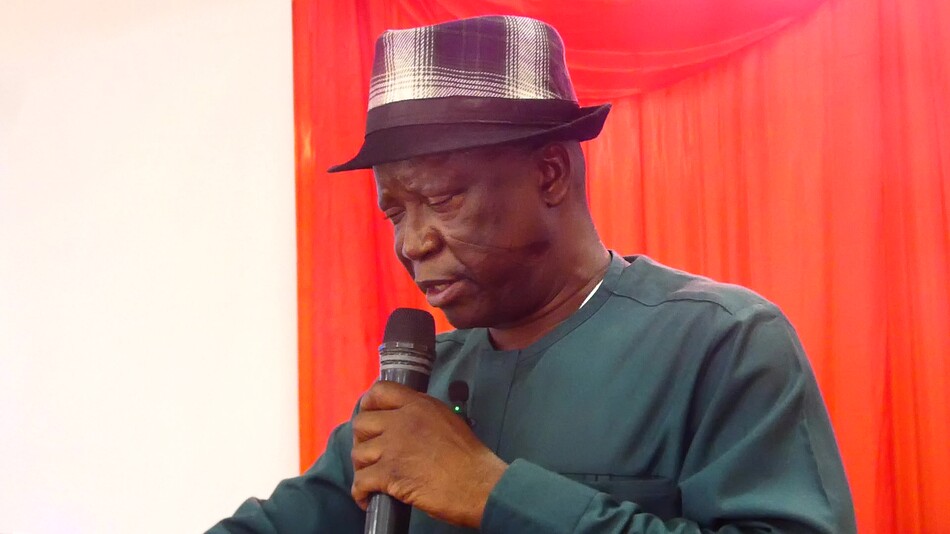
At a well-attended public engagement organized by the Public Utilities Regulatory Commission (PURC), the Upper East Regional Minister delivered a candid and urgent message about the region’s persistent infrastructure challenges. Addressing an audience of local residents, officials, and stakeholders, the Minister emphasized that access to reliable electricity and public water is not a luxury, but a crucial foundation for the region’s economic and social advancement. “Electricity isn’t just about lighting our homes—it powers our schools, hospitals, and businesses. Without it, our communities cannot thrive or compete,” the Minister asserted. He revealed that as of the end of February, the Upper East Region’s electricity coverage stood at just 66.5%. This figure, he noted, is far below the national average of 89%, leaving over 800 communities and sections across the region still disconnected from the national grid. The Minister described this gap as a significant barrier to progress, holding back local businesses, limiting educational opportunities, and weakening healthcare delivery. “These numbers are more than statistics. They represent families, students, and entrepreneurs who are cut off from the opportunities that reliable infrastructure brings,” he said. During his speech, the Minister took the opportunity to make a direct appeal to the Minister of Energy and the Green Transition. He called on them to review and address all outstanding issues related to the World Electricity Committee—a body in which many Upper East communities actively participated, but from which numerous areas have yet to see tangible benefits. “I urge the Ministry to ensure that no community is left behind. Many of our people were promised inclusion, but the reality on the ground tells a different story,” the Minister continued. He also highlighted the broader consequences of infrastructure exclusion, pointing out that inadequate access to electricity and water widens regional inequality and stifles the aspirations of residents. The Minister cited examples of businesses struggling to operate, students unable to study after dark, and health centers grappling with unreliable power. The Minister praised the PURC for providing a platform where citizens’ voices could be heard and for encouraging open dialogue between government, service providers, and the public. He concluded by reaffirming his commitment to advocating for equitable infrastructure development and called for collective action to bridge the gap. “Let’s work together to ensure that every corner of the Upper East enjoys the benefits of reliable electricity and water. This is how we build a stronger, more inclusive region,” he said. The engagement ended with a sense of urgency and hope, as residents and leaders alike agreed that closing the infrastructure gap is vital for the Upper East’s sustainable development. The Minister’s address was a rallying cry, echoing the collective desire for progress and inclusion. Source: Apexnewsgh.com/Ngamegbulam Chidozie Stephen
Political Tensions Rise in Awutu Senya East as NDC Chairman Eyes Parliamentary Contest

The political landscape in Awutu Senya East has been set abuzz following the latest announcement from Mr. Stephen Ofosu Agyare, the constituency chairman of the National Democratic Congress (NDC). At a recent ward meeting held in Opeikuma, Chairman Agyare signaled his intent to challenge the sitting Member of Parliament, Miss Philis Naa Koryoo Okunnor, in the party’s upcoming parliamentary primary, a move that has reignited simmering tensions within the party’s local leadership. Addressing party faithful, Agyare explained that his motivation stems from a deep commitment to the development of Awutu Senya East, with a particular focus on job creation and empowering the youth. “We need to push the development agenda further, especially for our young people,” he declared. His supporters cheered, seeing his decision as a bold step toward new leadership and progress for the constituency. But not everyone in the NDC ranks is celebrating. The chairman’s declaration has reopened old wounds, with some loyalists interpreting his move as a strategic bid to unseat the incumbent MP. Observers recall the frosty relationship between Agyare and Naa Koryoo—a rivalry that came to the fore in the 2023 NDC parliamentary primary, when Agyare threw his weight behind another female contender who ultimately lost to Naa Koryoo’s decisive victory. Despite efforts from senior party figures, including interventions by former President John Dramani Mahama, the rift between the two camps has proven difficult to heal. Attempts to bridge the divide have so far achieved little, leaving the grassroots uneasy about the potential fallout. Indeed, while Agyare’s loyalists praise his ambition and leadership, many in the party base worry that renewed competition will fracture the constituency’s unity. “This rivalry could cost us dearly,” one party organizer remarked, reflecting broader concerns that internal discord may jeopardize the NDC’s chances in future elections. Political analysts watching the situation describe the chairman’s move as a double-edged sword: on the one hand, it could infuse new energy and ideas into the party; on the other, it risks destabilizing the NDC’s electoral strength in Awutu Senya East. With the parliamentary primary looming, all eyes are now on how the party will navigate this period of uncertainty and whether unity can be restored before the next polls. As the political drama unfolds, one thing is clear: the outcome of this contest will have lasting implications for both the NDC and the people of Awutu Senya East. Source: Apexnewsgh.com
Director of Operations of NAIMOS Attacked by Thugs Led by MP Ebenezer Kwaku Addo
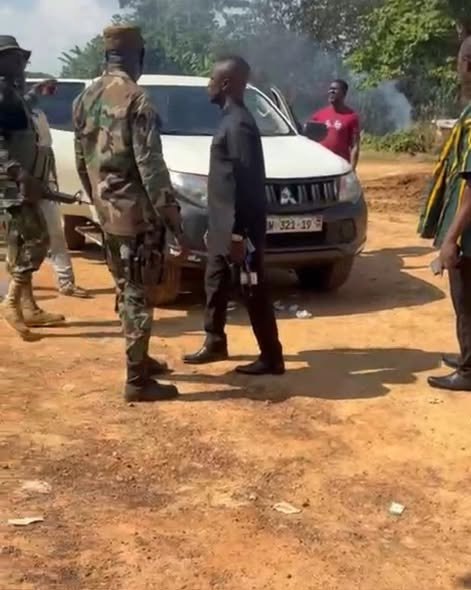
On the morning of Saturday, November 1st, 2025, the Ahafo Region of Ghana became the epicenter of a dramatic confrontation between law enforcement and illegal mining interests. What began as a routine reconnaissance mission for the National Anti-Illegal Mining Operations Secretariat (NAIMOS) rapidly escalated into a high-stakes standoff, exposing the deep-rooted challenges facing Ghana’s fight against illegal mining, known locally as “galamsey.” The mission, led by NAIMOS Director of Operations Colonel Buah and backed by ten Ghanaian soldiers, was intended to identify a suitable site for the permanent deployment of a NAIMOS field task force. This move was part of the Secretariat’s strategic plan to intensify and sustain anti-illegal mining operations in the region. However, as the convoy traveled along the Goaso to Hwidiem highway, their attention was drawn to an excavator operating near Bronikrom. Upon closer inspection, the team discovered several individuals actively engaged in illegal mining along the roadside. The suspects were immediately apprehended, and, in an effort to halt further environmental destruction, the Director ordered them to refill the pits they had dug. It was then that the situation took an unexpected turn. The Director instructed one of the arrested men to contact the site owner. The first to arrive was a man claiming to represent Defence Intelligence from the Ahafo Region. He was quickly joined by another individual, Alex, who arrived in a Toyota RAV4 and arrogantly asserted ownership of the site. Shortly after, a third man, driving a Range Rover, appeared and was also detained. While securing the site, the NAIMOS task force set ablaze makeshift shelters used as offices by the illegal miners. A search of the suspects’ vehicles revealed a startling cache: a Smith and Wesson pistol, two magazines, 21 rounds of ammunition, 12 assorted mobile phones, a black side bag, 11,000 Ghana cedis in cash, a power bank, and a Lexus ignition key. The evidence suggested that the operation was not only illegal but potentially dangerous and well-financed. As arrangements were made to transfer the suspects to the Hwidiem Police Station, the situation took a political twist. The Member of Parliament for Asutifi North, Hon. Ebenezer Kwaku Addo, arrived at the scene with a group of men. He claimed to be acting on behalf of Hon. Collins Dauda, the MP for the area, and demanded the immediate release of the arrested kingpins, including a Burkinabe national. He insisted the handcuffs be removed to spare the suspects embarrassment in front of locals. The NAIMOS Director refused, standing firm that all actions were lawful and that the suspects would be processed according to police procedures. Tensions quickly escalated as the MP and his entourage forcibly took the handcuff keys from a soldier, released the suspects, and began to chase the NAIMOS team en route to the police station. When the convoy arrived at Hwidiem Police Station, they were met by a crowd of approximately 600 people from the surrounding communities, incited by the MP to demand the suspects’ release and the return of seized vehicles. The mob’s threats were grave—they warned that soldiers would be “disciplined” if their demands were not met and even threatened to burn down the police station. Violence soon erupted. The Director’s Toyota Hilux was vandalized, and the threat of arson loomed over the police station. Despite appeals for calm, the volatility of the crowd placed immense strain on both the NAIMOS officials and police officers. In response to the crisis, Chief Superintendent Prince Odom-Koduah, the Ahafo Regional Crime Officer, led a 15-member regional task force to reinforce local law enforcement. They were supported by other senior officers, including Divisional Commander Superintendent John Atanga and District Commander Superintendent Opoku Yamoah. Despite reinforcements, the situation remained volatile as darkness fell and a power outage further inflamed tensions. In a bid to avoid bloodshed, a joint decision was made by the police, military, and the Zongo Chief of Hwidiem, Alhaji Mohammed Bashiru Zarikyi, to release the keys to the seized vehicles and appease the crowd. The Zongo Chief personally offered his Toyota Sequoia 4×4 to evacuate Colonel Buah and his team to safety at the Newmont Site in Kenyase, escorted by police. During the escape, the Chief’s vehicle was attacked, its rear windscreen shattered, but fortunately, no injuries were sustained. Reflecting on the ordeal, Colonel Buah described the MPs’ interference as a serious obstruction of justice, warning that such actions undermined efforts to protect Ghana’s environment and enforce the law. He stressed that the fight against illegal mining must be supported by all citizens, especially those in positions of influence, rather than sabotaged by political interests. Thanks to the professionalism of the NAIMOS team and the Hwidiem/Ahafo Police, no lives were lost. NAIMOS remains undeterred, vowing to press on with its mission to protect Ghana’s waters and forests and restore order in the mining sector, no matter the obstacles encountered. Source: Apexnewsgh.com