


MFWA Boss Questions Blogger’s Arrest, Warns Against Criminalising False News
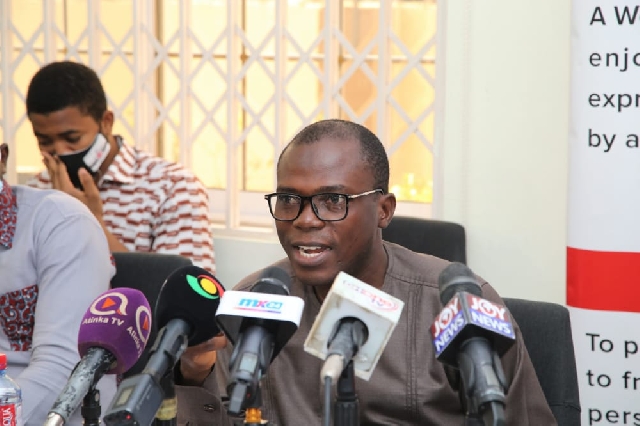
The recent arrest of blogger Samuel Amadotor for allegedly publishing false information has sparked a public outcry, with the Executive Director of the Media Foundation for West Africa (MFWA), Sulemana Braimah, leading the charge for answers and restraint. The controversy began when Amadotor was detained by the Ghana Police Service, supported by the National Signals Bureau (NSB), following a complaint from Mr. Okatakye Boakye Danquah Ababio I. According to police reports, Amadotor confessed during interrogation, claiming Chairman Michael Yeboah had contracted him to make the false post. Despite pleading not guilty in court, Amadotor was granted bail set at GHS50,000 with two sureties. Reacting to the arrest, Sulemana Braimah took to Facebook to express his deep concerns over the police’s involvement in what he described as a civil matter. “Why will the Ghana Police be arresting and detaining people for publication of ‘false news’ about private individuals or even public officials?” he asked. “Individuals cannot or should no longer sue for defamation because the police will act on their behalf? The police will now be arresting, detaining and taking people to court for defamation on behalf of individuals?” Braimah argued that even during the era of criminal libel, such actions would have raised eyebrows. He pointed out that every day, people publish untrue statements about others, yet the police do not—and should not—arrest everyone engaged in such acts. “These acts must stop,” he insisted, warning that criminalising false news sets a dangerous precedent for freedom of expression in Ghana. As debate swirls over the line between protecting reputations and safeguarding free speech, Braimah’s challenge to the authorities has added fuel to a national conversation on press freedom, the limits of criminal law, and the role of the police in mediating public discourse. Source: Apexnewsgh.com
Speaker Bagbin Calls for Bold Constitutional Reform at Parliamentary Book Launch
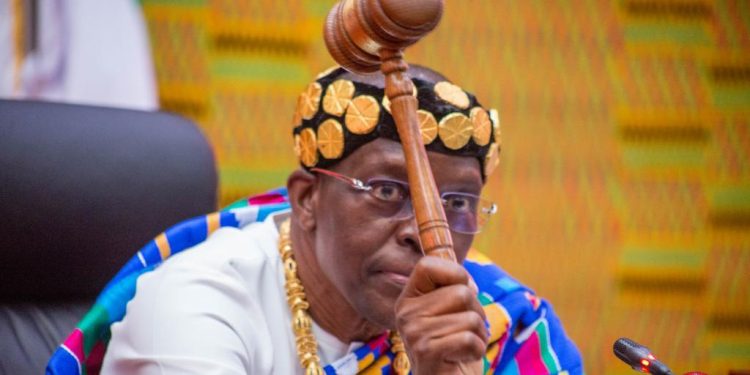
At a landmark book launch in Accra, the Speaker of Parliament, Alban Sumana Kingsford Bagbin, renewed his call for Ghana to embark on a bold constitutional reform process, describing it as essential for advancing governance and enhancing the effectiveness of public administration. The occasion was the unveiling of a new publication designed to demystify parliamentary language and procedures for the public. The book, lauded as a bridge between Parliament and citizens, aims to make legislative terms and practices more accessible and transparent, strengthening civic literacy and deepening democratic engagement. Addressing an audience of academics, legal practitioners, legislators, and civil society members, Speaker Bagbin did not mince words about the urgent need for change. He drew attention to the pivotal—but often underappreciated—role of subsidiary legislation in national governance. These regulations, he explained, shape the frameworks that guide daily life and influence the efficiency of public administration. However, Bagbin cautioned that the promise of effective subsidiary legislation is sometimes undermined by the rigid and detailed nature of Ghana’s 1992 Constitution. While acknowledging the Constitution’s service to the nation over three decades, he noted that its prescriptive character can limit the flexibility required to meet the complex challenges of the modern era. “The complexities of subsidiary legislation demand a constitutional environment that is adaptable and responsive,” Bagbin said. “Unfortunately, our current constitutional architecture, due to its rigid and detailed prescriptions, can be constricting.” He therefore called for a comprehensive constitutional rewrite—one that would reflect contemporary realities, strengthen democratic institutions, and encourage innovation in governance. Such reform, he emphasized, must be approached with broad national consensus and thoughtful deliberation to ensure it meets the aspirations of all Ghanaians. The launch drew widespread commendation as a timely effort to promote understanding and participation in parliamentary democracy. As the guests celebrated the new book, Speaker Bagbin’s words set the tone for a national conversation about constitutional change, reminding all present that a forward-looking legal framework is vital for Ghana to keep pace with a rapidly evolving world. Source: Apexnewsgh.com
Divided Voices: Inside the U.S. Congressional Battle Over Nigeria’s Religious Crisis
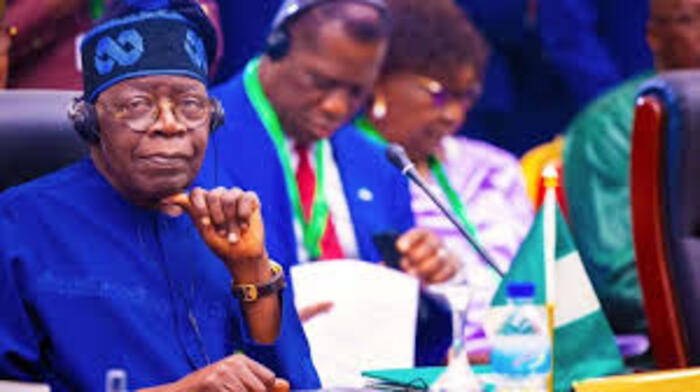
On a brisk Thursday morning, Room 2172 of the Rayburn House Office Building buzzed with anticipation. The United States House Foreign Affairs Subcommittee on Africa was about to hold an open hearing that would send ripples far beyond Capitol Hill. The subject: President Donald Trump’s controversial redesignation of Nigeria as a “Country of Particular Concern” following allegations of a Christian genocide. The stakes were high, and emotions ran even higher. Lawmakers, religious leaders, U.S. Department officials, and witnesses gathered under the glaring lights, their faces set with resolve or worry, depending on their side of the aisle. What began as a policy discussion would soon unfold as a gripping drama of clashing beliefs, desperate pleas, and calls for both restraint and action. The hearing came on the heels of President Trump’s thunderous threat: that America would send its military “guns-a-blazing to completely wipe out the Islamic terrorists who are committing these horrible atrocities.” The world was watching. The fate of millions hung in the balance. Chairman Chris Smith, seasoned and stern, opened the proceedings. He wasted no time outlining the grim statistics that haunted the room. “Eighty-nine percent of all Christians martyred worldwide are in Nigeria,” he declared, voice carrying the weight of 52,000 lost lives since 2009. He accused militant Fulani herdsmen of committing atrocities—rape, kidnapping, murder—with what he called “total impunity” from Nigerian officials. Smith’s words set the tone. “These attacks are unequivocally religiously motivated,” he insisted, blaming a previous administration for allowing Nigeria off the “Country of Particular Concern” list, despite warnings from the U.S. Commission on International Religious Freedom. “We will not be silent while people are persecuted. We will not stop fighting until the perpetrators are brought to justice.” The first panel featured two senior U.S. State Department officials: Jonathan Pratt, Senior Bureau Official of the Bureau of African Affairs, and Jacob McGee, Deputy Assistant Secretary of the Bureau of Democracy, Human Rights, and Labour. They faced a barrage of questions about U.S. policy and the deepening crisis in Nigeria. The second panel brought personal stories and grave warnings. Nina Shea, Director of the Centre for Religious Freedom, joined Bishop Wilfred Anagbe of Makurdi Catholic Diocese in Nigeria and Oge Onubogu of the Centre for Strategic and International Studies. Their testimonies would soon paint a vivid, often harrowing, picture of life, and death, in Nigeria’s Middle Belt. Jonathan Pratt took a measured tone as he explained America’s concerns. “Extremist groups like Boko Haram, ISIS West Africa, ISIS Sahel, Al-Qaeda affiliate Ansaru, and Lakurawa are spreading violence beyond the North-East, especially into Nigeria’s Middle Belt,” he explained. “Terrorists, separatists, bandits, and criminal militias are all over the country. Their attacks often deliberately target Christian communities.” Pratt acknowledged Nigerian security forces were taking significant losses in counter-terrorism operations, but insisted, “More must be done to protect vulnerable communities and hold perpetrators accountable.” The Trump administration, he said, was developing a concrete plan to compel Nigeria to strengthen security for Christian communities and improve religious freedom. This would involve not only the State Department, but also the Treasury and the Department of War—an unprecedented show of force. “Nigeria is Africa’s largest democracy and a key regional partner,” Pratt noted. “But the violence and atrocities threaten the universal right to religious freedom. We expect the Nigerian government to deliver results on the ground as proof of their commitment.” Representative John James, a Michigan Republican and member of the Energy and Commerce Committee, spoke with the authority of firsthand experience. “Nigeria is facing one of the gravest religious freedom crises in the world. I have visited and seen the direness myself. It is now the deadliest place on earth to be a Christian.” James reeled off harrowing numbers: “Since 2019, nearly 17,000 Christians have been killed. In the first seven months of this year alone, hundreds more were murdered.” He accused extremist groups—Boko Haram, Fulani militants, ISIS West Africa—of attacking with impunity, their crimes “often ignored or enabled by the Nigerian government.” He drew a direct line between religious persecution and political repression, referencing the detention of Nnamdi Kanu. “Religious persecution is tied to weakening institutions in Nigeria. The detention of Mazi Nnamdi Kanu is a clear example,” he said, recounting how courts had ordered Kanu’s release, yet he remained in solitary confinement, in deteriorating health. Congressman Bill Huizenga, his voice trembling with emotion, described personal ties to Nigeria. “We’ve got neighbours who’ve been missionaries there, who have family there, who know this is going on,” he said. He accused U.S. lawmakers and the media of downplaying the violence, insisting, “Christians, moderate Muslims, and anyone being terrorised by these radicalised Islamists in Nigeria require stronger protection. The Nigerian government is not doing enough.” He pointed to Benue state’s 1.4 million internally displaced people as proof of the crisis’s scale, and referenced a written submission from Chairman French Hill calling for enforceable sanctions. But not all lawmakers saw religious persecution as the sole or even primary issue. Representative Johnny Olszewski offered a different perspective. “The Nigerian government lacks the means to protect communities against groups that kill indiscriminately,” he said. “This does not abdicate the Nigerian government from responsibility. Muslims and Christians alike have lived under the constant threat of extreme groups like Boko Haram and ISIS West Africa for far too long.” Olszewski, who openly identified as a Christian, urged colleagues not to frame the crisis as simple government persecution. “The debate here should be about capacity—a critical problem in Nigerian institutions that has left millions exposed to extremist groups,” he said. “Jesus Christ is my Lord and Saviour. I have no problem sharing that. But this suffering is not just confined to one religious group.” He stressed that corruption, neglect, and governance failures must be confronted. “A government’s duty is to protect its people. When there’s a failure, leaders must be held accountable. But capacity within Nigerian institutions to maintain peace is a real question.” Olszewski also questioned the U.S. approach: “Are we offering real partnerships or just
Tension Rises in Niger State After Midnight Attack on Catholic School, Dozens Feared Abducted
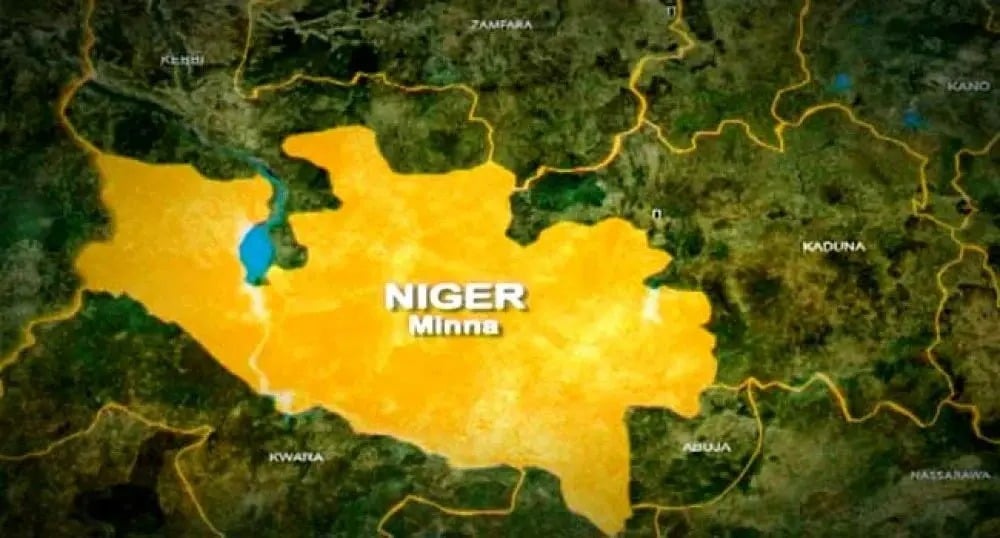
Panic and uncertainty have gripped Niger State following a midnight assault by terrorists on St. Mary’s School, a Catholic institution in the Papiri community of Agwara Local Government Area. The attackers abducted an unconfirmed number of students and staff, leaving families and the entire community anxiously awaiting official updates. According to reports by Daily Trust, several sources indicated that multiple students were seized during the late-night raid. A source from a local Catholic church confirmed the incident but stated that the school was still working to determine the exact number of those taken. “Yes, it is true, but I am not in a position to give details. The church will issue an official statement later in the day,” the source said. The Spokesperson for the Niger State Police Command, SP Wasiu Abiodun, acknowledged the incident but said further details would be provided after ongoing assessments. Meanwhile, Ahmed Abdullahi Rofia, Head of Department, Disaster and Relief, Agwara Local Government, confirmed via telephone that the attackers struck between 2:00 a.m. and 3:00 a.m. on Friday morning. The actual number of abducted students and staff remains undetermined as authorities continue to evaluate the situation. In a separate report on Friday, it was claimed that as many as 52 students had been taken, though official confirmation is still pending. The incident comes on the heels of a similar abduction in Maga, Kebbi State, where 25 students were kidnapped just days earlier, fuelling nationwide alarm over the worsening security challenges facing schools in northern Nigeria. The crisis intensified further when more than 50 schools were forced to shut down in Kwara State on Thursday due to the threat of bandit attacks. Amid escalating insecurity, President Bola Tinubu has cancelled his planned trips to South Africa and Angola to coordinate the national response to the growing wave of violence. Niger State Governor Umar Bago also confirmed the Papiri incident on Friday via his official Facebook handle, issuing a statement titled, “Niger State Government Condemns Kidnapping of Pupils in Papiri Area in Agwara Local Government, Reiterates Earlier Security Directive.” The statement, signed by the Secretary to the Niger State Government, Alh. Abubakar Usman, read: “The Niger State Government has received with deep sadness the disturbing news of the kidnapping of pupils from St. Mary’s School in Agwara Local Government Area. The exact number of abducted pupils is yet to be confirmed as security agencies continue to assess the situation.” As families remain on edge, authorities have pledged to intensify efforts to safely recover the abducted students and staff, while the nation grapples with the deepening crisis of insecurity in its schools. Source: Apexnewsgh.com
Minister Blames Leadership for 2024 Economic Crisis, Labels It ‘Worst in Ghana’s History’
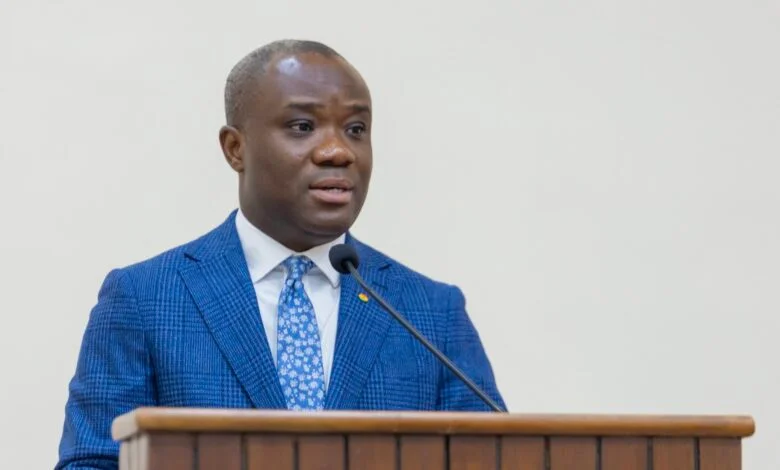
Minister for Government Communications Felix Kwakye Ofosu has described the economic downturn that gripped Ghana in 2024 as “the worst crisis in Ghana’s history,” insisting that its severity was both unprecedented and avoidable. Speaking on Friday, November 20, Mr. Kwakye Ofosu attributed the crisis not to global economic conditions but to what he called mismanagement under the leadership of former Vice President Dr. Mahamudu Bawumia, who served as head of the Economic Management Team during the period. According to Mr. Kwakye Ofosu, the hardships suffered by Ghanaians in 2024 were the direct result of policy failures. He pointed to soaring inflation, currency instability, and difficulties in public finances as factors that combined to create a level of strain unseen in Ghana’s post-independence history. “The numbers and the lived experiences all point to a crisis of historic proportions,” he stated. He further emphasised the stark contrast between the government’s public assurances and the daily realities endured by ordinary citizens. Despite repeated promises from the former Vice President and the then-ruling NPP government, Mr. Kwakye Ofosu argued that the administration failed to implement measures that could have cushioned the population against the worst effects of the downturn. Instead, austerity measures and high living costs pushed many households into severe distress. Mr. Kwakye Ofosu dismissed claims that external factors were primarily to blame, noting that many other countries weathered similar global shocks without experiencing such acute hardship. He maintained that Ghana’s difficulties were amplified by poor decision-making and an overreliance on short-term, unsustainable policies. He concluded that the 2024 economic crisis would remain a central issue in political debate as the nation heads toward its next general election. According to Mr. Kwakye Ofosu, Ghanaians will continue to demand accountability, particularly from Dr. Bawumia, as he seeks reelection to lead the NPP into the 2028 presidential race. Source: Apexnewsgh.com
All Government Institutions to Fully Adopt Electronic Payments by Early 2026—Controller and Accountant-General Affirms
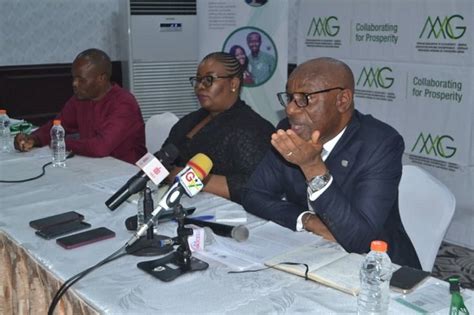
The Controller and Accountant-General, Kwasi Agyei, has reaffirmed that all government institutions will be fully migrated onto secure electronic payment systems by the first quarter of 2026, as part of a nationwide drive to enhance transparency and efficiency in public financial management. Speaking at a consultative meeting in Accra on Thursday, November 20, 2025, with Managing Directors of commercial banks, Mr. Agyei outlined the rollout of the Ghana Integrated Financial Management Information System (GIFMIS) and the Ghana Interbank Payment and Settlement Systems (GhIPSS) Electronic Funds Transfer (EFT) initiative. The engagement focused on deepening collaboration with banks, addressing outstanding concerns, and ensuring all stakeholders are adequately prepared for the integration. Mr. Agyei highlighted persistent challenges caused by the continued use of manual cheques within Ministries, Departments, Agencies (MDAs), and local government authorities, despite the Public Financial Management Act (Act 921) mandating GIFMIS as the approved public funds management system. He warned that reliance on manual cheque transactions exposes government funds to fraud risks, complicates reconciliation, and breeds operational inefficiencies. “Failure to use the GIFMIS platform undermines integrity and transparency in financial management and affects the timely generation of financial reports for decision-making and preparation of the national accounts,” he stressed. Mr. Agyei emphasized that eliminating manual cheques and adopting electronic payments is critical: “This initiative is not merely a technological upgrade; it is a transformative step toward strengthening accountability and efficiency in the management of public funds. Transitioning to electronic payments through secure platforms such as GIFMIS and GhIPSS is therefore both timely and essential.” He added that meeting the 2026 deadline would significantly boost accountability, promote efficiency, and build public trust in government financial operations. The Controller and Accountant-General’s Department (CAGD) also announced that sensitisation and training programmes for government agencies would continue ahead of the full rollout. Second Deputy Governor of the Bank of Ghana, Matilda Asante-Asiedu, reiterated the Central Bank’s commitment to digitising payment systems. She said integrating GIFMIS and GhIPSS would improve monitoring and accountability, and urged commercial banks to support MDAs and MMDAs in meeting the transition timeline. Source: Apexnewsgh.com
Government Defends Aircraft Procurement, Cites Lower Cost Than Previous Luxury Jet Rentals
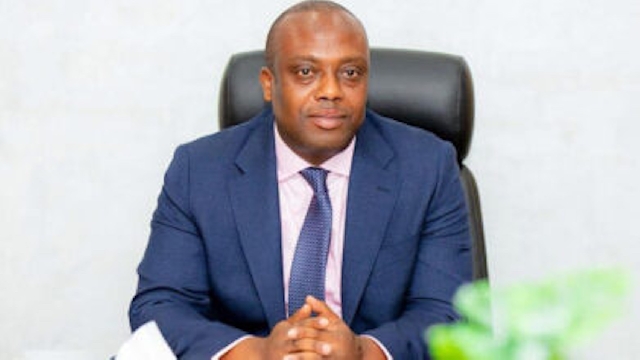
The government has mounted a strong defense of its plan to acquire six new aircraft, including two presidential jets, arguing that the overall cost will be lower than what was spent on renting luxury jets during the tenure of former President Nana Akufo-Addo. The explanation followed sharp criticism from the Minority caucus in Parliament, who questioned the government’s priorities regarding the $1.2 billion allocation for the aircraft, particularly in light of outstanding payments owed to teachers, nurses, and road contractors. Debating the 2026 budget in Parliament, Deputy Finance Minister Thomas Nyarko Ampem assured lawmakers that the procurement process would be handled prudently, with careful management of public funds. “I assure you that the cost of one aircraft will be far less than the amount you spent for President Akufo-Addo to rent luxurious aircraft,” he stated. However, the debate also saw former Defence Minister and MP for Bimbilla, Dominic Nitiwul, urge the government to apologize to the public for its earlier opposition to the purchase of a new presidential jet while in opposition. “You on the opposite side, need to explain to the people of Ghana why, for five years, you fought against it, and nine months later, you are running not to buy one but two. You need to apologise to the people of Ghana,” Nitiwul challenged. As the controversy over the aircraft procurement continues, the government maintains that the acquisition represents a more cost-effective and transparent approach to meeting the nation’s air transport needs, while the opposition continues to press for accountability and a clear explanation of priorities. Source: Apexnewsgh.com
MTN Ghana Recognised for Communication Excellence with Triple Award Win
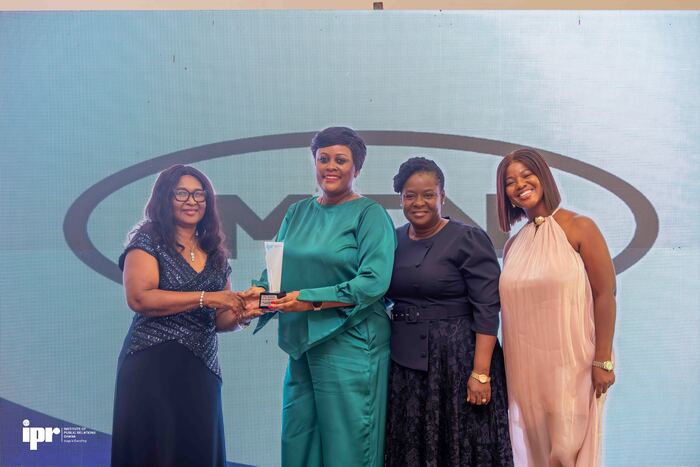
MTN Ghana has been recognised with three major awards at the IPR Ghana Excellence Awards for 2023/2024, reinforcing the company’s leadership in strategic communication and public relations within the telecommunications industry and the wider PR profession. MTN Ghana was named PR Organisation of the Year (Telecommunications), an honour that affirms the company’s commitment to strong stakeholder engagement and its emphasis on clear, consistent and impactful communication across all touchpoints. The company has won this award six consecutive times. The company also received the award for Best in Crisis and Issues Communications, highlighting MTN Ghana’s agility and professionalism in managing complex situations with transparency, accuracy and responsibility. This recognition underscores the organisation’s ability to deliver timely, reliable information and reassurance during challenging moments, demonstrating its commitment to listening, engaging, and supporting stakeholders. Additionally, MTN Ghana was awarded Best in Corporate Communications, acknowledging its excellence in articulating its values, vision, and strategic priorities both internally and externally. This category is novel and the team is excited to have won the first one. Speaking on the awards, Adwoa Wiafe, Chief Corporate Services and Sustainability Officer, said: “Collectively, these awards reaffirm MTN Ghana’s dedication to upholding high standards in communication practice and its ongoing efforts to deepen trust, enhance engagement, and shape meaningful connections with our customers, employees, and partners.” For her part, Georgina Asare Fiagbenu, Senior Manager, Corporate Communications, noted: “These honours affirm the dedication and passion of our Corporate Communications team. Our focus has always been to tell MTN’s story with clarity, empathy, and purpose, whether we are engaging customers, supporting internal teams, or managing complex issues. This achievement motivates us to continue raising the bar in how we communicate and build meaningful connections.” MTN Ghana remains committed to continuously elevating its communication strategies as it works towards its ambition of leading digital solutions for Africa’s progress. The National PR summit was held at the Western Plus Serene Atlantic Hotel in Takoradi from 13th to 15th November, bringing together public relations professionals from across Ghana to exchange ideas, deliberate on the business of the Institute, and celebrate excellence in the profession. The event was held under the theme, “Imagining PR in the Contemporary World”. Source: Apexnewsgh.com