
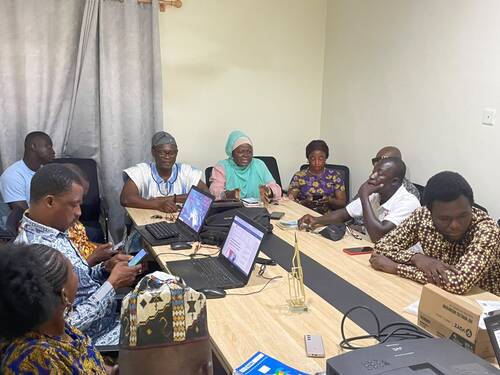
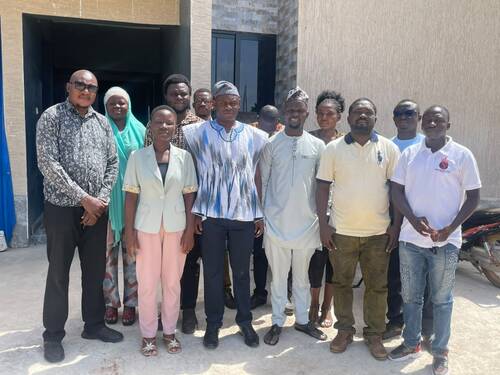

The Navrongo-Bolgatanga Catholic Diocese (NABOCADO) has stepped up efforts to strengthen peacebuilding in the Upper East and North East Regions by training journalists and members of the Ghana Journalists Association (GJA) on conflict-sensitive reporting.
The training, held under NABOCADO’s Integrated Peace Building for Improved Food and Nutrition Supply (INPEACE) Project, forms part of a broader strategy to reduce violent conflicts and promote peaceful coexistence in communities affected by recurring tensions.
Speaking at the event, the Director of Justice, Peace and Humanitarian Response (JPHR) at NABOCADO, Mr. Theophilus Abolga, explained that the INPEACE Project, which runs from June 2026 to May 2029, is designed to improve social cohesion while reducing violent conflicts across selected communities in the Upper East and North East Regions.
According to him, the project is being implemented in four districts, including Bawku Municipality and Kasena Nankana West in the Upper East Region, as well as Nakpanduri and Yunyoo-Nasuan in the North East Region.
Mr. Abolga noted that the media remains one of the most influential institutions in society, capable of either promoting peace or escalating tensions through the way conflicts are reported. He said the training was therefore intended to equip journalists with practical tools to ensure their reports contribute to reconciliation rather than deepen divisions.
He observed that for many years, conflicts, particularly the protracted Bawku conflict, have shaped public perception of the region, overshadowing its positive developments. He stressed that NABOCADO wants journalists to help rewrite that narrative by highlighting stories that foster unity, peaceful coexistence and hope.
“We want media reports to become instruments for building trust and social cohesion instead of unintentionally fuelling violence,” he said, adding that responsible journalism is critical to creating an environment where development can thrive.
Mr. Abolga further revealed that significant progress has already been made through the peacebuilding project. He explained that many communities are now taking ownership of peace initiatives by establishing youth groups and community peace structures dedicated to preventing violence.
He said NABOCADO has also established peace trackers in project communities to monitor early warning signs of conflict and report them promptly to the relevant authorities for timely intervention before situations escalate.
The JPHR Director praised traditional leaders for their growing commitment to peacebuilding, explaining that although chieftaincy disputes have at times contributed to conflicts, chiefs have equally demonstrated their ability to become powerful agents of reconciliation when given the necessary support. He cited examples from Doba, Kandiga and parts of the Bawku area, where traditional authorities have worked closely with NABOCADO, the National Peace Council and other stakeholders to restore peace.
Speaking on behalf of the Ghana Journalists Association, Mr. Apubeo commended NABOCADO for consistently investing in the capacity building of journalists.
He described the training as timely and necessary, noting that the media has a responsibility not only to inform the public but also to educate citizens, shape public opinion and contribute to peaceful coexistence.
Mr. Apubeo called for sustained collaboration between media organisations and peacebuilding institutions to ensure journalists continue to receive the skills and knowledge needed to report conflict-related issues accurately, fairly and in ways that strengthen peace and social cohesion.
Source: Apexnewsgh.com/Ngamegbulam Chidozie Stephen