
Family Demands Answers After Mysterious Killing of Bolgatanga Young Man in Sherigu Forest
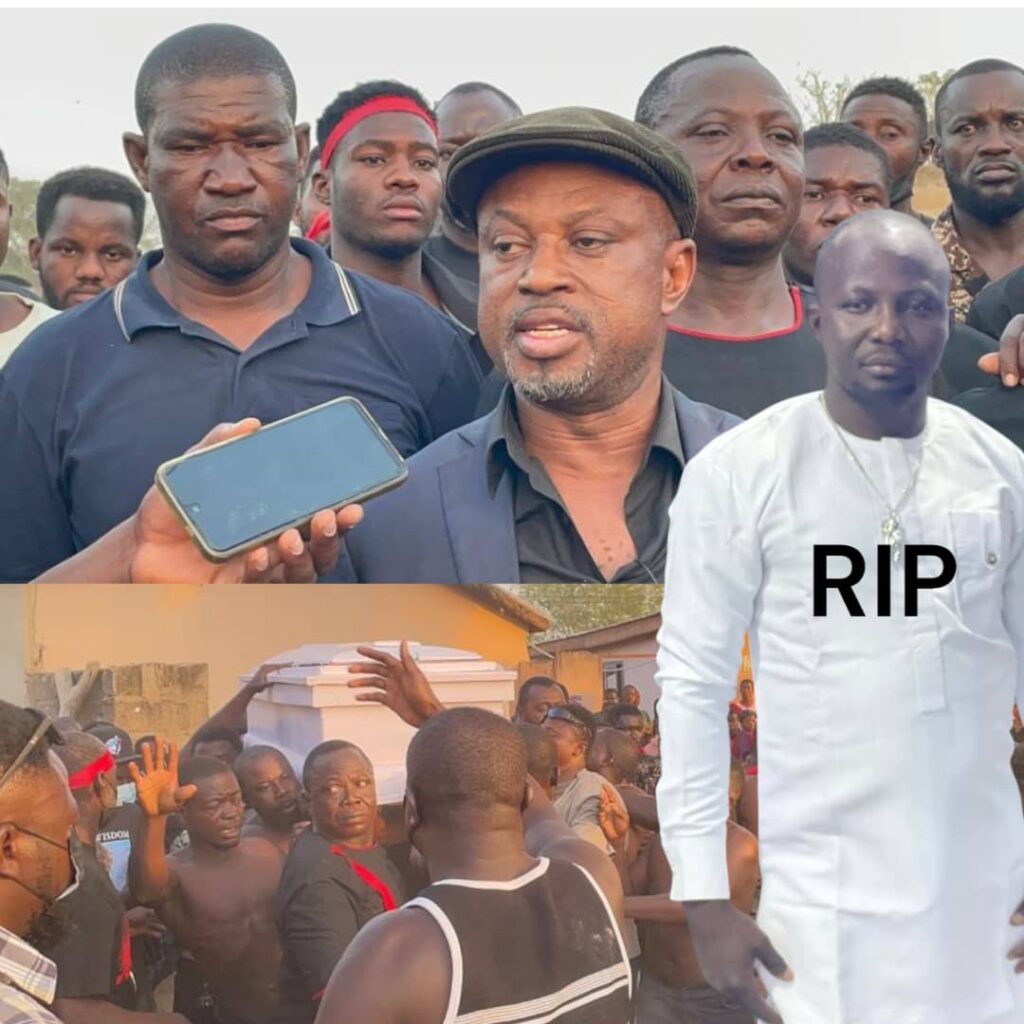
The quiet community of Tindonmolgo in Bolgatanga was plunged into mourning after the tragic and brutal killing of 39-year-old Norbert Anamzoya Akupa. Grief and outrage hung heavy in the air as family, friends, and townsfolk gathered for Norbert’s burial, forming a somber procession that wound from the Upper East Regional Hospital morgue to the family home. In a press conference marked by emotion and resolve, family spokesperson Agana Bawa Rashid recounted the chilling events that led to Norbert’s untimely demise. According to the family, Norbert left home on the night of January 30, 2026, after allegedly receiving a call from individuals believed to be police officers. He was never seen alive again. The following morning, early commuters discovered Norbert’s lifeless body on the roadside in the Sherigu forest. The crime scene was both disturbing and perplexing: investigators recovered twenty-four AK-47 bullets, nine shotgun shells, and a police face mask. Norbert’s motorcycle and personal belongings were untouched, suggesting that robbery was not a motive. The sheer number of bullets, the family argued, pointed to a calculated execution. “Why would anyone need 24 bullets to kill one man? This was no random act,” Mr. Agana declared. “If Norbert was suspected of any wrongdoing, due process should have been followed. Ghana is a country of laws, not lawlessness.” The press conference was also a rebuttal to rumors circulating on social media, which sought to tarnish Norbert’s reputation. Mr. Agana dismissed these allegations as baseless and a cruel attempt to justify the killing. “Our brother had no criminal record. He was a peaceful man deserving of protection, not violence.” The family’s pain has been compounded by unanswered questions and a sense of official silence. Despite requests for comment, the Upper East Regional Police Command declined to address the family’s allegations, indicating only that investigations are underway. Still, Norbert’s loved ones are determined to see justice served. They are calling for a transparent, thorough investigation to identify those responsible and to hold them accountable under the law. “We will not rest until the truth is revealed and those behind this heinous act are brought to justice,” vowed Mr. Agana. As the community waits anxiously for answers, Norbert’s legacy lives on in the determination of his family and friends, who have vowed to keep pressing for justice. “You may have taken Norbert from us,” said Mr. Agana, “but his spirit and our fight for justice cannot be silenced.” Source: Apexnewsgh.com/Ngamegbulam Chidozie Stephen
Modern Day Social Media Slavery: The Monetization Dilemma Facing African Content Creators

Ngamegbulam Chidozie Stephen Email: apexnewsgh@gmail.com In the digital age, social media has become a global equalizer, bridging continents, cultures, and communities. Platforms like Facebook, TikTok, Instagram, and YouTube have revolutionized how we interact, share stories, and even build livelihoods. Yet, beneath this veneer of democratization, a troubling disparity persists, one that many African content creators and digital entrepreneurs are finding increasingly difficult to ignore. The question that lingers: Why are African creators still largely excluded from direct monetization opportunities offered by these very platforms? Recently, media personality Ngamegbulam Chidozie Stephen voiced his concerns about what he describes as “modern-day social media slavery,” a term that resonates deeply with many across the continent. His frustration and that of countless others stems from the ongoing marginalization of African voices in the digital economy, particularly when it comes to earning money from content creation. Africa’s social media landscape is nothing short of remarkable. TikTok, for example, boasts over 189 million users across the continent, an impressive 11.9% of its global audience. The surge is most notable among Gen Z, with Egypt and Nigeria leading in user numbers at 32.9 million and 27.4 million, respectively, closely followed by South Africa’s 17.5 million. Facebook’s dominance is even more pronounced, with between 290 and 377 million African users as of 2025-2026, representing a staggering 82% market share among all social platforms. Instagram and YouTube also enjoy robust growth, driven by widespread smartphone adoption and improving internet infrastructure. YouTube alone counts roughly 180 million African users, with Egypt, Nigeria, and South Africa topping the charts. These statistics highlight Africa’s immense contribution to the global digital community. The continent’s youth, in particular, are not just passive consumers; they are active creators, trendsetters, and influencers. Yet, despite their numbers and creativity, a significant barrier remains: the inability to directly monetize their creativity on major platforms like TikTok. For millions of African content creators, the lack of direct monetization options is not just an inconvenience; it’s a structural disadvantage. TikTok, in particular, has come under scrutiny for not enabling direct monetization for African users, despite the platform’s rapid growth and deep penetration across the continent. While some African countries have recently gained access to Facebook’s monetization features, TikTok’s policies still leave many creators in the lurch. This exclusion means that, for now, the only way for an African TikTok creator to earn from their content is through complex workarounds. Typically, creators must rely on intermediaries based in the US or Europe, who register accounts, enable monetization, and then share the proceeds with their African partners. This not only complicates the process but also perpetuates a dependence on Western gatekeepers, a scenario that many, including Mr. Stephen, liken to a new form of digital servitude. The frustration is palpable, especially when considering the influence of African content creators on global trends. Figures like Mark Angel, Itsyaboymaina, Carter Efe, Ilyas El Maliki, Wode Maya, Mihlali Ndamase, Aisha Yesufu, and others have amassed millions of followers and generated content that resonates far beyond the continent’s borders. They are proof that African creativity is not only vibrant but also commercially viable. Yet, these same heroes are now being called upon to leverage their influence for change. As Mr. Ngamegbulam passionately argues, they have a responsibility, not just to themselves, but to the broader African creator community, to advocate for policy reforms that will allow direct monetization for all African users. Their collective voices could pressure tech giants to recognize Africa’s value not just as a market, but as an essential part of the global creative economy. Describing the situation as “modern-day slavery” is not mere hyperbole. The current dynamics effectively relegate African creators to second-class status in the digital world. While creators in the West enjoy seamless access to monetization features, sponsorships, and brand partnerships, their African counterparts are forced to navigate a maze of bureaucratic hurdles and rely on international connections just to earn a share of the same opportunities. This is particularly egregious when considering that Africa’s youth are among the most engaged and dynamic users of these platforms. The West reaps the benefits, both in terms of advertising revenue and cultural capital, while Africans are left scrambling for scraps. The exclusion is not only economically damaging, but it also sends a troubling message about whose voices and stories are considered valuable in the digital age. For many young Africans, social media represents more than just entertainment; it’s a lifeline to economic empowerment, self-expression, and global visibility. The inability to monetize content directly stifles entrepreneurship, discourages innovation, and perpetuates existing inequalities. It also means that Africa’s digital economy is not reaching its full potential, with billions of potential revenue lost to foreign intermediaries. Moreover, the absence of direct monetization deepens the digital divide between Africa and the rest of the world. It prevents local creators from reinvesting in their communities, building sustainable businesses, or even supporting themselves and their families. This is especially critical given the continent’s burgeoning youth population and high unemployment rates, conditions that make the promise of digital entrepreneurship all the more appealing. The reasons behind this exclusion are complex. Some platforms cite issues like payment infrastructure, regulatory challenges, or concerns about fraud. Others may simply be slow to adapt their policies to regions outside their primary markets. But whatever the rationale, the effect is the same: African creators are systematically denied the same opportunities afforded to their peers elsewhere in the world. This disparity is all the more galling given the relentless growth of social media usage in Africa. The continent is one of the fastest-growing markets for platforms like TikTok, Instagram, and YouTube. Its users are young, tech-savvy, and eager to engage. They create viral trends, generate massive view counts, and shape conversations on a global scale. The data is clear: Africa is not just a consumer market; it is a creative powerhouse. It is both ironic and troubling that, to monetize their creativity, African content creators must rely on Western infrastructure and intermediaries. This not
President Mahama Pledges Two Million Desks for Basic Schools by 2026
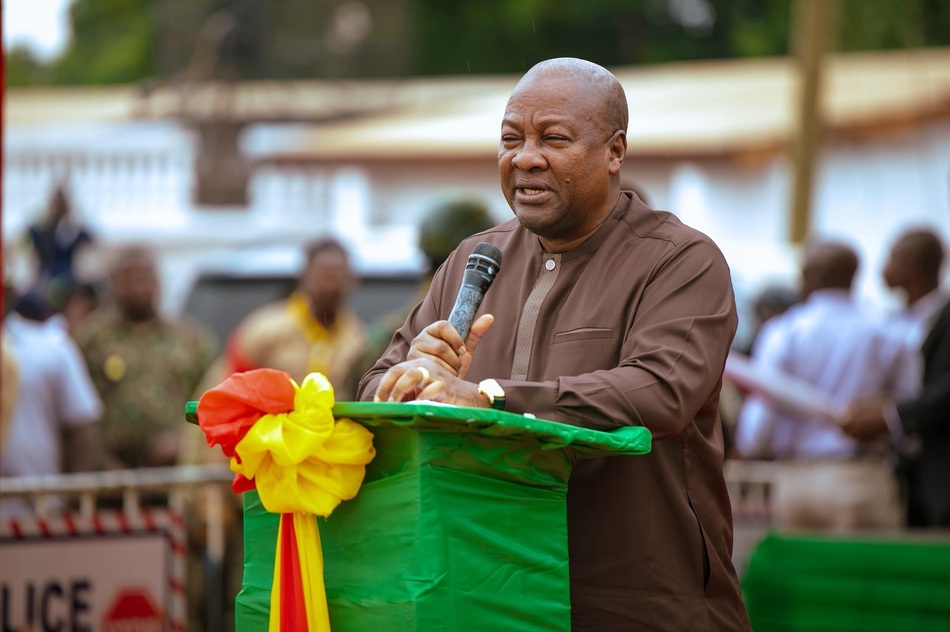
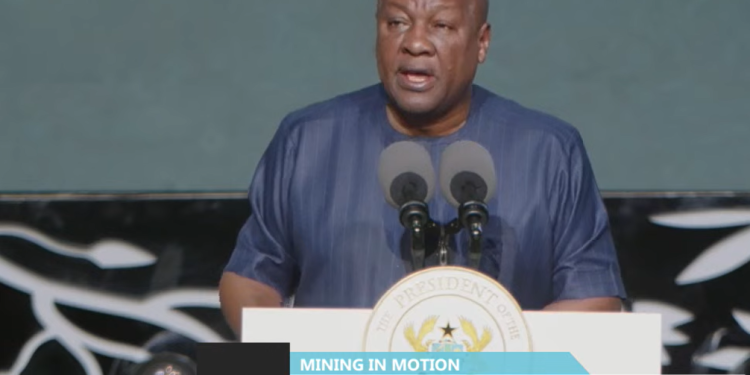
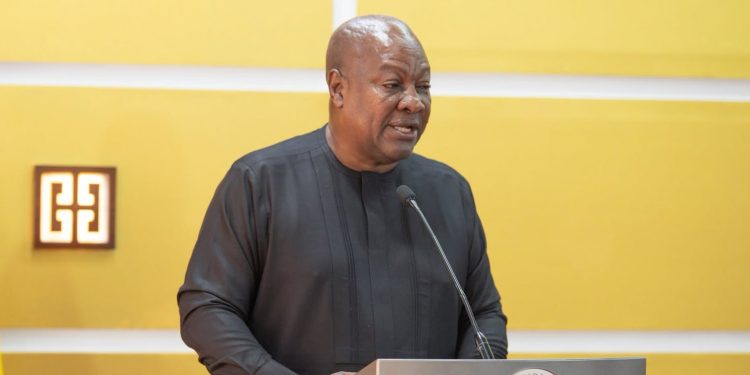
President John Dramani Mahama has unveiled an ambitious plan to supply two million desks to Ghanaian basic schools by the end of 2026, a move set to dramatically improve learning conditions for students across the country. The announcement came during his address to the Ghanaian community in Zambia on Thursday, February 5, as part of his three-day state visit. President Mahama highlighted the chronic neglect of basic school infrastructure, revealing that approximately 1.2 million children currently attend classes without desks. “The basic school level has been neglected. The previous government focused mainly on SHS because of its flagship Free SHS program. Many basic schools lack textbooks and furniture, and you often find children sitting on the floor,” he remarked. He assured the community that the government is determined to tackle the problem head-on. “This year, we are going to provide two million school furnishings. By 2028, no Ghanaian pupil will have to sit on the floor to study,” President Mahama pledged. The announcement has been widely welcomed by education stakeholders. Kofi Asare, Executive Director of Africa Education Watch, commended the government for prioritising student comfort and called for swift implementation. “We hope that the desks will arrive soon because this is long overdue,” he said. The pledge marks a significant step toward bridging infrastructure gaps in Ghana’s basic education sector and ensuring that every child has a comfortable and dignified environment in which to learn. Source: Apexnewsgh.com
Minority Caucus Demands Urgent Payment to Cocoa Farmers Amid Growing Crisis
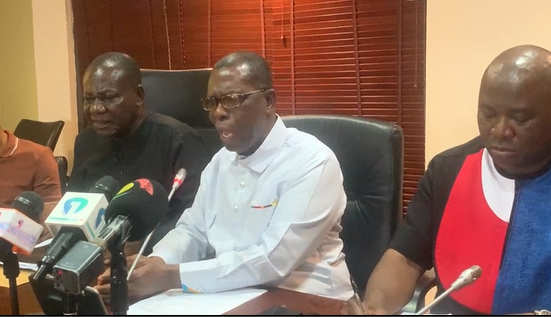
The Ranking Member on Parliament’s Food, Agriculture and Cocoa Affairs Committee, Isaac Yaw Opoku, has sounded the alarm over mounting hardship in Ghana’s cocoa sector, urging the government and the Ghana Cocoa Board (COCOBOD) to immediately pay farmers for beans sold since November 2025. Speaking to journalists in Accra on February 5, Mr. Opoku warned that payment delays are driving both farmers and the industry to the brink of crisis. Mr. Opoku revealed that many cocoa farmers have not received payments for over three months, leaving them unable to afford necessities like medication, school fees, or care for sick relatives. Some, he said, were even forced to forgo Christmas celebrations due to financial strain. The hardship has been compounded by Licensed Buying Companies (LBCs), who, unable to secure reimbursement from COCOBOD for cocoa already delivered, now owe farmers billions of cedis and have had to halt new purchases. “Farmers are being forced to sell on credit, accept heavy discounts, or return home with unsold produce,” Mr. Opoku said, painting a bleak picture of the human and economic toll. He dismissed claims by COCOBOD that sufficient funds had been released as misleading, stating that the reality on the ground was one of financial distress and broken promises. The Ranking Member also criticized the government for failing to deliver on campaign pledges of higher producer prices, noting that the current farmgate price of GH¢3,625 per 64kg bag falls far short of the GH¢6,000–GH¢7,000 per bag promised to farmers before the 2024 elections. He expressed concern over reports that the government might consider reducing the producer price to settle arrears, describing such a move as a betrayal. Beyond the plight of farmers, Mr. Opoku warned that the survival of indigenous cocoa buying companies and transporters is at risk, with capital locked up and operations grinding to a halt. He attributed some of the financial woes to wasteful spending and administrative mismanagement within COCOBOD. The Minority Caucus is demanding immediate payment to cocoa farmers for all outstanding cocoa beans, full reimbursement of LBCs, and prompt settlement of future deliveries. They are also calling for a formal apology from both the government and COCOBOD, insisting that timely payment is not a privilege but a fundamental duty. “Cocoa farmers are not beggars. Paying them on time is an obligation,” Mr. Opoku declared. Source: Apexnewsgh.com
DVLA Reiterates Strict Guidelines for Use of DV Number Plates
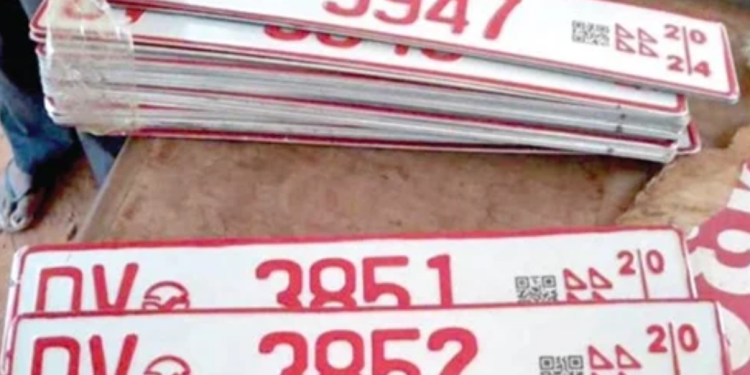
The Driver and Vehicle Licensing Authority (DVLA) has issued a firm reminder on the correct use of DV number plates, emphasizing that these plates are strictly reserved for licensed car dealers and vehicle manufacturers and are not intended as a substitute for full vehicle registration. Stephen Attuh, Director of Communication at the DVLA, addressed the issue on the Citi Breakfast Show on Thursday, February 5, in response to increasing public confusion and misuse of DV plates on roads nationwide. He clarified that DV plates are designed for limited, temporary use, such as moving vehicles from a dealer’s lot for repairs, defect fixing, or test drives before final sale. Attuh highlighted a widespread misconception among motorists who believe DV plates can be used indefinitely, even after purchasing a vehicle. He stressed, “You are not required to have a DV plate on your vehicle so long as it is not for purposes of fixing a defect on it or test driving. Once the vehicle is sold to you and you are off the dealer’s facility, you are required by law to register the vehicle to be duly identified before it can be on our roads.” He attributed the growing misuse of DV plates to some car dealers who flout regulations, allowing buyers to use the plates unlawfully. Citing Regulation 23 of Legislative Instrument (LI) 2180, Mr. Attuh underscored that the rules governing trade licences are clear, and any breach is a violation of the law. “The DV plate has many limitations, and its use for ordinary driving is not permitted,” he reiterated. The DVLA’s renewed advisory seeks to curb unlawful practices and ensure that vehicles on Ghana’s roads are properly registered and identifiable, in line with existing legal requirements. Source: Apexnewsgh.com
Ghana and Zambia Sign Landmark Visa Waiver Agreement to Boost Bilateral Ties
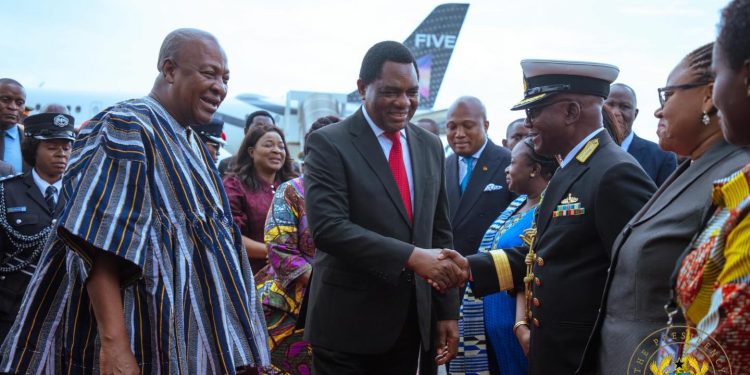
In a historic move to deepen ties and promote seamless mobility, the governments of Ghana and Zambia have signed a landmark visa waiver agreement, allowing citizens of both countries to travel freely without the need for visas. The announcement came during President John Dramani Mahama’s recent three-day state visit to Zambia, where he was welcomed by President Hakainde Hichilema at the Kenneth Kaunda International Airport on February 4. The development was disclosed to the press by Ghana’s Minister for Foreign Affairs, Samuel Okudzeto Ablakwa, who described the visa waiver as one of the most significant outcomes of the high-level visit. Mr. Ablakwa emphasized that the new policy is poised to enhance trade, tourism, investment, and cultural exchange between the two nations, removing long-standing bureaucratic barriers for travelers, including students, businesspeople, professionals, and tourists. According to the Foreign Affairs Minister, the visa-free arrangement was a key directive personally issued by President Mahama as a top priority for the visit. “We are prioritising your smooth mobility, and one of the major outcomes of this state visit is that, for the first time in the history of Ghana-Zambia relations, we are going to have a free visa between our two countries, so you no longer have to stress about visas,” Mr. Ablakwa said. He added that the President had made it clear that the agreement was a non-negotiable condition for the diplomatic trip. The visa waiver agreement signals a new era of cooperation, expected to foster closer diplomatic, economic, and people-to-people relations between Ghana and Zambia. As both countries look to the future, the removal of travel restrictions is set to unlock new opportunities and strengthen the bonds between their citizens. Source: Apexnewsgh.com
Amasaman High Court Reduces Nana Agradaa’s Prison Sentence to 12 Months

The Amasaman High Court has reduced the controversial 15-year prison sentence handed to evangelist Nana Agradaa, citing the original punishment as harsh and excessive. The ruling, delivered this week, affirmed her conviction but lowered her sentence to 12 calendar months, effective from July 3, 2025, the date on which she was initially convicted. Nana Agradaa, a former fetish priestess turned evangelist, was found guilty of charlatanic advertisement and defrauding by false pretence. Her conviction stemmed from a widely broadcast 2022 television appearance in which she claimed to possess spiritual powers that could miraculously double people’s money. Enticed by her promises, several victims handed over large sums of money, only to be disappointed when the promised returns never materialized. While the court acknowledged the seriousness of the offences, it concluded that the original 15-year sentence was disproportionate to the circumstances. Exercising its discretion, the court opted for a downward adjustment, emphasizing the importance of fair and just punishment under the law. With the revised sentence, Nana Agradaa will serve a total of 12 months in prison, marking a significant reduction from her initial punishment while maintaining the court’s stance on accountability for her actions. Source: Apexnewsgh.com
Government Unveils Post-Harvest Initiative to Boost Efficiency and Cut Losses in Agriculture
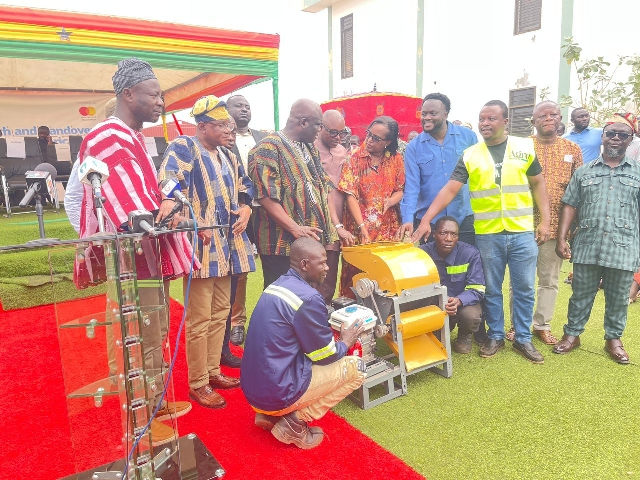
Ghana’s agricultural sector marked a pivotal moment as the Minister for Food and Agriculture, Eric Opoku, reiterated the government’s commitment to building a resilient and efficient food system, one that goes beyond increased production to protecting the hard-earned harvests of farmers. Speaking at the official launch and handover of locally fabricated post-harvest equipment, Minister Opoku described the event as a symbol of Ghana’s deliberate shift towards local innovation, value addition, and sustainability in agriculture. He acknowledged a long-standing challenge: despite investments in boosting output, the country has continued to lose a significant portion of its harvests due to poor post-harvest handling. “Inadequate storage and processing have not only wasted farmers’ effort and income, but have also weakened our national food systems,” the Minister noted. The new initiative seeks to change that narrative by engaging 2,231 youth artisans to fabricate around 300 threshers, 200 for maize and 100 for soybeans, across seven technology solution centres. More than 3,000 farming families nationwide are expected to benefit. Minister Opoku emphasized that the programme is about more than just numbers; it’s about building a skilled workforce to serve Ghana’s agriculture for years to come. The impact will be seen in reduced post-harvest losses, higher farmer incomes, improved produce quality, and stronger rural economies. Sustainability, the Minister stressed, is at the core of the initiative. “Equipment alone is not enough; skills and ongoing technical support are essential,” he said. The programme, therefore, includes comprehensive user training, a technical support system, and the involvement of trained agricultural and engineering graduates to guarantee safety, reliability, and continuity. He underscored that the future of Ghana’s agriculture lies in efficiency, value addition, and the dignity of labour. It also depends on empowering women farmers, equipping young people with relevant skills, and ensuring that every harvest contributes to national development. World Food Programme Country Director praised the initiative as a practical, homegrown solution to Ghana’s persistent post-harvest losses. She noted that significant quantities of maize and soybeans are lost after harvest, undermining incomes, nutrition, and national food security while driving up prices. The WFP supports the holistic approach, which addresses everything from production to processing, storage, and market access. By aligning with Ghana’s Feed Ghana programme and its broader mechanisation agenda, the new initiative promises to enhance food security and transform rural livelihoods for the better. Source: Apexnewsgh.com
Vice President Calls for Empowerment of SMEs, Women, and Youth to Unlock Africa’s Single Market
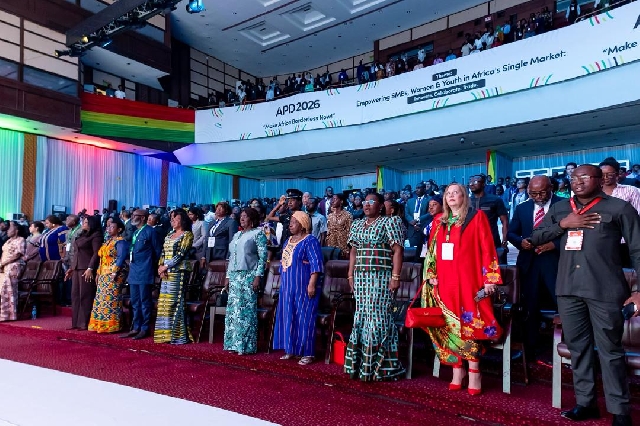
At the Africa Prosperity Dialogues (APD) in Accra on February 4, 2026, Vice President H.E. Prof. Naana Opoku-Agyemang delivered a clarion call for the empowerment of small and medium-sized enterprises (SMEs), women, and young people, positioning them as the driving force behind Africa’s economic transformation. Speaking on behalf of President John Dramani Mahama, Prof. Opoku-Agyemang emphasized that the continent’s future prosperity hinges on shifting away from dependency and fragmented economies toward self-reliance and a unified market. Addressing delegates, she highlighted the critical role of advocacy platforms like the APD in complementing the African Continental Free Trade Area (AfCFTA), headquartered in Accra. These platforms, she noted, foster intra-African trade, investment, and mobility, and are essential for promoting integration and shared growth. Prof. Opoku-Agyemang referenced President Mahama’s recent United Nations address, reiterating that Africa must take charge of its destiny. She stressed that any development excluding youth, women, or small businesses is fundamentally unsustainable, a conviction at the heart of the government’s ‘Reset Agenda.’ Drawing on Ghana’s rich history of Pan-African engagement, she cited initiatives like the Pan-African Festival of Arts and Culture, the Year of Return, and the Diaspora Summit, as well as renewed commitments at the Second AU–CARICOM Summit. These, she said, reflect Ghana’s dedication to bridging both historical and economic divides. Describing the AfCFTA as a historic opportunity, Prof. Opoku-Agyemang pointed to its status as the world’s largest free trade area by number of countries, encompassing a combined market of 1.3 billion people. She underscored the pivotal role of SMEs, which account for roughly 80 percent of employment across Africa, and highlighted the significant contributions of women and youth, women comprising nearly half the workforce and young people over 60 percent of the population, fueling innovation in technology and creative industries. However, she cautioned that fewer than 20 percent of African SMEs currently engage in export trade, and that women and young entrepreneurs face persistent barriers such as limited access to finance, skills, and markets. Without bold action, she warned, African economies risk remaining stuck in low-productivity cycles centered on raw material exports. The Vice President noted that this year’s APD theme, “Empowering SMEs, Women, and Youth in Africa’s Single Market,” highlights the pressing need to address these challenges. She called for sustained investment in infrastructure, innovation, and strong institutions, alongside coordinated industrial strategies, to unlock Africa’s economic potential. Prof. Opoku-Agyemang spotlighted Ghana’s ongoing initiatives, including the 24-Hour Economy and the Big Push infrastructure programme, designed to boost productivity, support trade, and foster regional integration within ECOWAS and the African Union. Concluding her address, she urged African leaders to view borders as instruments for organizing sovereignty in support of shared prosperity, and challenged all participants to ensure that the commitments forged at the dialogue translate into real, concrete outcomes for the continent. Source: Apexnewsgh.com
Ghana Medical Trust Fund Delivers Hope with Heart Surgery Support for Children Nationwide
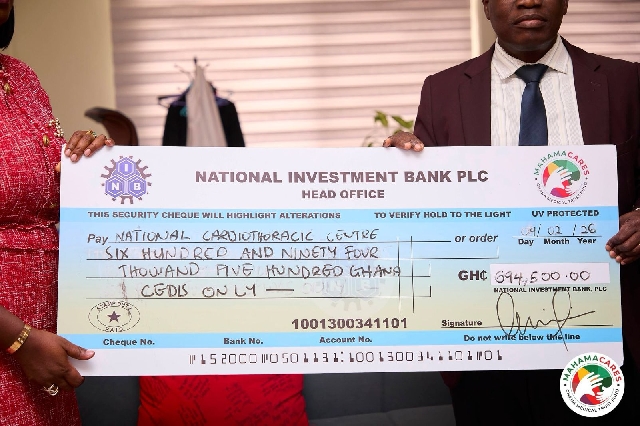
Eight children from various regions of Ghana are now closer to life-saving heart surgeries, thanks to a GH¢1,141,500 intervention by the Ghana Medical Trust Fund at the National Cardiothoracic Centre of Korle Bu Teaching Hospital. The timely support is transforming the lives of children who, under different circumstances, would be spending their days in classrooms and playgrounds instead of preparing for critical operations. Of the eight beneficiaries, five were recently referred to Korle Bu from regions including Northern, Savannah, Bono East, Western North, Western, and Greater Accra, demonstrating the Fund’s reach across the country. Their complex cardiothoracic conditions require urgent surgical attention, and the Trust Fund’s intervention is offering renewed hope to both the children and their families. This initiative is part of a 50-case pilot project preceding the Fund’s full rollout in April. By targeting those most in need, especially children who might otherwise be denied care due to financial barriers, the Ghana Medical Trust Fund is making essential, timely treatment possible for Ghana’s youngest patients. The Fund’s approach goes beyond promises, demonstrating a living commitment to care. For the families of these children, and for many more to come, the Ghana Medical Trust Fund is turning hope into healing, one surgery at a time. Source: Apexnewsgh.com