



“Comply or Lose Your License”: Lands Minister Puts Mining Companies on Notice During Talensi Tour
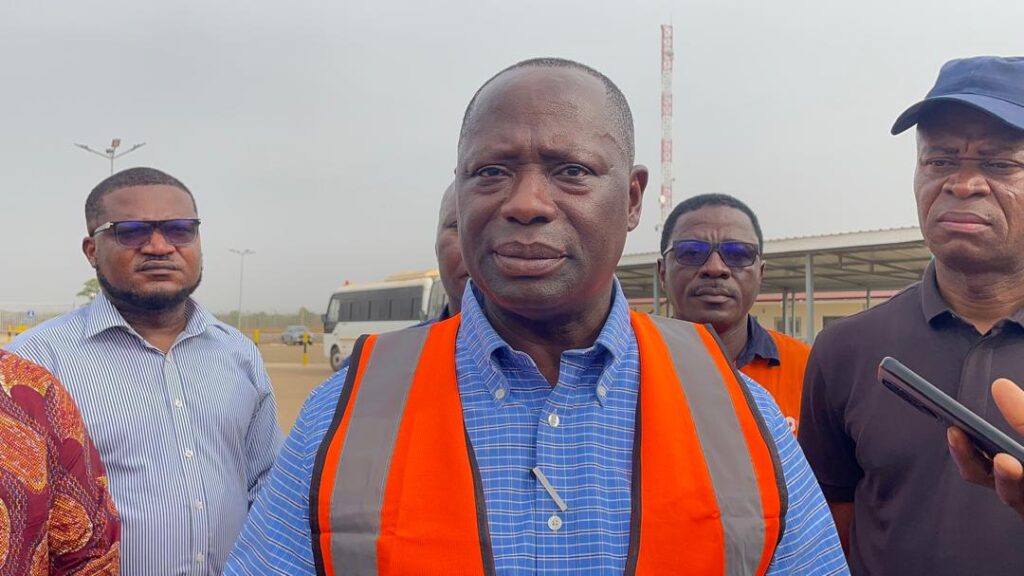
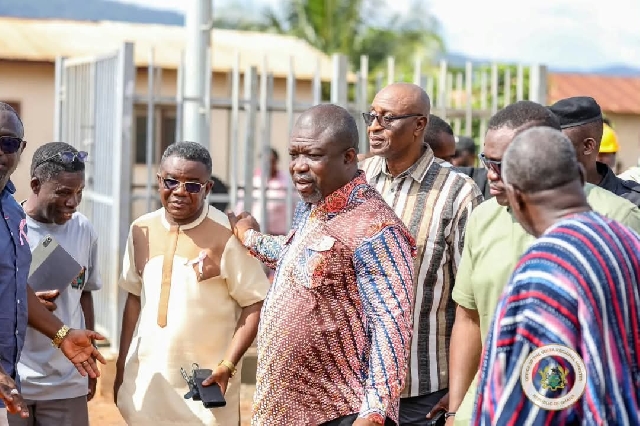
Ghana’s Minister for Lands and Natural Resources, Hon. Emmanuel Armah-Kofi Buah, has issued a stern warning to mining companies operating in the Talensi District of the Upper East Region, comply with environmental regulations or face license revocation. The warning came during a high-profile working tour of the region, where the minister met with traditional rulers, regional officials, and representatives of licensed mining companies to push for responsible mining practices and stronger benefits for local communities. The minister’s visit kicked off in Bolgatanga with a briefing at the Regional Coordinating Council, where Hon. Buah outlined the government’s priorities: formalizing small-scale mining, accelerating land title processing, and reinforcing environmental protection. He challenged Lands Commission staff to eliminate bureaucratic delays and improve record-keeping, ensuring that ordinary residents can secure their land rights without unnecessary hurdles. From Bolgatanga, the minister traveled to the Talensi District, where he first paid a courtesy call on the paramount chief of the Talensi Traditional Area, Nab Kugbilsong Nanlebegtang, seeking his blessing before proceeding with the tour. This gesture underscored the government’s commitment to working hand-in-hand with traditional authorities. The royal welcome, however, came with an urgent plea. The paramount chief and his council raised serious concerns about the growing menace of illegal mining, locally known as galamsey, which they described as a “cancer” ravaging the district. According to the chief, the consequences are far-reaching: environmental disruption, health risks, economic losses, and deepening social conflict. “Its activities have severe consequences in environmental disruptions, health risks, economic losses, and social conflict,” the chief stated plainly. “We therefore seek effective action to eliminate or minimize the cancer from the area,” he added, calling on the minister to move beyond words and deliver decisive intervention. In response to the chiefs’ concerns, Hon. Buah announced plans to expand the Community Mining Scheme in the Talensi District, a government initiative designed to provide legal, well-regulated mining sites equipped with proper training so that miners can operate safely and sustainably. He assured the traditional authorities of strong, ongoing collaboration between his ministry and local leadership to safeguard both the environment and the livelihoods of residents. The minister’s tour then took him to two of the district’s major licensed gold mining operations, Cardinal Namdini Mining Limited (CNML) and Earl International Group Ghana. At each site, Hon. Buah conducted on-the-ground inspections of operational areas, environmental safeguards, and worker safety measures. His message to both companies was unambiguous: compliance is not optional. He reminded the companies that the government holds the power to revoke mining licenses, and he was not shy about invoking it. “If any company fails to comply with the regulations on environmental grounds, their licenses will be revoked,” the minister declared. Both companies’ management teams responded by presenting their reclamation plans, community development projects, and environmental sustainability commitments, pledging to work closely with the Ministry, the Environmental Protection Agency (EPA), and other relevant stakeholders to uphold the highest standards. Wrapping up the tour, Minister Buah expressed gratitude to the chiefs and people of the Upper East Region for their cooperation and reaffirmed the ministry’s dedication to partnering with communities and mining firms alike, striking the delicate balance between economic opportunity and environmental stewardship. Regional officials welcomed the visit, noting that it would help align local actions with national policy and bring renewed momentum to responsible mining governance in the area. The minister’s tour sends a clear signal: in Ghana’s push to grow its mining sector, environmental accountability is no longer negotiable. Source: Apexnewsgh.com
Nkwanta Violence: IGP Deploys Armoured Vehicles as Five Bodies Recovered

The Inspector-General of Police (IGP), Christian Tetteh Yohuno has deployed additional security personnel and armoured vehicles to Nkwanta in the Oti Region following renewed violent attacks in the area. The Inspector-General of Police, Christian Tetteh Yohuno, moved swiftly on Wednesday night, ordering the deployment of two armoured vehicles and officers from the National Police Operations unit to the Nkwanta South Municipality in the Oti Region, following a fresh wave of violent attacks that sent shockwaves through the area. The deployment, confirmed in a statement issued by the Oti Regional Police Headquarters in Dambai on Thursday, March 26, was a direct response to the deteriorating security situation on the ground. According to the Police, the IGP’s decisive overnight intervention has since helped restore calm, with authorities indicating that the situation is currently under control. A joint team comprising personnel from the Police, Military, Bureau of National Intelligence (BNI), Defence Intelligence, and the Ghana National Fire Service recovered five bodies in the aftermath of the attacks. The victims, three males and two females, were found at two separate locations, a grim testament to the scale of the violence that had gripped the community. Investigations have now been launched to establish the full circumstances of the incident and to identify and prosecute those responsible. In the meantime, the Police are appealing for the cooperation of residents. Authorities are urging people in Nkwanta and surrounding communities to remain calm and to share any information that could assist the ongoing investigations. The statement, signed by Deputy Superintendent John Nchor, also carried a pointed warning against the spread of misinformation, cautioning that false information and inflammatory actions risk undoing the fragile calm that security forces have worked to restore. The deployment of armoured vehicles to Nkwanta signals the seriousness with which the IGP is treating the situation. For residents of the Oti Region, the hope now is that the presence of reinforced security will hold, and that answers about what happened and who is responsible will not be long in coming. Source: Apexnewsgh.com
Sam Jonah Exposes Political Capture of Ghana’s Insurance Sector
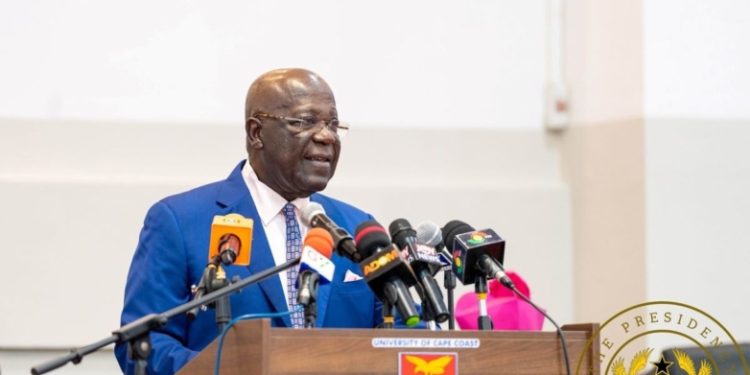
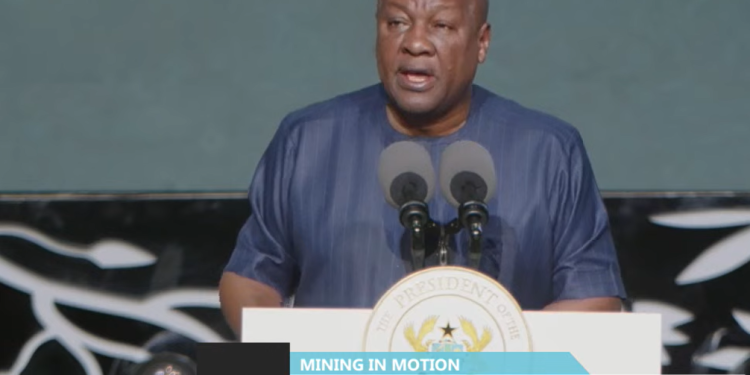
Leading business executive Sir Sam Jonah has issued a strong warning over what he describes as growing and systemic political interference in Ghana’s insurance sector, cautioning that it threatens the industry’s integrity and public trust. When Sir Sam Jonah took the podium at the 11th Annual Conference of the Insurance Brokers Association of Ghana in the Eastern Region, the room quickly understood this would be no routine address. Ghana’s most prominent business statesman had arrived with a diagnosis, and it was not a comfortable one. At the centre of his remarks was a problem he described as no longer isolated or occasional, but deeply embedded in the fabric of how insurance business is conducted in Ghana. Political interference, he warned, has moved from the margins of the industry to its very core, and the consequences are being felt across the entire sector. “There’s a growing and deeply troubling pattern of political and socioeconomic interference in the conduct of insurance business in Ghana,” he told delegates, his words carrying the weight of someone who had watched the problem grow over many years. What was once an occasional disruption, he said, has metastasised into something far more dangerous. “What was once an occasional disruption has become something more systemic, more embedded, more dangerous.” Sir Sam Jonah laid out the mechanics of this interference with striking clarity. Contracts, he revealed, are no longer being awarded based on performance or merit. Political direction, not professional assessment, is increasingly driving decisions. Insurance portfolios, particularly those belonging to state enterprises, are being handed out through personal connections and political leverage rather than competitive tender or professional selection. “Insurance portfolios are moved not through competitive tender or professional selection, but through personal access and political leverage,” he said. The distortions do not stop there. Brokers and insurers, he noted, are being pressured to accept placements they openly admit they cannot manage, taking on risks beyond their capacity simply because the instruction comes from above. And on pricing, he pulled no punches, warning that premiums are being loaded fraudulently, with no genuine risk assessment, serving purely as a vehicle for extracting money. But perhaps his most pointed remarks were reserved for the human cost of these practices. When the system fails, and he suggested it inevitably will, it is not the politically connected who bear the consequences. “When things go wrong… it is not the politically connected individuals who bear the cost. It is the taxpayer… who pays… and receives nothing in return.” He called it plainly what it is: betrayal. Beyond the financial damage, Sir Sam Jonah warned that political interference is corroding something harder to rebuild, public trust. When access matters more than competence, and connections outrank qualifications, the very institution of insurance is hollowed out from within. “It damages the institutions of insurance itself. It erodes public trust… and signals that competence is irrelevant, and that access is everything,” he said. He was careful, however, to draw a clear distinction. His concern is not with politically exposed persons participating in the industry, that, he said, is their right. What he insists on is that participation must be governed by the same professional standards that apply to everyone else. “The placement of insurance must be subject to professional standards, open competition, proper actuarial assessments, and the primacy of the policyholder’s interest,” he stated firmly. And lest anyone mistake these as aspirational ideals, Sir Sam Jonah made his position unambiguous. “These are not aspirations,” he said. “These are non-negotiable requirements.” Source: Apexnewsgh.com