

Stability Came at a Price — BoG Governor Asiama Opens Up on the True Cost of Ghana’s Economic Recovery
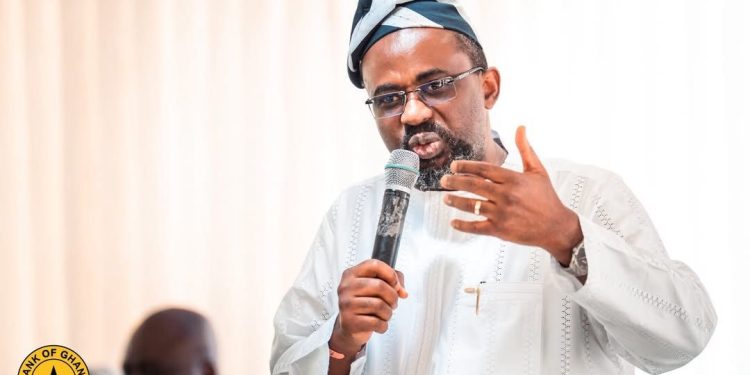
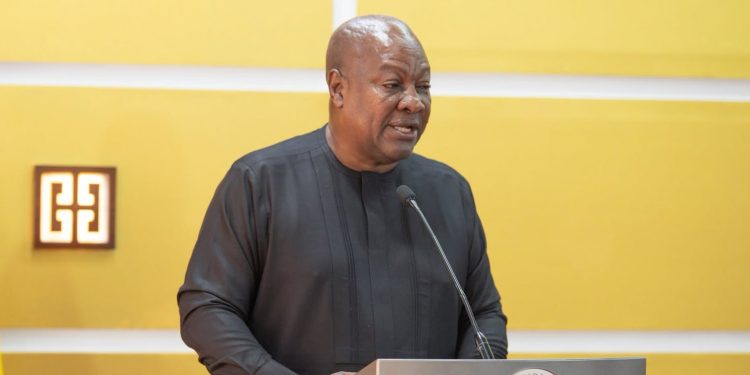
Ghana’s improved economic performance in 2025 did not come for free. That was the candid message from the Governor of the Bank of Ghana, Dr. Johnson Pandit Asiama, who used his appearance at the Kwahu Business Forum 2026 to pull back the curtain on the significant financial burden the central bank bore to deliver the macroeconomic stability that businesses and households have come to enjoy. Speaking at the Governor’s Roundtable session, which served as the closing highlight of the four-day forum, Dr. Asiama painted a picture of an institution that had to make costly, difficult decisions in order to steer Ghana’s economy back from the brink of high inflation and currency instability. “The Cedi is stable and under control,” he told the gathering. But behind that stability, he explained, lay a resource-intensive effort that stretched the central bank’s operations considerably. “Last year was good but expensive for the central bank. It took us a lot of money to mop up excess liquidity and bring inflation down to 5.4% by December 2025,” he said. The Governor was equally frank about the nature of central banking itself, describing it as a discipline defined by difficult choices. “The work we do is always about trade-offs… trying to strike the right balance,” he noted, a remark that resonated with business owners in the audience who understand all too well the tension between cost management and growth. At the heart of those trade-offs is the perennial challenge of controlling inflation without stifling credit and economic activity. To bring inflation down, central banks drain excess liquidity from the financial system — but doing so comes at a price. The higher the volume of liquidity to be absorbed, the greater the cost to the central bank’s balance sheet. In Ghana’s case, that cost was particularly steep in 2025, when inflation was slashed from 23.8% at the close of 2024 to 5.4% by December 2025, a reduction of 18.4 percentage points in a single year. Such an aggressive disinflation required equally aggressive monetary operations, and the Governor made no attempt to downplay the toll it took. Yet, looking ahead, Dr. Asiama offered a more optimistic outlook. With inflation now subdued and the monetary environment more stable, he suggested that the scale of intervention required going forward would be considerably smaller. “If you look at where inflation was at the end of December 2024 and where it is now, it wouldn’t involve the same level of resources to keep it low and stable going forward,” he said. That is welcome news not just for the central bank’s balance sheet, but for the broader economy. A less burdened central bank, operating in a low-inflation environment, is better positioned to support the kind of credit expansion that businesses need to grow. Dr. Asiama underscored this connection directly: “When banks are strong, they can give more credit.” The Governor’s Roundtable brought the 2026 Kwahu Business Forum to a close. The event, which ran from April 3, drew an impressive gathering of business owners, industrialists, investors, policymakers, and development partners, all convened to deliberate on policies capable of stimulating business growth. Among those in attendance were Chief of Staff to the President, Julius Debrah; Eastern Regional Minister, Rita Akosua Adjei Awatey; Economic Advisor to the President, Seth Terkper; and Legal Counsel to the President, Marietta Agyeiwaa Brew. With the forum concluded, the conversations it sparked, about the cost of stability, the future of credit, and the path to sustainable growth, are ones Ghana’s business community will be watching closely as the year unfolds. Source: Apexnewsgh.com
Sachet Water Price Hike Suspended — Government Steps In to Protect Consumers
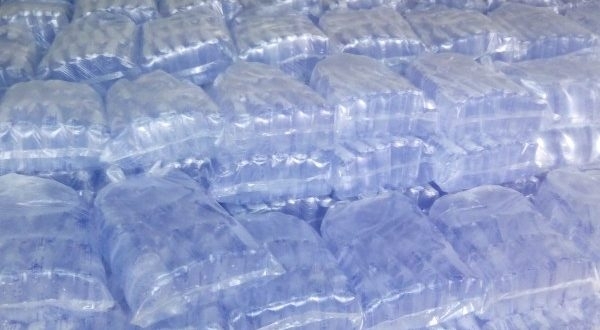
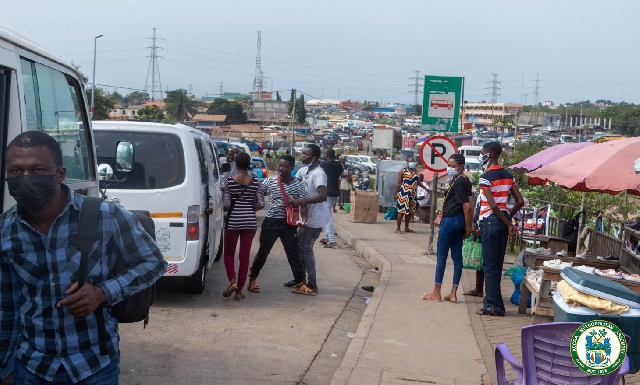
Ghanaians can breathe a sigh of relief, at least for now. The price of sachet water will remain unchanged after a planned increase, which was set to take effect on Monday, April 6, was suspended. The Ministry of Trade, Agribusiness and Industry made the announcement, signalling a timely intervention ahead of what would have been an unwelcome burden on households already navigating economic pressures. In a press statement, the ministry, led by Minister Elizabeth Ofosu-Adjare, commended the Ghana Plastic Manufacturers Association (GPMA) and the National Association of Sachet and Packaged Water Producers for pulling back on the proposed price adjustment. The ministry described the decision as a demonstration of commitment to consumer protection and market stability, assuring the public that no increase has taken effect and that sachet water remains available at its current price. The suspension, however, is only part of the story. Behind the scenes, producers and manufacturers have been grappling with rising production costs, a challenge the government acknowledges cannot be ignored indefinitely. To address this, a meeting has been scheduled for Wednesday, bringing together manufacturers and producers to discuss the factors driving the proposed increase, with production costs expected to take centre stage in the conversation. A key concern raised is Ghana’s heavy reliance on imported raw materials, particularly polymers, the primary ingredient used in sachet production. It is this dependence on imports that has made producers vulnerable to external cost pressures, and it is a vulnerability the government is now actively seeking to address. “As a ministry, we are very concerned about feeding the industry with available raw materials. In fact, that has been our mandate since the government took over,” said Mr. Addo, speaking on behalf of the ministry. “So what we are doing right now is speaking to other stakeholders in the value chain to see if we can have locally available polymers, which are the main ingredients in sachet production,” he added. The push to source raw materials locally is being framed not merely as a cost-saving measure, but as a longer-term strategy to stabilise sachet water prices and insulate the industry from the volatility of global commodity markets. For now, consumers can continue to purchase their daily sachet water without digging deeper into their pockets. But the Wednesday meeting will be a critical test of whether government, manufacturers, and producers can find common ground on a sustainable path forward, one that keeps sachet water affordable without leaving producers unable to cover their costs. Source: Apexnewsgh.com
BoG Governor Asiama Speaks on Ghana’s Economic Progress at Kwahu Business Forum
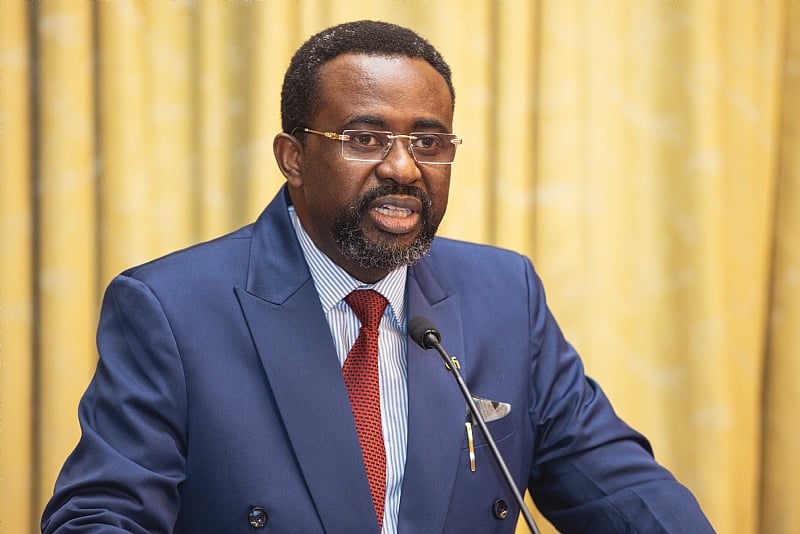
The Governor of the Bank of Ghana, Dr. Johnson Pandit Asiama, on Sunday, April 5, participated in the Kwahu Business Forum Governor’s Roundtable session, where he engaged the business community on Ghana’s economic development and the policy decisions shaping the country’s financial landscape. Governor Asiama used the platform to reflect on Ghana’s economic performance in 2025, acknowledging the significant strides made while also shedding light on the difficult policy trade-offs that central banks face globally. On the subject of inflation, a matter of keen interest to the business community, Dr. Asiama was candid about the price paid to achieve the current low inflation environment. “Last year was good but expensive for the central bank. It took us a lot of money to mop up excess liquidity and bring inflation down to 5.4% by December 2025,” he stated. He also pointed to the stable exchange rate as one of several strong macroeconomic indicators, asserting confidently, “The Cedi is stable and under control.” Elaborating on the nature of central banking, he noted, “The work we do is always about trade-offs… trying to strike the right balance.” Ghana’s inflation story in 2025 is a remarkable one. The rate dropped from 23.8% at end-December 2024 to 5.4% by end-December 2025, a reduction of 18.4 percentage points within a single year. Achieving such a dramatic decline, however, came at a considerable financial cost to the central bank. Central banks, by mandate, are tasked with maintaining economic stability, primarily by keeping inflation low and stable. To do this, they employ monetary policy tools, including Open Market Operations (OMO), which involve draining excess liquidity from the economy. In Ghana’s case, the Bank of Ghana issues BoG Bills purchased by commercial banks. The cost of issuing these bills is heavily influenced by the prevailing policy rate, making large-scale liquidity mop-up exercises particularly expensive. At the last Monetary Policy Committee press briefing, Governor Asiama disclosed that the cost of the Bank’s Open Market Operations rose significantly in 2025 as a result of the aggressive liquidity mop-up exercise. This is a challenge not unique to Ghana, other major monetary authorities, including the US Federal Reserve and the European Central Bank, face similar pressures when deploying tools to rein in inflation. The rationale for bearing such costs, however, is clear. Inflation, left unchecked, erodes the real incomes of citizens. Even when nominal wages remain unchanged, every uptick in inflation reduces the purchasing power of households. Central banks, therefore, cannot afford to be passive bystanders. Despite the heavy cost incurred in 2025, Governor Asiama expressed confidence that the year ahead would tell a different story. “If you look at where inflation was at the end of December 2024 and where it is now, it wouldn’t involve the same level of resources to keep it low and stable going forward,” he said. The logic is straightforward. With current inflation already below 4%, the scale of intervention required to maintain price stability in 2026 is far less demanding than the monumental effort needed to slash inflation by 18.4 percentage points in 2025. The Bank of Ghana’s monetary operations going forward are therefore expected to be less costly, easing pressure on the central bank’s balance sheet. Beyond inflation and monetary policy costs, Governor Asiama underscored the importance of collaboration between the central bank and the broader financial sector. He assured the business community that the Bank of Ghana remains committed to strengthening financial markets and the banking sector. “When banks are strong, they can give more credit,” he noted, a statement that speaks directly to the aspirations of businesses seeking access to financing for growth and expansion. Governor Asiama’s appearance at the Kwahu Business Forum offered a rare and frank window into the inner workings of central banking in Ghana. His remarks painted a picture of an institution that has made difficult, costly decisions in the interest of macroeconomic stability, and one that is now positioned to consolidate those gains at a lower cost. With inflation subdued, the Cedi stable, and a more favourable monetary environment taking shape, 2026 appears to hold genuine promise for Ghana’s economy and its business community. Source: Apexnewsgh.com
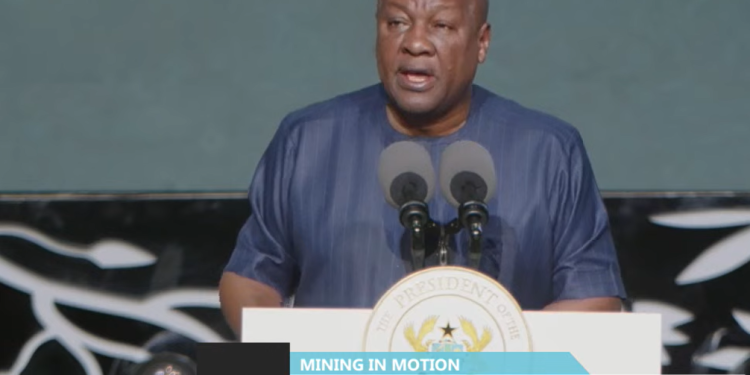
Mahama Heads to France for One Health Summit and Bilateral Talks with Macron
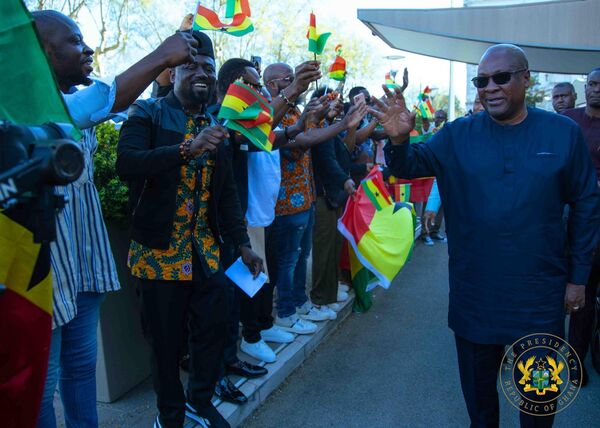
Ghanaian President John Dramani Mahama is set to embark on an official visit to France beginning Monday, April 6, 2026, following a formal invitation from French President Emmanuel Macron. The two-day engagement will take President Mahama across two of France’s most iconic cities, Lyon and Paris, for a packed schedule of global health diplomacy and high-level bilateral discussions. The visit begins in Lyon, where President Mahama will attend the 2026 One Health Summit, a landmark gathering bringing together world leaders, health ministers, and global health experts to tackle some of the most pressing challenges facing humanity, from the reform of global health systems and sustainable food production to coordinated strategies for combating health crises. As founder of the Accra Reset Initiative, President Mahama will take center stage at the summit on Tuesday, co-chairing its high-level segment alongside President Macron. He is scheduled to deliver two keynote addresses during the summit. The first will be at a session on Global Health Architecture, co-chaired by President Macron and Dr. Tedros Adhanom Ghebreyesus, Director-General of the World Health Organization. That session will focus on reforming global health initiatives and endorsing a Political Declaration designed to strengthen international health cooperation. His second keynote will open the high-level segment for heads of state and government, where President Mahama is expected to articulate Ghana’s commitments and perspectives on global health security, signaling the West African nation’s growing role on the world stage. From Lyon, the President will make his way to the French capital. On Wednesday, April 8, 2026, he will be welcomed to the Élysée Palace for a bilateral meeting with President Macron. The talks are expected to center on deepening Ghana–France relations, with discussions spanning health, education, trade, investment, and regional security. Prior to the Élysée meeting, President Mahama will also be received by Gérard Larcher at the Senate House, a gesture that underscores the diplomatic significance of the visit. Following his meeting at the Élysée Palace, President Mahama is expected to return to Accra, closing out what promises to be a consequential chapter in Ghana’s international engagements. The statement was issued by Felix Kwakye Ofosu (MP), Spokesperson to the President and Minister for Government Communications. Source: Apexnewsgh.com