
OSP Raids Five Fuel Depots in Sweeping Probe into Ghana’s Petroleum Sector Corruption
Ghana’s Office of the Special Prosecutor (OSP) has launched a sweeping crackdown on alleged corruption in the country’s petroleum downstream sector, conducting coordinated searches at five major fuel depots and seizing a trove of documents and electronic materials in the process. The operation, part of an ongoing investigation, targeted evidence linked to the suspected under-declaration of petroleum imports and the falsification of product types, practices that industry observers say carry significant financial consequences for the Ghanaian state. According to findings referenced in the OSP’s second half-year report, the probe has already implicated one Bulk Oil Distribution Company and 16 Oil Marketing Companies (OMCs) in the diversion of condensate and marine gasoil. So far, approximately GHS8.5 million has been recovered in connection with these activities. But the figures may only scratch the surface. Estimates suggest that Ghana could be losing as much as GHS2 billion annually through tax-related leakages in the petroleum downstream sector alone. Adding to the concern, around GHS680 million spent each year on premix fuel subsidies may not be reaching the intended beneficiaries, raising fresh questions about accountability across the supply chain. The OSP’s investigation points to a broader and more troubling pattern of alleged infractions, including tax evasion and the deliberate manipulation of product classifications during depot transfers. Preliminary findings go further still, suggesting the possibility of coordinated actions involving certain industry players and officials embedded within key regulatory and state institutions, among them the National Petroleum Authority (NPA), the Ghana Revenue Authority (GRA), and the National Security Secretariat. These alleged collaborations are said to have facilitated widespread misreporting and illicit financial flows over time. The revelations have drawn sharp reactions from civil society. The Centre for Environmental Management and Sustainable Energy (CEMSE) described the findings as deeply concerning and indicative of systemic challenges that have long plagued the sector. Its Executive Director, Benjamin Nsiah, announced that CEMSE, in partnership with the Institute of Energy Policy and Research, is preparing to launch a public accountability campaign in the coming weeks, a move aimed at sustaining pressure for transparency and reform. The OSP has confirmed that investigations remain ongoing, with further actions to be determined by the outcome of the probe. For many Ghanaians, the unfolding case is a test of whether the country’s anti-corruption institutions can deliver meaningful accountability in one of its most strategically important sectors. Source: Apexnewsgh.com
Ghana Named First Beneficiary of France’s National Health Platform as Mahama Meets Macron in Paris
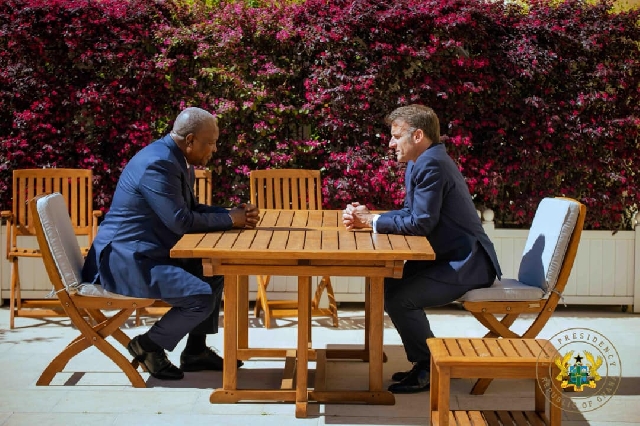
Ghana has been selected as the first country to benefit from France’s National Health Platform, a landmark health compact designed to strengthen healthcare systems, in a major announcement made by French President Emmanuel Macron during high-level talks with President John Dramani Mahama at the Élysée Palace in Paris. The announcement came as part of President Mahama’s one-day official visit to France, where the two leaders sat down for wide-ranging bilateral discussions covering agriculture, infrastructure, artificial intelligence, regional security, and Ghana’s ongoing economic recovery. The meeting opened on a warm note, with President Macron expressing gratitude to his Ghanaian counterpart for co-chairing the One Health Summit in Lyon. He also singled out the Accra Reset Initiative for recognition, describing it as significant and acknowledging the prominence it had gained during the summit. President Mahama, in turn, welcomed the new health partnership and said he was honoured to have been invited to co-chair the summit, underscoring its importance to the World Health Organisation. He added that the Accra Reset Initiative had already produced tangible outcomes that could serve as a foundation for further progress. Beyond health, the two presidents explored ways to deepen cooperation in agriculture to boost food security and enable year-round farming. Talks also touched on support for maternal health, artificial intelligence development, and the long-anticipated construction of the Accra-Kumasi expressway, a project with significant implications for Ghana’s infrastructure landscape. The leaders additionally reviewed ongoing development support being channelled through the Agence Française de Développement, France’s development finance institution. President Mahama used the occasion to express Ghana’s gratitude to both France and China for their roles in supporting the country’s debt restructuring process, pointing to encouraging signs of economic recovery on the horizon. As the talks drew to a close, both presidents reaffirmed the enduring ties between Ghana and France, a relationship anchored in shared values of democracy, peace, and a rules-based international order, while also exchanging views on pressing regional and global security concerns. Source: Apexnewsgh.com
Ken Ofori-Atta Released from U.S. Immigration Custody After Months of Detention
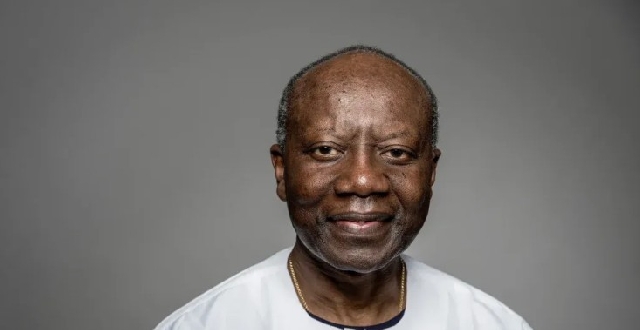
Former Finance Minister Ken Ofori-Atta is no longer in the custody of U.S. Immigration and Customs Enforcement (ICE), bringing a new twist to a case that has gripped public attention on both sides of the Atlantic. The development emerged from ICE’s own detainee tracking system, which no longer lists the former minister as being held. It was further confirmed by prominent activist Oliver Barker-Vormawor, who cited sources indicating that Mr. Ofori-Atta walked free on Tuesday, April 7, 2026. His ordeal in U.S. custody began in January 2026, when he was arrested in the United States over concerns related to his immigration status. He was detained in the Virginia area, with his legal representatives later clarifying that the matter centred on the legality of his stay in the country. For several weeks, he remained held at a detention facility in Virginia as legal proceedings unfolded around him, including immigration hearings and an extradition request filed by Ghana. During that period, a U.S. court denied him bail as he mounted a legal challenge against the case. His detention drew considerable public and political attention, largely owing to his high-profile tenure as Ghana’s Finance Minister, a role that placed him at the centre of some of the country’s most consequential economic decisions. Yet, even as the news of his release circulates, many questions remain unanswered. The circumstances under which he was freed are still unclear, and it is not yet known whether he will be permitted to remain in the United States or whether the extradition process will be revived. As of the time of this report, neither U.S. authorities nor his legal team have issued any official statement regarding the terms of his release. Source: Apexnewsgh.com
Ghana’s Crude Oil Output Hits Six-Year Low as PIAC Calls for Urgent Investment
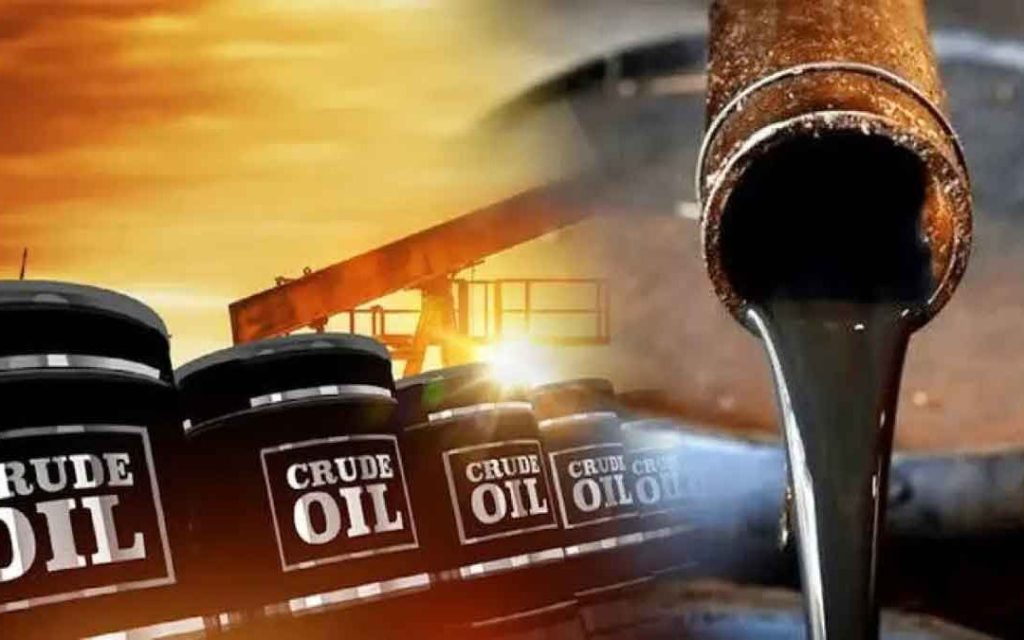
Ghana’s crude oil production has declined for the sixth consecutive year, sliding from a peak of 71.4 million barrels to just 37.3 million barrels in 2025, a compounded annual average decline of 9%, according to the 2025 Annual Report by the Public Interest and Accountability Committee (PIAC). The alarming figures were presented on Wednesday, April 8, when PIAC Chairman Richard Ellimah stepped before the public to highlight the growing crisis gripping the country’s petroleum sector. With each passing year, Ghana’s oil output has continued its downward spiral, raising serious concerns about the nation’s long-term energy revenue and economic stability. “In 2025, crude oil production declined for the sixth consecutive year, falling from a high of 71.4 million barrels to 37.3 million barrels. This represents a compounded annual average decline of 9%, which should be a concern for every Ghanaian,” Ellimah warned. The PIAC Chairman did not stop at sounding the alarm; he came up with recommendations. He urged the government to strengthen its collaboration with the Petroleum Commission to attract fresh investment into the sector and help reverse the troubling downward trend. Central to his recommendations was a call for developing a dedicated framework to boost investment in existing producing fields, with particular attention to the Tweneboa, Enyenra, and Ntomme (TEN) field, where output has consistently underperformed expectations. Beyond reviving existing fields, Ellimah also pressed the government to take proactive steps to court additional investors into Ghana’s oil sector, a move he believes is critical to stabilising and ultimately growing production levels. As Ghana grapples with dwindling oil revenues, the message from PIAC is clear: without decisive action and meaningful investment, the country risks watching its petroleum fortunes continue to erode. Source: Apexnewsgh.com
Ghana’s Economy Grows 7.5% in January 2026, Services Sector Leads Charge
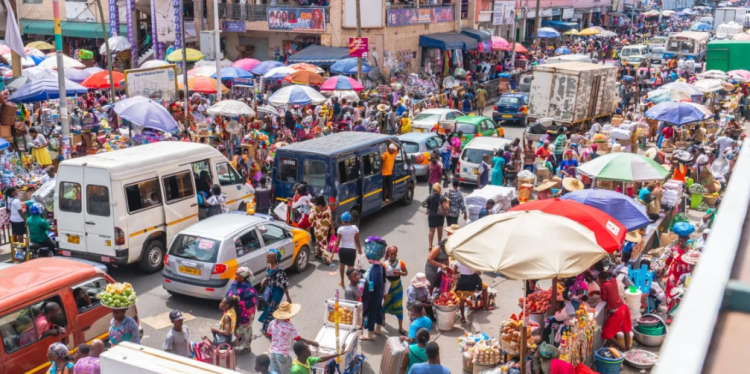
Ghana’s economy kicked off 2026 on a positive note, expanding by 7.5% in January, according to the Ghana Statistical Service. While the figure signals sustained growth momentum at the start of the year, it represents a slight moderation compared to the 8.2% recorded in the same period in 2025. The latest Monthly Indicator of Economic Growth (MIEG) data reveals that the services sector was the clear engine of activity, posting a robust 9.6% growth and contributing 54.3% of total economic expansion. Industry followed with a 7.2% growth, accounting for 29.0% of total growth, while agriculture recorded the slowest performance at 4.5%, contributing 14.0%. Government Statistician Dr. Alhassan Iddrisu noted that the strong showing from services reflects its increasingly dominant role in the economy, reinforcing the view that Ghana’s growth trajectory is tilting firmly toward a service-led model. However, the data also exposes an uneven growth pattern that warrants attention. The relatively sluggish pace in agriculture raises concerns about productivity in a sector that remains a lifeline for jobs and food security. Meanwhile, industry’s performance, though solid, suggests untapped potential for deeper value addition and greater output. As Ghana navigates the rest of 2026, economists and policymakers agree that sustaining the current momentum will require a more balanced approach, one that strengthens industrial capacity, revitalizes agricultural productivity, and harnesses the continued dynamism of the services sector to build broader and more resilient economic growth. Source: Apexnewsgh.com
Leadership Change at IGP’s Special Operations Team Amid Assault Investigation
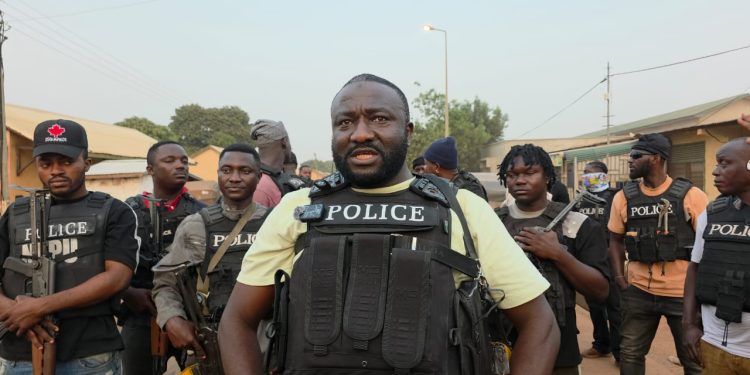
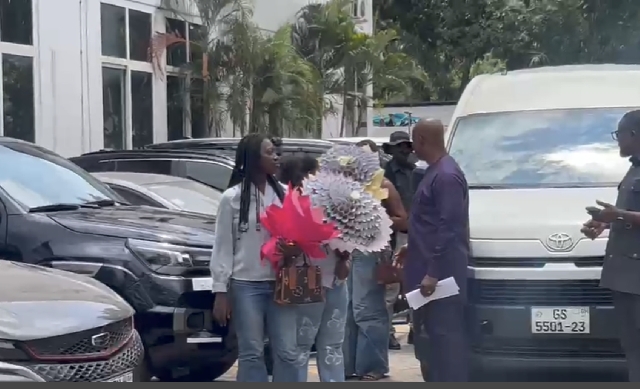
The leader of the Inspector General of Police’s (IGP) Special Operations Team, DSP Bawah Abdul Jalil, has been removed from his post as investigations continue into an alleged assault case against him and members of the team. Jalil and his colleagues are being probed for allegedly assaulting renowned Ghanaian artist Ibrahim Mahama. In a formal ceremony held on April 7, 2026, at the National Police Training School in Accra, DSP Bawah Abdul Jalil officially handed over command responsibilities to his successor, Superintendent Augustine Dawson Amoah, who will be supported by three other senior officers, marking a new chapter in the team’s leadership. Speaking at the ceremony, the outgoing DSP Jalil called on personnel to extend their full cooperation and support to the incoming leadership, stressing the importance of continuity and operational effectiveness within the team. Superintendent Amoah, in his maiden address to the team, struck a tone of resolve and commitment. He assured personnel of his dedication to effective leadership and called for unity, discipline, and professionalism in the execution of their duties as the team moves forward under new command. Source: Apexnewsgh.com
Mahama Nominates Five to Ghana’s Fiscal Council in Bold Push for Fiscal Discipline
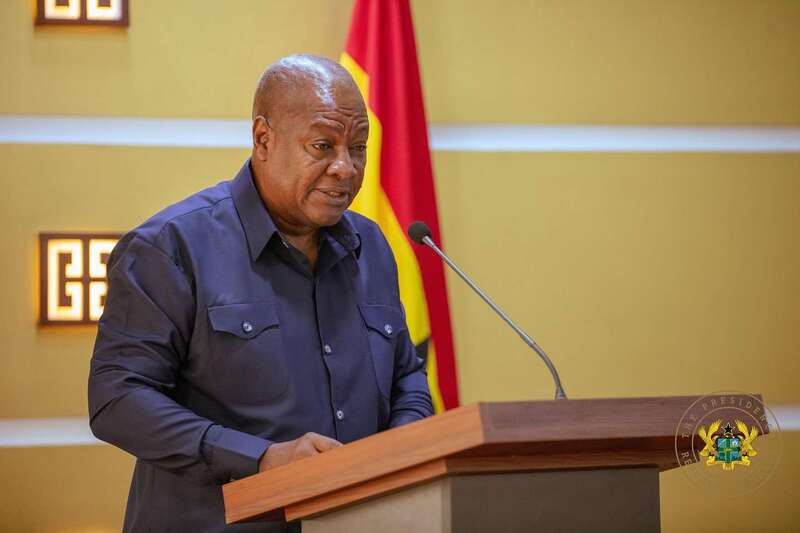
President John Dramani Mahama has nominated five distinguished individuals to serve on Ghana’s newly constituted Fiscal Council. The announcement, made on Wednesday, April 8, 2026, signals the government’s firm commitment to entrenching fiscal discipline and transparency in the management of the country’s economy. The nominations were communicated through a statement issued by Felix Kwakye Ofosu, the President’s Spokesperson and Minister for Government Communications. According to the statement, the appointments were made pursuant to Section 11D of the Public Financial Management Act, 2016 (Act 921), as amended by the Public Financial Management (Amendment) Act, 2025 (Act 1136). Leading the pack of nominees is Dr. Emmanuel Oteng Kumah, who has been designated as Chairperson of the Council. A seasoned international economic consultant and adviser, Dr. Kumah brings with him a wealth of experience drawn from his time at the International Monetary Fund and his tenure as former Board Chairman of Standard Chartered Bank Ghana. Joining him is Associate Professor Patrick Opoku Asuming of the University of Ghana Business School, nominated to represent academia on the Council. A development economist with a PhD from Columbia University, Prof. Asuming has published extensively on health economics and public policy in Ghana, making him a fitting voice for evidence-based fiscal governance. Rounding out the nominees are J. Kweku Bedu-Addo, a former public policy expert from the Finance Ministry, and Dr. Henry Akpenamawu Kofi Wampah, who brings deep central banking experience to the table. Dr. Wampah previously served as Governor of the Bank of Ghana from 2013 to 2016, an appointment made by President Mahama during his first term in office. The Fiscal Council itself is a product of the 2025 amendment to the Public Financial Management Act, which repealed the Fiscal Responsibility Act, 2018 (Act 982) and replaced the Presidential Fiscal Advisory Council that had been in place since 2018. Under the amended law, the Fiscal Council is established as an independent statutory body with the mandate to supervise the government, particularly the Ministry of Finance, in the application of fiscal rules. Notably, the law bars members from holding any position within government, a deliberate measure to protect their independence and ensure impartial oversight. All five nominees are subject to parliamentary approval before the Council becomes operational. Once inaugurated, the Fiscal Council is expected to play a critical role in promoting transparency, accountability, and prudent economic decision-making, helping to ensure that Ghana’s hard-won fiscal gains are sustained well into the future. Source: Apexnewsgh.com