



Mahama Turns Egg Glut Into School Feeding Opportunity: “If We Can’t Sell It, Let Our Children Eat the Eggs”

When a trade disruption creates a crisis for poultry farmers, one president’s response is to feed it to schoolchildren. That, in essence, is the thinking behind President John Dramani Mahama’s latest directive, and it is a solution as practical as it is direct. President Mahama has instructed that the School Feeding Programme be used as a temporary outlet to absorb a surplus of eggs currently flooding the domestic market, offering struggling poultry producers a lifeline while putting nutritious food on the plates of Ghana’s schoolchildren. The oversupply did not emerge overnight. Poultry producers have been sounding the alarm over a trade disruption with Burkina Faso that has effectively blocked egg exports for more than two months. With a key export market shut off, eggs that would ordinarily have crossed the border have been piling up locally, driving prices down and squeezing the finances of farmers and distributors who depend on steady market access to stay afloat. The situation has been compounded by the success of the government’s own poultry development programmes, which have boosted domestic egg production. More supply, fewer outlets, the result is a glut that is hurting the very farmers the programmes were designed to support. Speaking during a citizen engagement at the University for Development Studies in the Northern Region on Sunday, April 19, as part of his “Resetting Ghana” tour, President Mahama acknowledged the crisis plainly and offered his response with equal plainness. “As I speak now, there’s a glut in the production of eggs. Poultry farmers are complaining that they can’t get a market for their eggs,” he said. His solution? Route the surplus through the School Feeding Programme, ensuring that the eggs reach children across the country rather than going to waste. “And that’s why I’ve said that we should find a way of getting the School Feeding Programme to absorb the eggs and give it to our children to eat. If we can’t sell it, let our children eat the eggs,” the President said. The directive is notable for addressing two challenges at once. For poultry farmers, it provides an immediate domestic market to ease the pressure of the glut. For schoolchildren benefiting from the feeding programme, it means a more nutritious meal. President Mahama also indicated that efforts are underway to resolve the underlying export impasse with Burkina Faso and restore market stability in the longer term, suggesting that the School Feeding intervention is intended as a bridge measure while diplomatic and trade channels are worked through. For now, Ghana’s schoolchildren may be about to find eggs on their plates a lot more often, and the country’s poultry farmers will be hoping that is exactly what happens. Source: Apexnewsgh.com
Relief for GES Staff as Salary Arrears Dating Back to 2024 Get the Green Light for Payment
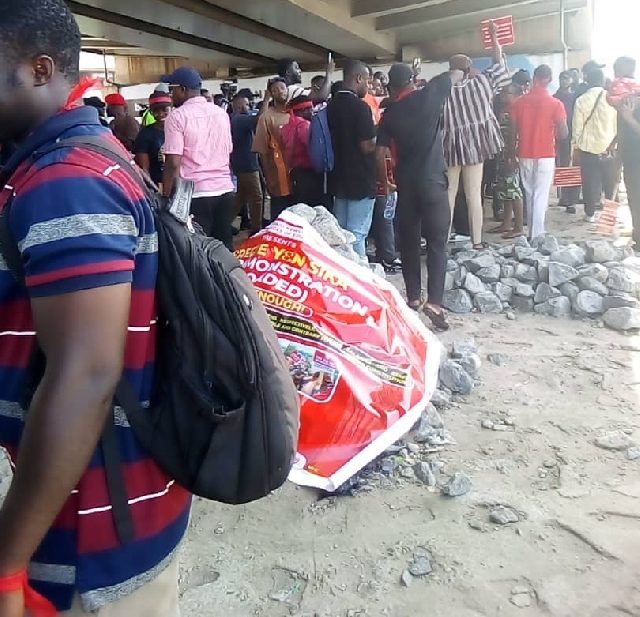
After months of waiting, thousands of Ghana Education Service (GES) staff are finally set to receive salary arrears that have been outstanding since August 2024. The GES has confirmed that payments have been approved and disbursements will begin in May 2026, bringing long-overdue financial relief to eligible employees across the country’s education sector. The approval follows clearance granted by the Ministry of Finance, which communicated its authorisation to the Controller and Accountant-General’s Department to proceed with processing the payments. In a circular issued by the Acting Deputy Director-General for Management Services, Prof. Smile Dzisi (Mrs.), GES confirmed that the approval covers arrears accrued between August 2024 and November 2025. The arrears will not be paid in a lump sum. Instead, GES has outlined a structured five-installment schedule designed to ensure an orderly disbursement process. Payments are set to begin in May 2026, with subsequent instalments following in June, July, and August 2026. Each instalment is expected to cover four months’ worth of arrears, gradually clearing the backlog that has accumulated over more than a year. The phased approach reflects a deliberate effort to manage the financial obligations in a sustainable and organised manner, rather than placing an immediate strain on the payment system. To ensure that no eligible staff member is left uninformed, GES has directed all Regional Directors to cascade the information to Heads of Schools across the country. The move is intended to guarantee that those who are owed money are made aware of the development and can expect their payments in line with the approved schedule. The announcement has also been copied to key stakeholders within the Ministry of Education, the GES Council, and senior management of the Service to facilitate coordination and smooth implementation. GES framed the development as part of a broader effort to settle outstanding financial obligations and improve staff welfare within the education sector, a sector where delayed salaries and arrears have long been a source of frustration among teachers and support staff. For the employees affected, the circular marks the end of a lengthy wait. With the first payment now less than two months away, the focus shifts to ensuring that the schedule holds and that every eligible staff member receives what they are owed. Source: Apexnewsgh.com
Anti-LGBTQ+ Bill Still in Play, Says Minister — Committee Meeting Set for April 23
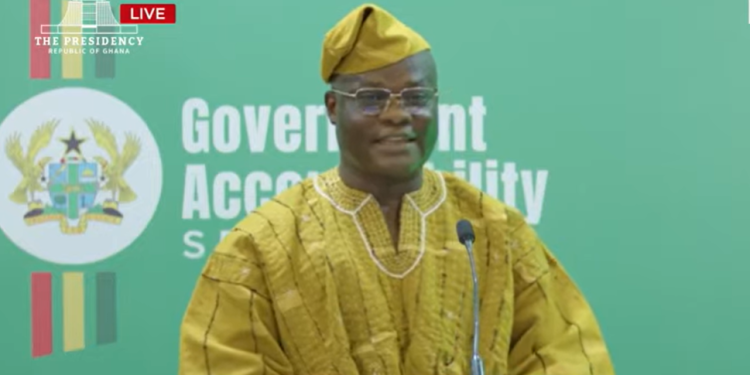
The Human Sexual Rights and Family Values Bill, popularly known as the anti-LGBTQ+ bill, has not stalled, and it has not been shelved. That is the message from the Minister for Local Government, Chieftaincy and Religious Affairs, Ahmed Ibrahim, who used Monday’s Government Accountability Series to offer the clearest public update yet on where the controversial legislation stands. According to the Minister, the bill is currently before Parliament’s Constitutional and Legal Committee, which is scheduled to meet on Thursday, April 23, to continue deliberations on it. Minister Ibrahim was emphatic on one point that has been at the centre of the public debate: this is not an executive bill. It is a private members’ initiative, introduced and driven by legislators, not the Presidency. He offered a candid account of how the bill was passed in Parliament, revealing that the process was not without its complications. “When it was time for the LGBTQ+ Bill to be passed, we were made up of four NDC MPs and four NPP MPs. But when we got to the venue, three of the NPP MPs ran away, leaving only one. So, we had to bring in an additional three NDC MPs to join us before the bill was passed,” he disclosed. The revelation underscores the cross-party nature of the bill’s passage, and, in the Minister’s view, strips away any basis for partisan point-scoring over it. “So, if a political party is saying that today they will take a political opportunity, that opportunity is gone,” he said pointedly. With some clergy groups reportedly planning demonstrations over what they perceive as delays in the bill receiving presidential assent, Ibrahim moved to redirect the frustration away from President John Dramani Mahama. “Let nobody bring the President in. It was we who introduced the bill,” he said firmly, adding that the President’s public remarks on the matter had been carefully considered and deserved to be heard in full context. “If you listen to his speech carefully, you will appreciate him for that,” the Minister said. Ibrahim made clear that he has been personally engaged at the highest levels to shepherd the bill through the process, meeting with the President, the Speaker of Parliament, and religious leaders who have raised concerns. “Pastors also come to me on the matter, and with that, I also know where we are,” he said, striking a tone of quiet confidence. “When you are in the field, you act, and not talk.” With the Constitutional and Legal Committee set to convene on April 23, the bill enters what could be a decisive phase of its legislative journey. Minister Ibrahim says he knows “every stage and every process”, a statement that suggests the bill’s path forward, while not without obstacles, is being actively managed. For the clergy groups, advocacy organisations, and members of the public watching closely on all sides of the debate, Thursday’s committee meeting will be the next significant moment to watch. Source: Apexnewsgh.com
Bank of Ghana Clears the Air: Content Creator Earnings from Digital Platforms Are Legal Foreign Income
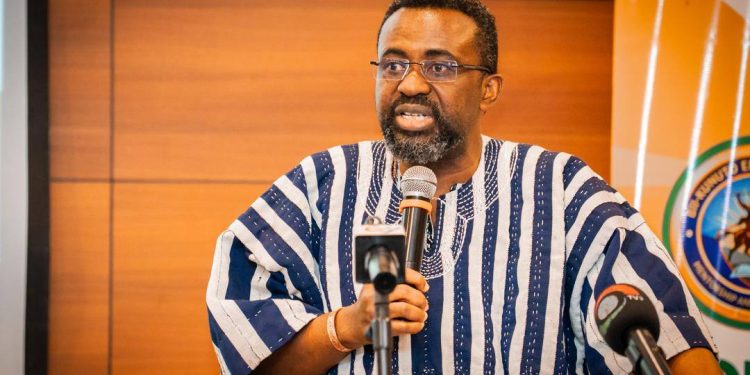
Ghanaian content creators monetising their work on platforms like X and other digital channels now have official clarity from the country’s central bank: their earnings are legitimate, they are recognised under Ghana’s foreign exchange framework, and they should be accessible without unnecessary friction. The Bank of Ghana (BoG) issued a statement clarifying that payouts received by Ghanaian creators from digital platforms qualify as service export proceeds, a classification that places them firmly within the bounds of permissible cross-border inflows under existing regulations. According to the central bank, content creators have two options for receiving their earnings. They may have funds paid into Foreign Exchange Accounts held with banks in Ghana, or alternatively, into cedi accounts, provided that all applicable regulatory requirements are met in either case. The clarification is significant. For creators who have long operated in a grey area of uncertainty about how their digital income should be treated, the Bank of Ghana has now drawn a clear line: these are legitimate earnings, and the system is designed to accommodate them. Despite the regulatory clarity, the Bank of Ghana acknowledged what many creators have experienced firsthand, actually accessing their funds has not always been straightforward. Reports of difficulties in receiving payouts have been a recurring frustration within Ghana’s growing creator community. The central bank, however, was careful to note that such challenges should not ordinarily arise when transactions are processed in accordance with established procedures. In other words, the framework exists; the problem, where it occurs, lies in how that framework is being applied on the ground. Rather than leaving creators to navigate the issue alone, the Bank of Ghana says it is actively engaging financial institutions and other relevant stakeholders to identify the root cause of the difficulties and ensure a prompt resolution. “The Bank appreciates the feedback received from affected persons,” the statement read, adding that “BoG is actively reviewing the matter and engaging with relevant institutions to identify the source of the issues and ensure prompt resolution.” The central bank also committed to keeping affected stakeholders informed throughout the process, a pledge that will be closely watched by creators who have been waiting for their earnings to flow freely. For Ghana’s digital creator economy, which has grown steadily alongside the global rise of content monetisation, Monday’s statement from the Bank of Ghana is a welcome development. The recognition of platform earnings as service exports not only legitimises the work of thousands of creators but also signals that the financial system is beginning to catch up with the realities of how income is earned in the digital age. Source: Apexnewsgh.com
Court offers Chairman Wontumi Final Chance to File Defence in Illegal Mining Case
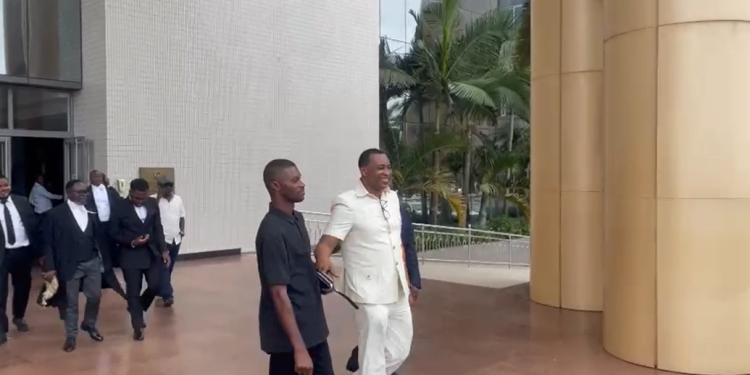
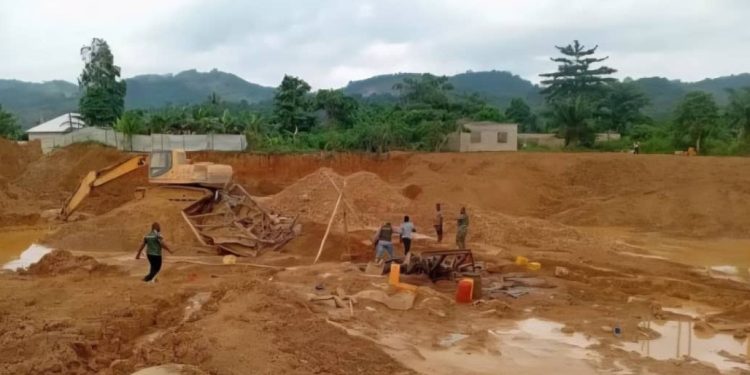
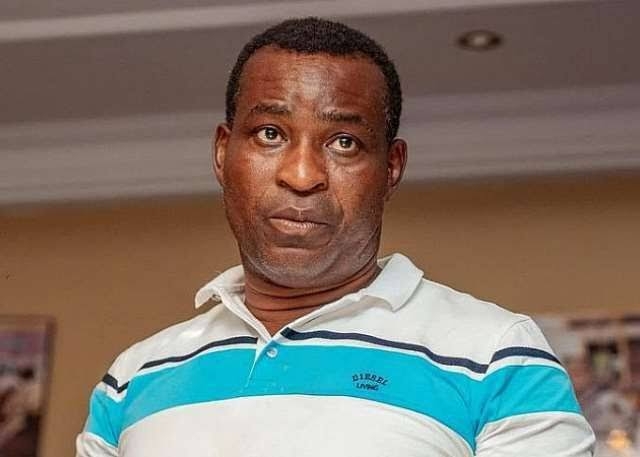
Bernard Antwi Bosiako, the Ashanti Regional Chairman of the New Patriotic Party, widely known as Chairman Wontumi, has been handed what amounts to a final opportunity to mount his defence in the Samreboi illegal mining case. But the path to that point on Monday, April 20, was anything but straightforward. Bosiako is standing trial over allegations that he permitted mining activities on his Akonta Mining concession in Samreboi without the required authorisation from the sector minister. After the prosecution closed its case, the court directed him to open his defence, outlining his options: testify in person, call witnesses, or make an unsworn statement. He was first instructed to file his witness statements by March 16, 2026. He did not. Instead, Bosiako filed an appeal at the Court of Appeal, challenging a submission of no case, and applied to the trial court to halt proceedings pending the outcome of that appeal. The application was rejected, and a new deadline of April 14, 2026, was set for the filing of witness statements, with a case management conference to follow. That deadline also passed without compliance. When the case was called at the High Court on Monday for the scheduled case management conference, Bosiako’s legal team had still not filed the witness statements. His lawyers informed the court that a fresh application seeking a stay of proceedings had been filed at the Court of Appeal, a repeat of the earlier move, and requested an adjournment until a ruling was delivered. The prosecution was having none of it. Deputy Attorney General Justice Srem-Sai rose to oppose the request, characterising it as a deliberate delay tactic. He argued that filing a repeat application does not automatically entitle an accused person to a stay of proceedings, and went further, urging the court to proceed to conviction on the grounds that Bosiako had effectively failed to mount any defence. Presiding judge Audrey Kocuvie-Tay declined the request for an adjournment. She ordered Bosiako to file his witness statements by May 5, 2026, ahead of a case management conference scheduled for May 7. She also made clear that proceedings would continue in the meantime, regardless of what happens at the Court of Appeal. It is a firm signal from the bench that the court will not allow the trial to be indefinitely stalled through procedural manoeuvres. For Chairman Wontumi, the May 5 deadline now looms as a critical moment, one that will determine whether he mounts a formal defence or leaves his fate increasingly in the hands of the court. Source: Apexnewsgh.com
From GH¢362 Million to GH¢5 Billion: How DACF Funding to District Assemblies Surged in 2025
The numbers tell a striking story. In 2024, Ghana’s Metropolitan, Municipal and District Assemblies (MMDAs) received just GH¢362 million from the District Assemblies Common Fund (DACF), a figure so low it raised serious questions about the viability of local governance and development across the country. One year later, that figure had ballooned to GH¢5 billion. The Minister for Local Government, Chieftaincy and Religious Affairs, Ahmed Ibrahim, laid out the details at the government’s Accountability Series on Monday, April 20, offering a quarter-by-quarter breakdown of how funds flowed to assemblies throughout 2025. The turnaround was not accidental. According to Minister Ibrahim, the 2025 disbursements were structured deliberately, designed to bring consistency and predictability to a funding system that had previously left assemblies starved of resources. The first quarter opened with a release of GH¢790,372,058.40, providing assemblies with a meaningful base to begin the year. The second quarter saw the figure more than double to GH¢1,464,983,309.60, reflecting a significant ramp-up in disbursements. The third quarter recorded GH¢1,188,921,640.80, a slight dip, but still a substantial allocation — before the fourth quarter closed the year on the highest note of all, with GH¢1,592,706,391.20 released to assemblies across the country. Together, the four quarters added up to a total of GH¢5 billion — a more than thirteen-fold increase on what was disbursed the year before. The increased releases, however, did not come without strings. Minister Ibrahim explained that the improved disbursements were tied to specific development obligations that every MMDA was expected to fulfil in return for accessing the funds. Each district was required to construct at least two Community-based Health Planning and Services (CHPS) compounds, three classroom blocks, and ten boreholes. Assemblies were also expected to make progress on completing ongoing legacy projects that had stalled under previous funding constraints. The conditions, in the Minister’s framing, were not punitive, they were purposeful. By linking funding to concrete deliverables, the government sought to ensure that the money translated into visible, tangible improvements in communities across the country. Beyond the standard development benchmarks, the government earmarked 25 percent of the Common Fund for a specific economic initiative: the development of 24-hour economy model markets. The allocation reflects the government’s broader agenda to stimulate economic activity at the local level and create jobs in communities that have long been bypassed by growth concentrated in urban centres. For Minister Ibrahim, the contrast between 2024 and 2025 is more than a set of figures; it is evidence of a deliberate policy shift toward taking local governance seriously. The question now is whether the momentum of 2025 can be sustained, and whether the assemblies that received the funds have delivered on the development commitments that came with them. Source: Apexnewsgh.com
Bongo Paramount Chief Urges President to Fast-Track Bongo Solar Farm Amid Persistent Power Crisis in Upper East Region
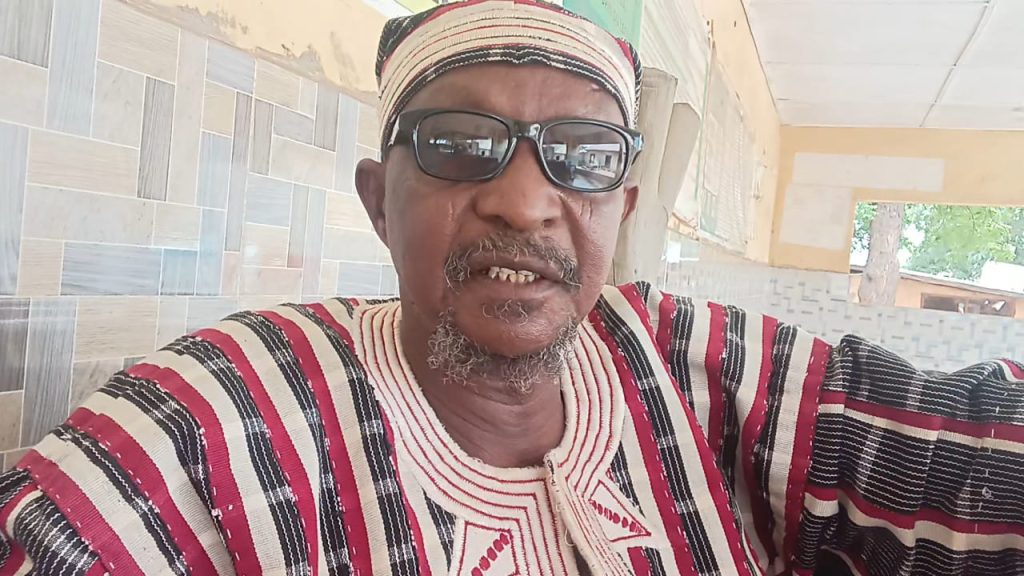
The Paramount Chief of the Bongo Traditional Area, Naba Baba Salifu Atamale Lemyaarum, has made a passionate appeal to President John Dramani Mahama to accelerate the development of a solar farm in Bongo, as residents of the Upper East Region continue to grapple with persistent and debilitating power fluctuations. The Chief made the call during an exclusive interview with Ngamegbulamm Chidozie Stephen of Apexnewsgh on Wednesday, using the platform to draw urgent attention to an electricity crisis that he says has gone on for far too long. For the people of the Upper East Region, the power situation has become a source of daily anguish. According to Naba Atamale Lemyaarum, residents have endured at least two weeks of erratic power supply, marked by constant fluctuations and outages that have disrupted livelihoods and daily life. The situation reached a troubling low just days before the interview, when the community spent an entire night without electricity. The following morning brought an alarming explanation: a substation had caught fire. “The load on our substation is too much,” the Paramount Chief said plainly, pointing to an overstretched power infrastructure that he believes is at the root of the region’s recurring electricity woes. Rather than simply lamenting the problem, Naba Atamale Lemyaarum offered a concrete solution, one that, in his view, has been sitting idle for over a decade. He called for a greater embrace of solar energy, arguing that the Upper East Region’s abundant sunshine is a resource that is being squandered. In his vision, solar power would serve domestic needs, while hydropower is preserved for more energy-intensive industrial uses such as factories and welding. “Solar energy will augment the hydropower,” he said. “With hydropower, we can use it for factories, welding and all that. But domestically, it will depend on solar power.” Central to the Chief’s appeal is a project that was announced with great fanfare more than a decade ago. In 2014, the Volta River Authority (VRA) acquired land in Bongo for the construction of a solar farm one that was described at the time as potentially the second largest solar farm in the whole of West Africa. Yet, years on, the project remains unfinished. While the Paramount Chief acknowledged that some work has been done, he expressed frustration at the pace of progress, describing implementation as “very slow.” It is against this backdrop that he directed his appeal to the President — a leader he spoke of with genuine admiration. “He is a man of wisdom and charisma, who is seeking to get the welfare of the people of this country,” Naba Atamale Lemyaarum said. But admiration, he made clear, does not diminish the urgency of the request. He pleaded with the President to direct the VRA to immediately prioritise the completion of the Bongo solar farm, arguing that doing so would provide the critical backup needed to end the cycle of power crises plaguing the region. The stakes of the power crisis extend beyond inconvenience. The Upper East Region is currently experiencing intense heat, and the combination of soaring temperatures and unreliable electricity, which limits access to fans and cooling, has compounded public health concerns, particularly around the risk of meningitis, a disease the region has historically been vulnerable to. For Naba Atamale Lemyaarum, the message to Accra is simple: the people of the Upper East Region cannot afford to wait much longer. The land is there, the sun is there, and the need has never been more pressing. What is required now is the political will to act. Source: Apexnewsgh.com